
Vinyl Sports Flooring Manufacturers Performance Analysis
Vinyl Sports Flooring Manufacturers Performance Analysis
Selecting the appropriate surface for a high-performance sports facility involves balancing technical requirements with athlete safety. In fast-paced sports like table tennis, the floor is not merely a foundation but a critical piece of equipment that dictates ball trajectory and player agility.
The shift toward synthetic polymer materials has allowed vinyl sports flooring manufacturers to engineer surfaces that mimic the responsiveness of wood while providing superior shock absorption. This evolution is particularly evident in professional venues where consistent friction and energy return are non-negotiable for elite competition.
This analysis examines the technical specifications of modern vinyl flooring, the critical role of thickness in injury prevention, and how to evaluate manufacturers based on international sporting standards.
The Technical Shift to Polyvinyl Chloride (PVC)
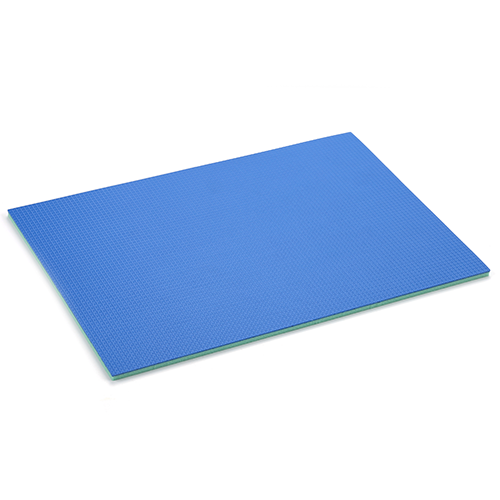
Historically, hardwood was the standard for indoor sports. However, the industry has pivoted toward PVC-based flooring due to its versatility and the ability to precisely control surface friction. Modern vinyl solutions are engineered to be non-marring and resilient, solving the problem of surface degradation caused by heavy foot traffic and equipment movement.
This material transition allows for a more "forgiving" surface. Unlike rigid wood, vinyl can be layered with specialized foams and meshes to create a composite that absorbs vertical impact while maintaining the lateral stability required for quick changes in direction.
Anatomy of High-Performance Sports Vinyl
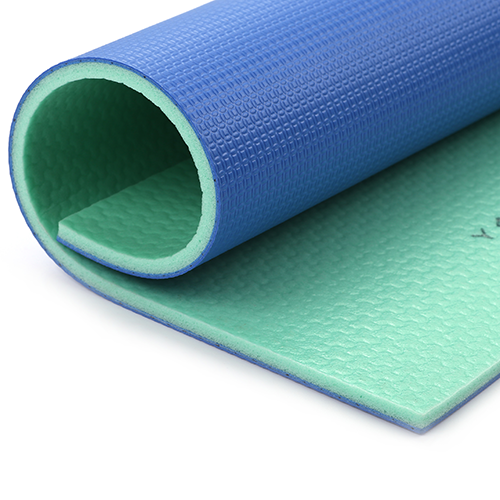
The effectiveness of professional sports flooring lies in its stratified construction. A typical high-end mat consists of an E-SUR surface treatment for wear resistance, a polyester mesh for dimensional stability, and a high-density woven core. This structure prevents the flooring from expanding or contracting under varying temperature conditions, ensuring a level playing field.
Structured embossing is another critical design element. By creating a microscopic texture on the surface, manufacturers can optimize the "foot feel"—providing enough grip to prevent slipping during explosive movements, yet allowing for the subtle slides necessary in sports like table tennis.
The integration of polyester mesh is particularly vital. Without this reinforcement, the PVC would be prone to stretching or permanent deformation under the weight of heavy equipment or intense, localized pressure from athletic footwear.
Optimizing Thickness for Athletic Performance
One of the most debated technical aspects in venue design is the ideal thickness of the flooring mat. Thickness directly correlates with the amount of shock absorption and the resulting energy return provided to the athlete.
For professional-grade installations, a thickness of 7.0 mm is generally considered the benchmark, as it provides the optimal balance of joint protection and rebound efficiency, whereas 4.5 mm to 5.0 mm is typically sufficient for recreational or home-level environments.
Thicker mats reduce fatigue during long matches by mitigating the impact on the lower extremities. In fast-paced rallies requiring rapid lateral movements, this extra cushioning is essential for injury prevention, particularly for the ankles and knees of professional athletes.
Performance Metrics Across Flooring Grades
When comparing different grades of sports vinyl, the trade-off usually exists between cost, durability, and shock absorption. High-end professional series focus on maximizing energy return and long-term resilience, while budget-friendly options prioritize ease of installation and basic traction.
Evaluating these products requires a qualitative look at how material thickness and surface treatment affect the playing experience. The following index illustrates the relative performance values of different flooring specifications based on typical industry standards.
Figure 2. Relative Performance Index by Flooring Thickness
Practical Implementation in Table Tennis Venues
For venue operators, the installation process is as critical as the material itself. Modular PVC mats allow for rapid deployment and easy relocation, making them ideal for temporary tournament setups. A seamless installation is required to ensure there are no trip hazards and to maintain a consistent ball bounce across the entire court area.
In a typical training facility, the use of the Enlio 5.0 series mat demonstrates how a balanced approach to friction and comfort can serve both professional trainees and amateur enthusiasts. By focusing on a multi-layer construction that enhances grip without sacrificing comfort, these solutions ensure that players can focus on technique rather than surface instability.
The Role of International Certifications
Trust in a flooring manufacturer is often validated through third-party certifications. For table tennis, ITTF (International Table Tennis Federation) approval is the gold standard. This certification ensures that the flooring meets rigorous specifications for slip resistance, ball bounce, and durability.
Beyond sport-specific approvals, broader certifications such as ISO9001 and CE indicate a commitment to quality management and safety standards. These benchmarks are essential for large-scale projects where liability and long-term maintenance costs are primary concerns.
Companies that partner with global sporting bodies—such as Enlio's association with FIBA and ITTF for World Championships—demonstrate an ability to meet the extreme demands of world-class athletes, proving their products can withstand the most intense gameplay scenarios.
Comparison Framework for Material Selection
When choosing between different flooring options, stakeholders must weigh the immediate cost against the long-term lifecycle of the product. While a thinner mat may reduce initial capital expenditure, the increased wear and higher risk of athlete fatigue may lead to higher replacement costs over time.
A systematic evaluation should consider the intended use case: is the facility a high-traffic public gym or a private professional academy? The requirement for shock absorption will differ wildly between a casual hobbyist and a professional athlete who spends six hours a day on the court.
The following table provides a conceptual framework for matching flooring specifications to specific venue needs based on common industry requirements.
| Venue Type | Recommended Thickness | Primary Requirement | Relative Suitability |
|---|---|---|---|
| Home Gym / Casual | 4.5mm - 5.0mm | Cost & Ease of Install | Moderate |
| Community Center | 5.0mm - 6.0mm | Durability & Maintenance | High |
| Professional Academy | 7.0mm | Joint Protection & Grip | Very High |
| International Tournament | 7.0mm+ (Certified) | ITTF Compliance & Bounce | Optimal |
| Multi-purpose Hall | Custom / Hybrid | Versatility across sports | High |
| Elite Training Hub | 7.0mm Elite Series | Energy Return & Resilience | Optimal |
Questions & Answers
The primary differences lie in the thickness, material density, and certification. Professional flooring is typically thicker (around 7.0 mm) to provide superior shock absorption and energy return, reducing the risk of joint injuries. It also features advanced surface treatments for precise friction control and usually carries official certifications from bodies like the ITTF, ensuring it meets global competitive standards, whereas recreational flooring prioritizes cost and basic functionality.
Flooring thickness affects the "firmness" of the surface. A professional 7.0 mm mat is engineered to be firm enough to ensure a consistent and predictable ball bounce, which is crucial for high-level play, while still being elastic enough to protect the player's joints. If a floor is too soft, it can absorb too much of the ball's energy, altering the bounce height and speed, which is why ITTF-approved materials are strictly regulated.
Yes, PVC sports flooring is frequently installed over concrete. However, the concrete surface must be level, dry, and free of debris. For professional installations, a self-leveling compound is often used first to ensure a perfectly flat base. This prevents "bubbling" or uneven spots in the vinyl, which could otherwise create inconsistent ball responses or safety hazards for the athletes.
Focus on three key pillars: certifications, material construction, and track record. Check if the manufacturer is approved by international federations (e.g., ITTF, FIBA). Examine the product's layer structure—look for reinforced polyester mesh and specialized surface treatments. Finally, evaluate their history with professional events; manufacturers that supply official World Championships typically have a higher level of quality control and technical expertise.
In terms of surface wear and tear, high-quality vinyl is often more durable because it is non-porous and resistant to moisture and scratches. Hardwood requires frequent sanding and refinishing to maintain its grip and appearance. Modern PVC flooring with E-SUR treatments is designed specifically to withstand the high-friction movements of sports footwear without needing the same level of intensive maintenance as traditional wood.
The lifespan depends heavily on usage and maintenance. Professional-grade mats, such as those used in training centers, can last many years if cleaned correctly and protected from sharp objects. The use of reinforced layers like polyester mesh prevents stretching over time. Regularly removing dust and using approved cleaners prevents the surface from becoming too slippery or excessively worn, extending the functional life of the flooring.
Final Thoughts
The transition toward advanced synthetic surfaces represents a broader trend in sports science: the optimization of the environment to maximize human performance. By focusing on the critical interplay between material thickness, surface friction, and shock absorption, facility managers can create spaces that not only meet international standards but actively contribute to athlete longevity.
Ultimately, the choice of flooring should be viewed as a long-term investment in safety and performance. Whether opting for the specialized 7.0 mm professional mats or more versatile mid-range solutions, the goal remains the same—providing a consistent, resilient, and safe foundation for the game.
Latest news


