Outdoor Basketball Court Flooring Cost Technical Analysis
Outdoor Basketball Court Flooring Cost Technical Analysis
Budgeting for an outdoor sports facility often starts with a single, critical question: what is the actual outdoor basketball court flooring cost? Unlike indoor installations, outdoor surfaces must battle UV radiation, temperature fluctuations, and moisture, which significantly alters the cost-benefit analysis of different materials.
The market has shifted from basic concrete pours to high-performance modular systems and treated hardwoods. This evolution is driven by a growing demand for professional-grade shock absorption and lower long-term maintenance overhead, forcing facility managers to look beyond the initial sticker price toward the total lifecycle cost of the surface.
To make an informed investment, it is essential to understand the technical variables that influence pricing, from sub-base preparation to the specific chemical composition of the wear layer.
Material Foundations of Outdoor Surfaces
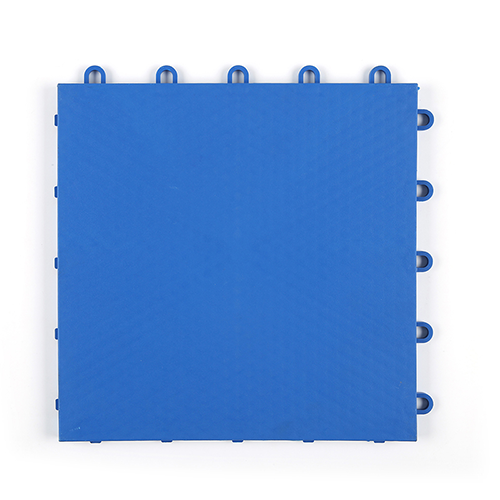
The cost of outdoor basketball flooring is primarily dictated by the material's ability to withstand environmental stress. Polypropylene (PP) modular tiles have become a dominant choice due to their interlocking nature, which allows for thermal expansion and contraction without cracking—a common failure in rigid concrete or asphalt surfaces.
On the premium end, treated hardwoods and specialized vinyls are utilized, though they require more stringent protective coatings to prevent warping. The choice between a permanent poured surface and a removable modular system fundamentally changes the initial capital expenditure and the long-term maintenance schedule.
Technical Drivers of Flooring Expenditures
Beyond the surface material, the sub-base preparation is often the most underestimated factor in the total budget. A professional court requires a precision-leveled concrete or asphalt slab. Any irregularity in the base leads to "dead spots" in the ball bounce and accelerated wear on the flooring tiles, meaning a cheap base often leads to an expensive floor replacement.
The technical specifications of the wear layer also play a significant role. For instance, UV-stabilized pigments and anti-skid UV paint are necessary to prevent the court from fading under intense sunlight and becoming slippery when wet. These chemical additives increase the production cost but are non-negotiable for safety and longevity.
Furthermore, shock absorption levels—measured by the thickness and density of the cushion layer—influence pricing. A court designed for high-impact professional play requires more advanced elastic layers than a residential backyard court, directly impacting the cost per square meter.
The Role of Structural Layering
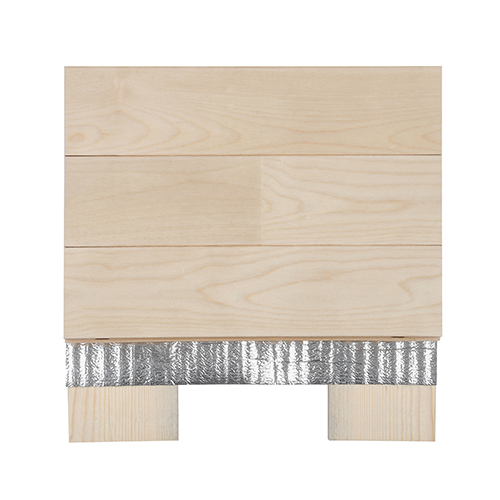
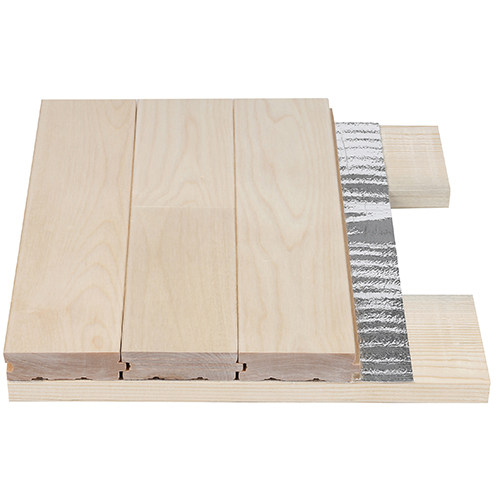
High-performance sports flooring is rarely a single layer. It is an engineered system designed to manage load-bearing and energy return. For premium wood-based systems adapted for semi-outdoor or sheltered environments, the architecture involves a sophisticated stack of moisture-proof membranes, rubber cushions, and load-bearing keels.
The integration of a suspended wooden floor structure allows for adjustable keel heights and rough board arrangements, enabling the surface to be tailored to specific ground clearance limits while maintaining critical shock absorption.
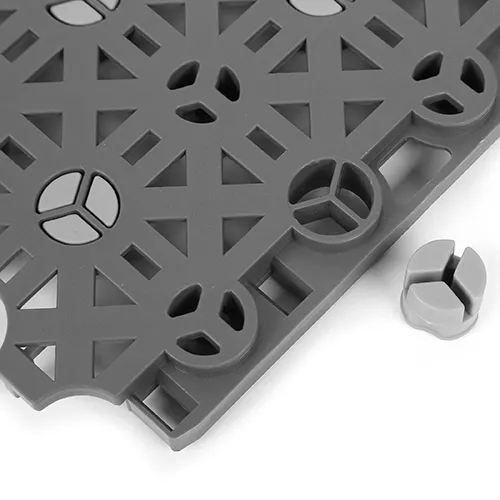
In modular plastic systems, the "layering" is achieved through the geometry of the tile. The hollow underside of the PP series tiles acts as a natural shock absorber and drainage channel, reducing the need for expensive separate underlayments while keeping the total installation cost competitive.
Cost-Performance Relative Index
When evaluating different flooring options, buyers should use a relative index that weighs the initial cost against durability and athletic performance. For example, while basic acrylic on concrete is the cheapest upfront, its shock absorption is minimal and it requires frequent resurfacing.
Modular PP tiles and professional sports wood systems offer a higher initial investment but provide superior joint protection and longer lifespans. The following index illustrates the relative value balance across common outdoor-capable categories.
Figure 2. Material Value Assessment Index
Site-Specific Application Challenges
The environmental context of the installation can cause drastic swings in the final budget. In high-humidity regions, the cost increases due to the necessity of high-grade moisture-proof layers (such as PE aluminum foil films) to prevent bubbling or mold growth beneath the surface.
Conversely, in arid environments with extreme heat, the focus shifts to UV stability. A typical industrial setting or a community sports complex must evaluate the daily foot traffic; high-use venues require thicker surface flooring (20-22mm for wood systems) and more robust UV paint to avoid premature degradation, which adds to the initial material cost.
Evolution of Weather-Resistant Polymers
The shift toward modular court tiles reflects a broader industry trend in polymer science. Modern PP series tiles are engineered to be non-porous, meaning they do not absorb water, which eliminates the freeze-thaw cracking common in traditional asphalt courts. This technical shift reduces the "hidden cost" of annual repairs.
Furthermore, the introduction of customized floor options allows facilities to integrate specific safety standards (such as FIBA or ITF approvals) without requiring a complete structural rebuild. By layering different materials—such as natural rubber cushions under solid wood—manufacturers can balance professional performance with outdoor durability.
As materials evolve, we see a trend toward "hybrid" surfaces that combine the aesthetic of hardwood with the resilience of polymers, aiming to lower the total cost of ownership while maintaining a premium athletic feel.
Selection Framework and Trade-offs
Choosing the right flooring requires a trade-off analysis between initial expenditure, athletic requirements, and the desired lifespan. A residential user may prioritize the ease of installation found in PP series tiles, whereas a professional academy will invest in the superior energy return of a hardwood system with a natural rubber cushion.
It is also critical to consider the "installation velocity." Modular systems can be deployed in days, reducing labor costs and facility downtime. In contrast, poured systems require curing time, which can add indirect costs to the project timeline.
The following table provides a comparative framework for evaluating different surface options based on typical professional requirements.
| Material Type | Initial Cost | Shock Absorption | Maintenance Need |
|---|---|---|---|
| Acrylic on Concrete | Low | Minimal | High (Resurfacing) |
| Modular PP Tiles | Medium | Moderate | Low (Replaceable) |
| Vinyl Sports Floor | Medium-High | High | Moderate |
| Hardwood (Treated) | High | Very High | High (Specialized) |
| Polyurethane (PU) | Medium-High | Moderate-High | Moderate |
| Custom Hybrid | High | Tailored | Moderate |
Questions & Answers
The most significant variance comes from the sub-base preparation and the choice of shock-absorption layering. A court installed over a perfectly leveled, professional-grade concrete slab will cost more initially but prevents surface failure. Additionally, moving from basic modular tiles to a multi-layered system including natural rubber cushions and UV-resistant hardwoods significantly increases the price per square foot due to material complexity and labor requirements.
While acrylic is often cheaper at the start, modular PP tiles provide better long-term value through lower maintenance. Acrylic surfaces are prone to cracking and require complete resurfacing every few years. Modular tiles can be replaced individually if damaged, allow for natural drainage, and offer superior shock absorption, which reduces athlete injury risk—a critical factor for professional or school venues.
Pure hardwood is generally for indoor use, but "sports wood flooring" can be adapted for semi-outdoor or covered environments using professional processing. This involves using solid wood (Maple, Birch, or Oak) treated with anti-skid, wear-resistant UV paint and incorporating a moisture-proof layer (like PE aluminum foil) to prevent deformation. It is the gold standard for performance but requires a higher budget and strict environmental control.
A suspended structure uses a system of keels and rough boards to create a gap between the actual playing surface and the concrete base. This air gap, often combined with rubber cushions, provides the elasticity needed for shock absorption. It is particularly useful for venues with limited ground clearance, as the height of the keel can be adjusted to fit the available space without sacrificing athletic performance.
UV-resistant paint is a critical investment. Standard paints degrade under sunlight, leading to color fading and a loss of surface grip (becoming dangerously slick). Professional UV paint adds to the initial cost but extends the lifespan of the floor by years and ensures the court remains safe for athletes. For high-traffic courts, a specialized color paint process is often used to provide a personalized design and enhanced durability.
Modular court tiles are the most versatile for multi-purpose use. Because they are interlocking, the layout can be easily adjusted or reconfigured to accommodate different court dimensions (e.g., switching from a basketball layout to a pickleball sports court). Their consistent bounce and drainage make them suitable for various sports, providing a cost-effective solution that doesn't require multiple separate installations.
Final Thoughts
Determining the outdoor basketball court flooring cost is not merely about comparing price lists, but about analyzing the interaction between material science and environmental conditions. Whether choosing the flexibility of PP modular tiles or the high-performance energy return of a suspended hardwood system, the priority must remain on athlete safety and surface longevity.
By focusing on the structural integrity of the sub-base and the quality of the wear layers, facility owners can avoid the costly cycle of premature replacement. Investing in an engineered system—one that balances load-bearing capacity with professional shock absorption—ensures a durable facility that stands the test of time and weather.
Latest news