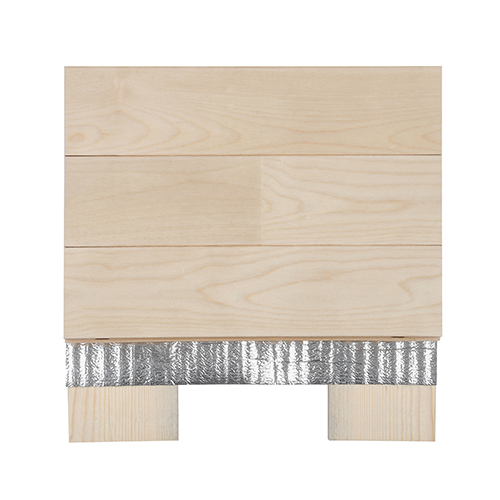
Indoor vs Outdoor Pickleball Court Performance Analysis
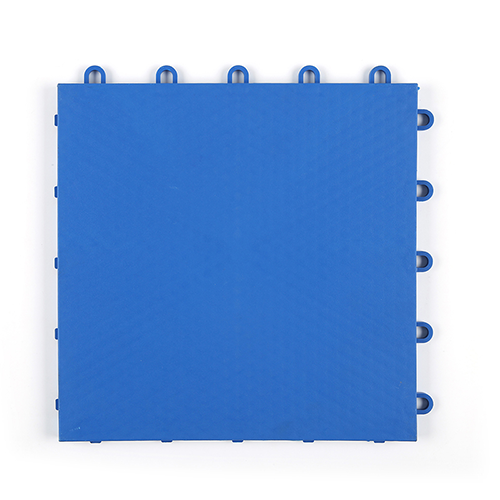
Indoor vs Outdoor Pickleball Court Performance Analysis
Selecting the right environment for a pickleball facility often boils down to a critical debate: the trade-offs between an indoor vs outdoor pickleball court. While the sport is inherently flexible, the choice of location fundamentally alters the game's physics, the durability requirements of the flooring, and the overall user experience.
For facility managers and private developers, this decision is not merely about aesthetics or available land, but about managing environmental stressors and optimizing athlete performance. Outdoor courts must battle UV radiation and moisture, while indoor spaces must prioritize shock absorption and acoustic management to ensure long-term viability.
By analyzing the technical demands of each setting, we can identify which surfacing solutions provide the necessary traction and resilience to support high-intensity play regardless of the venue.
Environmental Impact on Gameplay
The primary difference in an indoor vs outdoor pickleball court is the presence of external variables like wind and temperature. Outdoors, wind significantly affects the trajectory of the lightweight plastic ball, forcing players to adapt their strategy and shot selection. Temperature fluctuations also affect the ball's bounce and the elasticity of the court surface.
Indoor environments provide a controlled climate, which eliminates wind interference and allows for a more consistent, technical game. However, indoor spaces often struggle with lighting glare and acoustics, which can distract players during intense rallies.
Technical Requirements for Court Surfaces
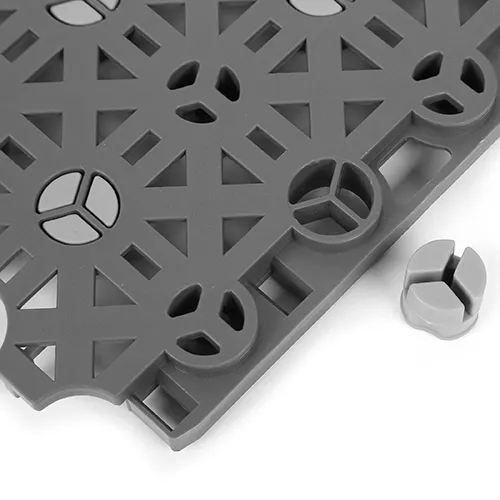
When evaluating the material needs for a court, the distinction between indoor and outdoor specifications is stark. Outdoor surfaces must be UV-stabilized to prevent discoloration and brittleness under constant sun exposure. Furthermore, drainage is a critical technical factor; outdoor modular tiles typically feature an open-grid or perforated design to allow rainwater to pass through, preventing hydroplaning.
Indoor courts, conversely, prioritize the interaction between the shoe and the floor. The focus shifts toward friction coefficients and wear resistance. Surfaces like vinyl or specialized hardwood are common, but modular PP (Polypropylene) series are gaining traction due to their ability to be installed over existing concrete without permanent modification.
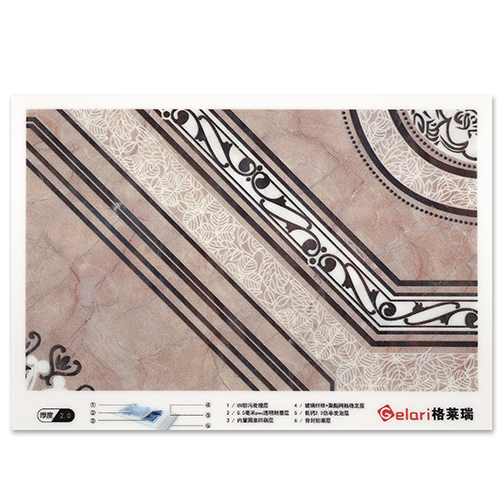
Regardless of the setting, anti-skid properties are non-negotiable. High-performance surfaces often utilize micro-convex and concave patterns on the top layer to increase grip and friction, ensuring that players can execute rapid lateral movements without slipping.
The Role of Shock Absorption
Joint protection is a primary concern for athletes in sports involving sudden stops and pivots. The structural design of the flooring plays a pivotal role in mitigating the impact forces transmitted to the player's ankles and knees.
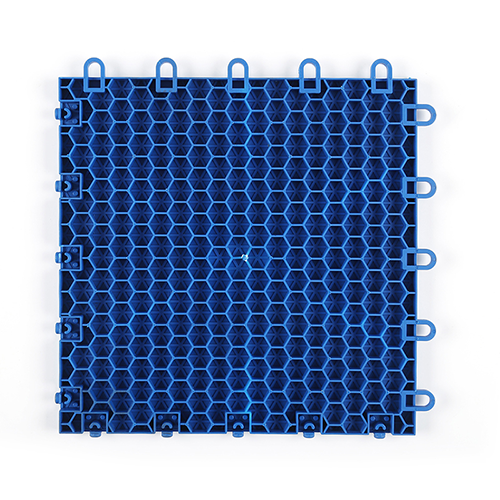
Advanced court surfaces now integrate a honeycomb base or a back-side comb design to maximize shock absorption, reducing the risk of contusions and long-term joint wear during intense matches.
This architectural approach to flooring—combining a rigid top for ball bounce with a flexible base for impact attenuation—creates a safer environment. For indoor facilities, this often means a multi-layered system, whereas outdoor courts rely on the inherent flexibility of high-grade polymers.
Performance Metrics Comparison
Comparing an indoor vs outdoor pickleball court requires a look at qualitative indices. While outdoor courts offer higher accessibility and lower climate-control costs, they suffer from higher maintenance needs due to debris and weathering. Indoor courts provide a premium, consistent experience but involve higher overhead for lighting and HVAC.
From a technical standpoint, the stability of the playing surface is measured by its ability to maintain friction levels across different humidity ranges. Modular systems, such as those produced by Hebei Enlio Sports Goods Co.,LTD, are engineered to provide a balanced index of traction and shock absorption across both environments.
Figure 2. Court Environment Performance Index
Practical Application Scenarios
In a typical municipal park setting, outdoor court tiles are the preferred solution due to their fast installation and ability to breathe. These systems utilize an inter-lock portable design, allowing facilities to quickly deploy or replace sections of the court without needing to tear up the entire foundation. This is especially useful for communities that need to adapt multi-purpose areas for seasonal pickleball use.
For professional sports complexes or private clubs, an indoor setup with a high-grade vinyl floor or customized sports flooring is often the choice. These environments focus on the "game-changer" aspects: unimpeded 360-degree movement and precise ball response. In these scenarios, the flooring is treated as a performance tool that allows athletes to sprint and pivot with absolute confidence.
Future Trends in Modular Flooring
The industry is moving toward sustainable, eco-friendly materials that do not sacrifice performance. Modern polymers used in modular court tiles are now designed to be recyclable while maintaining the rigidity required for professional play. This shift addresses the growing demand for green sports infrastructure.
We are also seeing a convergence in design where "hybrid" surfaces are developed. These surfaces attempt to bridge the gap in the indoor vs outdoor pickleball court debate by offering the drainage of an outdoor tile with the shock absorption and friction levels usually reserved for indoor gymnasiums.
Additionally, the integration of 3D max treatments on the surface layer is becoming standard. This increases wear resistance and ensures that the anti-slip properties remain effective even after years of high-traffic use, reducing the frequency of costly surface refinishing.
Decision Framework for Facility Owners
Choosing between indoor and outdoor configurations requires a weighted analysis of budget, target demographic, and geographic location. While outdoor courts offer a lower barrier to entry and higher visibility for public engagement, indoor facilities provide the stability needed for high-stakes competition and year-round revenue.
From a procurement perspective, the focus should remain on the "Total Cost of Ownership" (TCO). A cheaper outdoor surface that degrades in three years due to UV exposure is more expensive than a premium modular system with a decade-long lifespan.
The following framework summarizes the key technical and operational trade-offs to consider when finalizing the court specifications.
| Evaluation Factor | Indoor Court | Outdoor Court | Recommended Solution |
|---|---|---|---|
| Weather Impact | None | High (Wind/Rain) | UV-Stabilized PP Tiles |
| Surface Grip | High/Consistent | Variable (Dust/Moisture) | 3D Micro-Textured Layer |
| Joint Impact | Controlled Absorption | Surface Dependent | Honeycomb Base Design |
| Installation Speed | Moderate | Fast (Modular) | Inter-lock Portable System |
| Maintenance | Dusting/Cleaning | Debris Removal/UV Care | Wear-Resistant Polymers |
| Player Volume | High (Year-round) | Seasonal | Commercial Grade Vinyl/PP |
Questions & Answers
The primary difference lies in environmental resilience. Outdoor flooring must feature UV inhibitors to prevent sun damage and drainage mechanisms (like perforated grids) to handle rain. Indoor flooring focuses more on shock absorption for joint protection and specific friction coefficients to optimize the grip between the player's shoes and the floor without causing "stick-slip" injuries.
Yes, high-quality modular PP tiles are versatile. For outdoor use, they provide the necessary drainage and UV resistance. For indoor use, they offer a portable, fast-install alternative to permanent flooring. However, the specific series chosen should match the intended use—for instance, selecting a model with enhanced shock absorption for indoor competitive play.
Wind is a major variable in the indoor vs outdoor pickleball court debate. Because the ball is light, wind can alter its flight path unpredictably. If the facility is intended for professional tournaments or high-level training, an indoor court is preferred to ensure the game is decided by skill rather than weather conditions.
Shock absorption is the ability of the flooring to dissipate the energy generated when a player's foot hits the surface. In pickleball, where lateral movement and sudden stops are frequent, a floor with a honeycomb base or comb design reduces the impact on joints, preventing fatigue and reducing the risk of long-term injury.
While outdoor courts have lower initial construction costs (no building required), they often have higher long-term maintenance costs due to weather-related degradation. Indoor courts have higher initial capital expenditure but offer consistent revenue streams and lower surface replacement frequency, often resulting in a better long-term ROI for commercial operators.
Slipping is prevented through surface engineering. Look for flooring that features micro-convex and concave patterns (3D treatment). This increases the surface area of contact and friction. For outdoor courts, ensuring the surface is clear of dust and moisture through proper drainage is also essential for maintaining safety.
Final Thoughts
The decision between an indoor vs outdoor pickleball court is a balance of environmental control and accessibility. While outdoor courts democratize the sport by making it accessible in public spaces, indoor courts elevate the game by providing a professional, consistent environment that protects the athlete's physical longevity.
Ultimately, the quality of the sports flooring is the bridge that connects these two worlds. Whether utilizing the UV-resistant modular tiles of Hebei Enlio Sports Goods Co.,LTD for a park or a high-traction vinyl floor for a gymnasium, the goal remains the same: providing a safe, durable, and high-performance surface that allows the athlete to focus entirely on the match.
Latest news