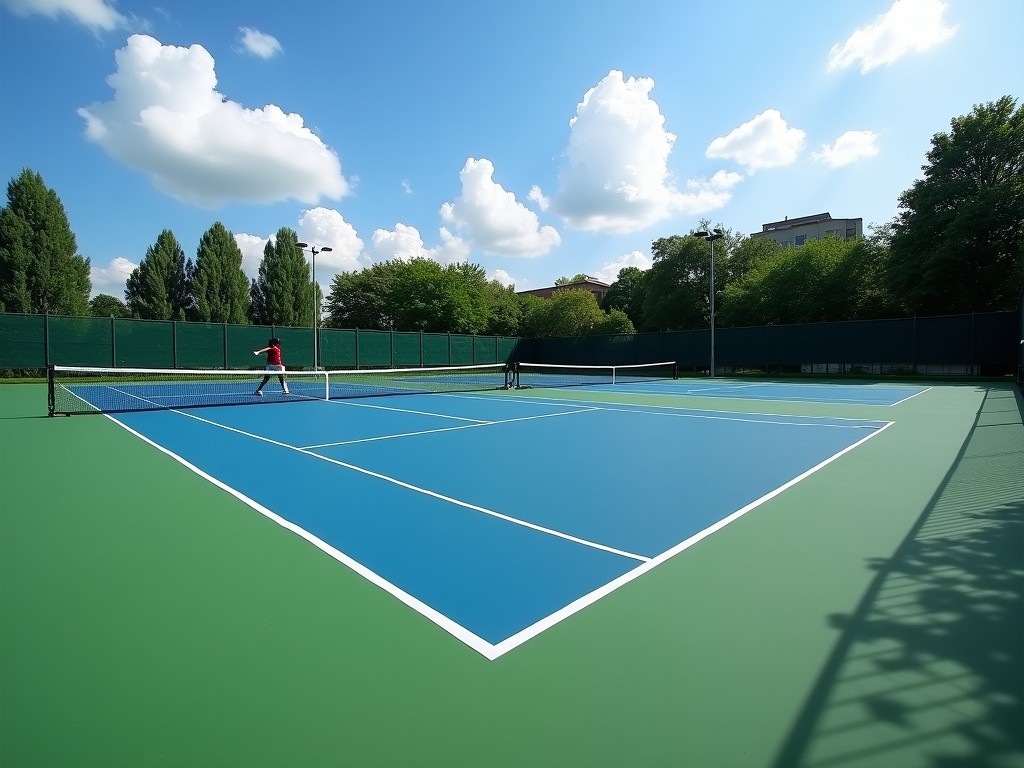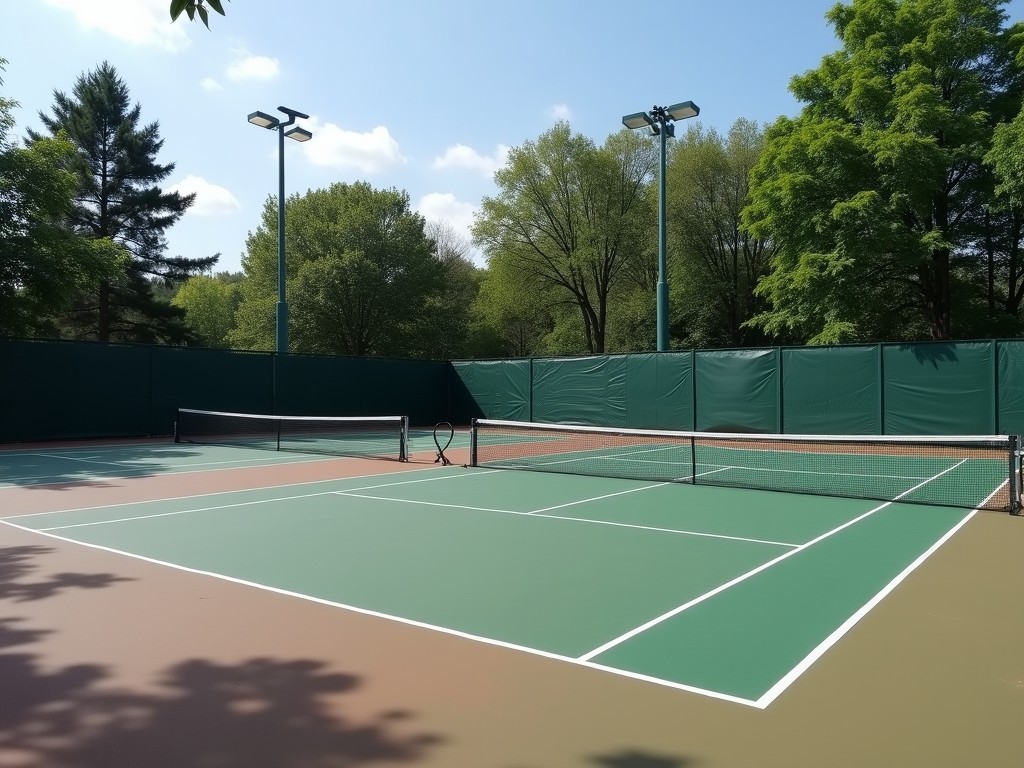
Wholesale Outdoor Pickleball Sports Court Flooring Factory
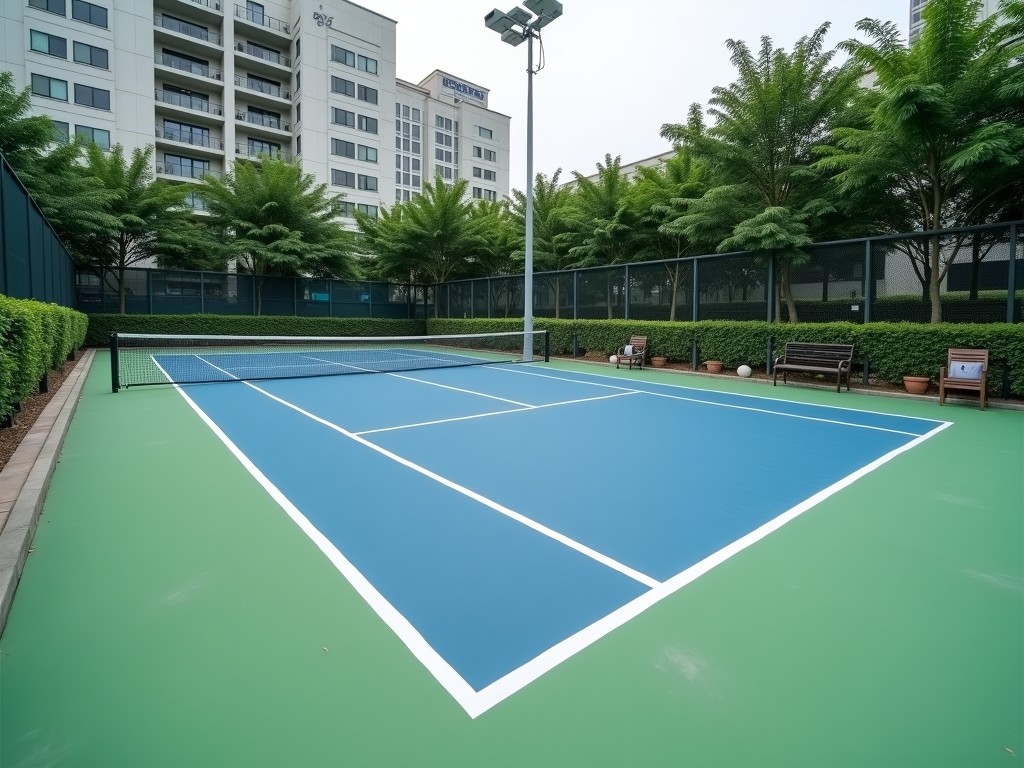
Wholesale Outdoor Pickleball Sports Court Flooring Factory
Wholesale Outdoor Pickleball Sports Court Flooring
Outdoor pickleball courts require a surface that balances traction, shock absorption, and weather resistance while maintaining consistent ball response. The flooring system described here is engineered as a modular interlocking tile made from UV‑stabilized polypropylene copolymer, formulated to endure temperature swings from -20 °C to +60 °C without cracking or delamination.
Material Composition
The primary resin is a high‑impact polypropylene blended with ethylene‑propylene‑diene monomer (EPDM) rubber granules for enhanced slip resistance. Additives include a HALS (hindered amine light stabilizer) package to mitigate UV‑induced yellowing and a micro‑biocide to inhibit mold growth in humid climates.
- Base polymer: polypropylene copolymer (MFI 8‑12 g/10 min)
- EPDM rubber content: 15‑20 wt %
- UV stabilizer concentration: 0.5‑1.0 wt %
- Density: 0.92‑0.95 g/cm³
- Water absorption (24 h): <0.5 % by weight
Performance Characteristics
| Property | Typical Value | Test Standard |
|---|---|---|
| Thickness (interlocking profile) | 12 mm (±0.5 mm) | ISO 24346 |
| Shore A hardness | 85 ± 3 | ASTM D2240 |
| Coefficient of friction (wet) | 0.65‑0.75 | ASTM E303 |
| Vertical deformation (under 500 N) | 1.8‑2.2 mm | EN 14808 |
| Thermal expansion coefficient | 1.2 × 10⁻⁴ / °C | ASTM D696 |
| Load‑bearing capacity (point load) | ≥ 2 kN | ISO 23999 |
Installation Guidelines
The flooring tiles feature a male‑female edge system that snaps together without adhesives. A level sub‑base of compacted crushed stone or concrete with a tolerance of ±3 mm is required. Expansion gaps of 10 mm per 5 m of court length should be left at the perimeter to accommodate thermal movement.
- Clean and dry the sub‑base; remove debris and standing water.
- Lay a geotextile membrane if the base is prone to weed growth.
- Start from a corner, interlock tiles row by row, tapping gently with a rubber mallet to ensure full engagement.
- Cut edge tiles with a fine‑tooth saw to fit boundaries; maintain the 10 mm gap.
- Roll the completed surface with a 50 kg roller to settle the interlocks.
Applications
Pickleball demands a surface that provides consistent bounce (coefficient of restitution ≈ 0.80) and reliable lateral grip for quick direction changes. The combination of a moderately hard top layer and a slightly softer underlayer yields energy return that matches the sport’s ball specifications while reducing joint stress during prolonged play. The same flooring is suitable for multi‑use courts that also host badminton or mini‑tennis, as the performance envelope covers the required slip resistance (0.55‑0.80) and shock absorption ranges for those activities.
Quality Control
Each production lot undergoes dimensional inspection on a coordinate measuring machine (CMM) to verify tile thickness and interlock geometry within ±0.2 mm. Surface hardness is checked with a durometer at five random points per batch. UV stability is validated by accelerated weathering (1000 h QUV) with ΔE < 5 after exposure. Finished tiles are subjected to a slip‑resistance test using the pendulum method; results must fall within the specified range before packaging.
Customization Options
- Thickness: 10 mm, 12 mm, 15 mm (adjusted sub‑base preparation)
- Surface texture: smooth, medium‑grip, high‑grip (EPDM granule size variation)
- Color: standard court green, red, blue, or custom Pantone match
- Logo integration: recessed emboss or surface‑printed UV‑stable ink
- Edge finish: straight, beveled, or with integrated drainage channels
Packaging and Shipping
Tiles are stacked in layers of 20 mm thick corrugated cardboard sheets, then placed on pallets (1.1 m × 1.1 m) with a maximum load of 1.2 t per pallet. Corner protectors and stretch film secure the load. Each pallet is labeled with lot number, tile count, and handling instructions. Containerized shipments use 20‑ft or 40‑ft dry containers; desiccant packs are included to control moisture during transit.
Frequently Asked Questions
Can the tile dimensions be customized for non‑standard court layouts?
Yes. While the standard module is 300 mm × 300 mm, we can produce rectangular or half‑size tiles to accommodate irregular boundaries or integrated seating areas. Custom tooling lead time adds approximately 2‑3 weeks.
What information is required before a quotation can be issued?
Please provide the court dimensions (length × width), desired tile thickness, surface texture preference, color specification, and any logo or marking requirements. If the sub‑base details are known (concrete, asphalt, compacted stone), include those as they affect accessory needs such as edging strips.
How is quality inspected before shipment?
Each batch undergoes dimensional, hardness, UV, and slip‑resistance testing as outlined in the Quality Control section. A final visual inspection checks for surface defects, color uniformity, and proper interlock engagement. A test report is available upon request.
What packaging methods protect the flooring during long‑distance transport?
Tiles are layered with corrugated separators, stacked on pallets, secured with corner protectors, and wrapped in stretch film. For overseas shipments, desiccant bags and moisture‑barrier liners are added to prevent condensation damage.
Contact for Inquiry
To discuss your project specifications, request a sample, or obtain a detailed quotation, please reach out to our technical sales team.
Request a Quote