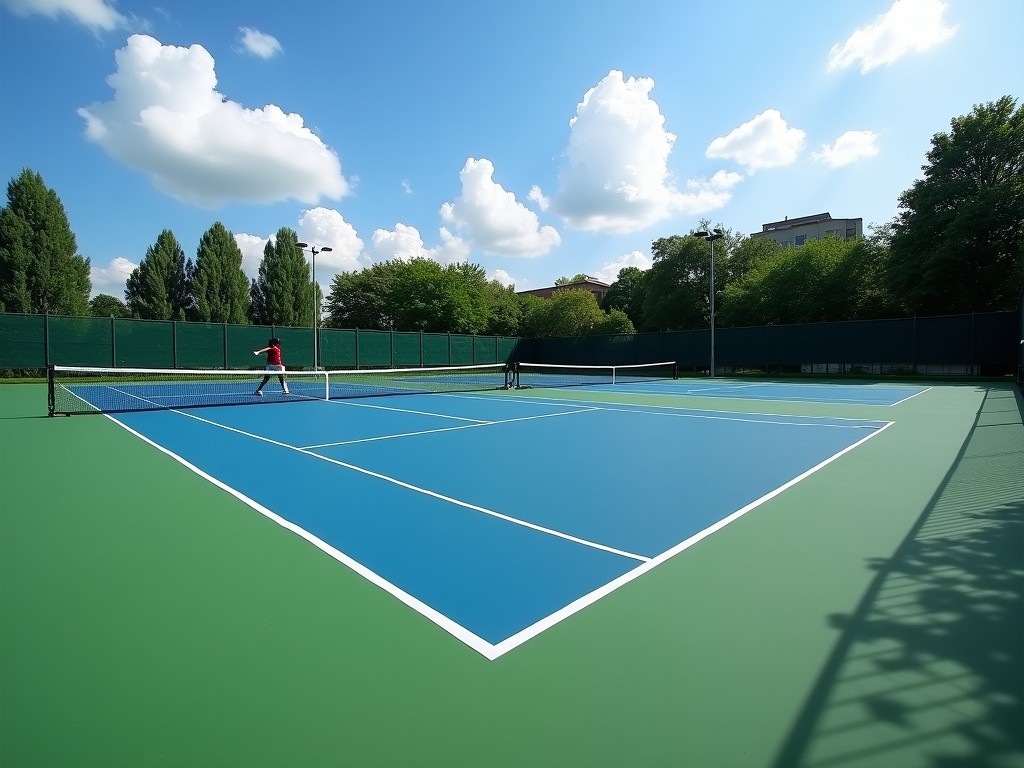
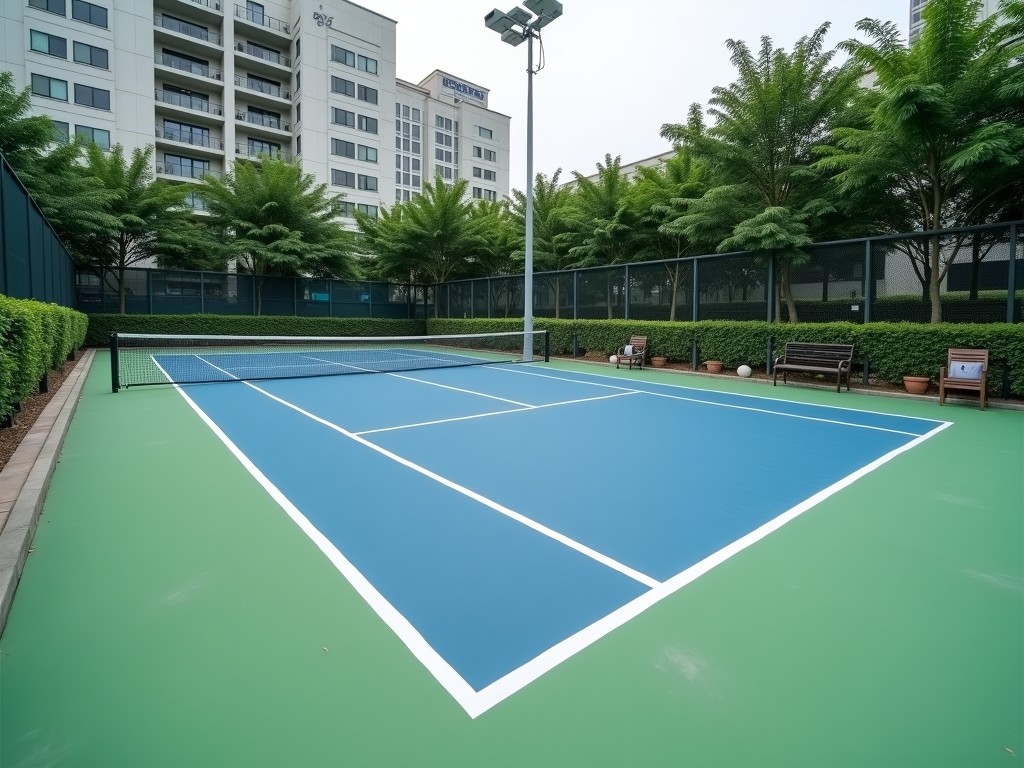
Wholesale Converting Tennis Court To Pickleball Court Flooring Supplier
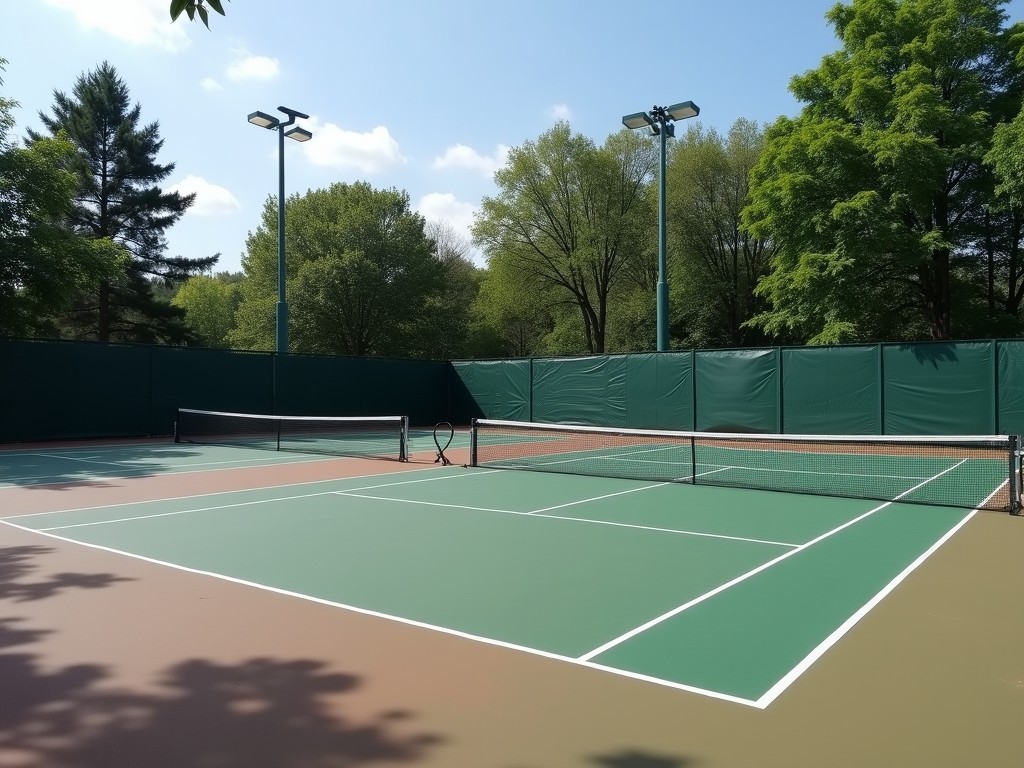
Wholesale Converting Tennis Court To Pickleball Court Flooring Supplier
Wholesale Converting Tennis Court to Pickleball Court Flooring
Converting an existing tennis court to a pickleball layout requires a flooring system that can be installed over the current surface, provide consistent ball rebound, and meet the specific dimensional tolerances of pickleball play. The system must also accommodate the lighter ball and slower game speed while maintaining player safety and surface durability under repeated lateral movements.
Material Composition and Structural Properties
Typical wholesale options use modular interlocking tiles made from polypropylene copolymer or polyvinyl chloride (PVC) blends. These materials are selected for their dimensional stability under temperature fluctuations ranging from -10 °C to 50 °C, with a coefficient of thermal expansion below 0.06 mm/m·°C. The base layer often incorporates a foam underlayment of closed‑cell EVA or PE foam, providing a nominal shock absorption value between 30 % and 45 % as measured by ASTM F2569.
Typical Material Options and Performance Characteristics
| Material | Nominal Thickness (mm) | Shock Absorption (%) | Coefficient of Friction (dry) | UV Resistance (hours) | Load Rating (kN/m²) |
|---|---|---|---|---|---|
| Polypropylene copolymer | 12–16 | 32–38 | 0.6–0.8 | 1500–2000 | 150–200 |
| PVC‑based composite | 10–14 | 30–35 | 0.5–0.7 | 1200–1800 | 130–170 |
| Rubber‑filled polypropylene | 14–18 | 38–45 | 0.7–0.9 | 1800–2500 | 170–220 |
Installation System and Interlocking Mechanism
The flooring employs a tongue‑and‑groove edge design that locks adjacent tiles without adhesives or mechanical fasteners. Each tile features a male protrusion on one side and a corresponding female recess on the opposite side, allowing a shear‑lock engagement that resists lateral displacement under loads up to 2 kN per tile. Installation proceeds by snapping tiles together in a staggered pattern, which distributes joint stress and accommodates minor substrate irregularities up to 3 mm variance.
Surface Texture and Playability Characteristics
The top surface is molded with a fine‑grained non‑directional pattern that yields a dry coefficient of friction between 0.55 and 0.85, suitable for the quick lateral stops and starts inherent to pickleball. The texture depth averages 0.2 mm, providing enough micro‑abrasion to prevent slipping while minimizing wear on shoe soles. Ball rebound tests conducted per ITF Show‑Court standards show a vertical restitution ranging from 0.78 to 0.84, matching the expected behavior on a standard hard court when adjusted for the lighter pickleball.
Customization Options for Court Conversion
Wholesale suppliers can provide tiles in custom colors to match existing facility branding or to delineate pickleball‑specific zones such as the non‑volley line and service courts. Edge trim pieces are available in straight, curved, and corner configurations to accommodate irregular court perimeters. Additionally, thickness variations allow the installer to compensate for underlying surface unevenness without requiring extensive substrate preparation.
- Color matching using Pantone or RAL references
- Custom‑cut edge ramps for wheelchair access
- Optional shock‑pad underlayment layers of 5 mm or 10 mm thickness
- Logo inlay capability via insertable plates
Quality Control and Testing Procedures
Production batches undergo inline dimensional inspection using laser scanners to verify tile thickness within ±0.1 mm and edge engagement tolerance within ±0.2 mm. Finished tiles are subjected to accelerated weathering per ASTM G154 (UV‑A 340 nm) for 1000 hours, followed by impact resistance testing using a 2 kg steel ball dropped from 1 m height. Results are documented in a test report that includes average shock absorption, friction coefficient, and residual indentation after a 500 kg static load for 24 hours.
Applications in Facility Conversion Projects
Converting tennis courts to pickleball use maximizes facility utilization by accommodating up to four pickleball courts within the footprint of a single tennis court, thereby increasing player throughput without new construction. The modular nature of the flooring allows phased installation, enabling courts to remain partially operational during retrofit. Because the system sits atop the existing asphalt or concrete, it avoids costly demolition and preserves the underlying substrate for potential reversion to tennis use if demand shifts.
Frequently Asked Questions
Can the tile thickness be adjusted to compensate for an uneven base?
Yes, thicker tiles (up to 18 mm) or additional underlayment layers can be selected to level minor substrate variations, typically up to 5 mm of deviation, without compromising interlock integrity.
What information is required before a quotation can be issued?
Suppliers need the court dimensions, desired pickleball layout (number of courts, orientation), existing surface condition (material, cracks, slope), and any color or branding specifications. Providing a site plan or CAD file accelerates the quoting process.
How are the tiles protected during export shipment?
Tiles are stacked on pallets with interleaving polyethylene sheets, then secured with stretch film and corner protectors. Pallets are rated for dynamic loads of up to 1.5 t and are suitable for containerized transport.
What is the typical production lead time for a standard order?
Lead times generally range from 3 to 5 weeks for stocked colors and thicknesses, while custom colors or special underlayments may extend to 7‑9 weeks, depending on raw‑material availability.
Contact for Technical Inquiry
For detailed specifications, sample requests, or project‑specific engineering support, please reach out to our technical team via the inquiry form. We will respond with material data sheets, installation guidelines, and a preliminary cost estimate based on your court dimensions and performance requirements.
Submit Technical Inquiry