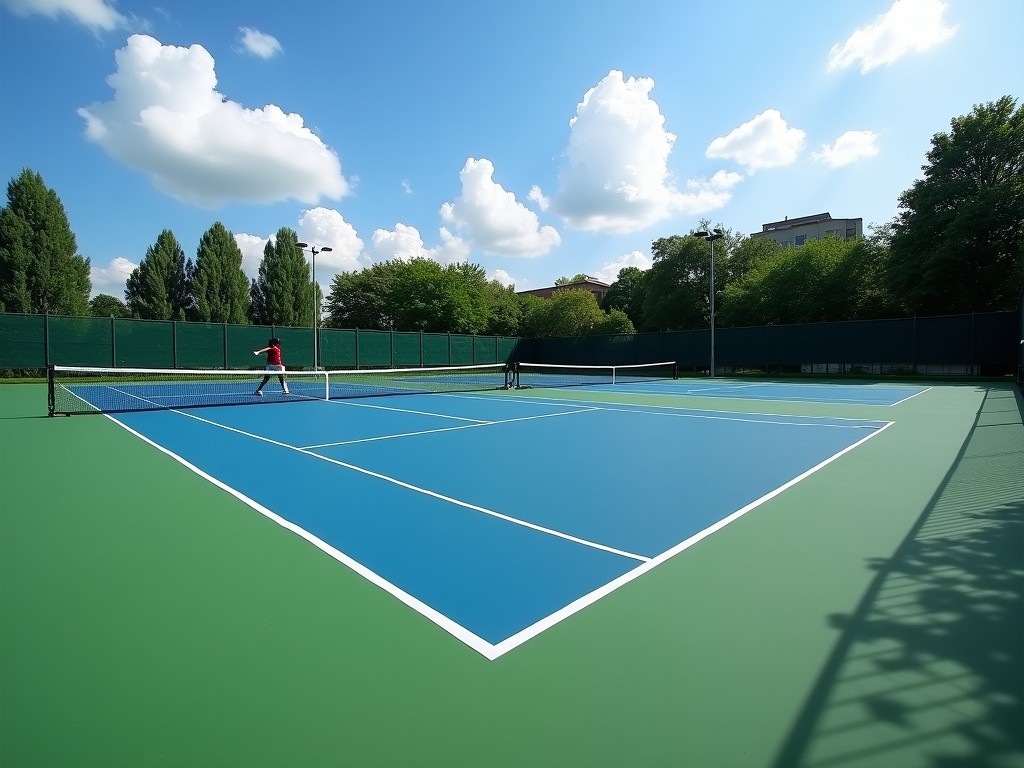
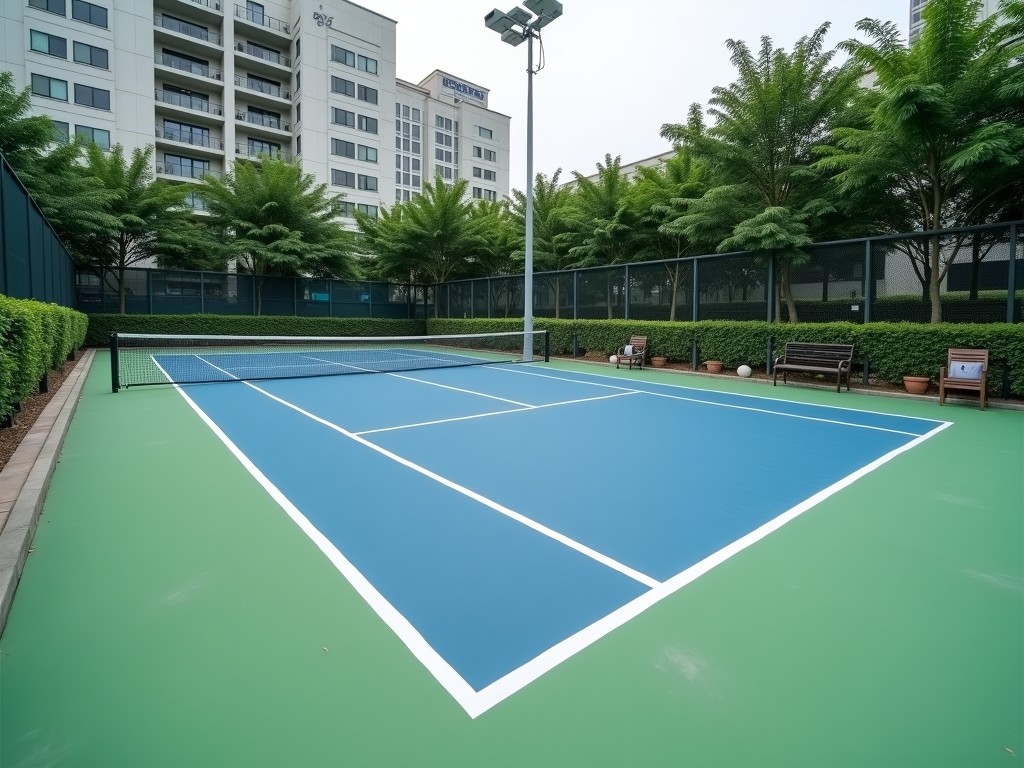
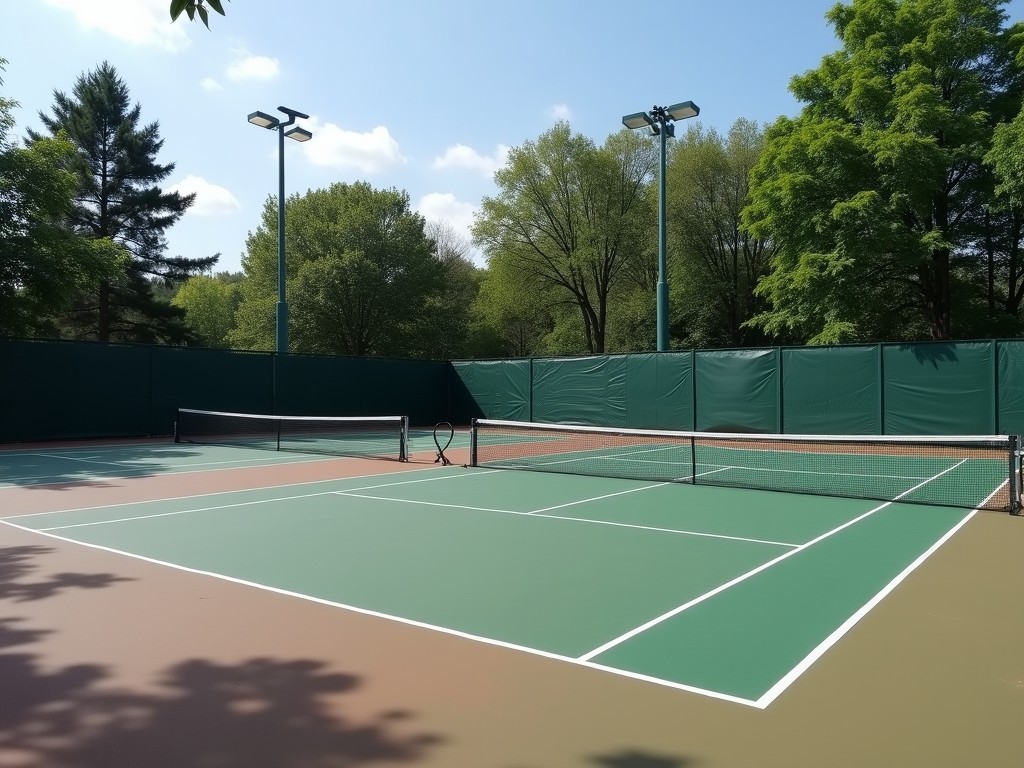
Custom Outdoor Basketball Court Surface Flooring Options Company
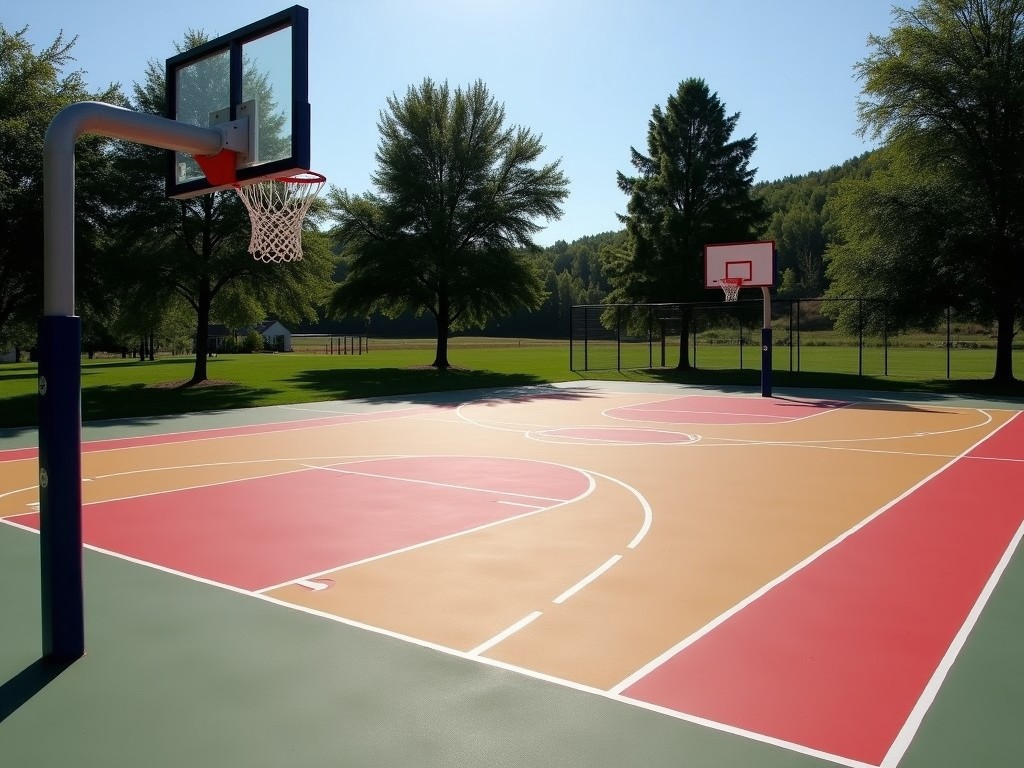
Custom Outdoor Basketball Court Surface Flooring Options Company
Custom Outdoor Basketball Court Surface Flooring Options
Overview
Outdoor basketball courts require a surface that withstands repeated impact, UV exposure, temperature fluctuations, and moisture while providing consistent ball bounce and player traction. The flooring system must meet specific performance criteria: impact attenuation, slip resistance, drainage rate, and wear resistance.
Material Options
Typical materials used for custom outdoor basketball court surfaces include:
- Polypropylene interlocking tiles – UV-stabilized, modular, drainage channels.
- Recycled rubber granules bound with polyurethane – shock absorbent, porous.
- Acrylic-coated asphalt – seamless, hard, high bounce.
- Perforated PVC sports flooring – slip-resistant surface, easy cleaning.
Performance Characteristics
| Property | Typical Value | Test Standard |
|---|---|---|
| Impact Attenuation (Gmax) | ≤ 200 g (depending on thickness) | ASTM F1292 |
| Slip Resistance (Coefficient of Friction) | 0.5 – 0.7 (wet) | ASTM E303 |
| Drainage Rate | ≥ 100 mm/hr (perforated systems) | ASTM F1551 |
| UV Stability (Color Change after 1000 h) | ΔE < 5 | ASTM G154 |
| Wear Resistance (Taber Abrasion) | ≤ 100 mg loss (1000 cycles) | ASTM D4060 |
Values vary with material selection and thickness; custom testing can be arranged for project‑specific requirements.
Customization Options
Customization is driven by court dimensions, performance targets, and site conditions. Available options include:
- Tile size: 300 mm × 300 mm or 500 mm × 500 mm interlocking units.
- Thickness range: 12 mm to 25 mm for shock‑absorbing layers.
- Surface texture: fine‑grain for slip resistance, smooth for high bounce.
- Color pigments: custom RAL or Pantone matches, UV‑stable.
- Line‑marking integration: pre‑printed or in‑lay epoxy.
- Edge detailing: ramped, beveled, or recessed for drainage.
Each option influences structural load, drainage capacity, and maintenance intervals; selection should be based on mechanical calculations and site drainage design.
Installation Considerations
Proper installation ensures long‑term performance. Key steps include:
- Site preparation: compacted sub‑base with ≤ 5 mm tolerance, slope ≥ 1 % for drainage.
- Moisture barrier: polyethylene sheet if required.
- Laying pattern: staggered joints for interlocking tiles; continuous roll for poured systems.
- Fastening: mechanical interlock or adhesive per manufacturer spec.
- Joint sealing: flexible sealant to prevent water ingress.
- Line marking: apply after surface cure, using UV‑resistant acrylic paint.
Installation tolerance affects ball rebound consistency; verification with a rebound tester (ASTM F2117) is recommended post‑install.
Applications
The flooring system is suited for environments where a durable, low‑maintenance playing surface is required:
- Municipal parks and recreation centers – high foot traffic, variable weather.
- School athletic fields – need for impact attenuation to reduce injury risk.
- Private residential courts – desire for custom colors and line markings.
- Commercial sports complexes – modular tiles allow quick replacement of damaged sections.
In each case, the surface must meet local safety regulations (e.g., EN 14904 for indoor/outdoor sports surfaces) while providing consistent play characteristics.
Quality Assurance
Quality control follows a documented procedure:
- Raw material testing: melt flow index, UV stabilizer content.
- In‑process checks: tile dimensions, interlock force, thickness uniformity.
- Finished product evaluation: impact attenuation, slip resistance, dimensional stability after accelerated weathering.
- Traceability: batch numbers recorded for each production lot.
Non‑conforming material is segregated and re‑processed; a certificate of compliance can be supplied upon request.
FAQ
Can dimensions be customized?
Yes. Court size, tile layout, and thickness are adjusted according to project specifications. Provide CAD drawings or site measurements for a precise quote.
What information is required before quotation?
Required inputs include: intended usage (competition, recreation), sub‑base conditions, drainage requirements, desired performance levels (impact attenuation, slip resistance), color preferences, and timeline.
What materials are available?
Available materials are polypropylene interlocking tiles, recycled rubber‑polyurethane systems, acrylic‑coated asphalt, and perforated PVC sports flooring. Each can be customized with UV stabilizers and color pigments.
How is quality inspected?
Inspection includes dimensional checks, impact attenuation testing (ASTM F1292), slip resistance (ASTM E303), and UV stability (ASTM G154) on samples from each production lot.
What packaging methods are available?
Products are packed in stackable pallets with protective film and corner guards. Custom crating or container loading is available for export shipments.
What is the typical production lead time?
Lead time ranges from 3 to 6 weeks depending on material selection, customization level, and order volume. Exact schedule is confirmed after receipt of technical specifications.
Contact
For technical inquiries or to request a quotation, please reach out using the form below.
Request Quote