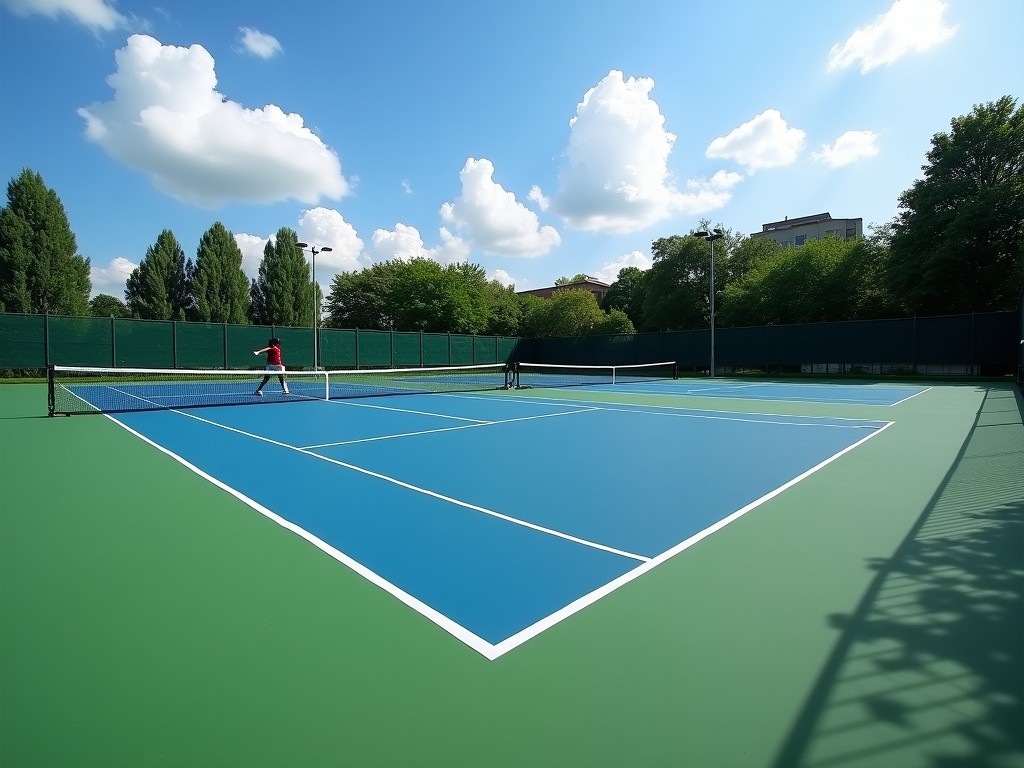
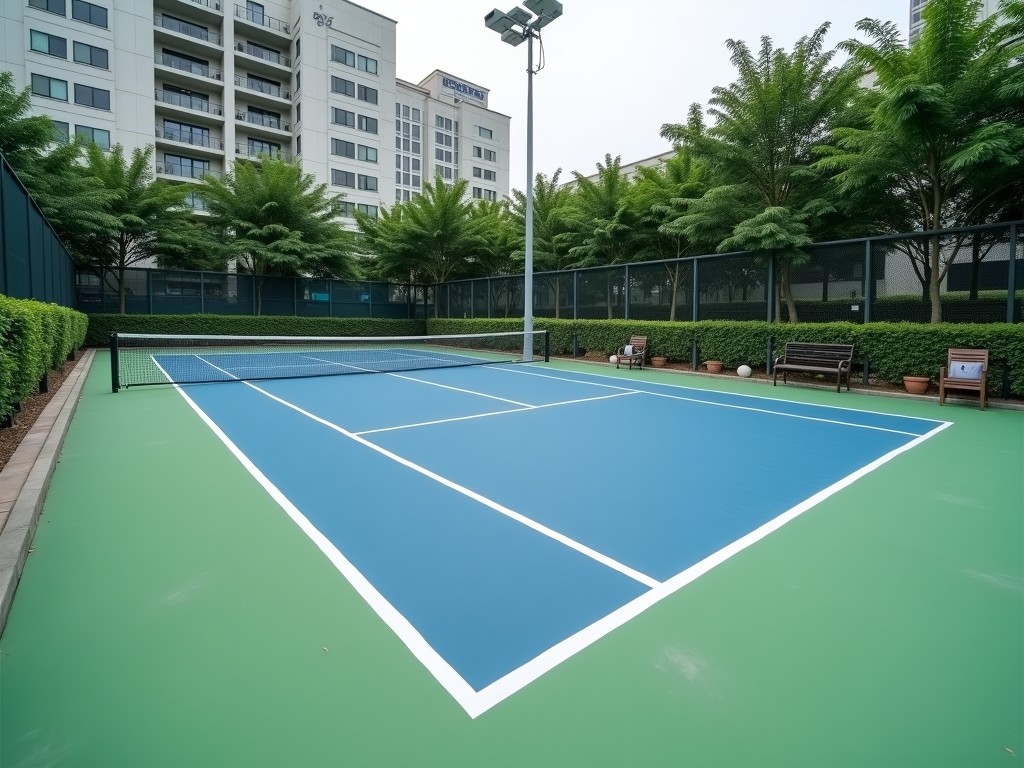
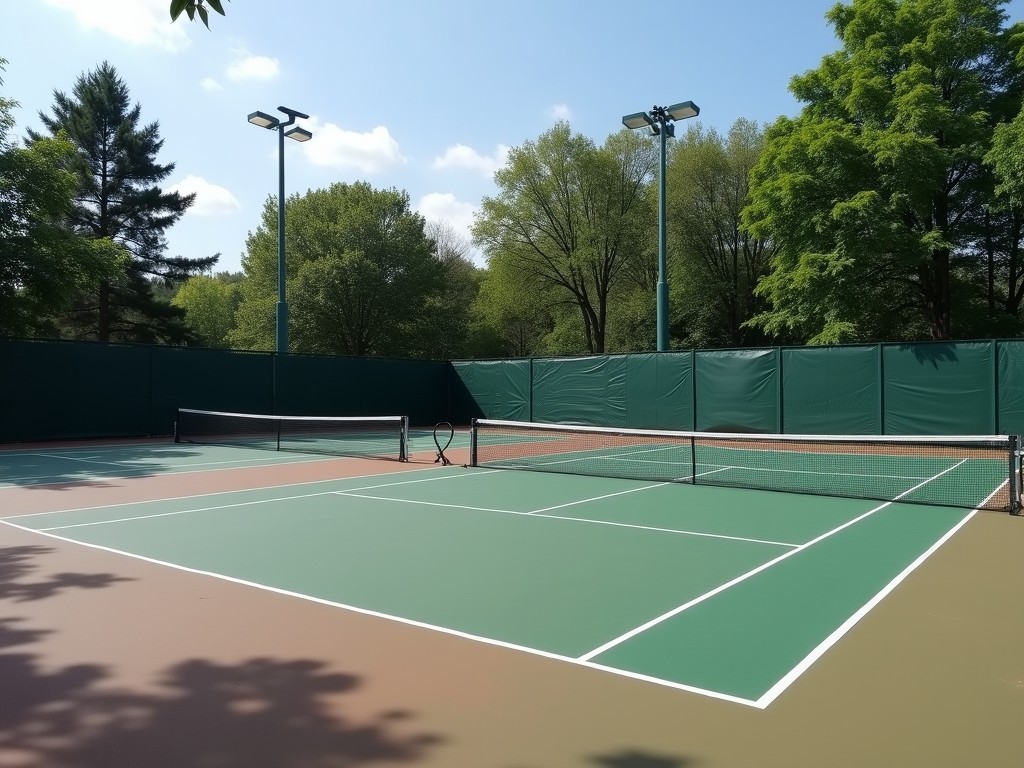
Custom Combination Tennis And Pickleball Court Flooring Manufacturer
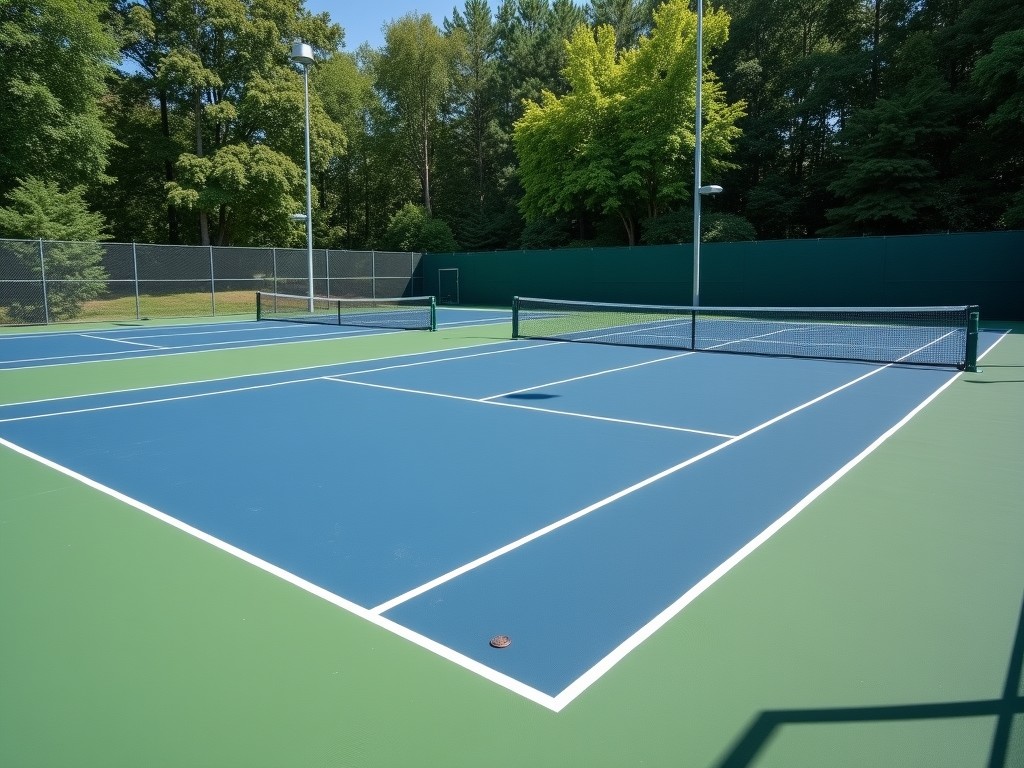
Custom Combination Tennis And Pickleball Court Flooring Manufacturer
Custom Combination Tennis and Pickleball Court Flooring Manufacturer
Overview
A dual‑sport surface must meet the divergent play characteristics of tennis and pickleball while providing a uniform substrate for both. The flooring system combines a resilient base layer with a specialized wear layer that delivers controlled ball rebound, adequate slide resistance, and impact attenuation suitable for competitive play.
Manufacturers produce the flooring in modular rolls or interlocking tiles, allowing rapid installation over concrete or asphalt substrates. The product is engineered to satisfy ITF and USAPA performance classifications for multi‑use courts.
Material Composition
The base layer typically consists of a polyurethane‑modified rubber granulate blend, providing a thickness of 8 mm to 12 mm depending on the expected load. This layer contributes to vertical deformation values between 0.5 mm and 0.8 mm under a 20 kg impact, reducing joint stress for players.
The wear layer is a pigmented acrylic‑polyurethane coating applied at 1.2 mm to 1.8 mm thickness. It incorporates silica aggregates to achieve a slip resistance coefficient of 0.6–0.7 (wet) and a Taber abrasion loss below 80 mg per 1000 cycles, ensuring durability under frequent ball impact and foot traffic.
Structural Design
A floating construction isolates the surface from substrate movement, using a perimeter edge strip that allows ±3 mm expansion without transmitting stress to the wear layer. The modular tiles feature a tongue‑and‑groove system with a shear strength of at least 0.4 MPa, preventing lateral shift during intense play.
Drainage channels are molded into the underside of the base layer at a 2% slope, directing water to perimeter drains and preventing hydrostatic pressure buildup. This design satisfies ASTM F2157 for outdoor sport surfaces.
Technical Specifications
| Property | Typical Value | Test Standard |
|---|---|---|
| Thickness (total) | 10 mm – 14 mm | ASTM F1936 |
| Shock Absorption | 35 % – 45 % | ASTM F2772 |
| Vertical Deformation | 0.5 mm – 0.8 mm | ASTM F2772 |
| Ball Rebound (Tennis) | 90 % – 105 % | ITF Test Method 01 |
| Ball Rebound (Pickleball) | 92 % – 108 % | USAPA Standard |
| Slip Resistance (wet) | 0.60 – 0.70 | ASTM E303 |
| Abrasion Resistance | <80 mg/1000 cycles | ASTM D4060 |
| Thermal Expansion Coefficient | 5 × 10⁻⁵ /°C | ISO 11359‑2 |
Customization Options
Court dimensions can be adjusted to match facility layouts, with standard panel widths of 1 m and lengths up to 2.5 m, allowing seamless coverage of irregular perimeters. Color schemes are selectable from a RAL palette, enabling club branding or visibility enhancements for line markings.
Surface texture can be modified through varying silica granule size in the wear layer, influencing the coefficient of friction between 0.55 and 0.75 to suit player preference for slide or grip. Thickness of the base layer may be increased to 15 mm for high‑impact zones such as baseline areas.
Applications
Facilities that host both tennis tournaments and pickleball leagues benefit from a single surface that eliminates the need for seasonal resurfacing. The consistent ball response reduces athlete adjustment periods when switching between sports, supporting multi‑event scheduling.
Schools and community centers utilize the flooring for physical education programs where varied racket sports are taught in succession. The low maintenance requirements and resistance to UV degradation make the system suitable for outdoor installations with minimal annual recoating.
Manufacturing & Quality Control
Each batch undergoes rheological testing of the polyurethane blend to ensure viscosity remains within 1500–2500 cP at 25 °C, guaranteeing uniform curing across the panel. Finished tiles are inspected for thickness variance using laser profilometry, accepting deviations no greater than ±0.3 mm.
Accelerated weathering is performed per ASTM G154, exposing samples to 1500 hours of UV‑B radiation; post‑exposure color change is limited to ΔE < 3 units, confirming long‑term color stability. Final acceptance includes a ball rebound test on three random tiles per lot, with results falling within the specified range.
Installation Considerations
Substrate flatness must not exceed 3 mm over a 2 m span, measured with a straightedge and feeler gauge, to prevent localized stress points. A primer compatible with polyurethane systems is applied at 0.1 mm thickness to enhance bonding between the base layer and concrete.
Expansion gaps of 5 mm are left at perimeter walls and filled with a flexible silicone sealant after installation, accommodating thermal movement without compromising surface continuity. The recommended curing period before first use is 48 hours at 20 °C–25 °C ambient temperature.
Call to Action
Engineers and procurement managers seeking a detailed quotation or technical datasheet can initiate contact through the provided link. Supplying project dimensions, expected usage frequency, and any specific color or texture preferences will enable a precise feasibility study and lead‑time estimate.