China Green Playground Mats Outdoor Sports Flooring Factory
China Green Playground Mats Outdoor Sports Flooring Factory
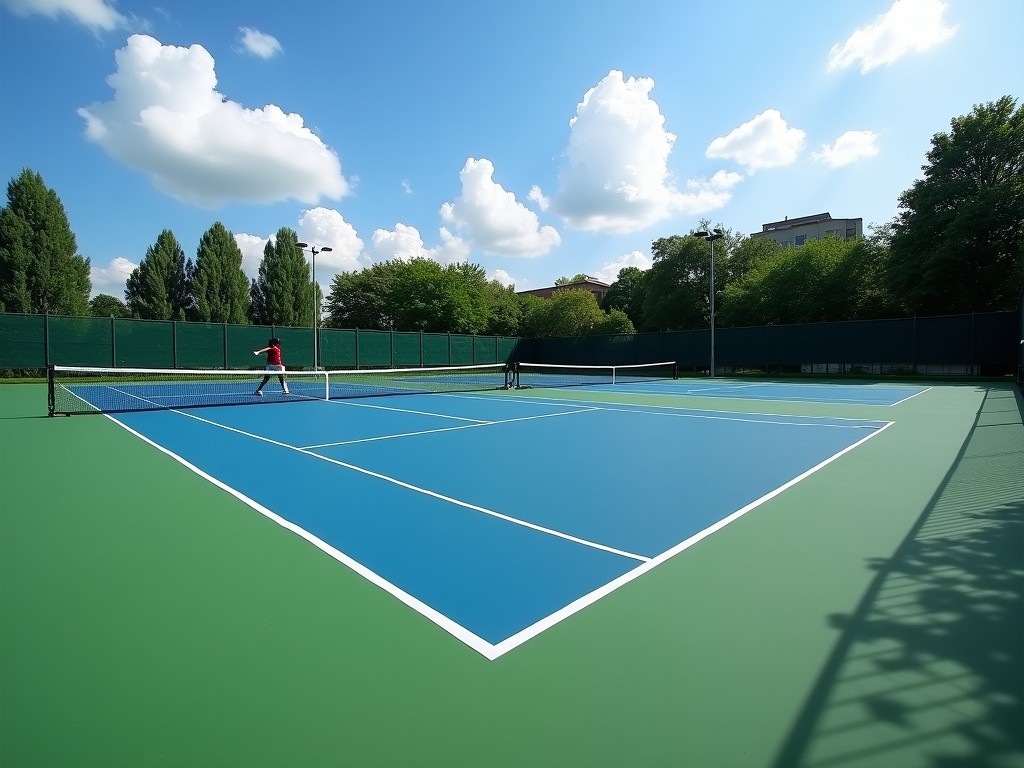
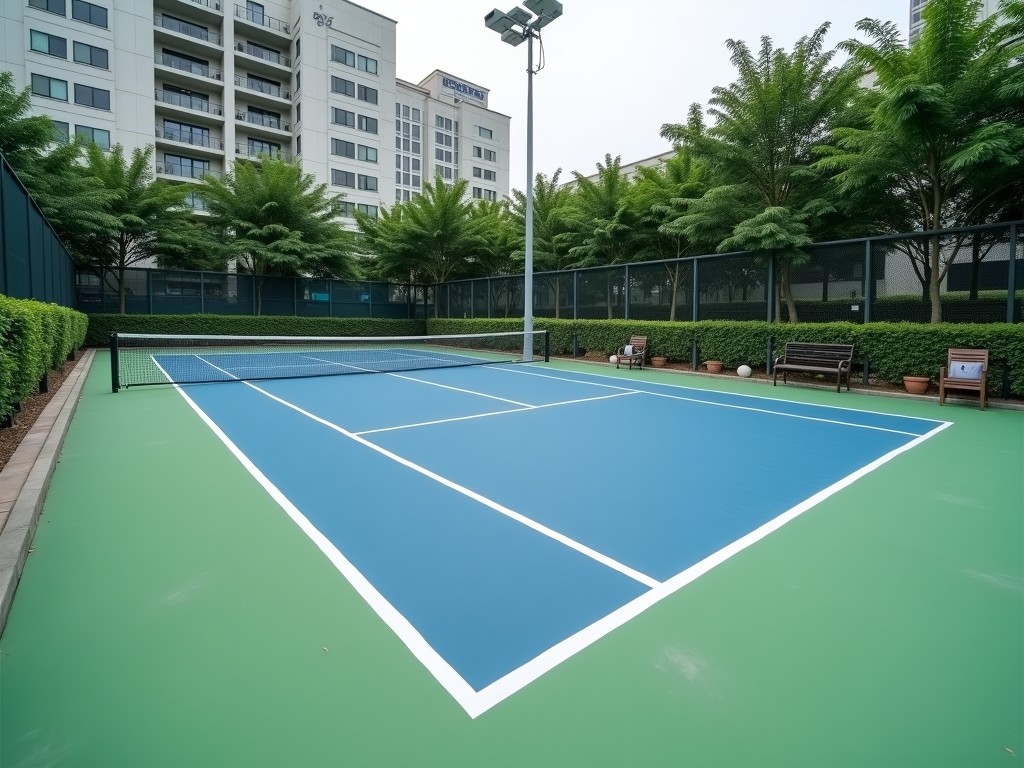
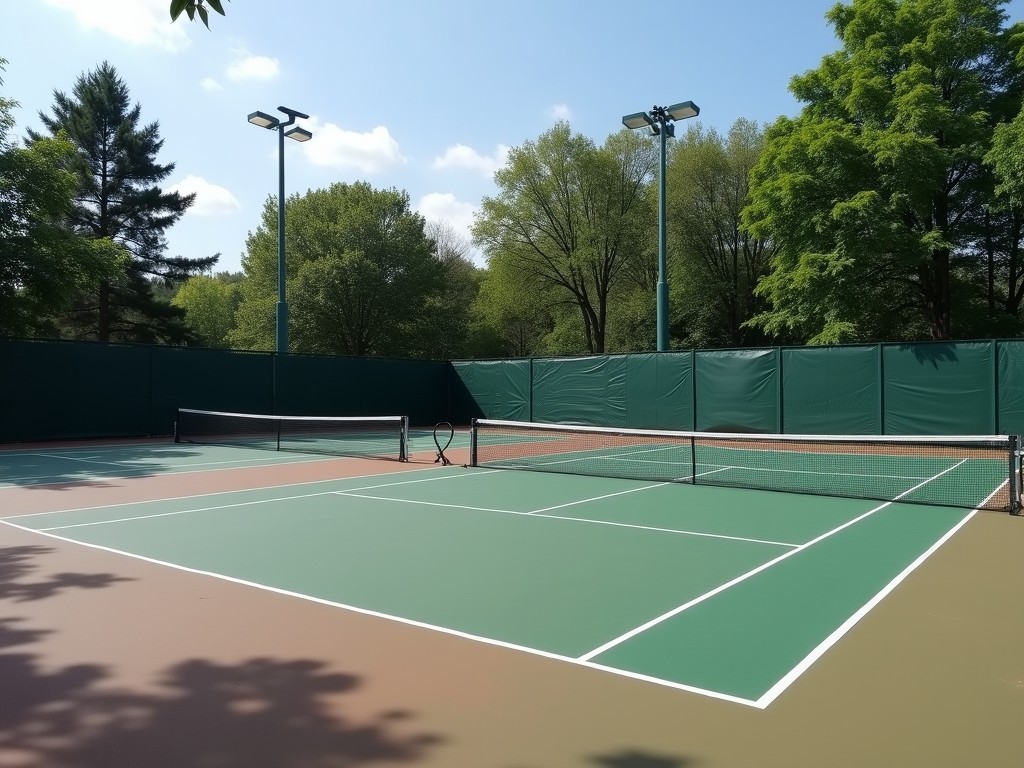
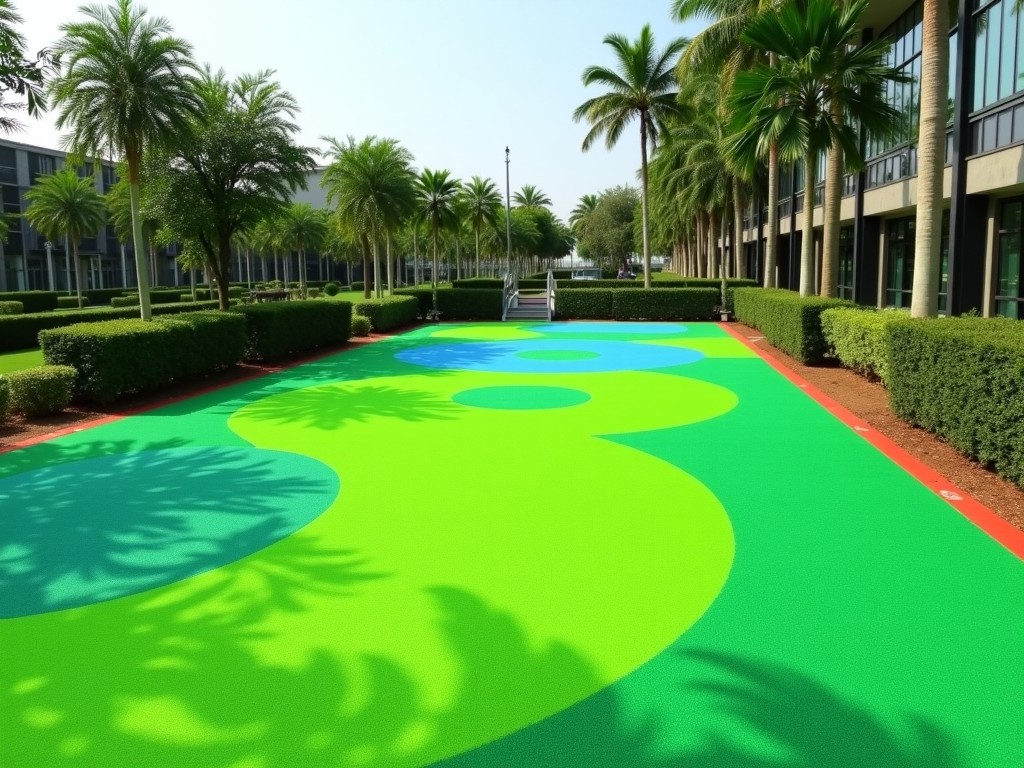
Green Playground Mats Outdoor Sports Flooring
Overview
The product consists of interlocking tiles made from a recycled ethylene‑vinyl acetate (EVA) copolymer blended with a UV‑stabilizing additive. Each tile is 20 mm thick, weighs approximately 2.4 kg per square meter, and provides a uniform surface for playgrounds, sports courts, and recreational areas.
The modular design allows rapid installation over compacted gravel, asphalt, or concrete substrates without adhesives. Tabs on the edges engage with corresponding grooves on adjacent tiles, creating a continuous mat that accommodates thermal expansion and contraction.
Material Composition
Base polymer: ethylene‑vinyl acetate with vinyl acetate content of 18 % by weight, selected for flexibility at low temperatures and resistance to cracking.
Additive package: 2 % hindered amine light stabilizer (HALS) and 1 % antioxidant to extend outdoor service life under UV exposure.
Recycled content: minimum 30 % post‑consumer EVA regrind, processed to maintain consistent melt flow index (MFI) of 7 g/10 min.
Performance Characteristics
| Property | Typical Value | Test Reference |
|---|---|---|
| Thickness | 20 mm | Caliper measurement |
| Density | 120 kg/m³ | ISO 1183 |
| Shore A hardness | 45 ± 5 | ASTM D2240 |
| Impact attenuation (Gmax) | ≤ 180 g | ASTM F1292 |
| Coefficient of friction (wet) | 0.55 | ASTM F2913 |
| UV stability (hours) | ≥ 1500 | ASTM G154 |
| Tensile strength | 1.2 MPa | ASTM D412 |
| Elongation at break | 250 % | ASTM D412 |
Values represent averages from production lots; actual results may vary with formulation adjustments or environmental conditions.
Design Features
- Interlocking tabs and grooves provide shear resistance up to 0.8 MPa, limiting lateral movement under dynamic loads.
- Perforated underside (5 % open area) facilitates vertical drainage, reducing water accumulation after rainfall.
- Surface texture incorporates a raised dot pattern (height 0.5 mm, spacing 10 mm) to enhance slip resistance without compromising comfort for bare feet.
- Edge tiles include a safety ramp (gradient 1:12) to meet accessibility guidelines for wheeled equipment.
Applications
In elementary school playgrounds, the mat’s impact attenuation reduces the risk of head injury from falls up to 2 m, satisfying local safety ordinances that reference critical fall height.
For multi‑use sports surfaces such as basketball or futsal courts, the consistent coefficient of friction enables reliable shoe‑surface interaction, supporting quick direction changes while minimizing abrasion.
In temporary event flooring, the lightweight tiles (≈ 2.4 kg/m²) allow manual handling and rapid deployment over existing concrete, with load distribution capable of supporting static loads of 5 kN/m² without permanent deformation.
Quality Assurance
Each production run undergoes incoming material verification: melt flow index, density, and vinyl acetate content are measured against supplier certificates.
In‑process controls include visual inspection of tile dimensions (± 0.5 mm thickness tolerance) and functional testing of interlocking engagement force.
Finished tiles are subjected to random sampling for impact attenuation; lots are accepted only when the average Gmax does not exceed 200 g and no individual specimen surpasses 250 g.
Documentation of test results is retained for traceability and made available to customers upon request.
Customization Options
- Thickness: 15 mm, 25 mm, or 30 mm to adjust fall‑height performance.
- Color: standard green, safety yellow, or custom Pantone‑matched hues achievable through pigment loading.
- Surface pattern: optional logo embossing or contrasting inset graphics for branding.
- Edge treatment: straight cut, beveled, or integrated ramp sections for wheelchair access.
Packaging & Logistics
Tiles are stacked in groups of ten, wrapped in low‑density polyethylene film, and placed on pallets measuring 1.1 m × 1.1 m.
Each pallet carries approximately 2 m² of flooring (≈ 100 tiles) and is secured with polyester strapping to prevent shifting during transit.
For overseas shipments, pallets are fitted with corner protectors and loaded into 20‑foot containers with a maximum gross weight of 24 t.
Lead Time
Standard inventory items (20 mm thick, green) are typically available for shipment within 5 working days after order confirmation.
Custom specifications (alternate thickness, color, or logo) require a production lead time of 3‑4 weeks, inclusive of tooling preparation and quality verification.
Get a Quote
To discuss project‑specific requirements, request a formal quotation, or arrange sample evaluation, contact our sales team.
Please provide the intended area dimensions, substrate condition, and any performance criteria (e.g., critical fall height, color) to expedite the quoting process.