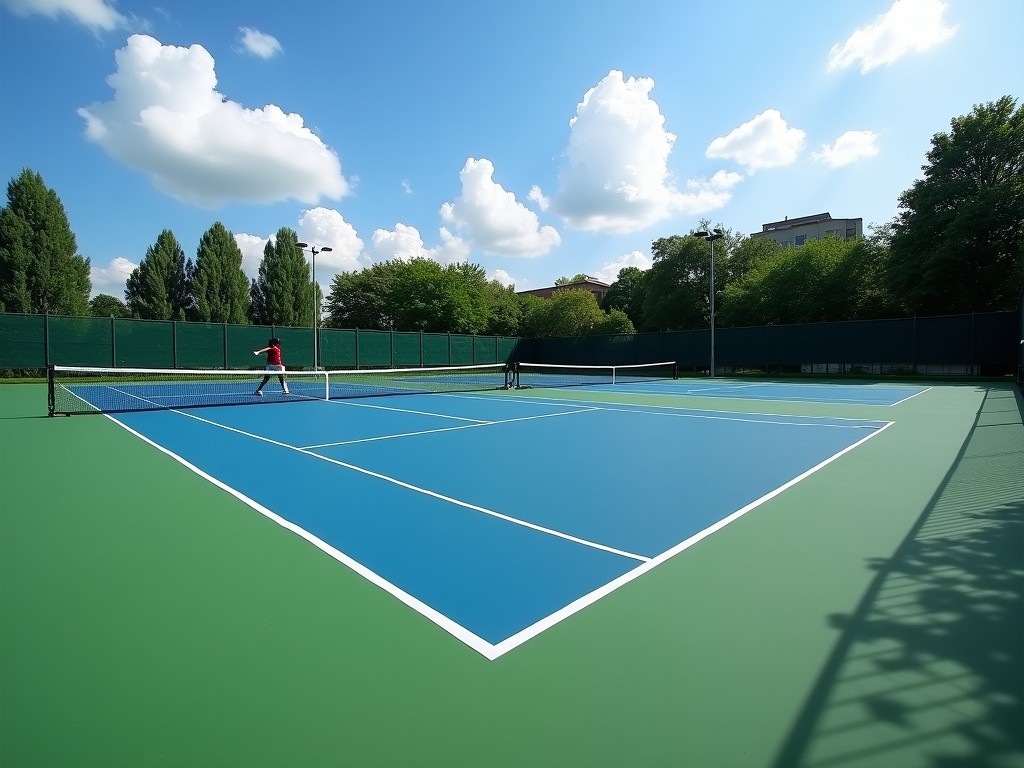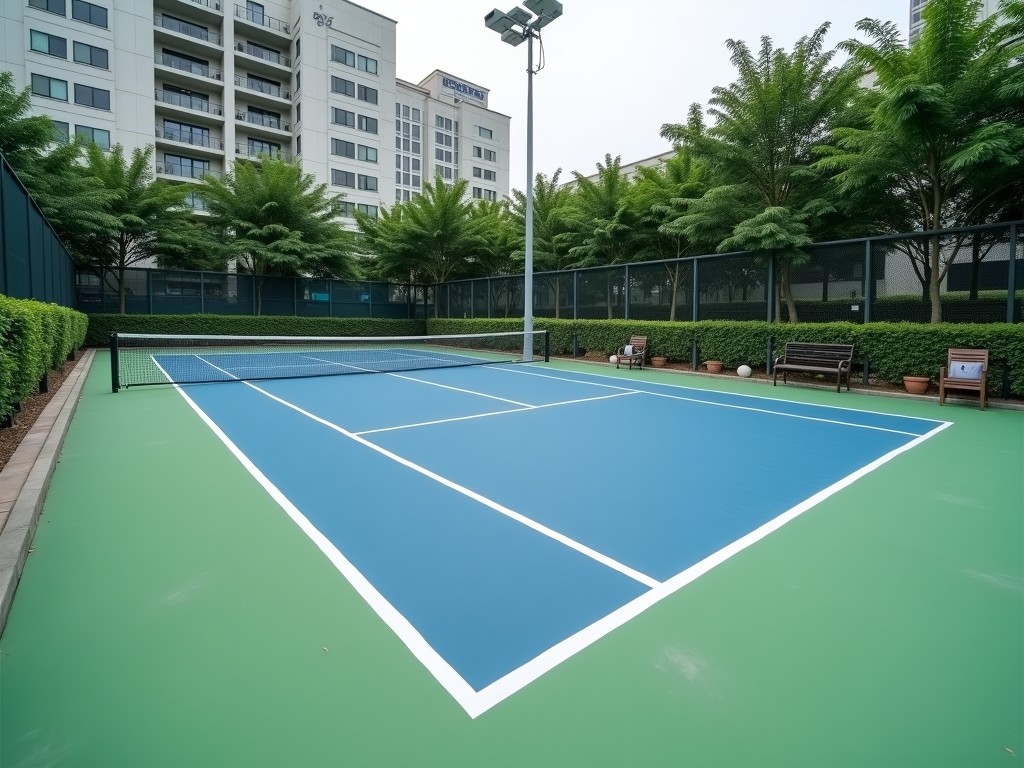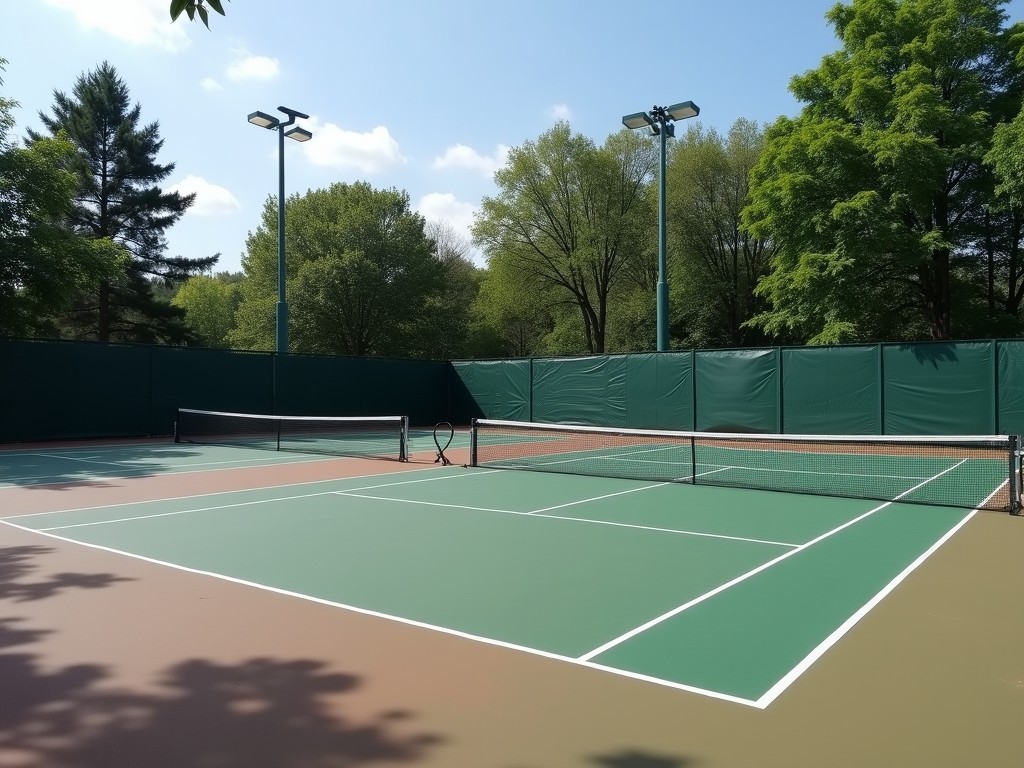
China Fast Mat Tennis Outdoor Court Flooring Factory
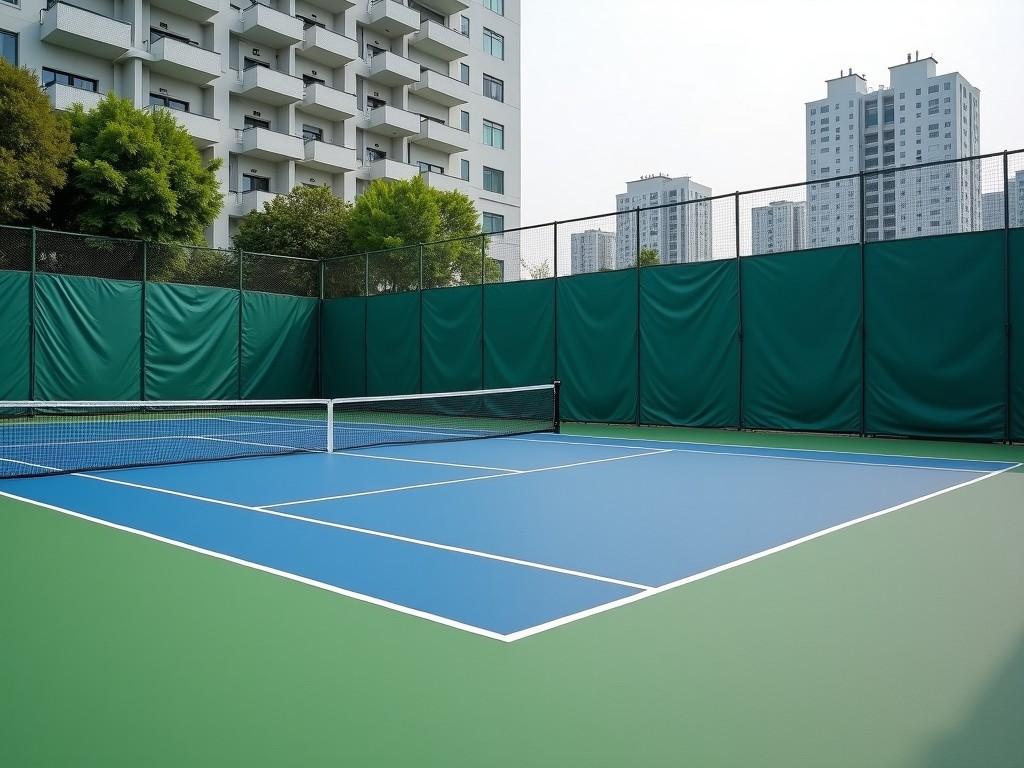
China Fast Mat Tennis Outdoor Court Flooring Factory
Fast Mat Tennis Outdoor Court Flooring – Technical Overview
This section explains the engineering basis of the fast‑mat system used for outdoor tennis courts, focusing on material selection, layer configuration, and performance metrics that influence playability and longevity.
Material Composition and Structure
The wear layer consists of a UV‑stabilized polypropylene copolymer blend, typically 2.0 mm thick, formulated to resist abrasion from tennis balls and foot traffic while maintaining a low coefficient of thermal expansion (< 0.02 mm/m·°C).
Beneath the wear layer, a reinforced glass‑fiber mat provides tensile strength (> 30 MPa) and dimensional stability, preventing delamination under cyclic loading. The mat thickness ranges from 3.0 mm to 5.0 mm depending on the specified load class.
A closed‑cell polyethylene foam backing, 4.0 mm thick, supplies shock absorption (measured at 30 % impact reduction per ASTM F2772) and facilitates drainage through perforated channels spaced at 50 mm intervals.
Performance Characteristics
Surface friction is engineered to a dry‑wet coefficient of 0.45 ± 0.05, meeting ITF Category 2 standards for optimal slide‑grip balance during lateral movements.
Vertical deformation under a 500 N load is limited to 0.8 mm, ensuring consistent ball rebound height within ± 5 % of the reference concrete baseline.
Thermal cycling tests (−20 °C to +60 °C, 100 cycles) show no cracking or loss of adhesion, confirming suitability for temperate and subtropical climates.
Installation Methodology
The flooring arrives in interlocking tiles (500 mm × 500 mm) with a male‑female edge profile that allows dry‑lay assembly without adhesives.
Site preparation requires a compacted granular base (minimum 150 mm thickness) with a tolerance of ± 3 mm over a 2 m straightedge; a geotextile separator is recommended to prevent soil migration.
Tiles are tapped into place using a rubber mallet, achieving a joint gap of less than 0.5 mm; perimeter restraint is provided by aluminum edge strips anchored to the substrate.
Applications in Outdoor Tennis Facilities
- Club courts where rapid installation and low maintenance reduce seasonal downtime.
- School and community centers requiring a surface that withstands multi‑sport usage while meeting tennis‑specific playability.
- Temporary tournament venues where the flooring can be removed and re‑laid within 48 hours.
- Coastal installations benefiting from the material’s resistance to salt‑air corrosion and UV degradation.
Quality Control and Testing
Each production lot undergoes inline thickness measurement (± 0.1 mm) and tensile strength sampling (minimum 5 specimens per batch) to verify mat integrity.
Finished tiles are subjected to a Taber abrasion test (CS‑10 wheels, 500 g load, 1000 cycles) with a target wear loss of ≤ 0.02 g.
UV stability is evaluated per ISO 4892‑2, requiring no more than a 5 % change in color ΔE after 1500 h of exposure.
Customization Options
Thickness of the wear layer can be adjusted from 1.5 mm to 3.0 mm to balance cost and wear resistance.
Color pigments are incorporated into the polypropylene blend, allowing RAL‑matched shades without compromising UV stabilizers.
Edge profiles are available in square, beveled, or ramped configurations to accommodate different substrate transitions or accessibility requirements.
Typical Specifications
| Property | Typical Value | Test Standard |
|---|---|---|
| Wear Layer Thickness | 2.0 mm (adjustable) | ISO 1183 |
| Shock Absorption | 30 % impact reduction | ASTM F2772 |
| Friction Coefficient (dry) | 0.45 ± 0.05 | ITF Test Method 02 |
| Vertical Deformation @ 500 N | 0.8 mm | EN 14808 |
| UV Stability (ΔE after 1500 h) | ≤ 5 | ISO 4892‑2 |
| Tile Weight | ≈ 6.5 kg per tile | Internal |
Frequently Asked Questions
Can dimensions be customized? Yes, tile size can be altered to 400 mm × 400 mm or 600 mm × 600 mm upon request, with corresponding changes to the interlocking profile.
What information is required before quotation? Project area, expected load class (light, medium, heavy), desired wear‑layer thickness, and any specific color or edge‑profile preferences.
What materials are available for the wear layer? Standard offering is UV‑stabilized polypropylene copolymer; alternatives such as PVC‑based blends are available for specific chemical‑resistance needs.
How is quality inspected? Each batch undergoes dimensional checks, tensile testing, abrasion testing, and UV exposure evaluation as outlined in the quality control section.
What packaging methods are available? Tiles are stacked on pallets with corner protectors and stretch‑film wrapped; optional plywood crating for high‑impact transport.
How are export shipments protected? Pallets are fitted with moisture‑barrier bags and shock‑absorbing edge boards to mitigate vibration and humidity during transit.
What is the typical production lead time? Standard lead time is 3‑4 weeks for orders under 500 m²; larger volumes are scheduled based on plant capacity and confirmed at order.
How are samples arranged? Free sample tiles (up to three pieces) can be shipped via express courier; the recipient covers freight charges.