Ce Certified Outdoor Padel Court Flooring Supplier
Ce Certified Outdoor Padel Court Flooring Supplier
CE‑Certified Outdoor Padel Court Flooring
This flooring system is engineered for permanent outdoor padel installations where UV exposure, temperature cycling, and mechanical wear are constant challenges. The product meets the essential requirements of the EU Machinery Directive and carries CE marking after conformity assessment against EN 14904:2022 for sports surfaces.
Material Composition
The surface layer consists of a polymer‑modified acrylic resin blended with silica sand granules (0.3‑0.8 mm) to provide a controlled slip resistance of 0.45‑0.55 (wet pendulum test). Beneath this, a recycled rubber granule mat (SBR, 1‑3 mm) delivers shock absorption, reducing peak impact forces by approximately 25 % compared with concrete substrates. All components are free of phthalates and heavy metals, complying with REACH Annex XVII.
Performance Characteristics
Laboratory ageing (UV‑B 0.68 W/m², 1000 h) shows less than 5 % loss in tensile strength and no visible cracking. The flooring maintains a vertical deformation of 2.3‑2.8 mm under a 200 kg load, within the EN 14904 range for sport surfaces. Thermal expansion coefficient is 1.2 × 10⁻⁵ / °C, allowing seamless expansion joints at 5 m intervals.
CE Certification Details
Certification was issued by a Notified Body following technical file review, including material safety data sheets, accelerated weathering reports, and slip resistance test certificates. The CE mark appears on the product label and accompanies the Declaration of Conformity, which references the relevant harmonized standards and the manufacturer’s internal production control plan.
Installation Methodology
Installation begins with a compacted crushed stone base (minimum 150 mm thickness) topped by a 50 mm levelling screed of polymer‑modified cement. The rubber mat is rolled out, seams are hot‑welded, and the acrylic‑sand coating is applied in two passes using a squeegee‑roller system to achieve a nominal thickness of 3 mm. Ambient temperature during application must stay between 5 °C and 35 °C, with relative humidity below 80 %.
Maintenance & Longevity
Routine maintenance consists of quarterly cleaning with pH‑neutral detergent and low‑pressure water (< 150 bar). Re‑coating of the acrylic surface is recommended every 4‑5 years to restore slip resistance and UV protection. Under typical climatic conditions, the system exhibits a service life exceeding 12 years before structural refurbishment is required.
Applications in Outdoor Padel
The flooring delivers a consistent ball bounce (0.92‑0.96 m rebound height) and adequate foot‑slide for lateral movements, meeting the expectations of both recreational and competitive padel clubs. Its permeable design prevents water accumulation, reducing the risk of algae growth and surface degradation in humid environments.
Quality Assurance & Testing
Each batch undergoes in‑line thickness monitoring (± 0.2 mm), tensile adhesion pull‑off tests (≥ 1.5 MPa), and portable slip resistance verification. Finished panels are inspected for colour uniformity (ΔE < 2) and surface flatness (≤ 3 mm deviation over 2 m). Non‑conforming material is quarantined and re‑processed according to the corrective action procedure documented in ISO 9001:2015.
Customization Options
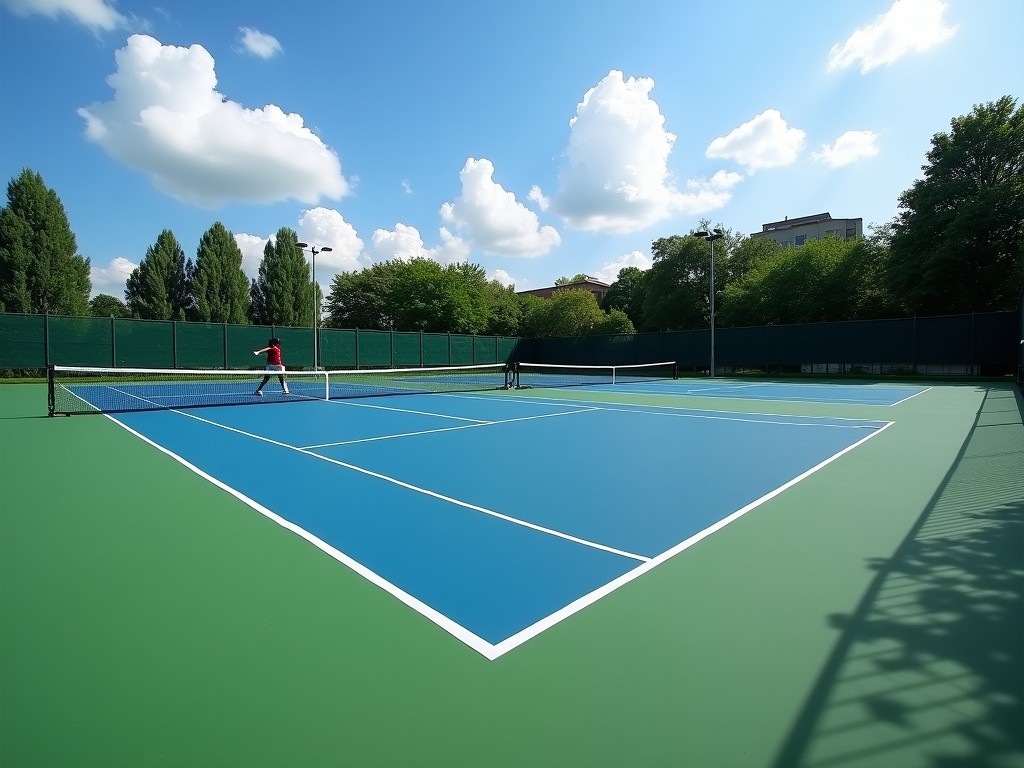
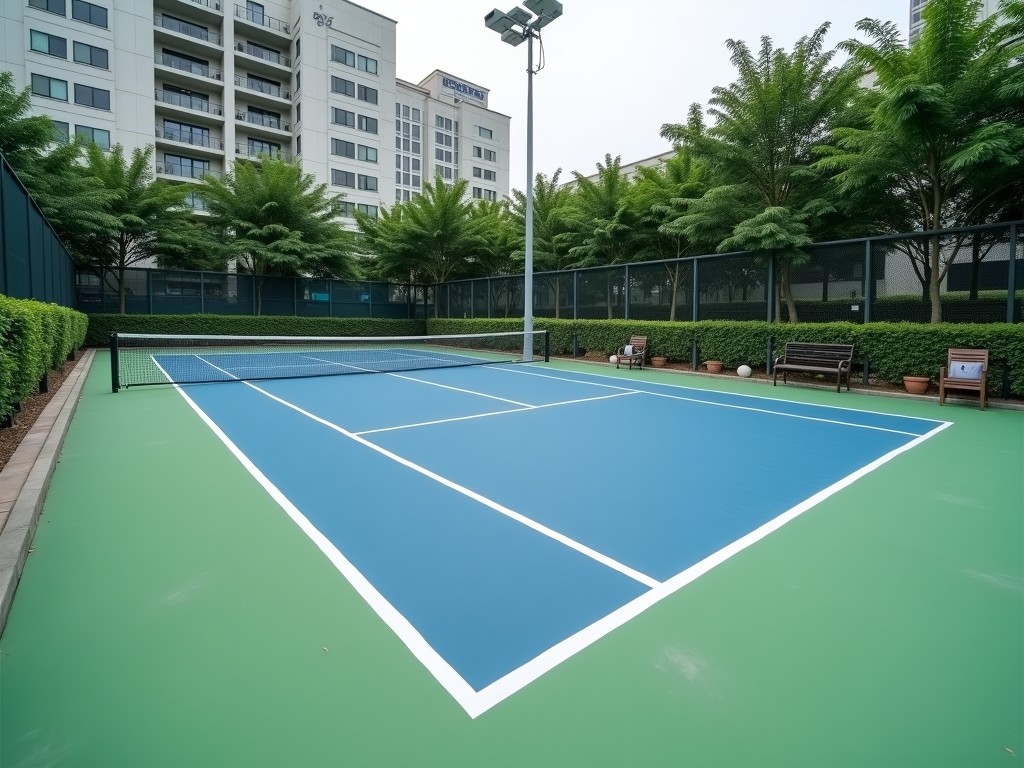
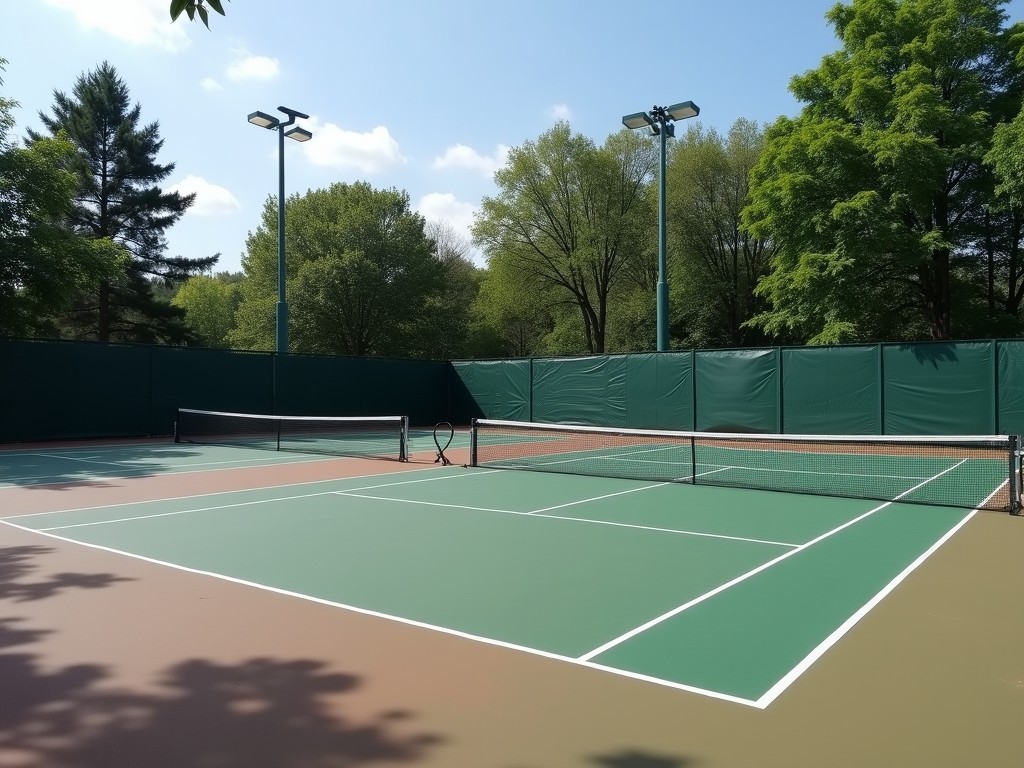
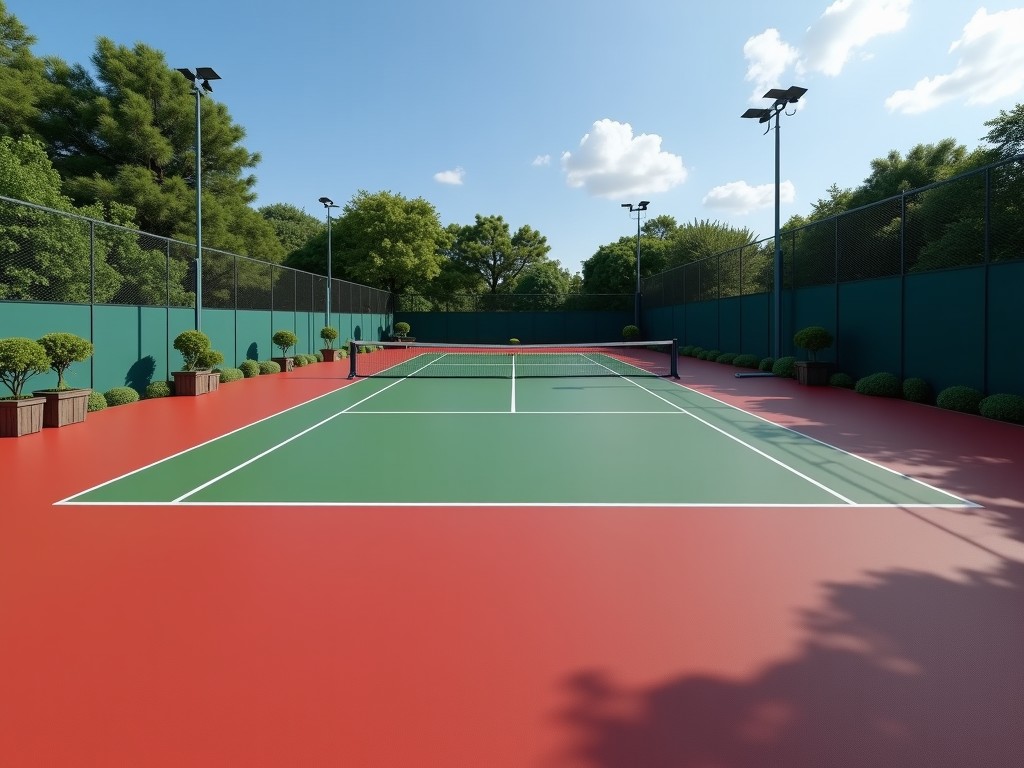
Clients may select from three standard colour palettes (green, blue, terracotta) or request a custom RAL match. The rubber underlayer thickness can be adjusted between 8 mm and 12 mm to tune impact absorption. Edge detailing options include beveled, rounded, or integrated drainage channels, all compatible with the same installation process.
Technical Specification Table
| Property | Value / Range | Test Standard |
|---|---|---|
| Slip Resistance (wet pendulum) | 0.45‑0.55 | EN 13036‑4 |
| Vertical Deformation (200 kg) | 2.3‑2.8 mm | EN 14904 |
| Tensile Strength (after UV ageing) | ≥ 2.5 MPa | ISO 4892‑2 |
| Shock Absorption | ≥ 25 % vs concrete | ASTM F2772 |
| Thermal Expansion Coefficient | 1.2 × 10⁻⁵ / °C | ISO 11359‑2 |
| Expected Service Life | > 12 years | Manufacturer data |
Frequently Asked Questions
- Can the colour be matched to corporate branding? – Yes, custom RAL colours are available upon request with a minimum order quantity of 200 m².
- What information is required for a quotation? – Project area, sub‑base condition, desired underlayer thickness, colour preference, and site location for logistics planning.
- How are shipments protected for overseas delivery? – Rolls are wrapped in UV‑stable polyethylene film, placed on pallets with corner protectors, and secured with strapping; moisture‑barrier sheets are included for humid climates.
For detailed technical datasheets, sample requests, or to discuss project‑specific requirements, please contact our engineering team.
Request a Quote