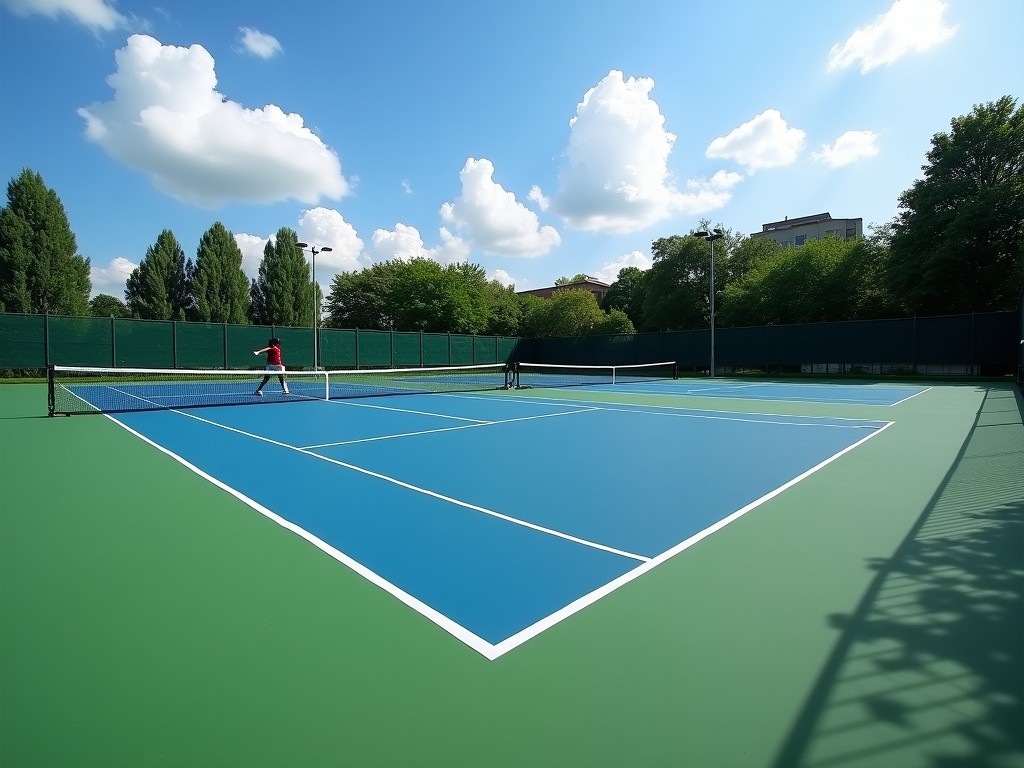
Best Price 3X3 Outdoor Basketball Court Flooring Supplier
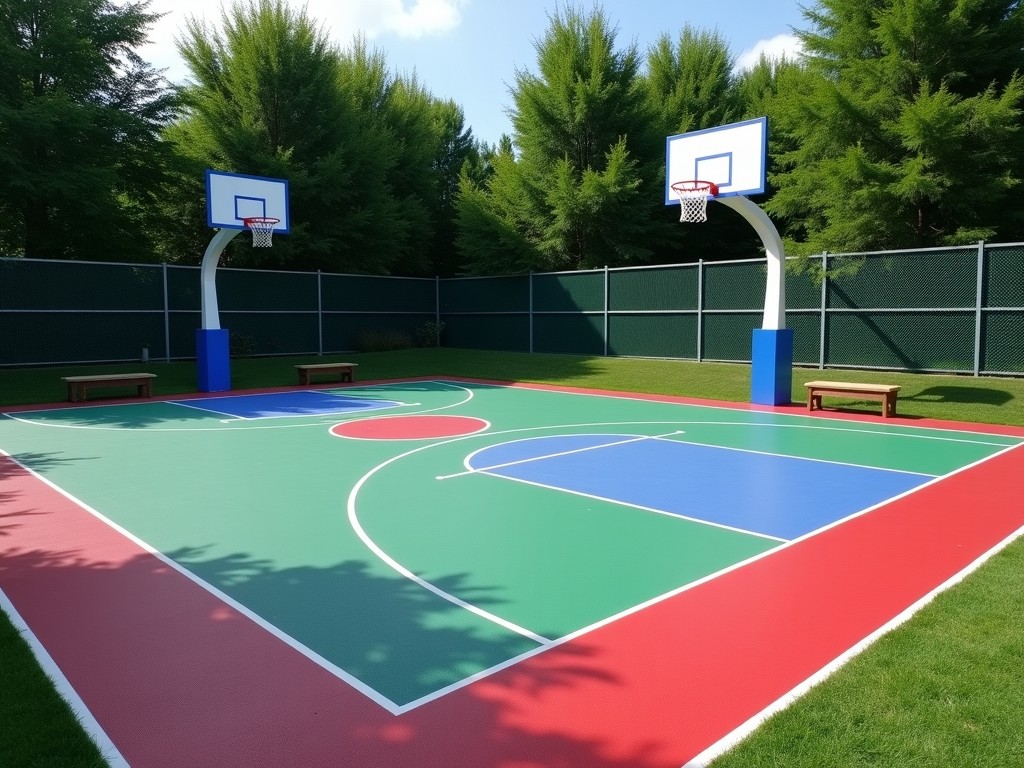
Best Price 3X3 Outdoor Basketball Court Flooring Supplier
Best Price 3x3 Outdoor Basketball Court Flooring Supplier
A 3x3 meter outdoor basketball court requires a flooring system that withstands repeated impact, weather exposure, and frequent cleaning.
The system described here consists of interlocking polypropylene modules with a textured surface designed to provide consistent ball bounce and player traction.
Suppliers offering this configuration typically quote per square meter pricing that varies with thickness, surface finish, and edge treatment.
Material Composition and Performance
The flooring’s base polymer is a UV‑stabilized polypropylene copolymer selected for its resistance to cracking under freeze‑thaw cycles. Additives include carbon black for UV absorption and a fine silica filler that raises surface hardness to approximately 70 Shore D. The polymer melt flow index is maintained between 0.8 and 1.2 g/10 min, ensuring consistent extrusion and interlock formation. Recycled content can be incorporated up to 30 % without degrading mechanical properties, supporting sustainability goals. Flame retardancy ratings typically achieve UL‑94 V‑2, meeting indoor‑outdoor safety requirements for public installations.
Dimensional Specifications and Tolerances
Standard modules measure 300 mm × 300 mm, so a 3 m × 3 m court requires exactly 100 pieces. Thickness options are 12 mm, 16 mm, and 20 mm, each influencing shock absorption measured by ASTM F355 (force reduction values of 25 %, 35 %, and 45 % respectively). Individual module weight ranges from 0.8 kg for the 12 mm version to 1.4 kg for the 20 mm version, affecting handling effort and sub‑base load.
Installation Methodology
Installation begins with a compacted gravel base of at least 100 mm depth, graded to a slope below 1 % for effective drainage. Modules are dry‑fit and snapped together using a rubber mallet; the interlocking ribs engage with a 0.5 mm tolerance, eliminating the need for adhesives or fasteners.
Applications and Suitability
Beyond permanent recreational courts, the flooring serves as temporary surfacing for tournaments, school multi‑use halls, and municipal fitness zones. Its non‑porous surface resists water absorption, reducing slip hazards when wet and inhibiting algae growth. The system meets EN 14904 criteria for indoor sports surfaces, a benchmark often referenced for outdoor installations requiring comparable performance. Because the modules can be lifted and reinstalled, the product supports seasonal relocation or repair without damaging the underlying base.
Quality Assurance and Testing
Each production lot undergoes melt flow index testing to confirm polymer viscosity within the target range. Impact resistance is validated by a dropped steel ball test (ASTM D2444) with a pass threshold of 20 J without cracking. UV stability is assessed after 1000 hours of QUV exposure, accepting a color shift ΔE < 5 as acceptable.
Customization Options
Surface texture can be varied from a fine sand‑grain finish to a coarse diamond pattern to adjust ball rebound coefficient. Edge profiles include a beveled safety edge for pedestrian areas or a flat edge for seamless abutting with existing pavement. Color matching to RAL or Pantone standards is achieved by dispersing pigments at 2‑5 % by weight, ensuring uniform hue across the module.
| Property | Typical Value | Test Method / Note |
|---|---|---|
| Module size | 300 mm × 300 mm | Nominal |
| Thickness options | 12 mm, 16 mm, 20 mm | Customer selectable |
| Weight per module | 0.8 kg (12 mm) – 1.4 kg (20 mm) | Dependent on thickness |
| Interlock tolerance | 0.5 mm | Male‑female edge |
| Surface hardness | ≈70 Shore D | ASTM D2240 |
| UV stability (ΔE after 1000 h) | < 5 | QUV‑A |
| Impact resistance (pass) | ≥20 J (no crack) | ASTM D2444 |
| Wet slip resistance (pendulum) | ≥45 BPN | ASTM E303 |
Frequently Asked Questions
- Can dimensions be customized? Yes, module size can be altered to 250 mm or 400 mm squares upon request, affecting total piece count and pricing.
- What information is required before quotation? Project area, desired thickness, surface texture, edge type, and any color specifications are needed to generate an accurate quote.
- What materials are available? UV‑stabilized polypropylene copolymer is standard; optional additives include antimicrobial agents or increased recycled content.
- How is quality inspected? Each lot undergoes melt flow, impact, and UV stability tests; dimensional checks are performed on a sampling basis per ISO 2859‑1.
- What packaging methods are available? Modules are stacked on pallets with protective corner guards and shrink‑wrapped; custom crating is offered for overseas shipments.