Wholesale Standard Solid Wood Sports Flooring Supplier
Wholesale Standard Solid Wood Sports Flooring Supplier
Wholesale Standard Solid Wood Sports Flooring
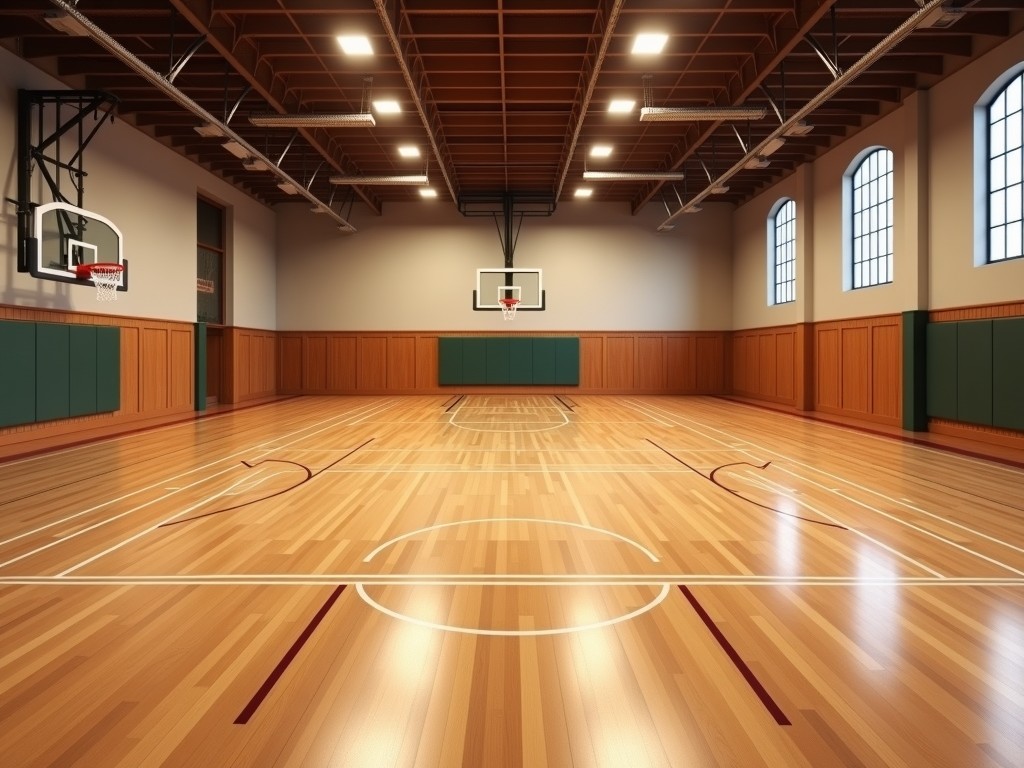
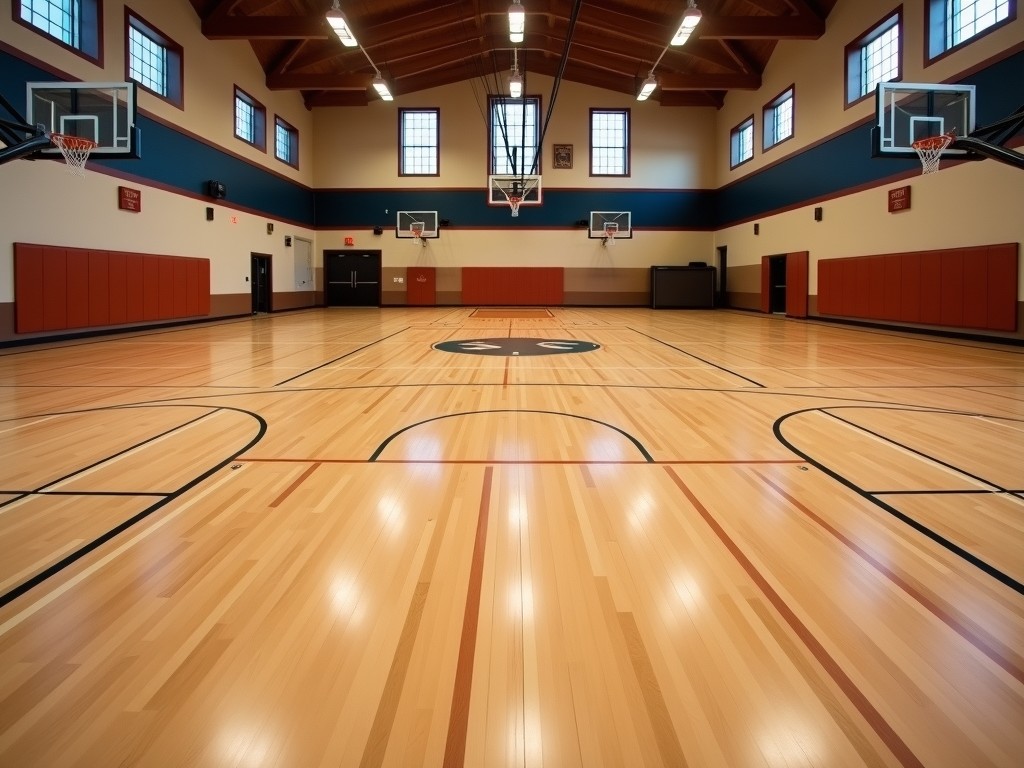
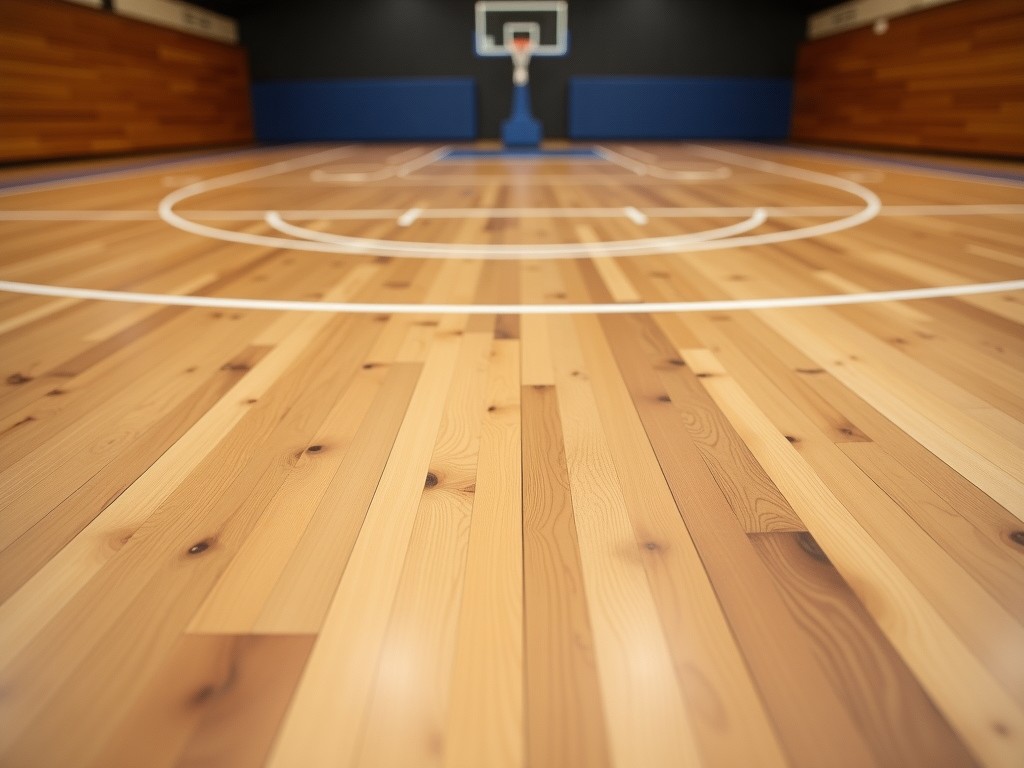
Solid wood sports flooring is selected for indoor courts where consistent ball rebound, shock absorption, and surface durability are required. Typical installations include basketball, volleyball, and multi‑purpose activity halls. The product is supplied in wholesale quantities for contractors and facility managers who need reliable, interchangeable panels.
Key Technical Specifications
| Property | Typical Value | Unit | Notes |
|---|---|---|---|
| Thickness | 22 | mm | Standard; customizable 18‑30 mm |
| Width | 60 | mm | Nominal; other widths available |
| Length | 2400 | mm | Standard panel length; can be cut to site |
| Wood Species | Maple (hard maple) or Oak | – | Select grade, kiln‑dried |
| Density | 0.70‑0.75 | g/cm³ | Typical for hard maple |
| Modulus of Elasticity (MOE) | 12‑14 | GPa | Longitudinal direction |
| Shock Absorption (EN 14904) | ≥55 | % | Measured under standard test |
| Vertical Deformation | 2.0‑3.5 | mm | At 500 N impact |
| Friction Coefficient (wet/dry) | 0.6‑0.8 | – | Meets sports‑floor slip resistance |
| Wear Resistance (Taber Abrader) | ≤150 | mg loss/1000 cycles | With UV‑cured finish |
Material Selection and Construction
The flooring is produced from select‑grade hard maple (Acer saccharum) or European oak (Quercus robur). Boards are kiln‑dried to a moisture content of 8‑12 % to minimize dimensional change after installation. Grain orientation is primarily longitudinal to maximize stiffness and load distribution. Edge profiling includes tongue‑and‑groove with a 1.5 mm groove depth, allowing tight‑fit installation without visible gaps.
Performance Characteristics
Force reduction (energy return) for the flooring system ranges from 55 % to 70 % depending on thickness and underlayment, meeting EN 14904 Category 3–4 requirements. Vertical deformation under a 500 N impact stays within 2‑3.5 mm, providing a responsive feel for athletes while limiting joint stress. Ball rebound efficiency, measured as the ratio of rebound height to drop height, exceeds 90 % for basketballs when the surface is properly maintained.
Applications in Sports Facilities
- Indoor basketball courts – uniform ball bounce and adequate slip resistance for quick direction changes.
- Volleyball courts – sufficient shock absorption to reduce landing impact on joints.
- Badminton and squash courts – low‑vibration surface that preserves shuttlecock speed.
- Multi‑purpose halls – modular panels enable rapid reconfiguration for different sports or events.
Quality Assurance and Testing
Each batch undergoes visual grading for knots, splits, and color variation, limited to select‑grade standards. Moisture content is verified with a pin‑type meter on at least 5 % of boards. Dimensional tolerances are checked: thickness ±0.3 mm, width ±0.2 mm, length ±2 mm. Surface roughness (Ra) after finishing is maintained between 0.4‑0.8 µm to ensure consistent friction. Finished panels are inspected for coating adhesion (cross‑hatch test) and gloss level (60‑80 GU) before packaging.
Customization Options
Wholesale buyers can specify:
- Thickness: 18 mm to 30 mm in 2 mm increments.
- Width: 50 mm, 60 mm, 70 mm, or custom.
- Length: standard 2400 mm or cut‑to‑site lengths up to 4800 mm.
- Surface finish: unfinished, UV‑cured polyurethane (gloss 60‑80 GU), or oil‑based sealant.
- Edge profile: standard tongue‑and‑groove, beveled edge, or square edge for adhesive installation.
Packaging and Logistics
Boards are stacked in bundles of 10‑15 mm thickness, wrapped in polyethylene film to protect against moisture, and placed on wooden pallets with corner guards. Each pallet is secured with steel straps and labeled with product code, quantity, and moisture content at time of packing. For export shipments, a desiccant packet and a moisture‑barrier liner are added inside the container to maintain RH below 60 % during transit.
Frequently Asked Questions
- Can dimensions be customized? Yes, thickness, width, and length can be adjusted to project requirements; please provide detailed drawings or specifications.
- What information is required before quotation? Required data include total area, desired thickness, wood species preference, finish type, and delivery destination.
- What materials are available? Standard offerings are hard maple and European oak; other species such as beech or ash are available upon request.
- How is quality inspected? See the Quality Assurance section – visual grading, moisture content, dimensional tolerances, surface roughness, and coating adhesion tests.
- What packaging methods are available? Bundled on pallets with polyethylene wrap; custom packaging (e.g., crates) can be arranged for delicate finishes.
- How are export shipments protected? Desiccant, moisture‑barrier liner, and corner‑guarded pallets prevent moisture damage during transit.
- What is the typical production lead time? Lead time ranges from 3‑5 weeks for standard sizes; customized orders may add 1‑2 weeks depending on complexity.
- How are samples arranged? Samples of 300 mm × 300 mm can be shipped via express courier; charges are credited against the first order.