Wholesale Solid Hardwood Sports Flooring Supplier
Wholesale Solid Hardwood Sports Flooring Supplier
Wholesale Solid Hardwood Sports Flooring Supplier
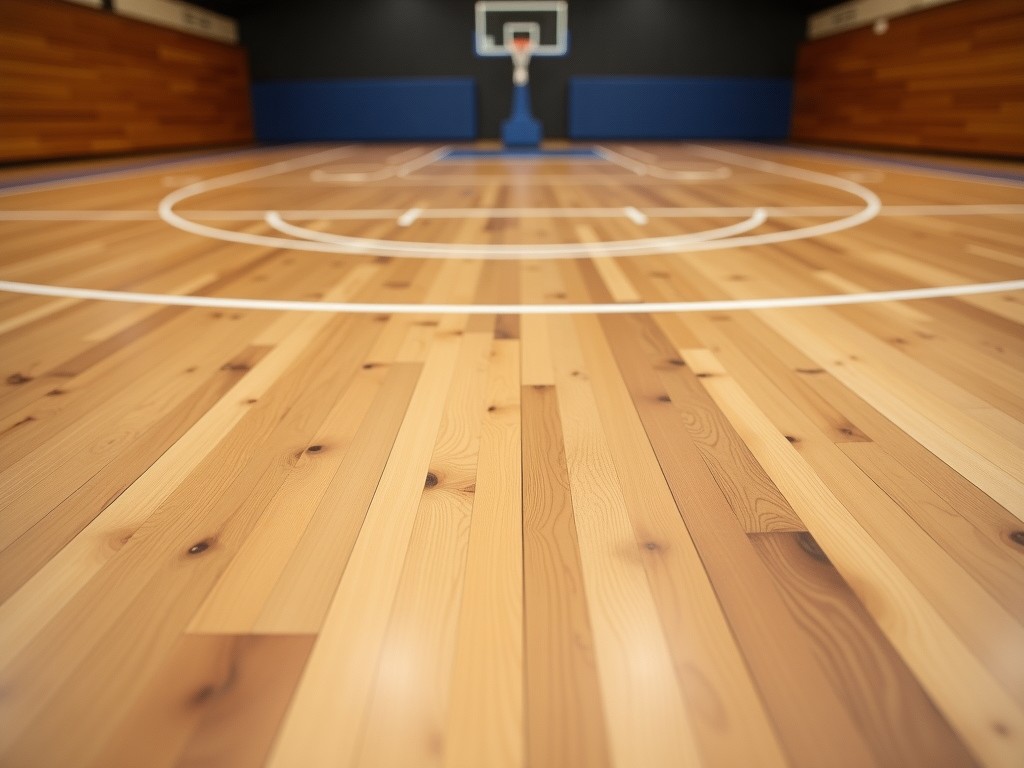
Solid hardwood sports flooring is manufactured from sawn lumber of selected hardwood species, milled to tight tolerances, kiln‑dried to a target moisture content of 6‑9 %, and finished with a wear‑resistant coating. The product consists of a wear layer (typically 3‑5 mm thick) bonded to a stable core, providing the dimensional stability required for high‑impact athletic use while retaining the natural feel of wood.
Key Technical Specifications
| Parameter | Typical Value / Range |
|---|---|
| Species | Maple, Beech, Oak, Ash (select grades) |
| Overall Thickness | 14 mm – 22 mm |
| Wear Layer Thickness | 3 mm – 5 mm (solid wood) |
| Board Width | 60 mm – 100 mm |
| Board Length | Random lengths 300 mm – 2400 mm (fixed lengths available) |
| Surface Finish | UV‑cured polyurethane, 2‑coat system, gloss 20‑30 % |
| Installation Method | Nail‑down over plywood subfloor, glue‑down, or floating with approved underlayment |
| Shock Absorption (ASTM F2772) | ≥ 55 % (maple), ≥ 50 % (beech/oak) |
| Vertical Deformation | 0.5 mm – 1.0 mm under 2000 N load |
| Friction Coefficient (ASTM F2913) | 0.6 – 0.8 (suitable for basketball, volleyball, badminton) |
Manufacturing Considerations
Raw lumber is sawn to quartersawn or rift‑sawn orientation to minimize dimensional change, then stacked in kilns with controlled temperature and humidity cycles to achieve uniform moisture content. After drying, boards are graded for knots, grain slope, and color variation; only boards meeting the selected grade proceed to profiling. The wear layer is milled to the final thickness, edges are eased or beveled according to customer specification, and a sanding sequence prepares the surface for coating.
The coating line applies a primer, followed by two top‑coats of UV‑cured polyurethane. Each layer is cured under calibrated UV intensity to achieve cross‑link density that provides abrasion resistance (Taber wear index < 150 mg/1000 cycles) while maintaining a coefficient of friction within the sport‑specific range. Final inspection includes moisture content re‑measurement, hardness testing (Janka), and gloss measurement.
Typical Applications and Performance Rationale
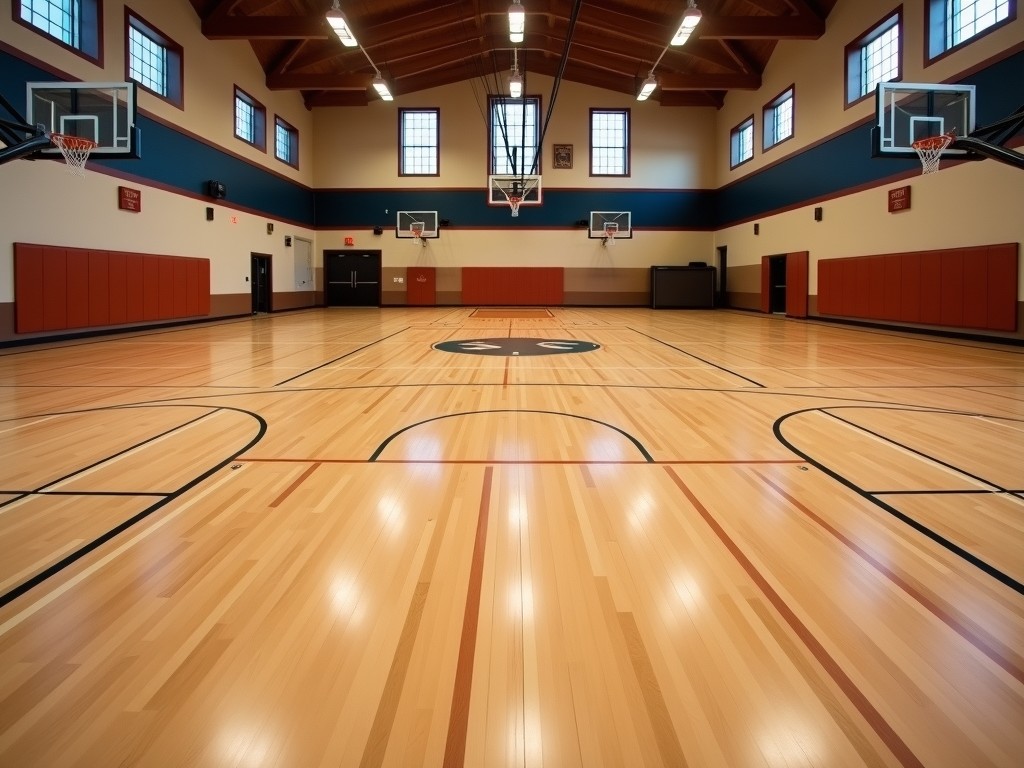
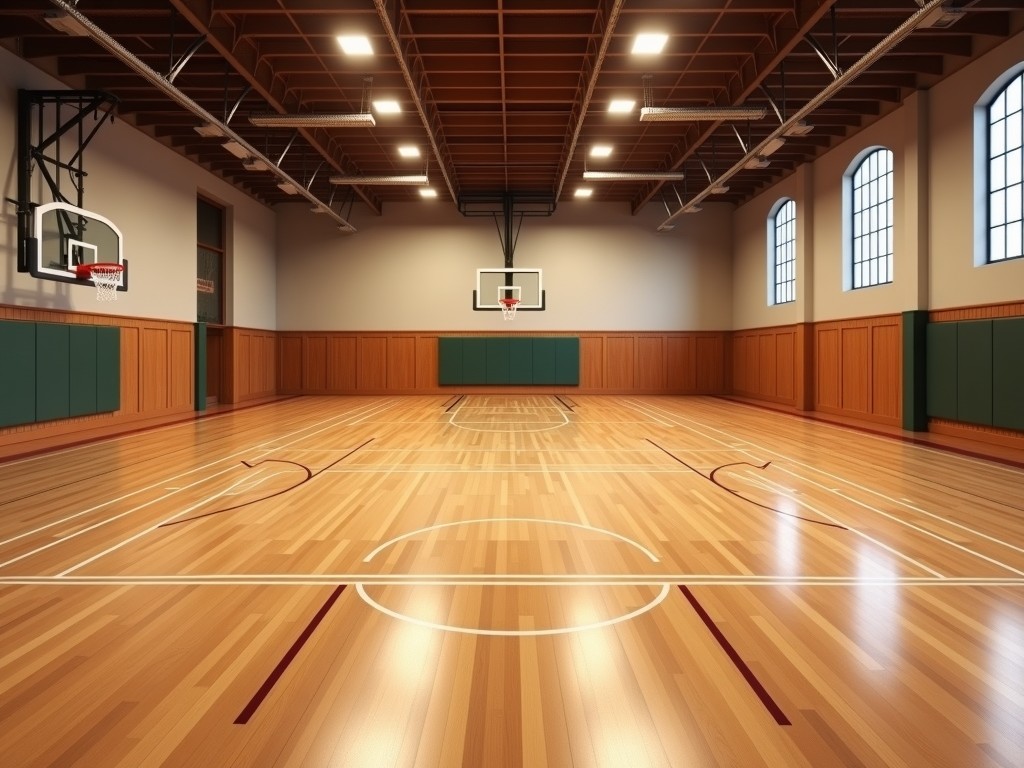
In basketball and volleyball courts, the floor must provide consistent ball rebound and adequate shock attenuation to reduce joint stress. Solid hardwood delivers a high stiffness‑to‑damping ratio, resulting in a ball rebound efficiency of approximately 92 % and a peak force reduction of 30‑40 % compared to concrete substrates.
For multi‑purpose gyms that host aerobics, dance, and martial arts, the floor’s surface finish offers low‑slide resistance for lateral movements while maintaining enough grip for sudden stops. The natural wood grain also contributes to acoustic dampening, lowering impact noise transmission to adjacent spaces by 4‑6 dB.
In indoor track and field facilities, the floor’s uniform elasticity supports proper energy return during sprinting, helping maintain stride length. The wear layer thickness is selected to withstand spike loads from track shoes without excessive surface damage over a typical service life of 15‑20 years with regular maintenance.
Customization Options
- Species: Maple (hard maple), Beech, European Oak, White Ash, or custom blends.
- Thickness: 14 mm, 18 mm, 22 mm overall; wear layer 3 mm, 4 mm, 5 mm.
- Width: 60 mm, 75 mm, 90 mm, 100 mm; edge profile: square, eased, or micro‑bevel.
- Finish: Matte (gloss 10‑15 %), Satin (gloss 20‑30 %), Semi‑gloss (gloss 40‑50 %).
- Length: Fixed lengths (1200 mm, 1800 mm, 2400 mm) or random length bundles.
- Installation accessories: Moisture barrier, acoustic underlayment, transition strips, vented base.
Quality Control Philosophy
Each production lot undergoes sampling at three stages: incoming lumber (moisture content, grain orientation), after milling (dimensional tolerances, surface roughness), and post‑coating (coating thickness, cure level, adhesion). Acceptance criteria are based on internal standards aligned with EN 14904 and ASTM F2772, ensuring that shipped flooring meets the required shock absorption, vertical deformation, and friction specifications.
Non‑conforming material is segregated and either re‑worked (e.g., re‑sanded, re‑coated) or diverted to secondary markets. Full traceability is maintained via barcode‑linked production records, enabling customers to retrieve inspection reports for any shipment.
Frequently Asked Questions
- Can dimensions be customized? Yes, board width, length, thickness, and wear layer depth are adjustable to project specifications; minimum order quantities apply.
- What information is required before quotation? Required details include intended sport or activity, subfloor type, desired dimensions, finish grade, and delivery destination.
- Which wood species are available? Standard inventory includes hard maple, European beech, white oak, and white ash; other species can be sourced upon request.
- How is quality inspected? Each lot is checked for moisture content (6‑9 %), dimensional tolerance (±0.1 mm), surface roughness (Ra ≤ 1.2 µm), coating thickness (35‑45 µm dry film), and adhesion (cross‑hatch test 5B).
- What packaging methods are available? Flooring is packed in corrugated cartons with edge protectors, stacked on pallets, and secured with stretch film; optional vacuum‑sealed packs for moisture‑sensitive environments.
- How are export shipments protected? Pallets are fitted with corner boards, top and bottom cardboard layers, and sealed with weather‑resistant wrapping; containers are loaded with desiccant bags to maintain RH below 60 %.
- What is the typical production lead time? Lead time ranges from 3‑5 weeks for standard specifications; customized orders may require 6‑8 weeks depending on species availability and finish complexity.
- How are samples arranged? Sample kits (3 boards per species/finish) can be dispatched via express courier; charges are credited against the first order.
Next Steps
To receive a detailed quotation, lead‑time confirmation, or sample kit, please provide your project specifications via the contact form. Our technical team will review the requirements and return a formal proposal within one business day.