Oem Wide Plank Hardwood Sports Flooring For Basketball Supplier
Oem Wide Plank Hardwood Sports Flooring For Basketball Supplier
OEM Wide Plank Hardwood Sports Flooring for Basketball
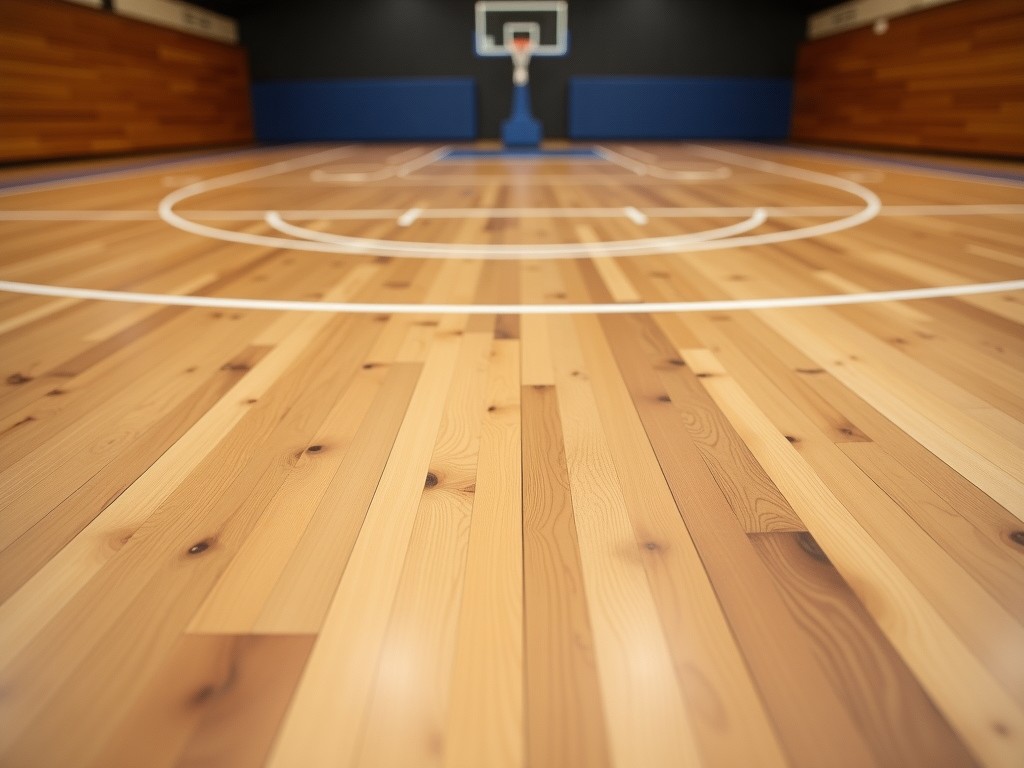
Wide plank hardwood flooring reduces the number of seams per court, which minimizes variations in ball rebound and provides a more uniform playing surface. OEM suppliers tailor plank dimensions, wood species, and finish systems to meet the specific performance criteria of basketball facilities while maintaining structural integrity under repeated impact loads.
Construction & Materials
The wear layer is typically sourced from hard maple (Acer saccharum) or white ash (Fraxinus americana), selected for its high Janka hardness (>1450 lbf) and tight grain, which resists indentation from shoe treads and equipment. A core layer of kiln‑dried softwood or high‑density plywood provides dimensional stability, while a moisture‑barrier backing limits vapor transmission from the subfloor.
Wear Layer
Nominal thickness ranges from 19 mm to 22 mm (3/4 in to 7/8 in) with a wear‑layer thickness of at least 6 mm to allow multiple sand‑and‑refinish cycles over the floor’s service life.
Core & Backing
Core thickness varies between 10 mm and 15 mm depending on span requirements; the backing incorporates a polyethylene film or asphalt‑based sealant to achieve a moisture vapor transmission rate below 0.5 perm.
Performance Characteristics
- Shock absorption (vertical deformation) typically 2.3 mm–2.8 mm under a 2000 N impact, meeting DIN 18032‑2 standards for sports surfaces.
- Area elasticity ranges from 35 % to 45 %, providing adequate energy return for quick‑cut movements while reducing athlete fatigue.
- Coefficient of friction (dry) measured between 0.55 and 0.65, offering sufficient traction for lateral slides without excessive grip that could increase joint stress.
- Ball rebound efficiency exceeds 90 % when tested per ASTM F2772, ensuring consistent playability across the entire court.
- Surface finish is a UV‑cured polyurethane system with a gloss level of 20–30 % to reduce glare under arena lighting while maintaining wear resistance.
Dimensional Specifications
| Parameter | Typical Value | Customizable Range |
|---|---|---|
| Plank Width | 125 mm (5 in) | 100 mm–150 mm (4–6 in) |
| Plank Length | Up to 2400 mm (94 in) random | 1800 mm–3000 mm (70–118 in) | Total Thickness | 22 mm (7/8 in) | 19 mm–27 mm (3/4–1 in) |
| Moisture Content (MC) | 6 %–9 % | 4 %–12 % (per project spec) |
| Finish Thickness | 0.4 mm UV‑cured PU | 0.2 mm–0.6 mm (alternative coatings) |
Installation Considerations
Proper subfloor preparation is critical; a flat tolerance of ±3 mm over a 2 m span ensures even load distribution. Depending on the structural system, the flooring can be glued directly to a concrete slab using a moisture‑resistant polyurethane adhesive, or installed over a sleeper‑and‑batten system with a floating interlocking mechanism to accommodate expansion.
Expansion gaps of 10–15 mm are left at perimeter walls and filled with flexible silicone after installation to prevent buckling under seasonal humidity changes.
Maintenance & Longevity
Routine maintenance includes dry dust mopping followed by a neutral pH cleaner applied with a microfiber mop; abrasive pads are avoided to preserve the finish. Periodic deep cleaning using a low‑speed rotary machine with a soft brush restores surface texture.
Re‑coating intervals typically occur every 3–5 years for high‑traffic courts, based on wear‑layer thickness and visual inspection of gloss retention. With proper care, the flooring system can achieve a service life exceeding 25 years before requiring full replacement.
Customization Options
- Wood species: hard maple, white ash, beech, or blended mixes for specific aesthetic or performance targets.
- Plank width: 100 mm to 150 mm to adjust visual scale and seam frequency.
- Thickness: 19 mm–27 mm to suit varying subfloor stiffness and load requirements.
- Finish: matte, satin, or low‑gloss UV‑cured polyurethane; optional water‑based systems for low VOC emissions.
- Branding: laser‑etched logos, court lines, or custom inlays incorporated during manufacturing.
- Edge treatment: square, eased, or micro‑beveled edges to influence ball roll and installation tolerances.
Quality Assurance & Testing
Each production lot undergoes moisture content verification using oven‑dry methods, ensuring MC remains within the specified 6 %–9 % range to prevent post‑installation movement. Hardness is confirmed via Janka testing on sample planks, and finish adhesion is measured per ASTM D4541 to guarantee a minimum bond strength of 2.5 MPa.
Finished panels are subjected to abrasion resistance tests (ASTM D4060) and impact resistance evaluations (ASTM D5420) to validate long‑term durability under repeated basketball impacts. All test results are available upon request for project documentation.
Applications – Why This Flooring Suits Basketball
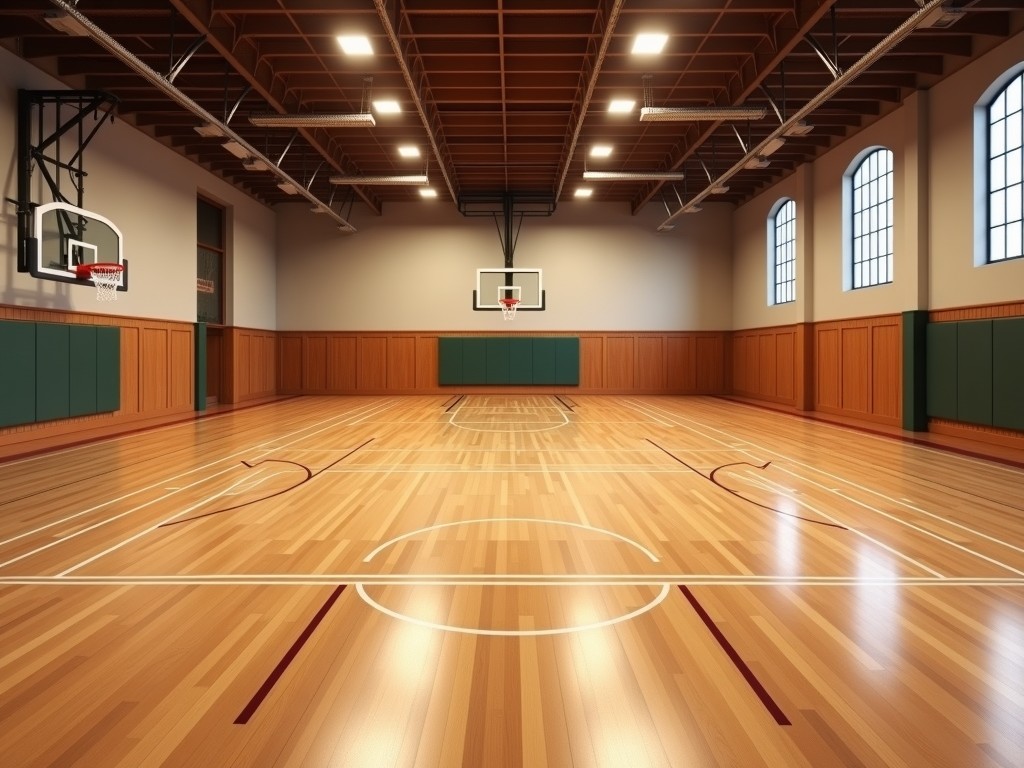
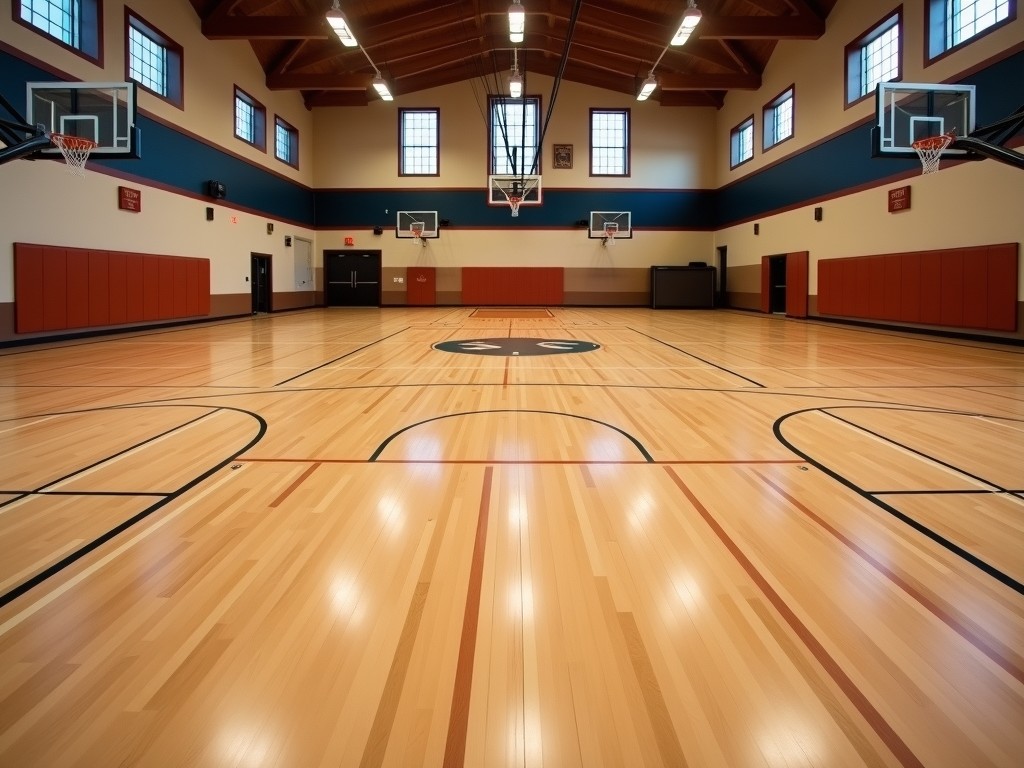
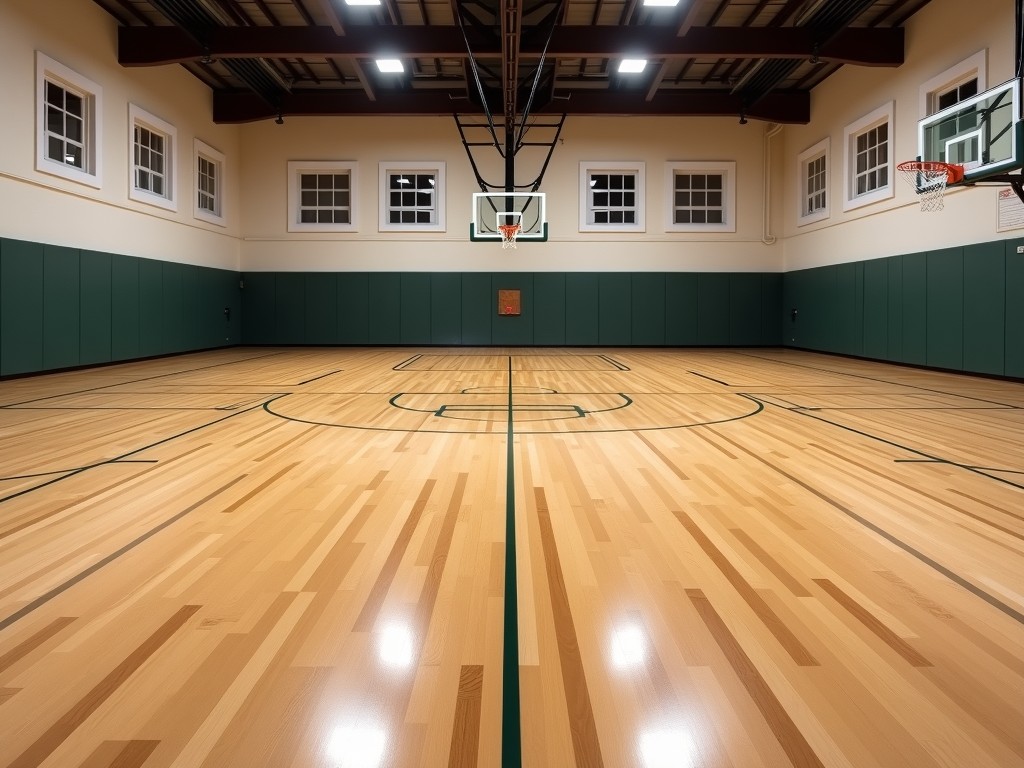
Basketball demands a surface that delivers consistent ball bounce, reliable traction for rapid direction changes, and adequate shock absorption to protect joints during jumping and landing. Wide plank construction reduces seam‑related variations in ball response, while the selected hardwood species provides a high stiffness‑to‑weight ratio that maintains uniform deflection across the court.
The low‑gloss finish minimizes glare under arena lighting, improving visual tracking of the ball, and the engineered moisture barrier protects the substrate from humidity fluctuations common in multi‑use facilities. Together, these characteristics support performance, safety, and longevity required by competitive and recreational basketball programs.
Frequently Asked Questions
Can dimensions be customized?
Yes, plank width, length, and total thickness are adjustable based on project specifications; standard ranges are provided in the dimensional specifications table.
What information is required before quotation?
Required details include court dimensions, subfloor type and condition, desired wood species or finish, any branding or line markings, and project timeline for delivery and installation.
How is quality inspected?
Quality control includes moisture content verification, Janka hardness testing, finish adhesion measurement, and visual inspection for surface defects; test reports are supplied with each shipment.
What packaging methods are available?
Panels are packed in protective cardboard sleeves with corner guards, stacked on pallets, and wrapped in stretch film; optional wooden crating is available for overseas shipments requiring additional impact protection.
Get a Technical Quote
To discuss your specific basketball flooring requirements, including custom dimensions, wood species, finish options, and lead times, please contact our engineering team.