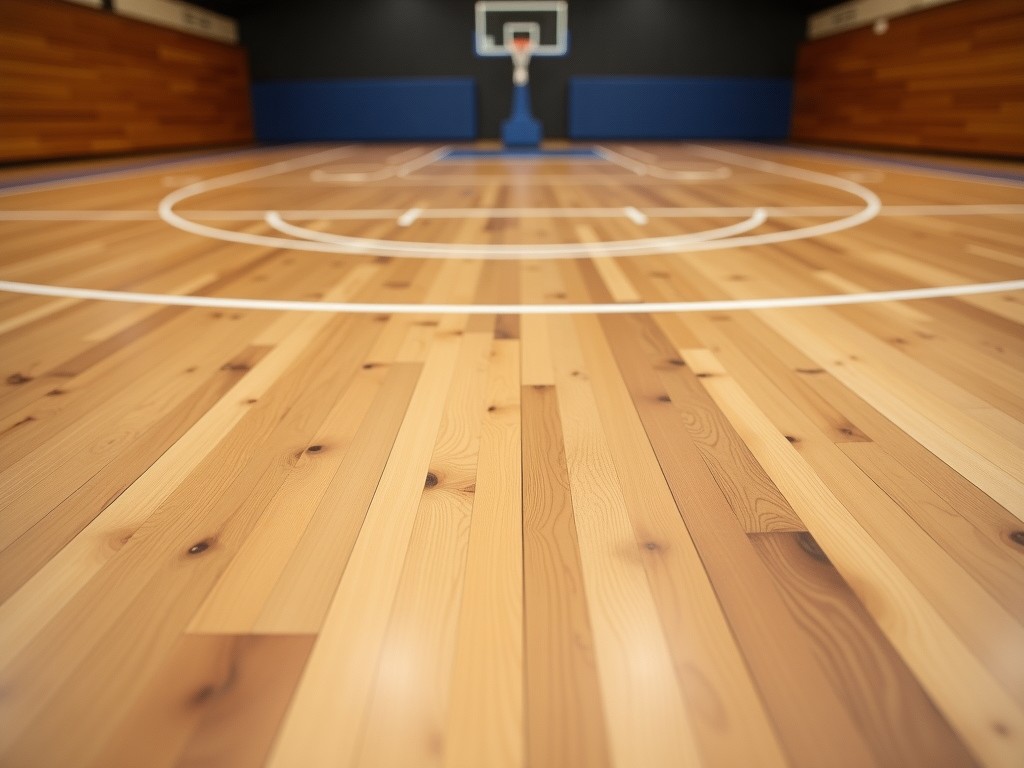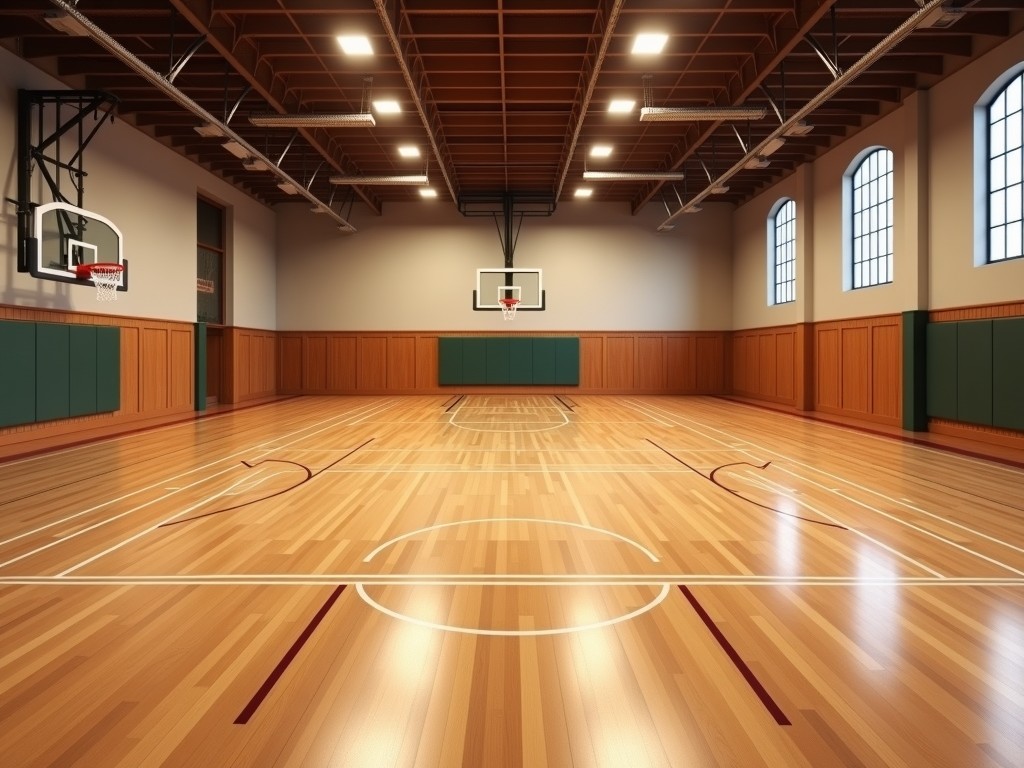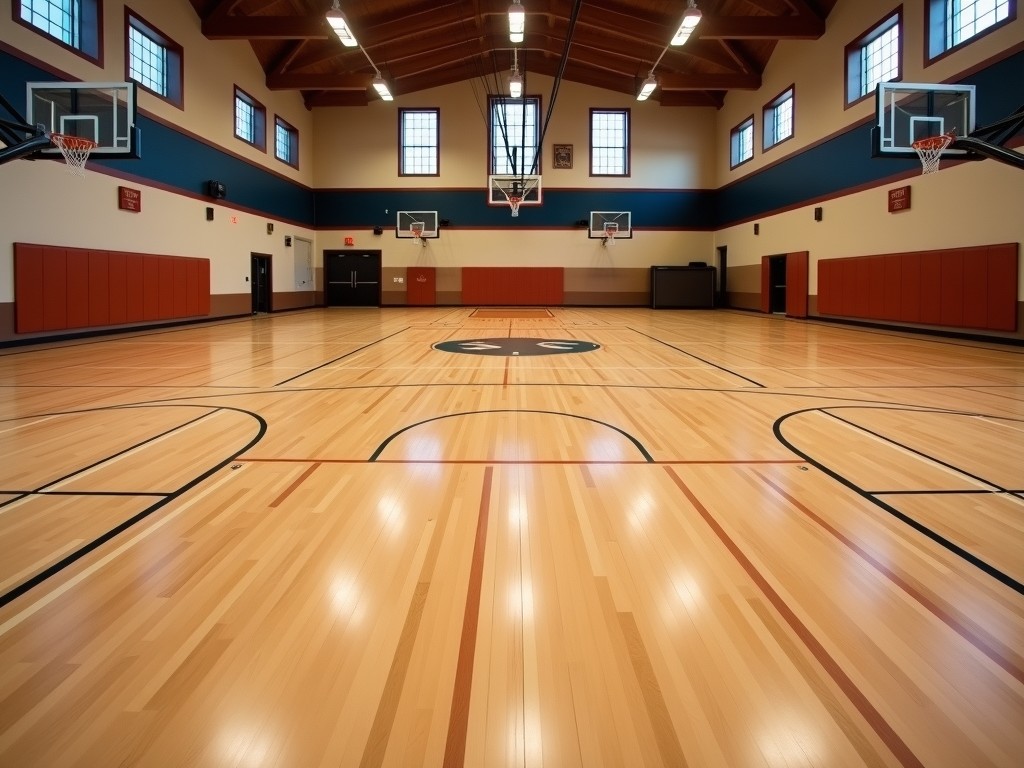
Custom White Maple Hardwood Sports Flooring Manufacturer
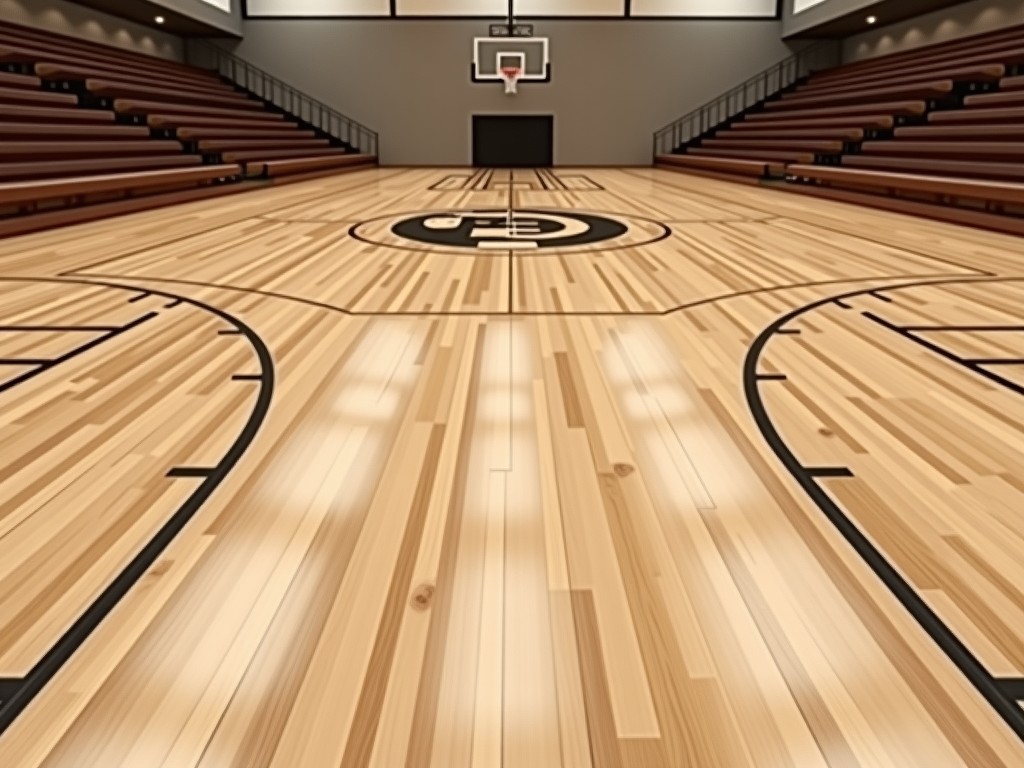
Custom White Maple Hardwood Sports Flooring Manufacturer
Custom White Maple Hardwood Sports Flooring Manufacturer
Product Overview
White maple (Acer saccharum) is selected for its uniform grain, high density, and consistent shock absorption properties. The hardwood is kiln-dried to a moisture content of 6‑8 % to minimize dimensional change under varying gymnasium humidity.
Sports flooring requires a surface that balances traction with slide, provides adequate force reduction, and returns energy efficiently to athletes. White maple meets these criteria when installed over a resilient sub‑system with appropriate padding and underlayment.
Technical Specifications
Typical board dimensions: thickness 20 mm, width 75 mm, length random 1.2‑2.4 m (custom lengths available).
Density: approximately 0.70 g/cm³ (dry).
Modulus of elasticity (MOE): 11–13 GPa measured parallel to grain.
Hardness (Janka): 1,450 lbf, providing resistance to indentation from equipment and foot traffic.
Finish: UV‑cured polyurethane coating, 40 µm dry film thickness, slip resistance coefficient (wet) ≥0.55 per ASTM F2913.
Applications
White maple sports flooring is commonly installed in basketball courts, volleyball arenas, badminton halls, and multi‑purpose gymnasiums where a consistent bounce and predictable foot‑slide are required.
The material’s natural light color enhances visibility of court markings under artificial lighting, reducing glare and improving player depth perception.
Because maple exhibits low vibration transmission, it helps protect joints during repetitive jumping motions, a factor considered in FIBA and NCAA facility guidelines.
Customization Options
Board thickness can be adjusted from 18 mm to 22 mm to match specific sub‑floor systems.
Width options include 70 mm, 80 mm, and 90 mm, allowing designers to tailor the visual joint pattern.
Lengths can be produced to exact room dimensions, minimizing waste and on‑site cutting.
Surface finishes are available in matte, semi‑gloss, or high‑gloss UV‑cured polyurethane, each with defined slip‑resistance values.
Edge profiles can be square, beveled, or micro‑beveled to accommodate different installation methods (glue‑down, nail‑down, or floating).
Quality Assurance
Each batch undergoes moisture content testing using a pin‑type meter; boards outside the 6‑8 % range are rejected.
Grain orientation is inspected to ensure less than 5 % deviation from vertical, which guarantees uniform strength across the panel.
Finish thickness is measured with a dry‑film gauge; coating uniformity is verified across a 100 mm² area.
Final inspection includes a slip‑resistance test per ASTM F2913 and a ball‑rebound test per ASTM F2772 to confirm compliance with sports‑performance standards.
Typical Performance Characteristics
| Property | Typical Value | Test Standard |
|---|---|---|
| Density | 0.70 g/cm³ | ASTM D2395 |
| Modulus of Elasticity | 12 GPa (average) | ASTM D143 |
| Janka Hardness | 1,450 lbf | ASTM D143 |
| Slip Resistance (wet) | ≥0.55 | ASTM F2913 |
| Ball Rebound | 90 % ± 3 % | ASTM F2772 |
Frequently Asked Questions
Yes. Thickness, width, and length can be adjusted to match project specifications; custom lengths reduce on‑site waste.
Project area, desired board thickness, width, finish type, and any edge profile preferences. Sub‑floor system details help us recommend appropriate underlayment.
Each board is checked for moisture content, grain orientation, finish thickness, and undergoes slip‑resistance and ball‑rebound testing before packaging.
Boards are stacked on pallets, wrapped in polyethylene film, and secured with corner protectors. Export shipments include moisture‑barrier liners and shock‑absorbent edge boards.
Lead time ranges from 3 to 6 weeks depending on order size and customization; exact schedule is confirmed after technical review.