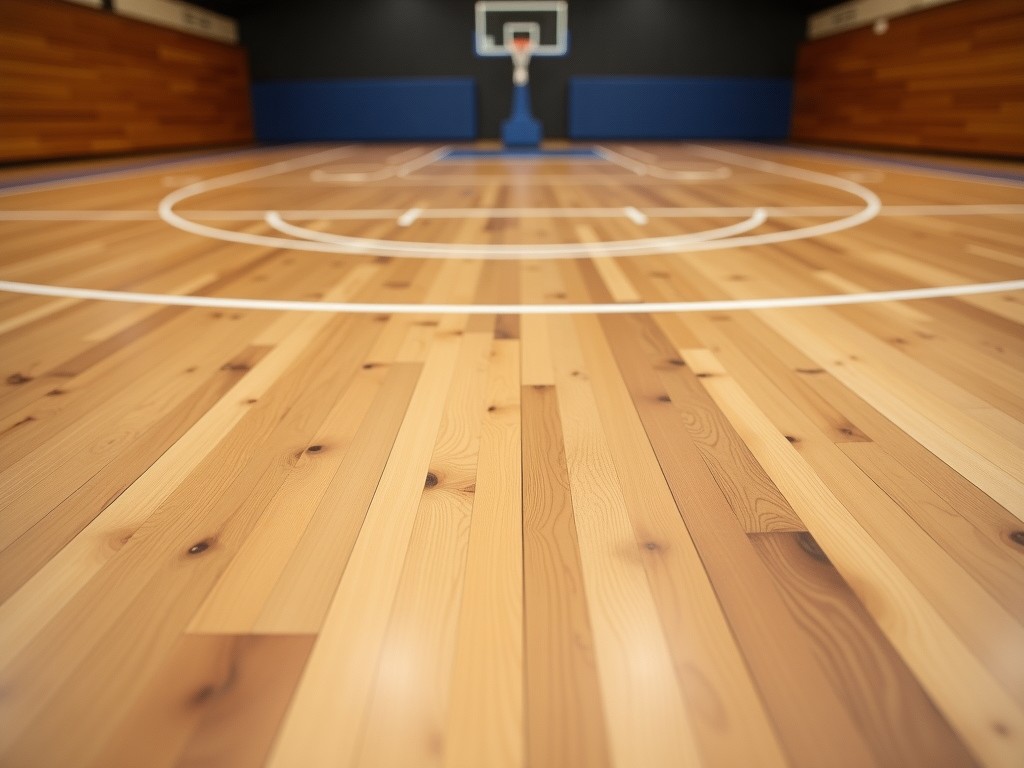
Custom Parquet Maple Hardwood Gym Flooring Factory
Custom Parquet Maple Hardwood Gym Flooring Factory
Custom Parquet Maple Hardwood Gym Flooring
The product consists of solid maple strips arranged in a parquet pattern, typically 3‑mm wear layer over a 19‑mm substrate, delivering a total thickness of 22 mm. This construction provides a stable, wear‑resistant surface suitable for high‑impact athletic environments.
Maple (Acer saccharum) exhibits a Janka hardness of approximately 1450 lbf, placing it among the harder domestic hardwoods used for flooring. Its closed‑grain structure limits moisture absorption, resulting in a dimensional change coefficient of about 0.0015 % per % RH. These properties contribute to consistent performance under fluctuating gym humidity and temperature.
Typical technical values for custom parquet maple gym flooring are shown below. All dimensions can be adjusted to meet project‑specific requirements.
| Property | Typical Value | Customizable Range |
|---|---|---|
| Total Thickness | 22 mm | 18‑30 mm |
| Wear Layer Thickness | 3 mm | 2‑5 mm |
| Plank Width | 75 mm | 50‑120 mm |
| Plank Length | 600 mm | 300‑1200 mm |
| Parquet Pattern Repeat | 300 mm × 300 mm | Customizable per design |
| Moisture Content (MC) | 6‑8 % | 5‑10 % (adjusted for region) |
| Janka Hardness | 1450 lbf | 1300‑1500 lbf (maple grade) |
| Static Coefficient of Friction | 0.65 | 0.60‑0.80 (finish dependent) |
| Dimensional Change Coefficient | 0.0015 %/%RH | 0.0010‑0.0020 %/%RH |
Buyers can select from a range of parquet layouts, plank dimensions, and surface finishes to match functional and aesthetic goals. Each option influences wear performance, installation time, and maintenance requirements. The following list outlines the primary customizable attributes.
- Parquet Pattern: herringbone, basket weave, brick, chevron, custom designs
- Plank Width: 50 mm, 75 mm, 100 mm, or custom
- Plank Length: 300 mm‑1200 mm (in 50 mm increments)
- Finish Type: oil‑based polyurethane, water‑based polyurethane, UV‑cured acrylate
- Edge Treatment: square, eased, micro‑bevel
- Color Stain: natural, light amber, medium tone, dark tone
Manufacturing begins with kiln‑drying maple lumber to a target moisture content of 6‑8 % before milling into strips. Strips are then glued into parquet modules, pressed, sanded, and finished under controlled environmental conditions.
Quality control includes inline moisture content gauges, thickness variance measurement (±0.1 mm), and surface hardness verification using a durometer. Slip resistance is tested per ASTM F2913 to ensure a static coefficient of friction above 0.6 for athletic safety. Final inspection checks for pattern alignment, finish uniformity, and edge integrity before packaging.
Gym floors experience repeated point loads from weights, dynamic loads from athletic movements, and occasional impact from dropped equipment. The maple substrate’s modulus of elasticity (~12 GPa) combined with the parquet’s interlocking geometry distributes stresses, reducing peak pressure on the subfloor. A wear layer of 3 mm provides a service life exceeding 15 years under typical commercial gym usage, based on Taber abrasion testing (≤150 mg loss per 1000 cycles). The sealed finish resists sweat and cleaning agents, maintaining a coefficient of friction within the 0.6‑0.8 range required for basketball and volleyball courts. These characteristics lower long‑term replacement risk and support consistent athlete performance.
Frequently Asked Questions
- Can dimensions be customized?
- Yes. Total thickness, wear layer, plank width, and length are adjustable per project specifications.
- What information is required for a quotation?
- Required details include desired dimensions, parquet pattern, finish type, edge treatment, quantity, and delivery location.
- How is quality inspected?
- Inline moisture checks, thickness gauges, hardness tests, and final visual inspection are performed before packaging.
- What packaging methods protect the flooring during transit?
- Modules are stacked on pallets, separated by corrugated sheets, and stretch‑wrapped with edge protectors to prevent movement and moisture ingress.
To discuss technical specifications or request a sample, contact our engineering team. Use the link below to submit your project details and receive a timely response.
Request a Quote