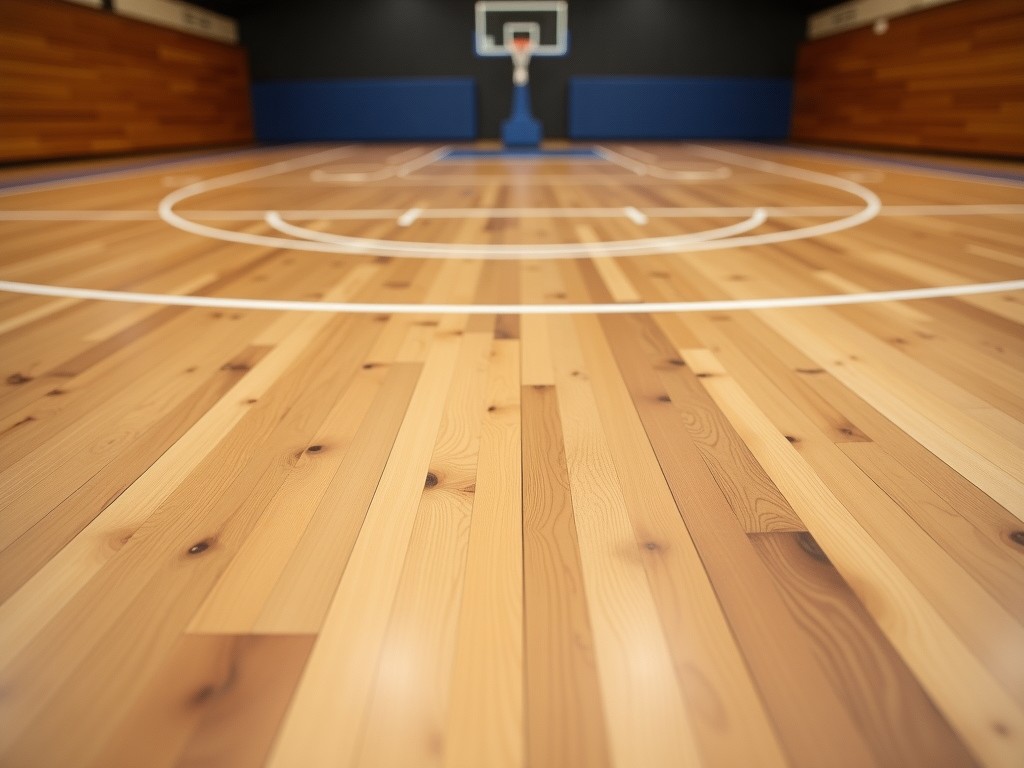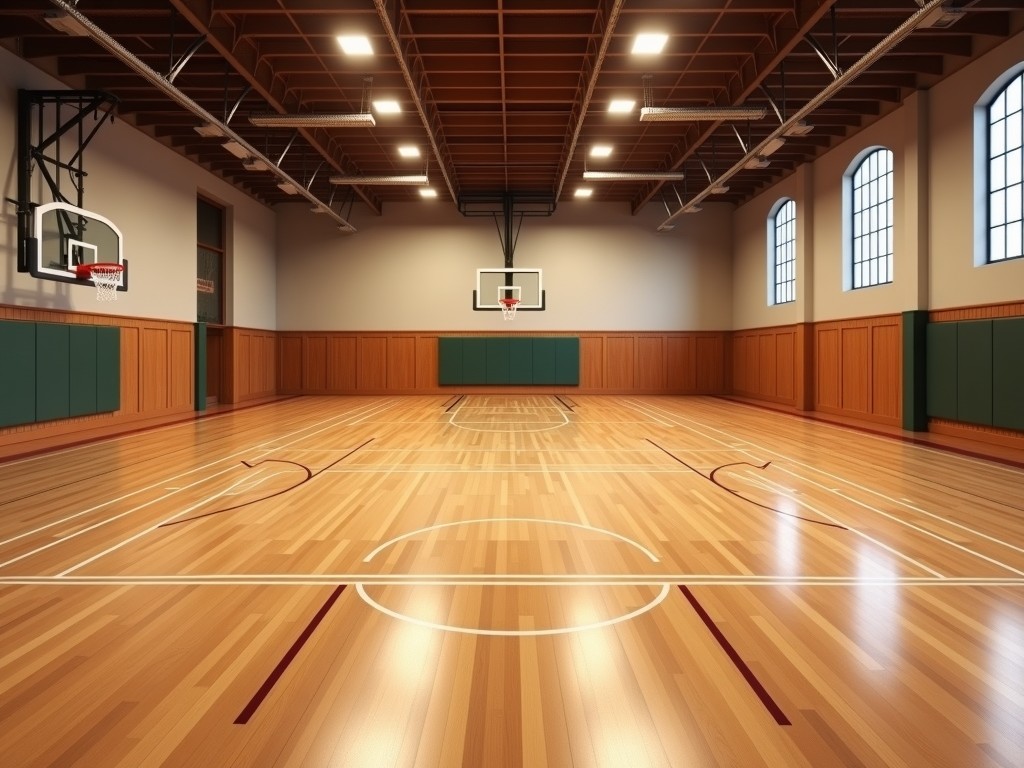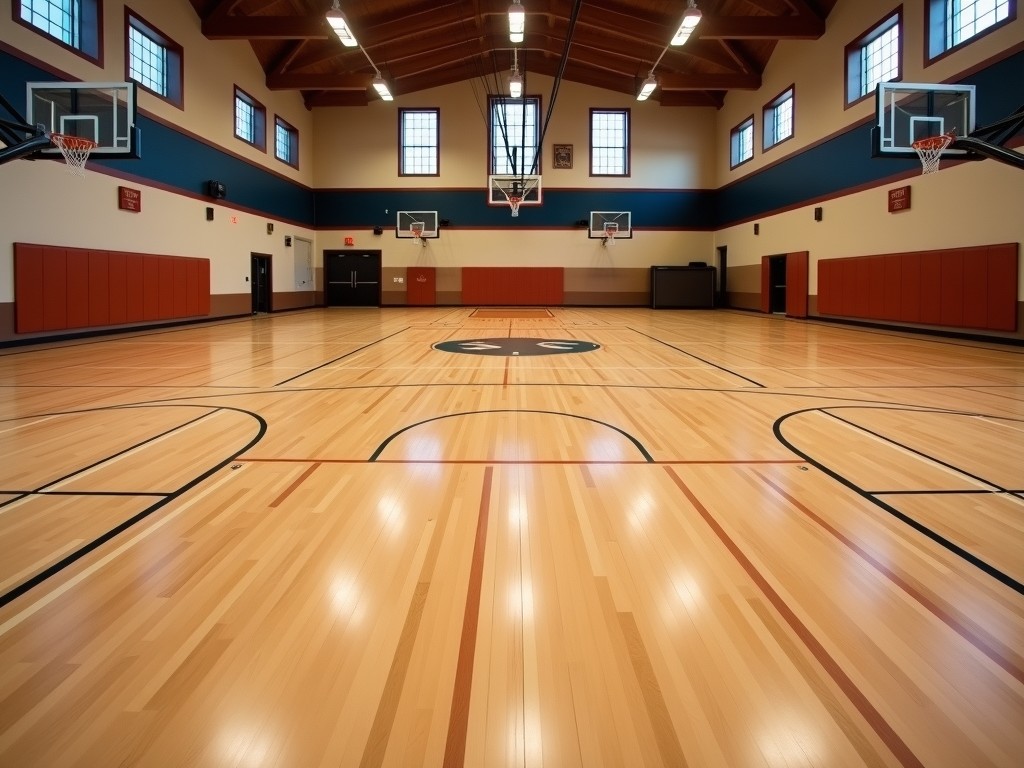
Custom Maple Wood Basketball Court Flooring Supplier
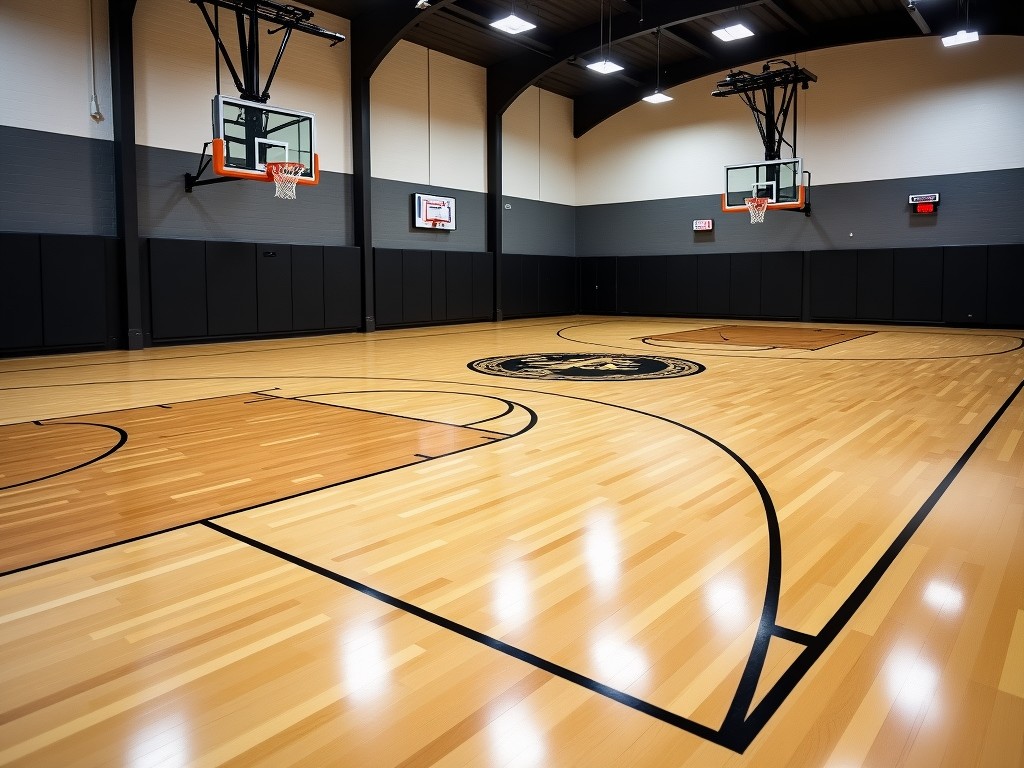
Custom Maple Wood Basketball Court Flooring Supplier
Custom Maple Wood Basketball Court Flooring Supplier
Maple hardwood courts are selected for basketball facilities where consistent ball response, athlete safety, and long‑term surface durability are critical. The species most commonly used is hard maple (Acer saccharum), which exhibits a Janka hardness of approximately 1450 lbf and a specific gravity around 0.63, providing a balance between impact resistance and dimensional stability under varying humidity conditions.
Material Characteristics
The flooring is produced from select‑grade, kiln‑dried maple boards with a target moisture content of 6 %–8 % (±1 %). This range minimizes expansion/contraction cycles that could cause joint movement or surface cupping. The modulus of elasticity (MOE) for hard maple averages 1.8 Mpsi, contributing to a uniform deflection under load that supports predictable ball bounce.
- Density: 0.62–0.66 g/cm³ (typical for hard maple)
- Janka hardness: 1400–1500 lbf
- Modulus of rupture (MOR): 12,000–15,000 psi
- Coefficient of friction (finished surface): 0.6–0.8 (ASTM F2913)
- Shock absorption (Gmax): ≤ 20 g (ASTM F2772)
Manufacturing Process
Boards are first sawn to nominal thickness, then planed to achieve a uniform thickness tolerance of ±0.2 mm. Subsequent steps include edge‑gluing with a moisture‑resistant PVA adhesive, followed by a multi‑stage sanding sequence (80 → 120 → 180 grit) to obtain a surface roughness Ra ≤ 0.8 µm. A UV‑curved polyurethane coating is applied in two passes, delivering a wear resistance rating of less than 10 mg loss per 1000 cycles in Taber abrasion testing (CS‑10 wheel, 500 g load).
Dimensional Tolerances and Standard Sizes
| Parameter | Typical Value | Tolerance |
|---|---|---|
| Thickness | 20 mm, 22 mm, 25 mm | ± 0.2 mm |
| Width (strip) | 58 mm (standard) | ± 0.1 mm |
| Length (panel) | 2.44 m (8 ft) modular | ± 1 mm |
| Surface flatness | ≤ 0.5 mm over 2 m | – |
Customization Options
- Thickness selection (20 mm–32 mm) to meet specific load‑bearing or acoustic requirements.
- Width variations (45 mm, 58 mm, 75 mm) for different joint patterns and visual aesthetics.
- Edge profiles: square, eased, or radiused to accommodate specific installation systems.
- Finish systems: UV‑cured polyurethane, water‑based acrylic, or oil‑modified urethane with adjustable gloss levels (10 %–80 %).
- Line‑inlay colors and widths (standard NBA/NCAA markings or custom logos) using durable, wear‑resistant paint.
- Acoustic backing layers (rubber or foam) for impact noise reduction in multi‑use venues.
Performance Metrics
| Performance Indicator | Typical Range | Test Standard |
|---|---|---|
| Ball rebound (ASTM F2117) | 90 %–94 % of drop height | ASTM F2117 |
| Vertical deformation (ASTM F2772) | 0.5 mm–1.2 mm | ASTM F2772 |
| Area elasticity (ASTM F2772) | 23 %–38 % | ASTM F2772 |
| Friction (wet/dry) | 0.55–0.75 (dry), 0.45–0.60 (wet) | ASTM F2913 |
Installation Considerations
Panels are typically installed over a floated sub‑floor system comprising a moisture barrier, closed‑cell foam underlayment, and a rigid interlocking grid. This configuration accommodates slight sub‑floor irregularities while providing uniform load distribution. Expansion gaps of 10 mm–15 mm are left at perimeter walls and around fixed objects, covered by flexible base‑board systems to allow seasonal movement without inducing stress in the maple surface.
Maintenance Guidelines
Routine maintenance involves dry dust mopping followed by a damp mop with a pH‑neutral cleaner (pH 6–8). Periodic deep cleaning uses a low‑pressure spray‑extraction system with a recommended cleaning solution concentration not exceeding 0.5 % surfactant. Recoating intervals depend on traffic intensity; for high‑usage courts, a light sanding (120 grit) and re‑application of a polyurethane top coat every 24–36 months maintains wear resistance and gloss consistency.
Quality Assurance & Testing
Each production lot undergoes incoming material inspection for moisture content, density, and visual grading. In‑process checks include thickness gauging, edge straightness, and surface roughness measurement. Finished panels are subjected to standardized ball rebound, friction, and shock absorption tests per ASTM F2772/F2117. Results are documented and available upon request; any panel deviating beyond the specified tolerance is segregated for rework or scrap.
Applications & Suitability
Hard maple courts are ideal for indoor basketball venues where consistent ball response and athlete traction directly affect game performance. The material’s high stiffness-to-weight ratio reduces dead spots, while its natural damping characteristics contribute to lower impact forces on joints, supporting player safety during frequent jumping and landing actions. Beyond basketball, the same flooring specifications accommodate volleyball, badminton, and multipurpose recreational use when appropriate line markings and surface finishes are applied.
Frequently Asked Questions
- Can dimensions be customized? Yes, thickness, width, and panel length can be adjusted to meet project‑specific requirements; custom tooling may be required for non‑standard widths.
- What information is needed for a quotation? Facility dimensions, desired thickness, finish type, line‑marking specifications, and any acoustic or moisture barrier requirements.
- Which maple grades are available? Select‑grade, clear‑grade, and rustic‑grade options, each defined by allowable knot size, grain orientation, and color variation.
- How is quality inspected before shipment? Dimensional checks, moisture content verification, surface finish adhesion testing, and a sample set of performance tests (rebound, friction, shock absorption).
- What packaging methods protect the flooring during transit? Panels are stacked flat, separated by corrugated sheets, wrapped in stretch film, and placed on heat‑treated pallets with edge protection.
- What is the typical lead time? Production lead time ranges from 4–6 weeks for standard specifications; custom finishes or sizes may extend this period.
- Are samples available? Yes, sample panels (300 mm × 300 mm) can be shipped upon request, with applicable freight charges.
Next Steps
For detailed technical data sheets, sample requests, or project‑specific consultation, please contact our engineering team using the inquiry form below.
Submit Inquiry