China Natural Maple Hardwood Sports Flooring Manufacturer
China Natural Maple Hardwood Sports Flooring Manufacturer
China Natural Maple Hardwood Sports Flooring Manufacturer
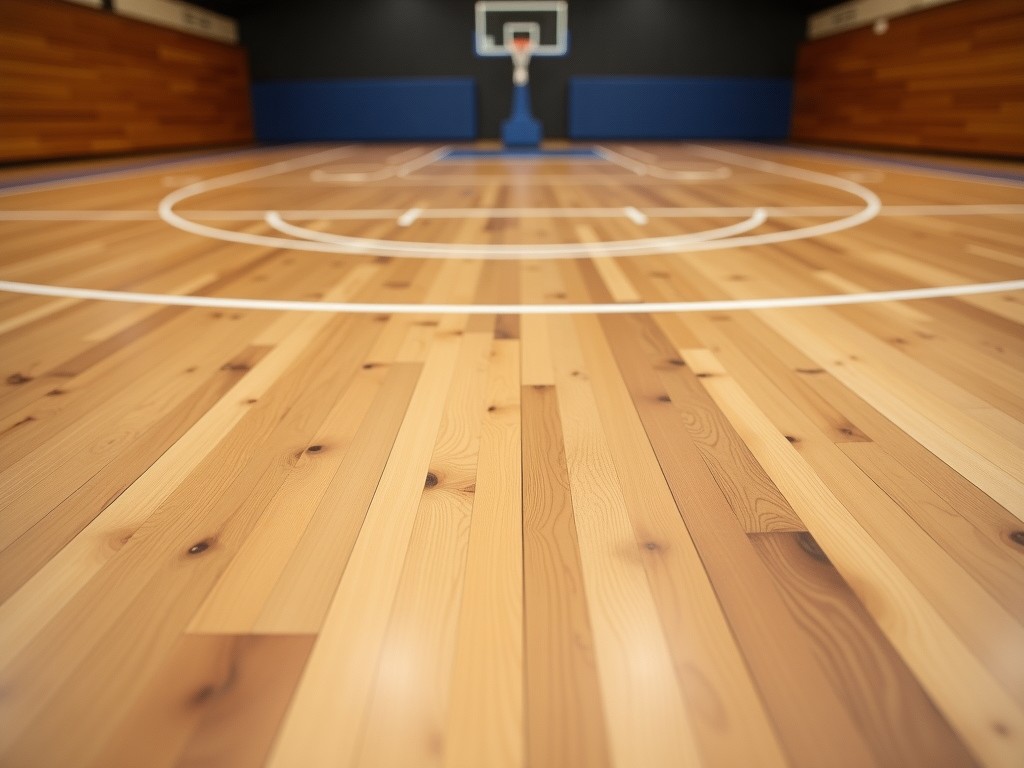
Natural maple hardwood (Acer saccharum) is selected for sports flooring due to its uniform grain, high density, and consistent mechanical response under dynamic loading. The species exhibits a Janka hardness rating typically ranging from 1450 to 1500 lbf, providing resistance to indentation from athletic equipment while maintaining sufficient elasticity for shock absorption.
Material Characteristics
The heartwood of maple displays a pale cream to light reddish hue, which can be left natural or stained to meet specific aesthetic requirements. Its cellular structure yields a modulus of elasticity around 1.8 Mpa, contributing to a balanced rebound effect that reduces joint stress during repetitive impact activities such as basketball or volleyball.
Dimensional stability is achieved through controlled kiln drying to a target moisture content of 6 %–8 %, minimizing expansion or contraction under varying indoor humidity conditions. This stability is critical for maintaining flatness and preventing gaps between boards over the flooring’s service life.
Manufacturing Process
Raw logs are sawn into blanks, then subjected to a multi‑stage drying cycle in computer‑monitored kilns to achieve uniform moisture content. Subsequent planing and profiling produce tongue‑and‑groove edges with a tolerance of ±0.1 mm, ensuring tight joint fit without excessive force during installation.
Surface preparation includes sanding to a 120‑grit finish before application of a UV‑cured polyurethane coating. The coating thickness typically ranges from 30 µm to 45 µm, providing abrasion resistance while preserving the wood’s natural feel. Edge sealing is performed to inhibit moisture ingress at the joints.
Technical Specifications
| Property | Typical Value | Notes |
|---|---|---|
| Thickness | 14 mm – 22 mm | Customizable per project |
| Width | 60 mm – 100 mm | Standard 75 mm common |
| Length | 1.2 m – 2.4 m | Random length available |
| Wear Layer (finish) | 30 µm – 45 µm UV polyurethane | Gloss level 20‑30 % |
| Coefficient of Friction | 0.5 – 0.7 (dry) | Meets ASTM F2772 |
| Shock Absorption | 55 % – 65 % | Measured per EN 14904 |
| Vertical Deformation | 0.5 mm – 0.8 mm | At 2000 N impact |
Applications
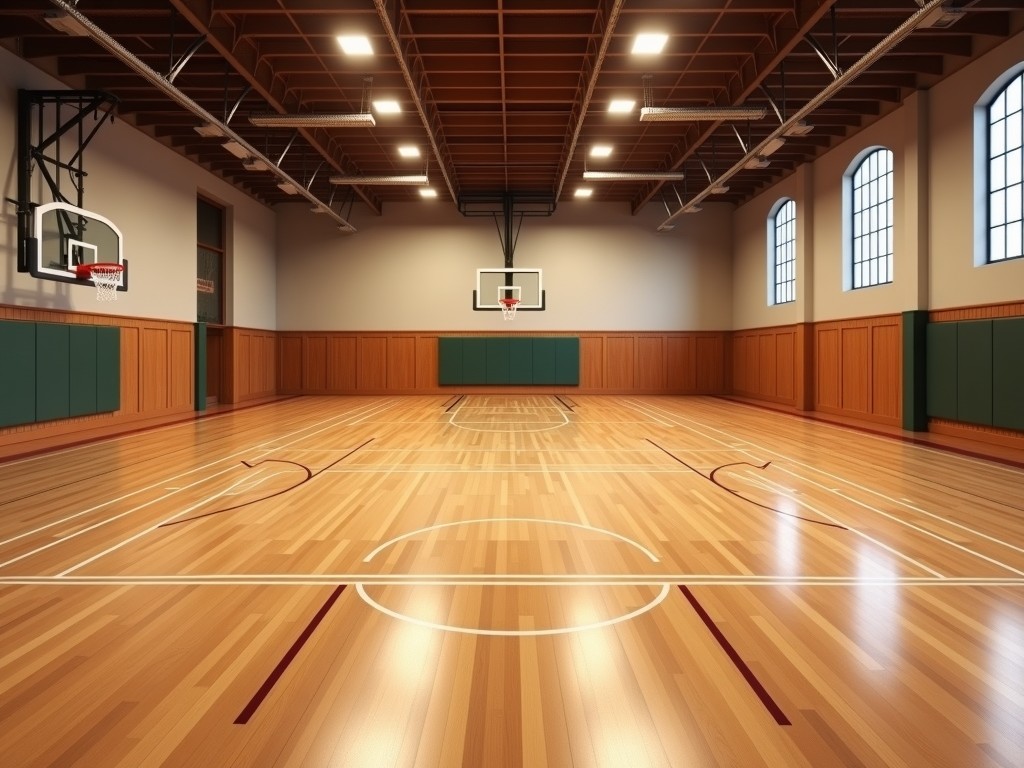
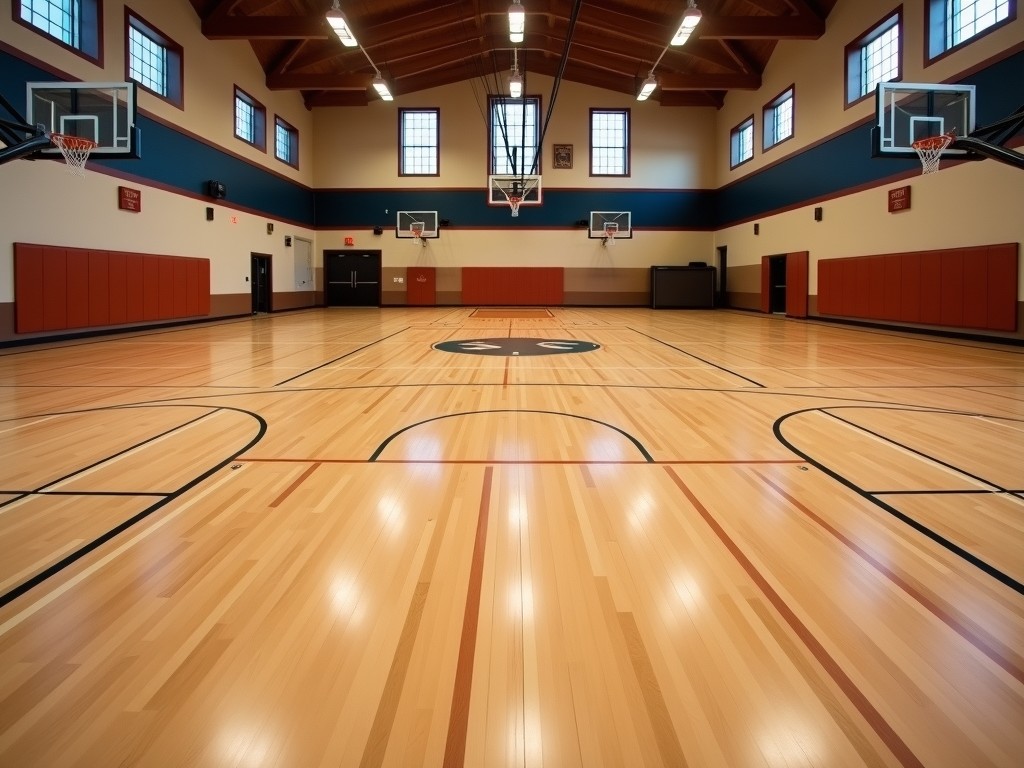
- Gymnasium courts benefit from the floor’s consistent bounce and energy return, which supports high‑intensity ball sports while reducing athlete fatigue.
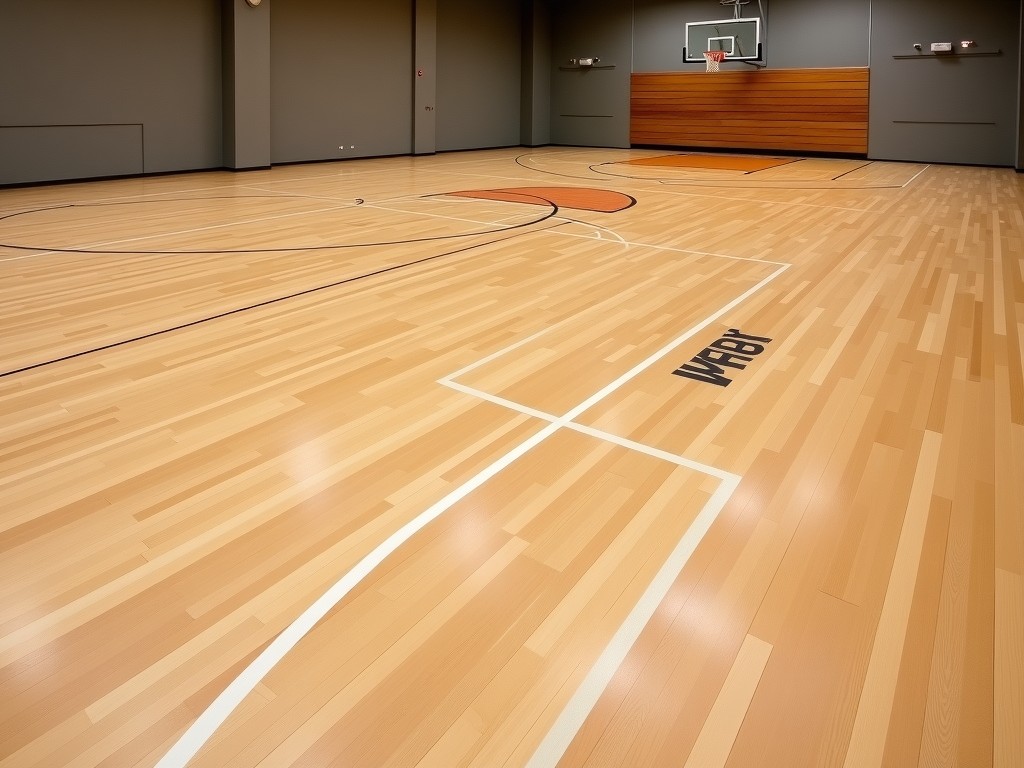
- Multi‑purpose activity rooms require a surface that tolerates both point loads from equipment and distributed loads from dance or aerobics; maple’s uniform hardness accommodates both.
- Dance studios rely on the material’s moderate slip resistance and smooth finish to enable precise footwork without excessive grip that could impede turns.
- Educational facilities value the low maintenance nature of a sealed hardwood surface, which can be refurbished through sanding and recoating rather than full replacement.
Quality Control & Testing
Each production lot undergoes moisture content verification using capacitance meters, with acceptance criteria limited to 6 %–8 % ±0.5 %. Hardness is spot‑checked via Janka tester on finished boards to confirm compliance with the specified range.
Flatness is assessed over a 2‑meter straightedge; deviations must not exceed 0.3 mm to ensure seamless jointing. Coating adhesion is measured by cross‑hatch tape test per ASTM D3359, requiring a rating of 5B or better.
Abrasion resistance is evaluated using a Taber abraser (CS‑10 wheels, 500 g load, 1000 cycles); weight loss is recorded and must remain below 30 mg to satisfy commercial wear standards.
Customization Options
- Thickness adjustment from 14 mm to 22 mm to suit sub‑floor conditions and desired acoustic performance.
- Width selection ranging from 60 mm to 100 mm, influencing visual scale and installation speed.
- Finish types include matte, satin, or low‑gloss UV polyurethane, with optional anti‑microbial additives.
- Color staining or bleaching to achieve specific tone matches while preserving wood grain visibility.
- Edge profiling options such as square, beveled, or eased edges to meet aesthetic or safety requirements.
- Pre‑finished versus unfinished delivery, allowing on‑site sanding and coating when project‑specific color matching is needed.
Packaging & Logistics
Boards are stacked in bundles of uniform length, wrapped in polyethylene film to prevent moisture ingress during transit. Each bundle is placed on a heat‑treated pallet and secured with steel strapping, facilitating efficient forklift handling.
Pallets are stacked to a maximum height of 1.2 m inside standard 20‑foot or 40‑foot containers, with corner boards and edge protectors applied to reduce impact damage. A desiccant packet is included per pallet to maintain internal humidity below 60 % RH.
Frequently Asked Questions
Can dimensions be customized? Yes, thickness, width, and length can be adjusted according to project specifications; please provide detailed requirements for a quotation.
What information is required before quotation? Required details include intended sport or activity, sub‑floor type, desired thickness and width, finish preference, and total area to be covered.
What materials are available? We supply natural maple hardwood (Acer saccharum) sourced from sustainably managed forests; alternative species such as birch or beech are available upon request.
How is quality inspected? Inspection includes moisture content verification, Janka hardness testing, flatness measurement, coating adhesion testing, and Taber abrasion wear evaluation as outlined in our quality control section.
What packaging methods are available? Standard packaging uses polyethylene‑wrapped bundles on heat‑treated pallets; custom packaging such as vacuum‑sealed bags or crate packing can be arranged for specific logistics needs.
How are export shipments protected? Shipments incorporate moisture barriers, corner protection, and secure strapping; additional insurance coverage can be arranged upon request.
What is the typical production lead time? Lead time varies with order size and customization, generally ranging from 3 to 6 weeks after receipt of confirmed drawings and deposit.
How are samples arranged? Sample boards (typically 300 mm × 300 mm) can be dispatched via express courier; sample costs are credited against the first order.