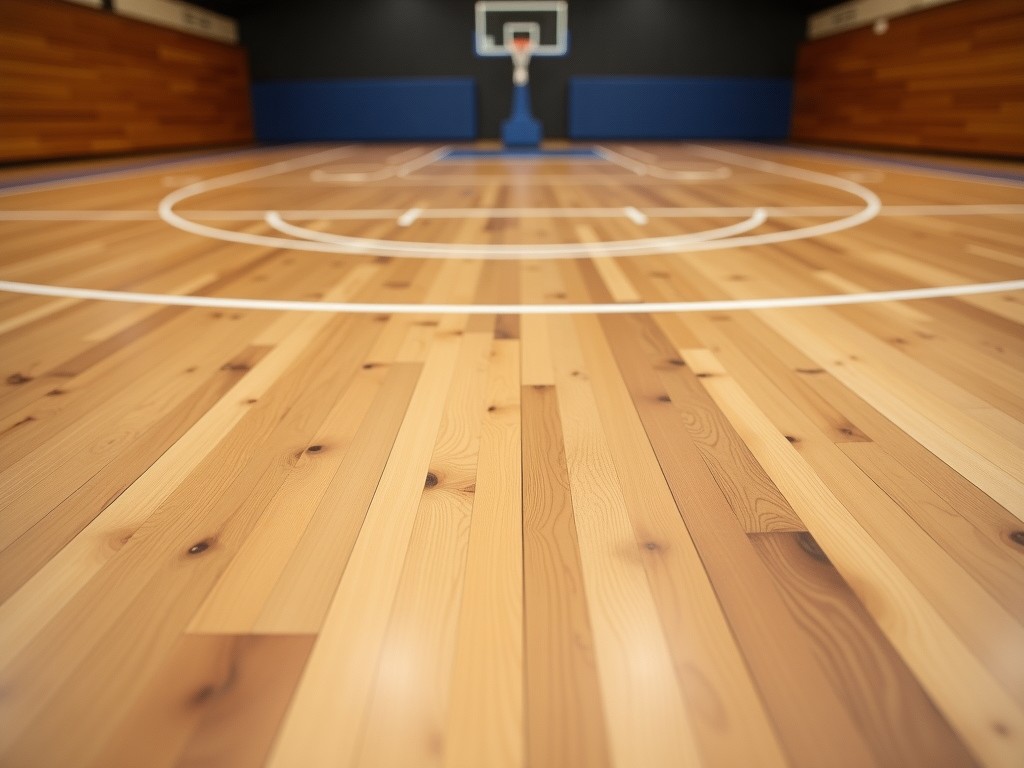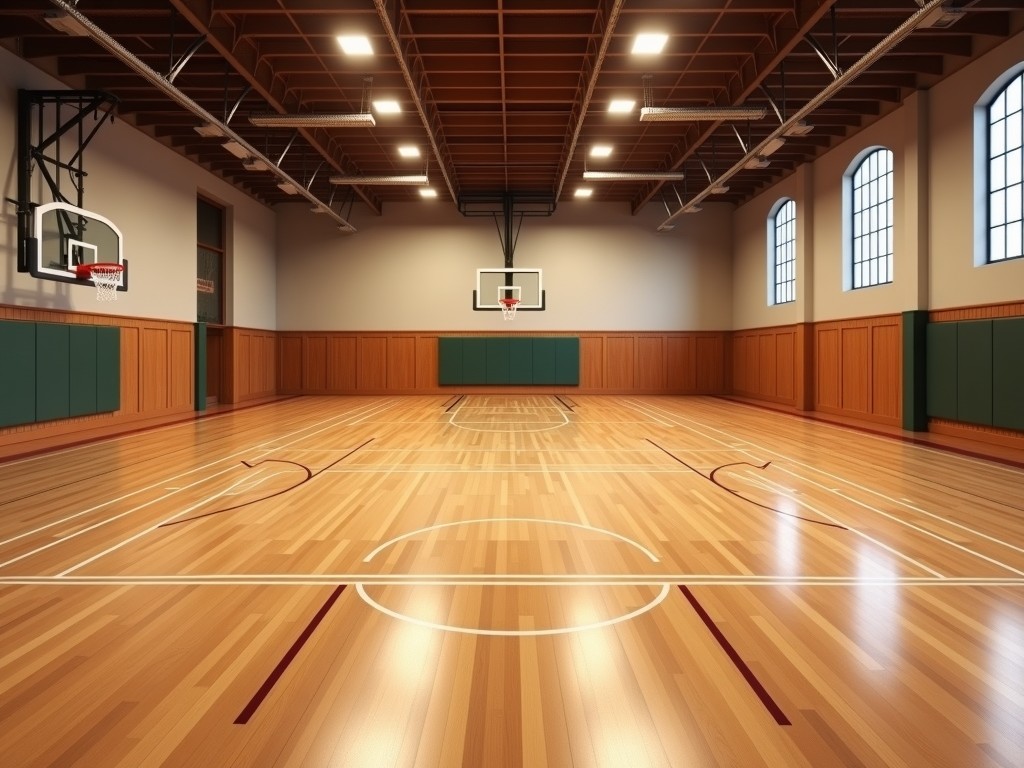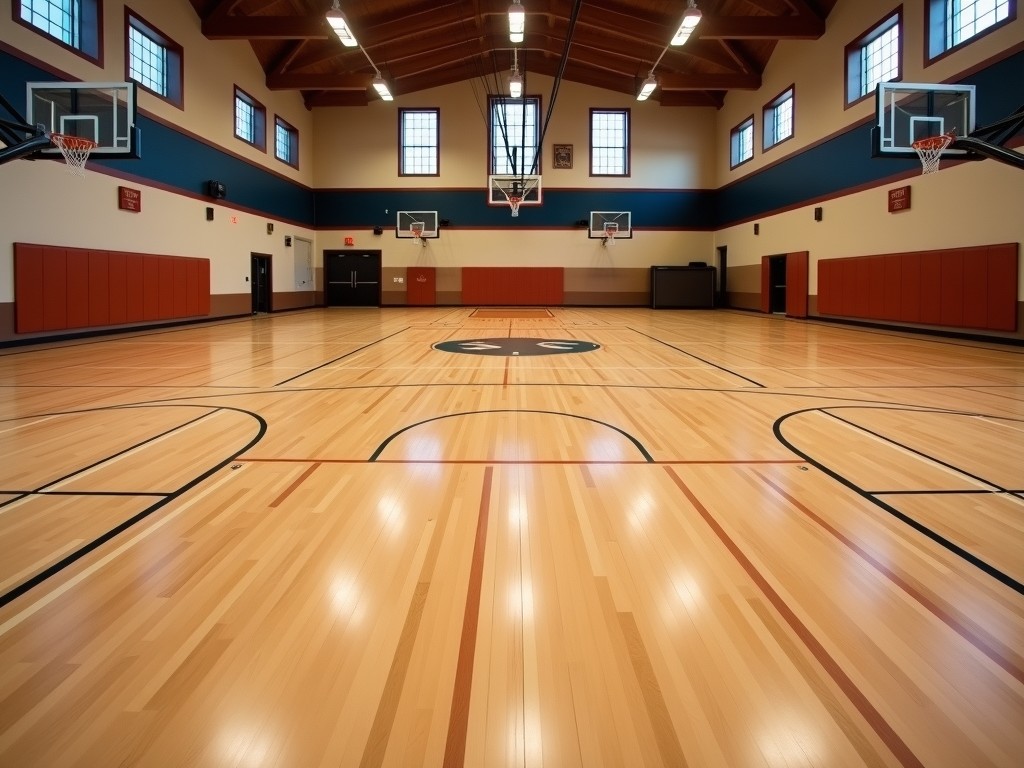
Best Price Hardwood Basketball Court Sports Flooring Supplier
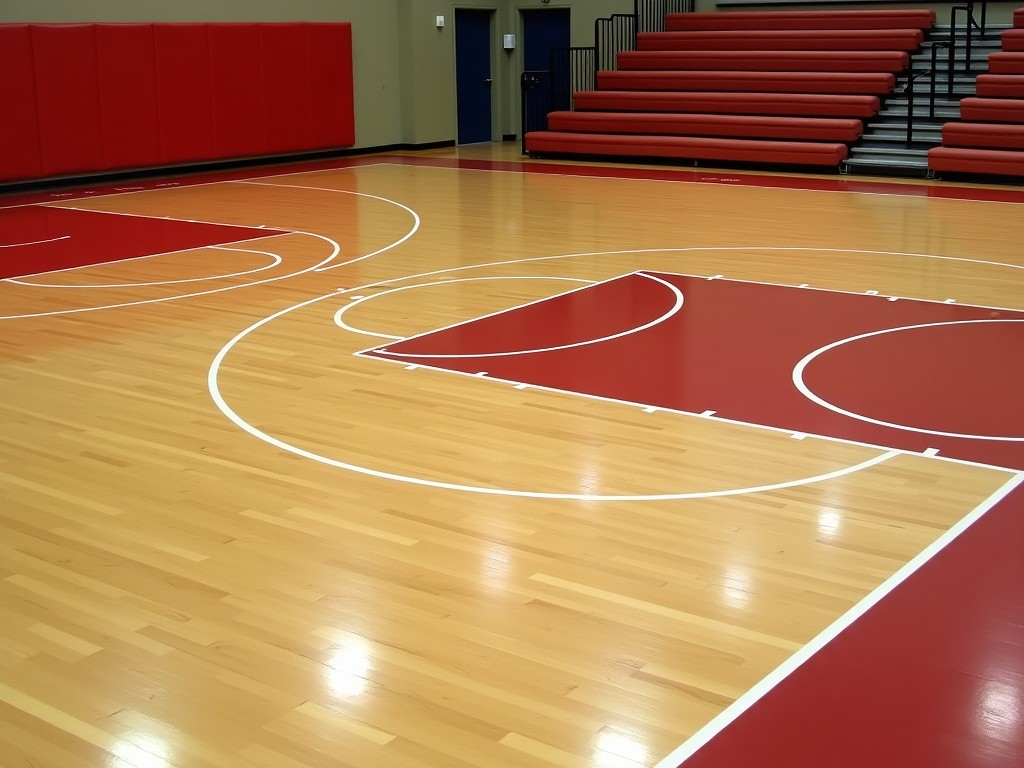
Best Price Hardwood Basketball Court Sports Flooring Supplier
Best Price Hardwood Basketball Court Sports Flooring Supplier
Hardwood flooring remains the preferred surface for competitive basketball due to its consistent ball rebound, predictable traction, and ability to absorb impact forces.
The material is selected for its dimensional stability under varying humidity conditions typical of indoor sports facilities.
Suppliers must provide flooring that meets sport‑specific performance criteria while offering cost‑effective solutions for large‑scale installations.
Typical hardwood basketball court panels are manufactured from solid maple strips with a nominal thickness of 20 mm.
Each panel features a tongue‑and‑groove edge profile that allows tight, seamless joints without visible fasteners.
The wood is kiln‑dried to a moisture content of 6 % ± 2 % to minimize seasonal expansion and contraction.
- Solid maple (Acer saccharum) – standard for high‑traffic courts
- European beech (Fagus sylvatica) – alternative with similar hardness
- Birch (Betula spp.) – lower cost option for recreational facilities
| Property | Typical Value | Notes |
|---|---|---|
| Thickness | 20 mm | Nominal, adjustable per project |
| Width (strip) | 75 mm | Standard strip width |
| Length (panel) | 2.4 m | Custom lengths available |
| Density | 0.70 g/cm³ | Air‑dry basis |
| Janka Hardness | 1450 lbf | Resistance to indentation |
| Coefficient of Friction (dry) | 0.60 | ASTM F2772 |
| Coefficient of Friction (wet) | 0.40 | ASTM F2772 |
| Shock Absorption | 55 % | ASTM F2772, vertical deformation |
Proper installation begins with a level subfloor that meets a flatness tolerance of ±3 mm over a 2 m straightedge.
Panels are typically glued down using a moisture‑resistant polyurethane adhesive or mechanically fastened with concealed clips.
Expansion gaps of 10 mm are left around the perimeter and at fixed obstacles to accommodate seasonal movement.
Basketball demands a surface that provides uniform ball bounce across the entire playing area.
Hardwood’s stiffness and damping characteristics produce a rebound coefficient close to 0.90, meeting FIBA and NCAA standards.
The natural grain offers a moderate coefficient of friction that supports quick lateral cuts while reducing the risk of slipping.
Impact attenuation properties help lower peak forces on athletes’ joints during jumping and landing.
Each batch undergoes moisture content verification using a pin‑type meter before leaving the factory.
Dimensional checks are performed on a sampling basis, measuring thickness, width, and length to a tolerance of ±0.2 mm.
Surface finish is inspected for gloss level and uniformity, ensuring a consistent coefficient of friction across the court.
Final packs are labeled with lot numbers and include a test certificate summarizing the measured properties.
Clients can specify alternative wood species such as beetle‑killed maple or European beech when regional availability or cost considerations apply.
Finish options range from a matte UV‑cured coating to a low‑gloss polyurethane, each affecting the surface friction and wear resistance.
Custom line markings, team logos, or color‑coded zones can be milled directly into the surface or applied with in‑lay epoxy inlays.
Panel lengths can be cut to non‑standard sizes to fit irregular court layouts, subject to minimum order quantities.
Frequently Asked Questions
Q: Can dimensions be customized?
A: Yes, panel length and width can be adjusted to project requirements; thickness remains at 20 mm unless otherwise agreed.
Q: What information is required before quotation?
A: Court dimensions, subfloor condition, desired finish, and any custom markings or logos.
Q: How is quality inspected?
A: Moisture content, dimensional tolerance, and surface finish are checked per batch; certificates are provided.
Q: What packaging methods are available?
A: Panels are stacked on pallets, wrapped in stretch film, and protected with corner guards; container loading details are supplied upon request.