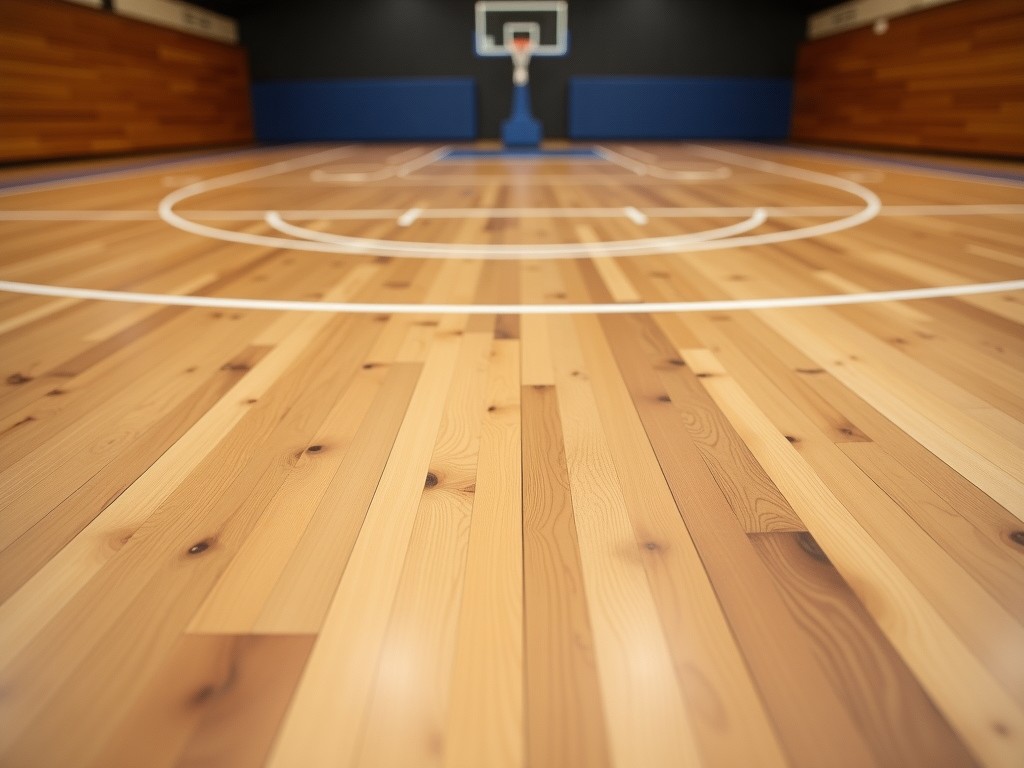
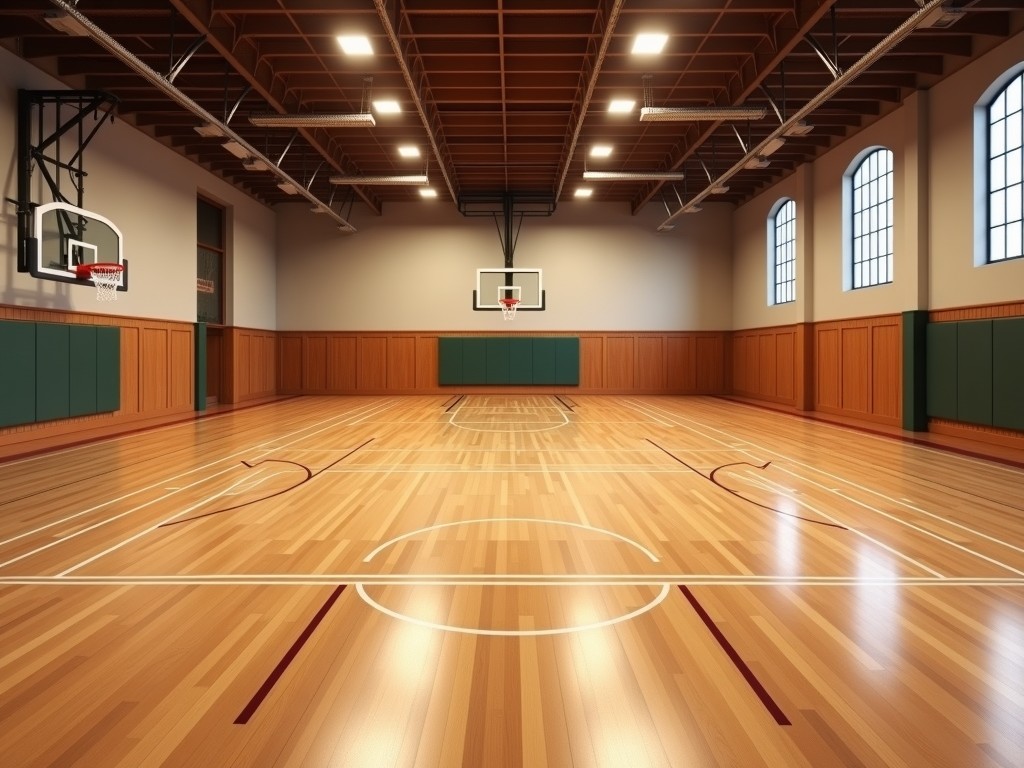
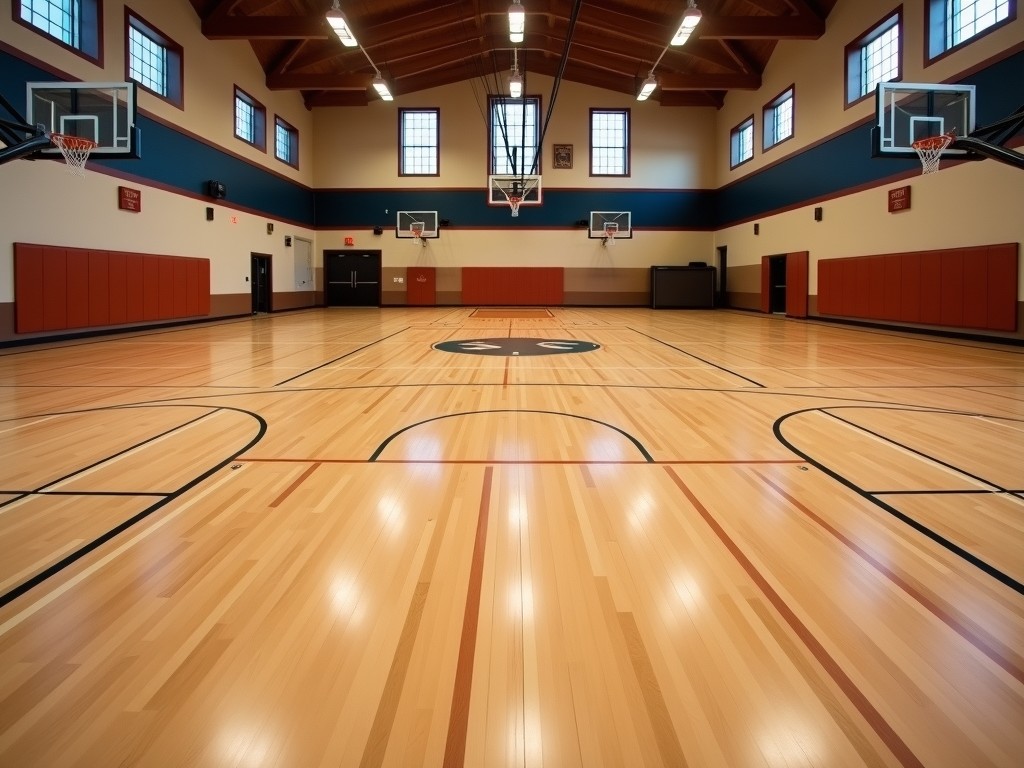
Best Price Affordable Maple Hardwood Basketball Flooring Factory
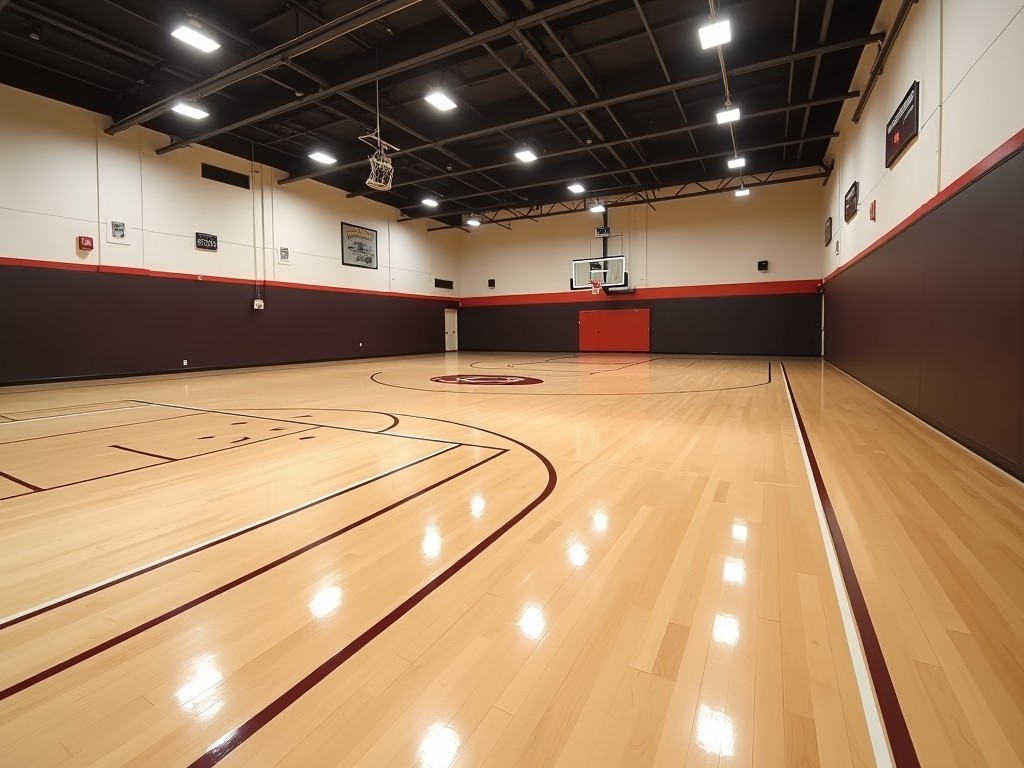
Best Price Affordable Maple Hardwood Basketball Flooring Factory
Affordable Maple Hardwood Basketball Flooring – Factory Direct Pricing
This product consists of solid maple strips milled to precise tolerances for indoor basketball courts. The hardwood provides a consistent ball rebound and surface traction that meets FIBA and NCAA performance requirements.
Material Composition and Properties
The flooring uses select-grade hard maple (Acer saccharum) with a typical density of 0.75 g/cm³ and a Janka hardness rating around 1,450 lbf. Moisture content is kiln‑dried to 6‑8 % to minimize dimensional change under indoor humidity conditions.
A factory‑applied finish consists of a two‑coat water‑based polyurethane system delivering a static coefficient of friction between 0.6 and 0.8, suitable for quick lateral movements.
Dimensional Specifications and Tolerances
Standard planks are produced in 20 mm thickness, with widths ranging from 50 mm to 100 mm and lengths up to 2.4 m. Dimensional tolerances are held to ±0.2 mm for thickness and ±0.5 mm for width.
End‑matching (tongue‑and‑groove) is machined to ensure tight joints without visible gaps after installation.
Typical Technical Specifications
| Parameter | Typical Value | Notes |
|---|---|---|
| Thickness | 20 mm | Standard; other thicknesses available on request |
| Width | 50‑100 mm | Custom widths possible |
| Length | Up to 2.4 m | Longer lengths require butt joints |
| Density | 0.75 g/cm³ | Typical for hard maple |
| Janka Hardness | ≈1,450 lbf | Indicates wear resistance |
| Moisture Content | 6‑8 % | Kiln‑dried, measured at shipment |
| Finish Type | Water‑based polyurethane, 2 coats | Low VOC, high durability |
| Static Coefficient of Friction | 0.6‑0.8 | Meets sports flooring standards |
| Shock Absorption | ≈55 % | Measured per ASTM F2772 |
Performance Characteristics for Basketball Courts
The maple surface delivers a ball rebound consistency within ±3 % of a reference concrete slab, ensuring predictable play. Its shock‑absorbing capacity reduces impact forces on athletes’ joints during jumping and landing.
Wear resistance is demonstrated by a Taber abrasion loss of less than 80 mg per 1,000 cycles under a 500 g load, suitable for high‑traffic court use. The finish maintains gloss level above 70 % after 500 hours of UV exposure.
Thermal expansion coefficient of maple is approximately 5×10⁻⁶ /°C, allowing the floor to accommodate seasonal temperature variations without cupping when installed with proper expansion gaps.
Acoustic testing shows a sound transmission class (STC) improvement of 3 dB over bare concrete, contributing to quieter gymnasium environments.
Overall, the flooring system provides a balanced combination of traction, energy return, and durability that meets the functional demands of competitive basketball.
Customization Options
- Thickness: 18 mm, 20 mm, 22 mm (custom)
- Width: 50 mm, 75 mm, 100 mm; optional custom widths
- Length: standard up to 2.4 m; longer lengths available with butt‑joint detailing
- Finish: water‑based polyurethane, oil‑based polyurethane, or UV‑cured acrylic
- Edge profile: tongue‑and‑groove, square edge, or beveled edge
- Stain: natural, light, medium, dark; or clear coat only
Quality Control and Testing
Each batch undergoes moisture content verification using a pin‑type meter, with acceptance limited to 6‑8 %. Hardness is spot‑checked via Janka tester on a representative sample.
Finish adhesion is evaluated by cross‑hatch tape test (ASTM D3359) requiring a rating of 5B or better. Dimensional stability is assessed after conditioning at 20 °C/65 % RH for 48 hours.
Final inspection includes visual grading for knots, splits, and color variation, ensuring only select‑grade material proceeds to packaging.
Packaging and Logistics
Planks are stacked on pallets with protective paper interleaving and stretch‑wrapped to prevent moisture ingress during transit. Each pallet is labeled with product code, batch number, and quantity.
Standard container loading accommodates 20 pallets per 40‑foot container, optimizing weight distribution and minimizing handling.
Lead Time and Sampling
Production lead time is typically 3‑4 weeks after receipt of approved drawings and deposit, depending on order size and customization complexity.
Samples of 300 mm × 300 mm sections are available upon request; shipping costs are borne by the requester.
Frequently Asked Questions
Can the dimensions be customized?
Yes, thickness, width, length, and edge profile can be adjusted to match project specifications; custom lengths beyond 2.4 m require joint detailing.
What information is required before quotation?
Please provide court area dimensions, desired thickness, finish type, and any special edge or staining requirements. A layout plan helps optimize material usage.
Which maple grades are available?
We supply select‑grade hard maple with minimal knots and uniform color; lower grades can be offered upon request for budget‑conscious projects.
How is quality inspected?
Inspection includes moisture content verification, hardness testing, finish adhesion (cross‑hatch), and visual grading per industry standards.
What packaging methods are available?
Standard packaging uses pallets with paper interleaving and stretch wrap; custom packaging such as crate or corrugated boxes can be arranged.
How are export shipments protected?
Pallets are wrapped in water‑resistant film and secured with straps; container loading includes dunnage to prevent shifting.
What is the typical production lead time?
Lead time ranges from 3 to 4 weeks for standard orders; customized orders may extend to 5‑6 weeks depending on complexity.
How are samples arranged?
Samples are cut from production stock, packaged in protective sleeves, and shipped via express courier; the requester covers freight charges.