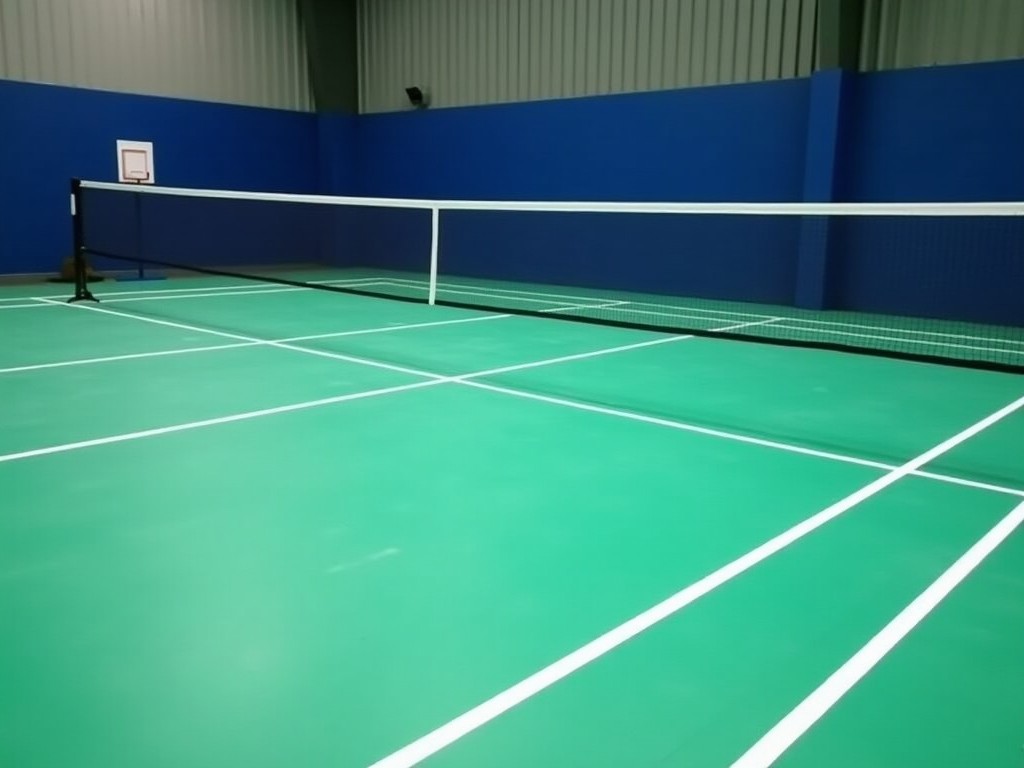
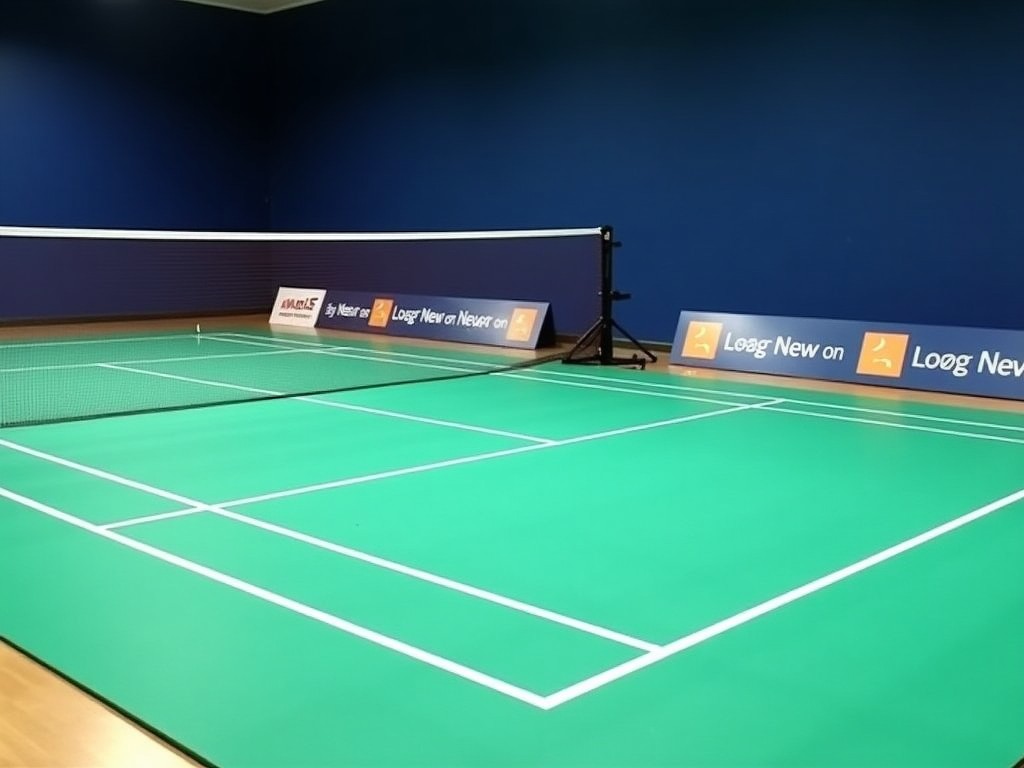
Wholesale Portable Badminton Court Floor Mats Supplier
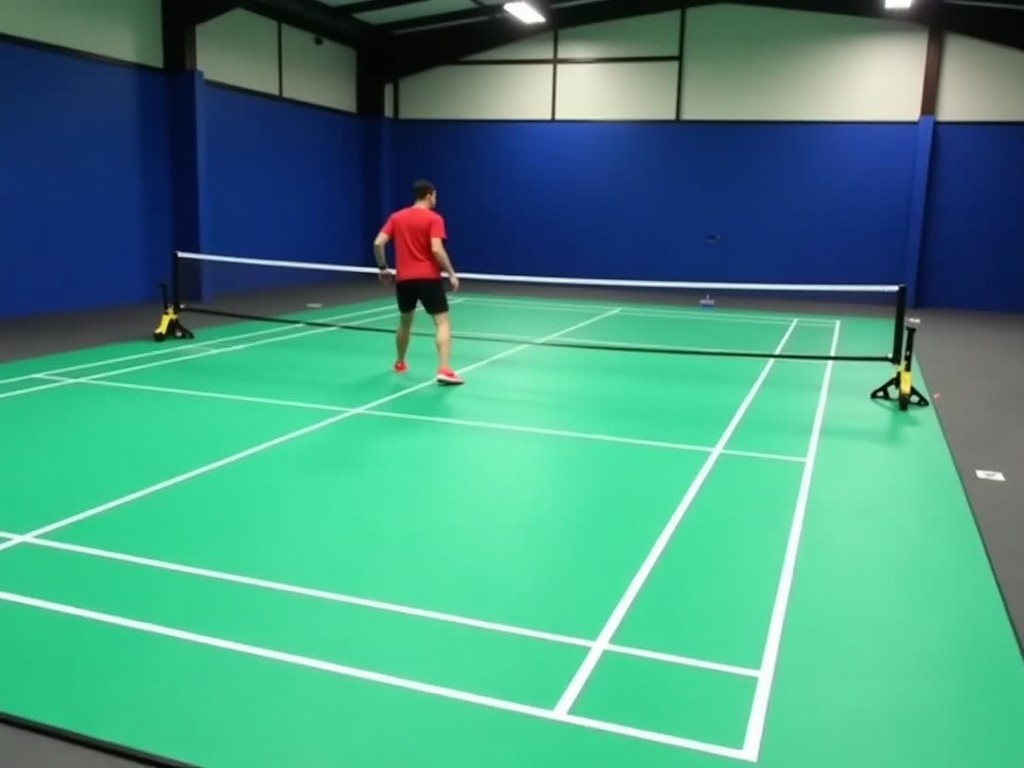
Wholesale Portable Badminton Court Floor Mats Supplier
Wholesale Portable Badminton Court Floor Mats
Portable badminton court flooring consists of interlocking panels that provide a consistent playing surface while allowing rapid installation and removal. The system is engineered to meet the shock absorption, slip resistance, and dimensional stability requirements defined by Badminton World Federation guidelines for temporary courts.
Material Composition and Performance Characteristics
Each panel is manufactured from high‑density polypropylene (HDPE) copolymer blended with ethylene‑vinyl acetate (EVA) modifiers to achieve a Shore A hardness of 85±5. This formulation delivers a vertical deformation of 2.5 mm under a 20 kg impact load, matching the energy return specifications for competitive play.
The surface layer incorporates a UV‑stabilized polyurethane coating with a coefficient of friction ranging from 0.6 to 0.8 (wet and dry conditions), reducing the risk of foot slippage during lateral movements. Edge profiles feature a reinforced polypropylene lip that increases shear strength by approximately 15 % compared to standard butt‑joint designs.
Thermal expansion of the HDPE‑EVA blend is measured at 1.2×10⁻⁴ mm/mm·°C, ensuring dimensional stability across temperature ranges from –10 °C to +45 °C typical of indoor sports halls.
Modular Design and Portability Features
Panels measure 1 m × 1 m with a uniform thickness of 20 mm, allowing a single installer to cover a standard 13.4 m × 6.1 m court in under 30 minutes using a handheld mallet for the interlocking tabs. The interlocking mechanism provides a tensile shear capacity of 3.5 kN per joint, sufficient to resist peak loads generated during aggressive rallies.
A lightweight core reduces panel mass to 7.8 kg each, enabling manual handling without mechanical lifts. When stacked, a pallet of 50 panels occupies a footprint of 1.2 m × 1.0 m and a height of 1.1 m, facilitating efficient warehouse storage and truckload consolidation.
Integrated alignment guides molded into each panel’s underside maintain flatness tolerance within ±0.5 mm across the assembled surface, meeting the flatness criteria required for official tournament play.
Typical Applications in Sports and Event Venues
Facility managers select these mats for multi‑purpose halls where badminton shares space with basketball, volleyball, or exhibitions. The rapid‑deploy nature allows conversion from a hardwood court to a badminton surface within a single shift, increasing venue utilization rates by up to 20 % according to industry benchmarks.
School districts and community centers use the product for temporary tournament setups because the flooring complies with ASTM F2772 standards for sport surfacing, providing adequate impact attenuation (force reduction ≥ 35 %) and vertical deformation limits.
Event organizers rely on the mat’s chemical resistance to common cleaning agents (isopropyl alcohol, diluted bleach) and its non‑porous surface, which prevents microbial growth and simplifies sanitation between matches.
Customization Options
| Parameter | Available Choices | Notes |
|---|---|---|
| Panel Color | Standard green, custom Pantone matches | Colorants are UV‑stable; custom shades require MOQ of 500 m² |
| Surface Texture | Fine‑grip (Ra ≈ 0.4 mm) or medium‑grip (Ra ≈ 0.6 mm) | Texture influences coefficient of friction; selection based on player preference |
| Thickness | 18 mm, 20 mm (standard), 22 mm | Increasing thickness raises shock absorption but adds weight; load calculations available on request |
| Edge Treatment | Straight interlock, tapered ramp, or flush‑fit border | Ramped edges reduce tripping hazards in multi‑use spaces |
All customizable parameters are subject to tooling lead times; standard configurations ship within 10 working days after receipt of purchase order.
Quality Control and Testing Procedures
Each production lot undergoes inline monitoring of melt flow index (MFI) to ensure polymer viscosity remains within 0.8‑1.2 g/10 min, which correlates directly with impact strength consistency. Finished panels are sampled for hardness, thickness, and dimensional tolerance using calibrated Durometer and laser micrometer instruments.
Impact attenuation is verified via the ASTM F355 Method A drop‑test, measuring peak deceleration of a 5 kg striker dropped from 200 mm. Acceptance criteria require a force reduction of no less than 38 % across three impact points per panel.
Slip resistance is assessed under both wet and dry conditions using the British Pendulum Tester; results must fall within the 0.6‑0.8 µ range documented in the product specification sheet. All test reports are retained for traceability and can be supplied to buyers upon request.
Packaging, Handling, and Logistics
Panels are stacked in groups of ten and secured with PET straps before placement into double‑wall corrugated cartons measuring 1.05 m × 1.05 m × 0.25 m. Each carton bears a printed label with SKU, batch number, and QR code linking to the digital test certificate.
Pallets conform to ISPM‑15 standards for export, utilizing heat‑treated hardwood stringers and stretch‑film wrapping to prevent moisture ingress during transit. A standard 40‑foot container can accommodate 20 cartons (200 panels) without exceeding weight limits.
Handling instructions printed on the carton advise lifting from the base panel to avoid edge deformation. Storage recommendations specify a maximum ambient temperature of 30 °C and relative humidity below 70 % to preserve material properties over a shelf life of five years.
Frequently Asked Questions
- Can panel dimensions be altered to fit non‑standard court sizes? – Yes, custom lengths and widths are available; panel thickness remains constant unless otherwise specified.
- What information is required before a quotation can be issued? – Desired court area, preferred color/texture, delivery timeline, and any certification needs (e.g., EN 14904).
- Which material grades are offered for the core and surface layers? – Core: HDPE‑EVA blend; Surface: polyurethane‑coated HDPE with optional antimicrobial additive.
- How is product quality verified prior to shipment? – Each lot is subjected to hardness, thickness, impact attenuation, and slip‑resistance testing; results are compiled into a batch test report.
- What packaging options exist for overseas orders? – Standard export‑grade cartons on ISPM‑15 pallets; optional wooden crates for high‑value or fragile shipments.
- How are sample panels arranged for evaluation? – Samples are shipped via express courier with a return label; charges are credited upon placement of a firm order.
For detailed specifications, pricing, or to discuss a custom configuration for your facility, please reach out to our technical sales team.
Submit Inquiry