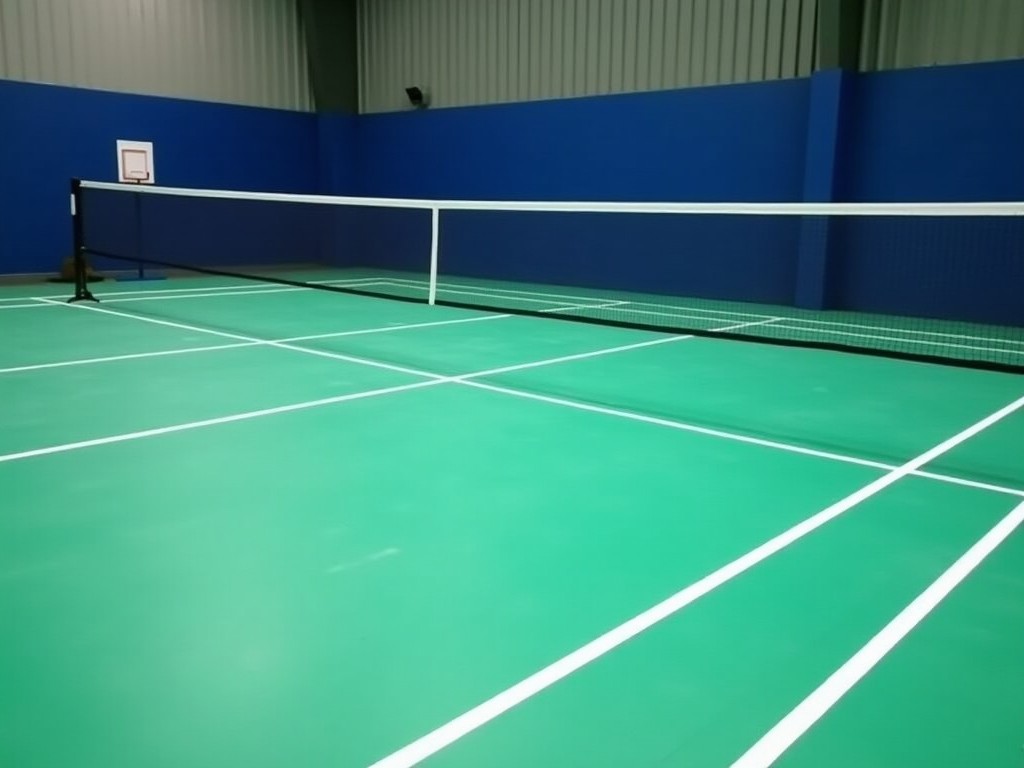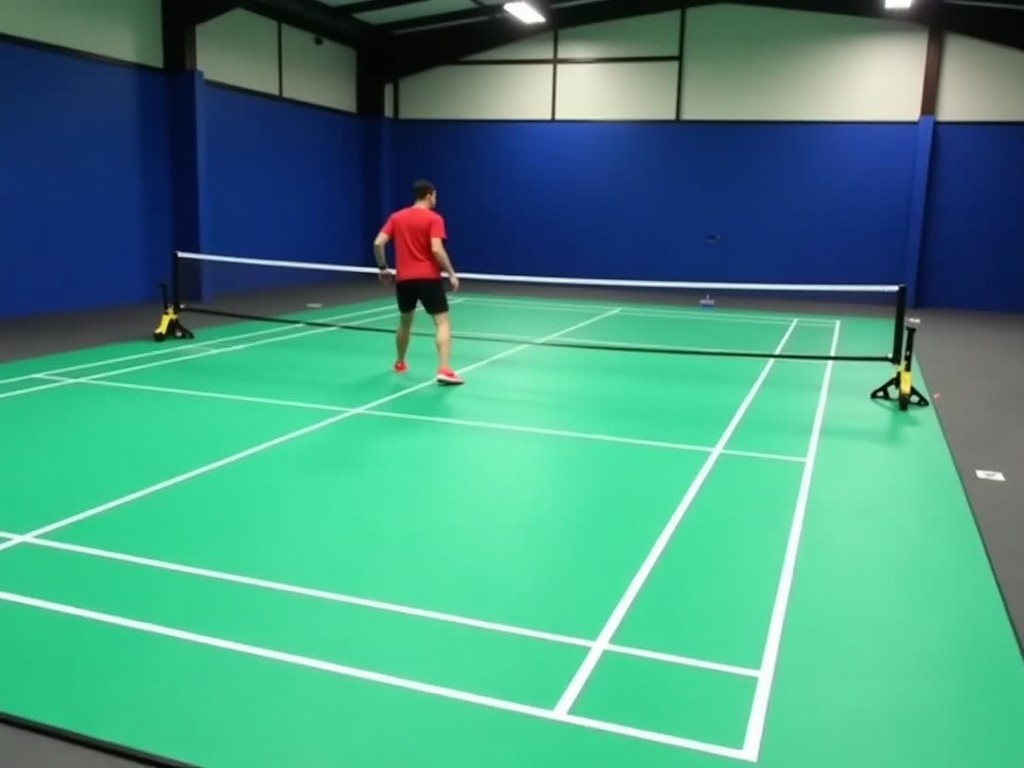
Oem Badminton Court Mats With Net Top Supplier
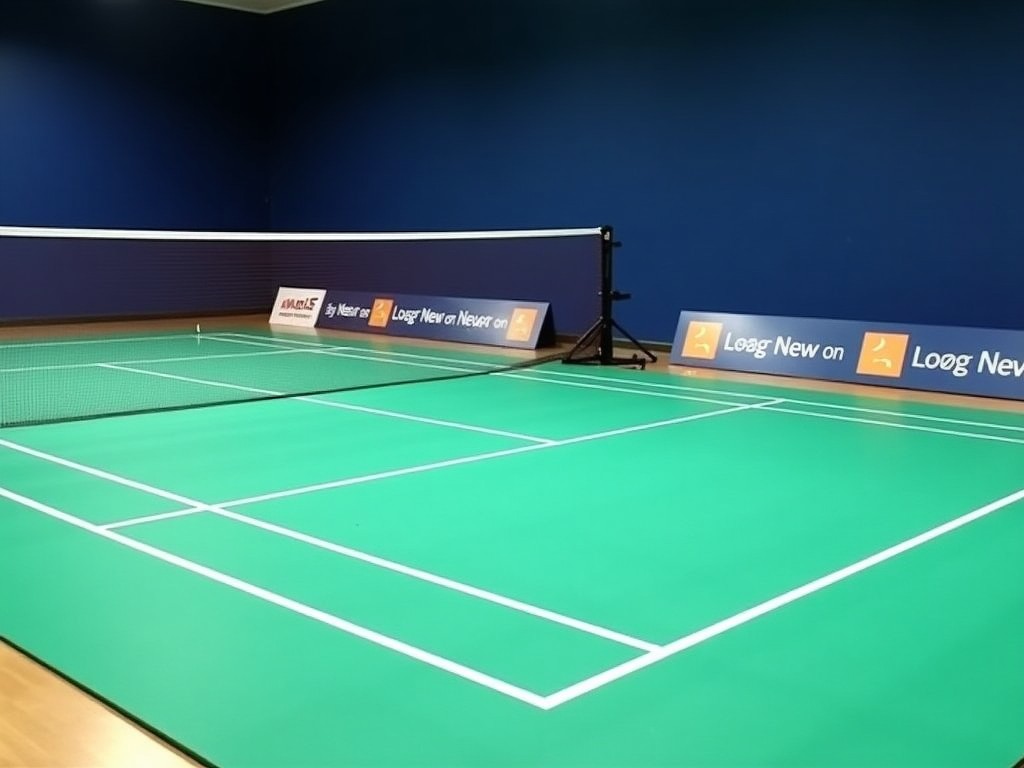
Oem Badminton Court Mats With Net Top Supplier
OEM Badminton Court Mats with Net Top Supplier
Material Composition and Structure
The mat core consists of a closed‑cell ethylene‑vinyl acetate (EVA) foam layer, 12 mm thick, with a density of 45 kg/m³, providing consistent shock absorption across the playing surface. A wear‑resistant polyvinyl chloride (PVC) top sheet, 0.8 mm thick, is laminated to the foam using a heat‑bond process that achieves a peel strength of ≥1.5 N/mm. The net‑top integration features a reinforced polyester mesh, 2 mm diameter filaments, embedded in a 0.5 mm PVC coating along the perimeter, delivering a tensile break load of 250 N per linear meter.
Performance Characteristics
| Property | Typical Value | Test Method |
|---|---|---|
| Shock absorption (vertical deformation) | 35 % ± 3 % | ASTM F2772 |
| Surface friction coefficient | 0.62 ± 0.05 | ISO 13036‑4 |
| Tensile strength (top sheet) | 22 MPa | ISO 527‑3 |
| UV stability (color change after 500 h) | ΔE < 3 | ISO 4892‑2 |
| Water absorption (24 h) | < 0.5 % by weight | ASTM D570 |
These values are derived from batch testing; actual performance can be tuned by adjusting foam density or top‑sheet thickness within the ranges listed in the customization section.
Customization Options
- Foam thickness: 8 mm, 10 mm, 12 mm, 15 mm (density adjustable 30‑60 kg/m³)
- Top‑sheet material: PVC, TPU, or rubber‑compounded vinyl (thickness 0.6‑1.2 mm)
- Surface texture: smooth, fine‑grain, or anti‑slip emboss (RA 10‑30 µm)
- Net‑top width: 50 mm, 75 mm, 100 mm (mesh count 9×9 to 12×12 per cm²)
- Color matching: Pantone or RAL references for top sheet and net coating
- Edge finishing: heat‑sealed, taped, or molded rubber flange
Each option is quoted separately; combined selections affect weight, roll‑up diameter, and cost per square meter.
Applications and Suitability
Badminton courts require a surface that limits vertical deformation to protect player joints while delivering sufficient traction for rapid lateral movements. The EVA‑foam core provides a linear force‑deflection curve up to 2000 N, matching the impact load of a smash landing. The PVC top sheet’s low‑abrasion finish reduces shoe wear, and the embedded net‑top eliminates tripping hazards at court boundaries. These characteristics make the mat appropriate for permanent indoor facilities, portable tournament setups, and multi‑purpose sports halls where quick installation and removal are essential.
Quality Assurance and Testing
Every roll undergoes inline thickness measurement (±0.2 mm) and surface hardness verification (Shore A 85 ± 5). After lamination, peel strength is sampled at 1 m intervals; any section below 1.2 N/mm triggers a rework. Finished mats are subjected to a 48‑hour accelerated aging cycle (UV‑B 0.68 W/m², 50 °C) followed by visual inspection for delamination or discoloration. Documentation includes a material safety data sheet (MSDS) and a test report summarizing the values in the performance table.
Packaging and Logistics
Mats are rolled onto a 150 mm diameter cardboard core, wrapped in 80 µm polyethylene shrink film, and placed in a double‑wall corrugated carton (dimensions: length = mat length + 20 cm, width = roll diameter + 10 cm, height = roll diameter + 10 cm). Each pallet holds up to 20 rolls, secured with PET strapping and corner protectors. For export, cartons are marked with handling symbols and include a packing list that details roll number, thickness, and custom specifications.
Lead Time and Sampling
Standard lead time for a 500 m² order is 3 weeks after approval of the technical drawing. Sample sections (1 m × 1 m) can be produced within 5 working days and shipped via express courier; shipping costs are reimbursed upon placement of a purchase order exceeding 200 m².
Frequently Asked Questions
Can dimensions be customized? Yes, length and width are cut to court specifications; standard rolls are 1.83 m wide, but custom widths from 1.0 m to 2.0 m are available.
What information is required before quotation? Required details include desired thickness, top‑sheet material, surface texture, net‑top dimensions, color codes, and total area.
How is quality inspected? Inline thickness gauges, peel‑strength testers, and UV‑aging chambers are used; final inspection includes visual checks and a roll‑tension test.
What packaging methods are available? Standard shrink‑wrapped rolls on cardboard cores; optional wooden crates for high‑value or overseas shipments.
How are export shipments protected? Cartons are moisture‑barrier lined, strapped, and corner‑protected; fumigation‑free pallets comply with ISPM 15.
What is the typical production lead time? 2‑4 weeks depending on order size and customization complexity; expressed in the quotation.
How are samples arranged? Samples are produced on the same line as production; request via the contact form and a proforma invoice will be issued for shipping.
Get a Quote
To receive a detailed technical proposal, please provide your court dimensions, performance targets, and any regulatory standards you must meet. Our engineering team will return a specification sheet, cost breakdown, and lead‑time estimate within one business day.