Custom Synthetic Badminton Court Flooring Price Supplier
Custom Synthetic Badminton Court Flooring Price Supplier
Custom Synthetic Badminton Court Flooring
Synthetic badminton court flooring is a multi‑layered polymer system designed to provide consistent ball rebound, adequate slip resistance, and impact attenuation for indoor sports facilities. Unlike natural wood, the material does not warp with humidity changes and requires minimal periodic maintenance.
Material Composition and Performance Characteristics
The typical construction includes a wear layer, a reinforced glass‑fiber or polyester mesh, and a closed‑cell foam backing. The wear layer is usually a polyurethane‑based coating with a thickness ranging from 0.8 mm to 2.0 mm, providing abrasion resistance measured by Taber wear index values below 150 mg per 1000 cycles.
Underlying foam layers contribute to vertical deformation, typically between 2.0 mm and 4.0 mm under a 500 N impact, which translates to force reduction values of 35 % to 55 % according to ASTM F2772. The coefficient of friction (COF) measured in the dry state falls within 0.4 – 0.6, meeting the slip resistance criteria for court sports.
Customization Options
- Total thickness: 6 mm – 12 mm, adjustable in 0.5 mm increments
- Wear layer thickness: 0.8 mm, 1.2 mm, 1.6 mm, 2.0 mm
- Surface texture: smooth, fine‑grained, or embossed for specific ball‑spin characteristics
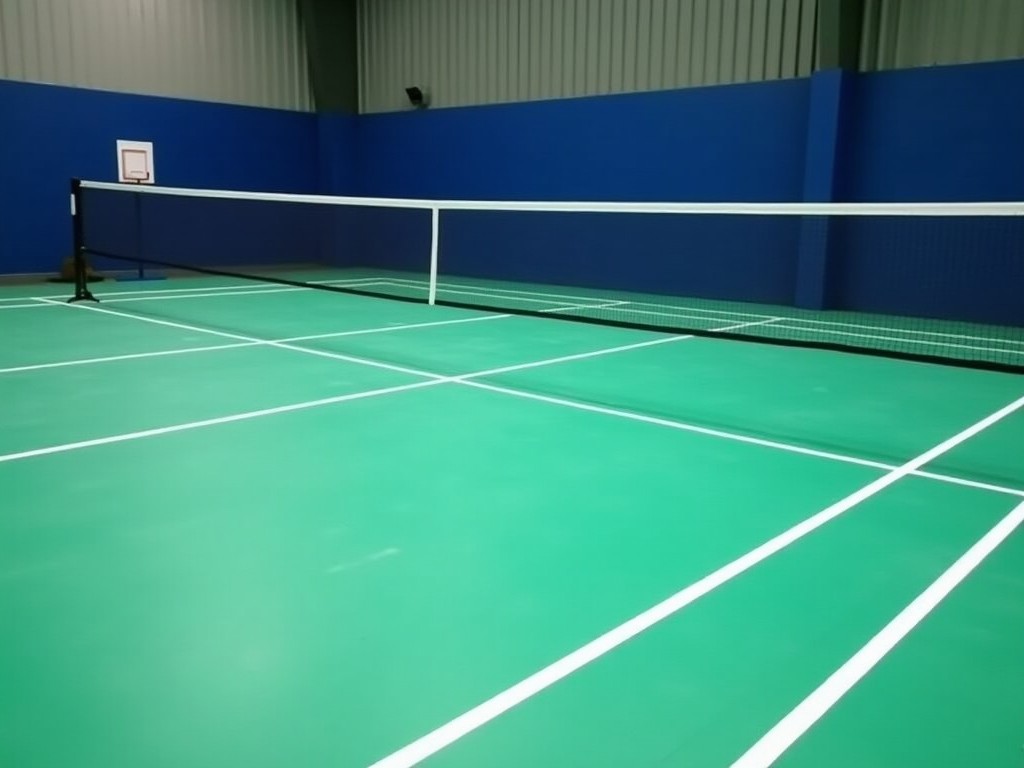
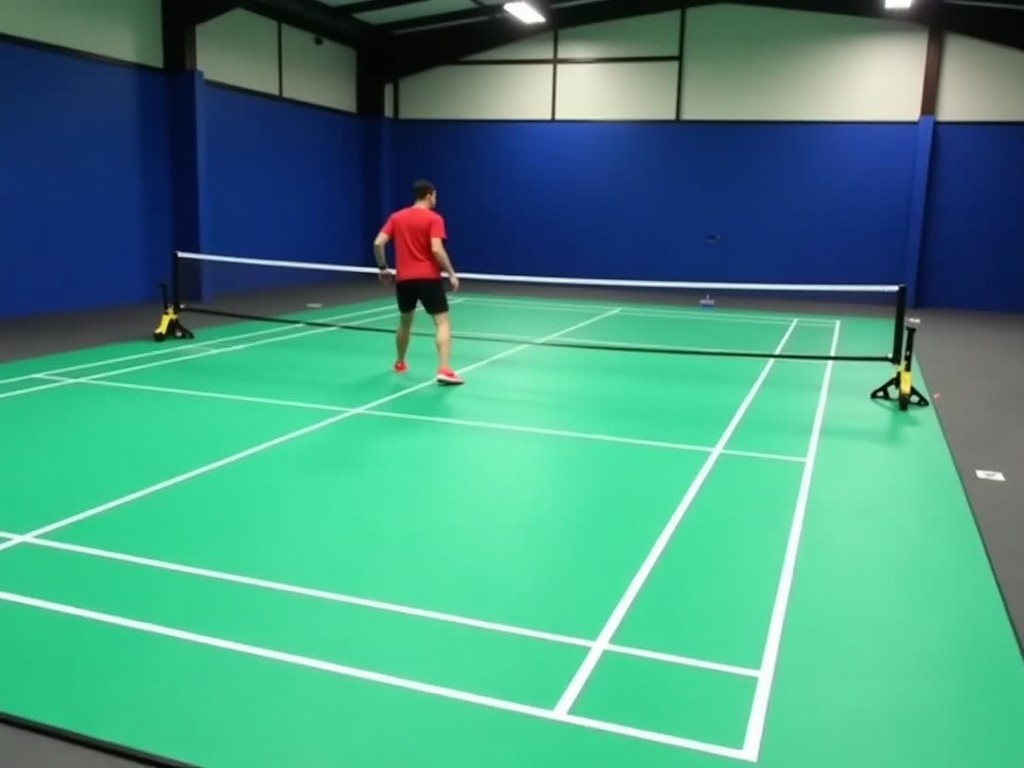
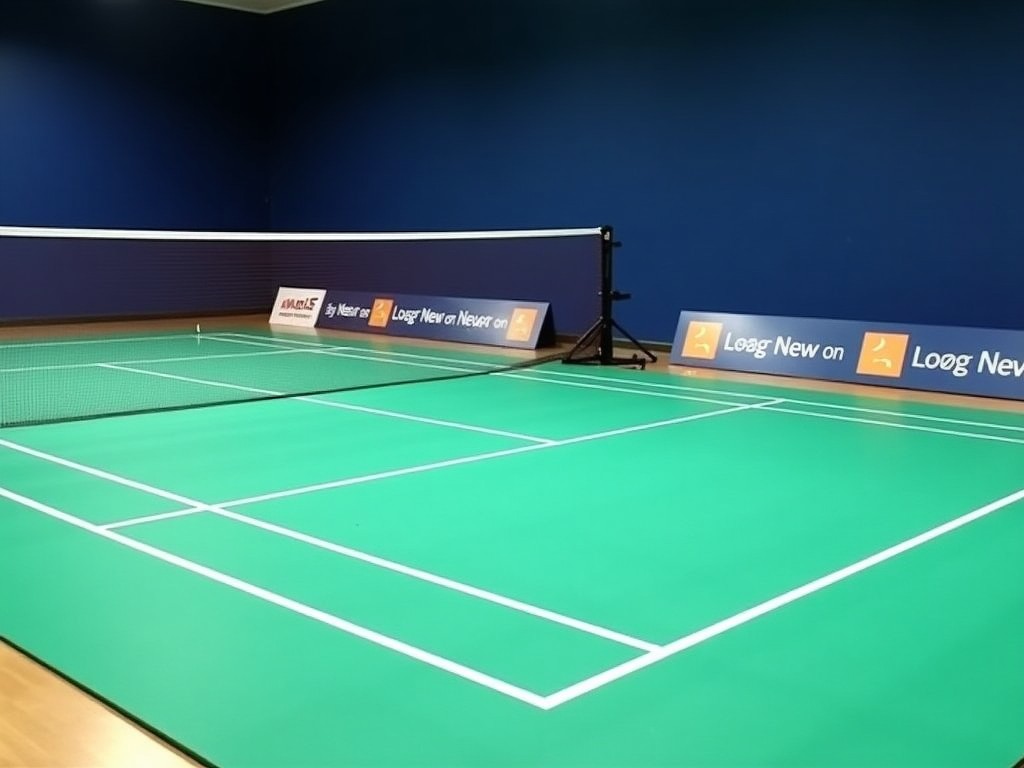
- Color palette: standard court colors (green, blue, red) plus custom RAL matches
- Line marking integration: pre‑printed or in‑lay PVC tape options
- Edge finishing: beveled, straight, or with integrated drainage channels
Applications and Functional Advantages
Badminton demands rapid lateral movements and precise shuttlecock trajectories; a floor with stable coefficient of friction and predictable energy return reduces the risk of ankle sprains and improves player confidence. The synthetic system provides uniform ball bounce across the entire surface, unlike wood which can exhibit variations due to grain direction.
Indoor multi‑purpose halls benefit from the flooring’s resistance to staining from sweat and its compatibility with standard cleaning agents. The closed‑cell backing prevents moisture absorption, maintaining dimensional stability over seasonal humidity swings.
Manufacturing Process and Quality Assurance
Production involves calendering the wear layer onto a reinforcing mesh, followed by lamination with the foam backing under controlled temperature and pressure. Post‑curing, each roll undergoes thickness profiling using laser gauges with a tolerance of ±0.1 mm across the width.
Quality checks include abrasion resistance (Taber), shock absorption (ASTM F2772), vertical deformation, and UV stability (ISO 4892‑2). Rolls are marked with batch numbers and test reports are available upon request.
Typical Technical Specifications
| Property | Typical Value | Test Standard |
|---|---|---|
| Total thickness | 8 mm – 12 mm | ISO 24346 |
| Wear layer thickness | 1.2 mm (standard) | ISO 24340 |
| Hardness (Shore A) | 85 ± 5 | ASTM D2240 |
| Coefficient of friction (dry) | 0.48 | EN 13036‑4 |
| Vertical deformation @ 500 N | 2.8 mm | ASTM F2772 |
| Force reduction | 42 % | ASTM F2772 |
| Weight per m² | 2.8 kg | ISO 8543 |
| Fire rating | Bfl‑s1 (EN 13501‑1) | EN 13501‑1 |
Price Influencing Factors
Unit cost is primarily driven by total thickness and wear‑layer thickness, as these determine raw material consumption. Custom colors or special surface textures add a setup charge proportional to the length of the run. Logistics expenses vary with destination; rolls are typically packed in polyethylene‑wrapped pallets of 20 m² each to minimize handling damage.
Volume discounts apply when ordering multiple courts or when the order exceeds 500 m², reflecting reduced per‑meter setup time on the calender line. Exact pricing is provided after reviewing the project specifications, including court dimensions, required line markings, and any edge‑finishing details.
Frequently Asked Questions
Can the flooring be supplied in rolls or as prefabricated tiles?
Both formats are available. Rolls are standard for full‑court installations, while interlocking tiles (typically 500 mm × 500 mm) are offered for temporary courts or areas requiring periodic replacement.
What information is needed to prepare a quotation?
Required details include: court length and width, desired total thickness, wear‑layer thickness, color or RAL code, line‑marking specifications (width and color), edge finishing type, delivery address, and requested delivery date.
How is the product protected during overseas shipment?
Rolls are wrapped in UV‑stable polyethylene film, placed on wooden pallets, and secured with polyester strapping. Corner boards and edge protectors are added to prevent deformation from stacking pressure.
What is the typical production lead time?
Lead time ranges from 3 weeks for standard colors and thicknesses to 5‑6 weeks for custom colors or special surface treatments, assuming raw material availability.
Are samples available for evaluation?
Yes, sample sections (300 mm × 300 mm) with the requested thickness and surface finish can be shipped at the client’s expense, allowing on‑site testing of bounce and friction characteristics.
Next Steps
To obtain a detailed quotation or request technical datasheets, please contact our sales team via the inquiry form. Providing the project specifics outlined above will enable an accurate cost estimate and lead‑time confirmation.
Request Quote