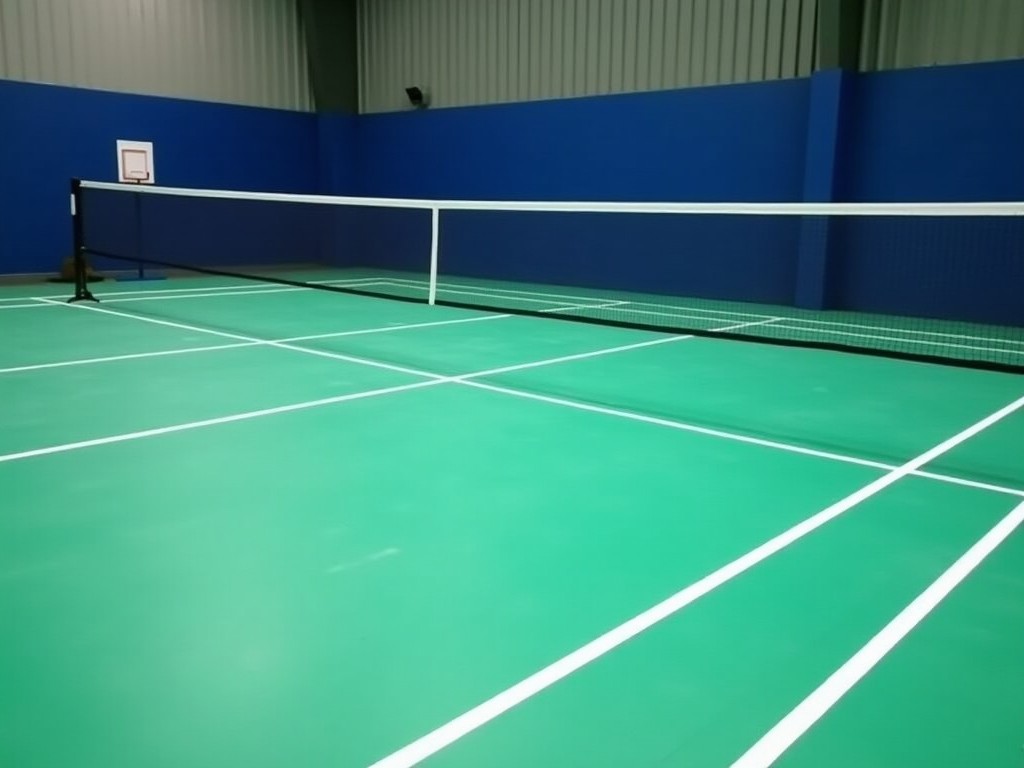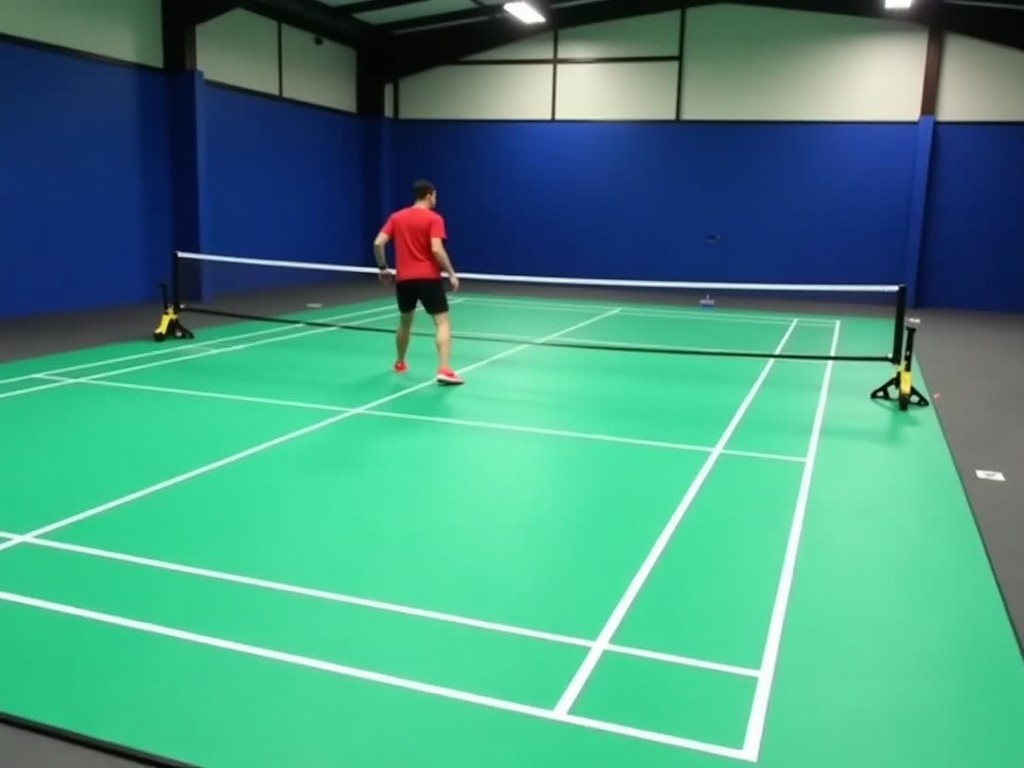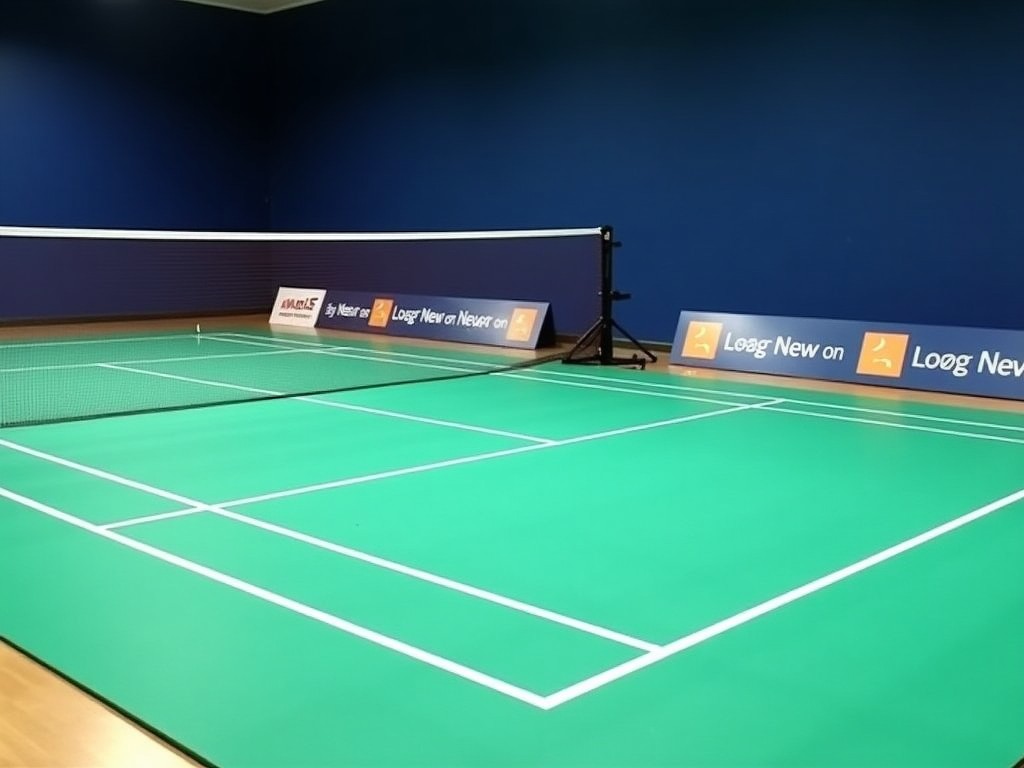
Custom Badminton Court Flooring Mats Manufacturer
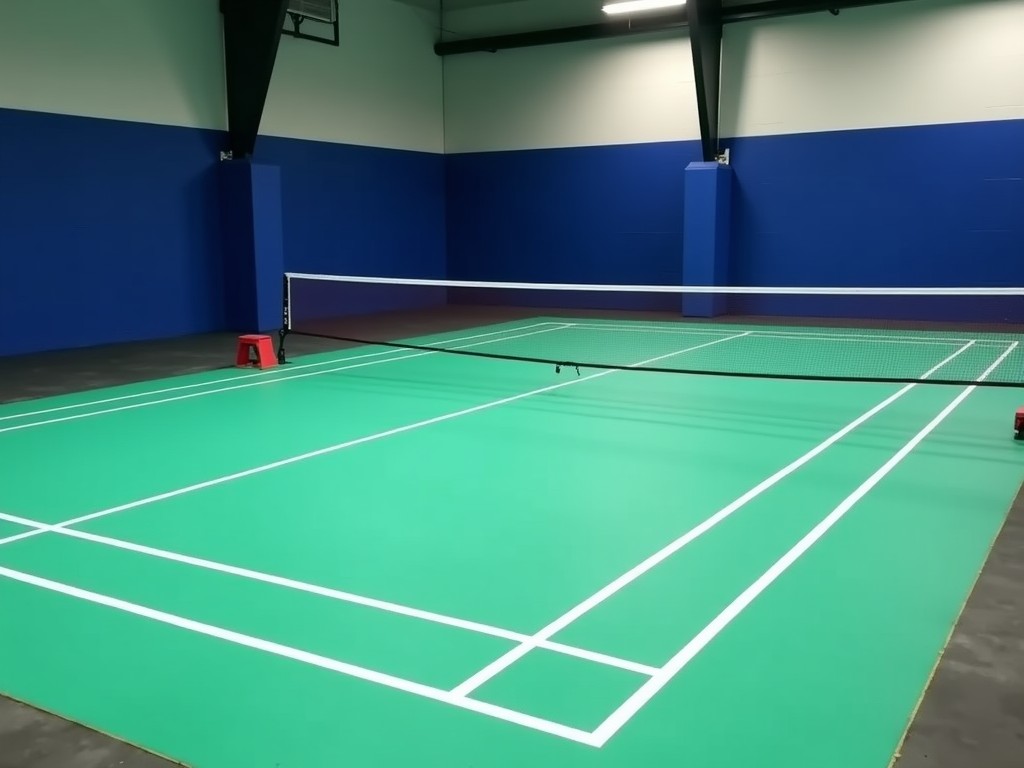
Custom Badminton Court Flooring Mats Manufacturer
Custom Badminton Court Flooring Mats
These mats are engineered to provide a consistent playing surface that meets Badminton World Federation (BWF) standards for shock absorption, slip resistance, and ball rebound. Each mat is fabricated to the exact dimensions of the client’s court, eliminating seams that can affect gameplay and maintenance.
Material Composition and Layer Structure
The core consists of a high‑density polyethylene (HDPE) foam layer, 12 mm thick, with a compressive modulus of 0.45 MPa, delivering uniform energy return across the entire surface. Above the foam, a wear‑resistant polyvinyl chloride (PVC) top sheet, 1.5 mm thick, is embossed with a directional grip pattern that yields a dynamic coefficient of friction between 0.62 and 0.68 under wet and dry conditions. A stabilizing bottom layer of recycled rubber granules, 3 mm thick, prevents lateral movement on concrete or asphalt substrates.
Performance Characteristics
| Property | Typical Value | Test Method |
|---|---|---|
| Shock Absorption (Force Reduction) | 58 % ± 3 % | EN 14808 |
| Vertical Deformation | 2.3 mm ± 0.2 mm | EN 14809 |
| Ball Rebound | 92 % ± 2 % | ASTM F2772 |
| Slip Resistance (Wet) | 0.66 μ | EN 13036‑4 |
| Abrasion Resistance (Cycles to Wear) | > 150 000 | ISO 5470‑1 |
Customization Options
- Court dimensions: length adjustable from 13.4 m to 18.0 m, width from 5.18 m to 6.10 m in 0.01 m increments.
- Thickness variations: 12 mm, 15 mm, or 18 mm foam core to suit sub‑floor stiffness requirements.
- Surface colour: standard BWF‑approved green, blue, or custom Pantone matches upon request.
- Logo integration: high‑resolution dye‑sublimation printing of club or sponsor logos within the top sheet, limited to 5 % of total surface area.
- Edge detailing: beveled or straight‑cut edges with optional PVC anchoring strips for permanent installation.
Typical Applications
Badminton courts installed in multi‑purpose sports centres benefit from the mat’s modular nature, allowing rapid conversion between badminton, pickleball, and recreational fitness activities. The low‑profile design minimizes transition height when placed over existing wooden flooring, reducing trip hazards while maintaining the required 4.5 m clear height above the playing surface for international competition.
Quality Assurance Process
Each production batch undergoes inline thickness measurement using laser triangulation (± 0.1 mm accuracy) and surface hardness testing with a Shore A durometer. Finished mats are subjected to a full‑scale rebound test on a calibrated rig, and a visual inspection checks for colour uniformity, logo registration, and edge integrity before packaging.
Packaging and Shipping
Mats are rolled onto a rigid cardboard core with a diameter of 150 mm, wrapped in low‑density polyethylene film, and placed inside a double‑wall corrugated crate. Crates are labeled with handling instructions, weight (typically 18 kg / m²), and orientation arrows to prevent deformation during transit.
Lead Time and Sampling
Standard production lead time is 3‑4 weeks after approval of the final CAD drawing and material sample. Customers may request a 1 m × 1 m performance sample, which is shipped via express courier within 5 business days for on‑site evaluation.
Frequently Asked Questions
- Can the mats be installed over existing synthetic turf? Yes, provided the turf is firmly bonded to a stable substrate and the combined height does not exceed the venue’s clearance limits.
- What information is required for a quotation? Court dimensions, desired thickness, colour preference, logo files (if any), and installation type (permanent or portable).
- Are the mats suitable for outdoor use? The PVC top sheet is UV‑stabilized; however, prolonged direct sunlight may cause colour fading. For permanent outdoor installations, a protective canopy is recommended.
- How are seams handled for courts larger than a single mat width? Mats are manufactured with interlocking tongue‑and‑groove edges that align within 0.2 mm tolerance, creating a seamless playing surface when joined.
- What certifications do the products hold? The mats meet BWF‑Approved Flooring standards and have been tested to EN 14904 for multi‑purpose sports surfaces.
Next Steps
To begin the specification process, please provide your court dimensions and any branding requirements. Our engineering team will return a detailed layout drawing and material data sheet for review.