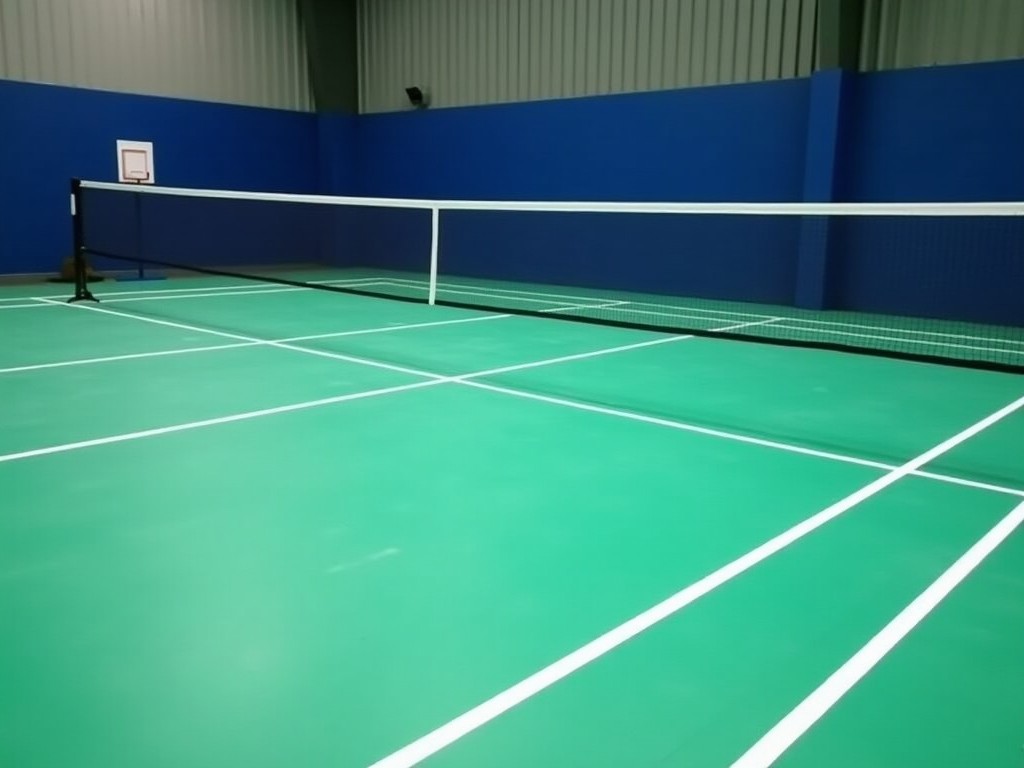
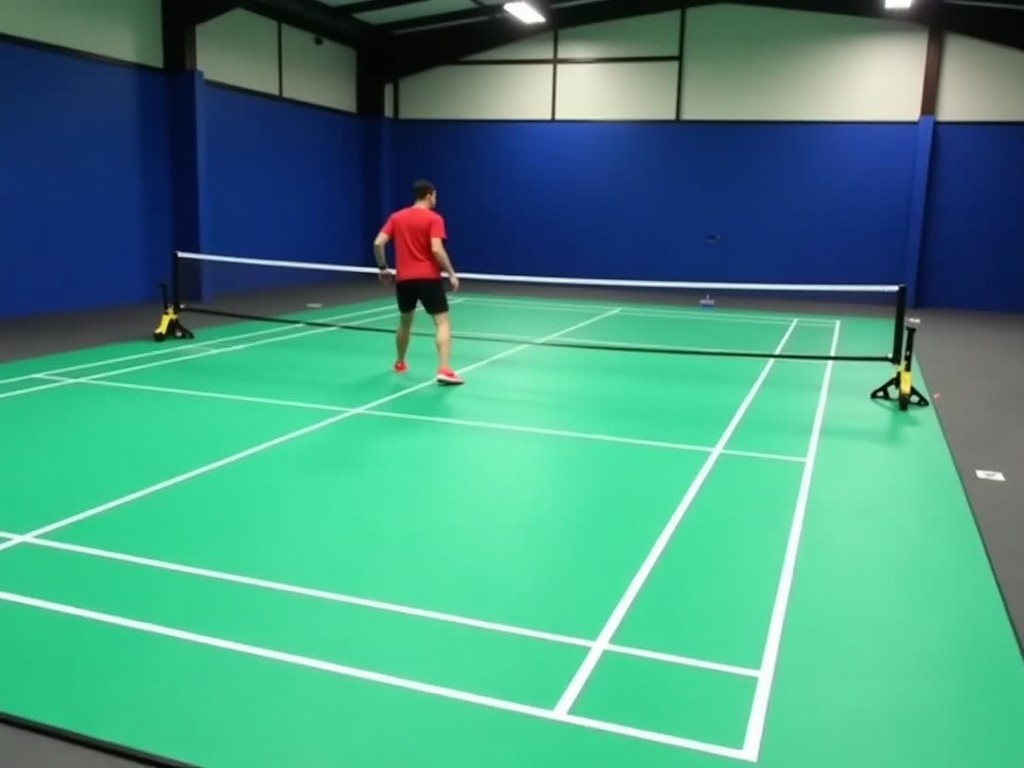
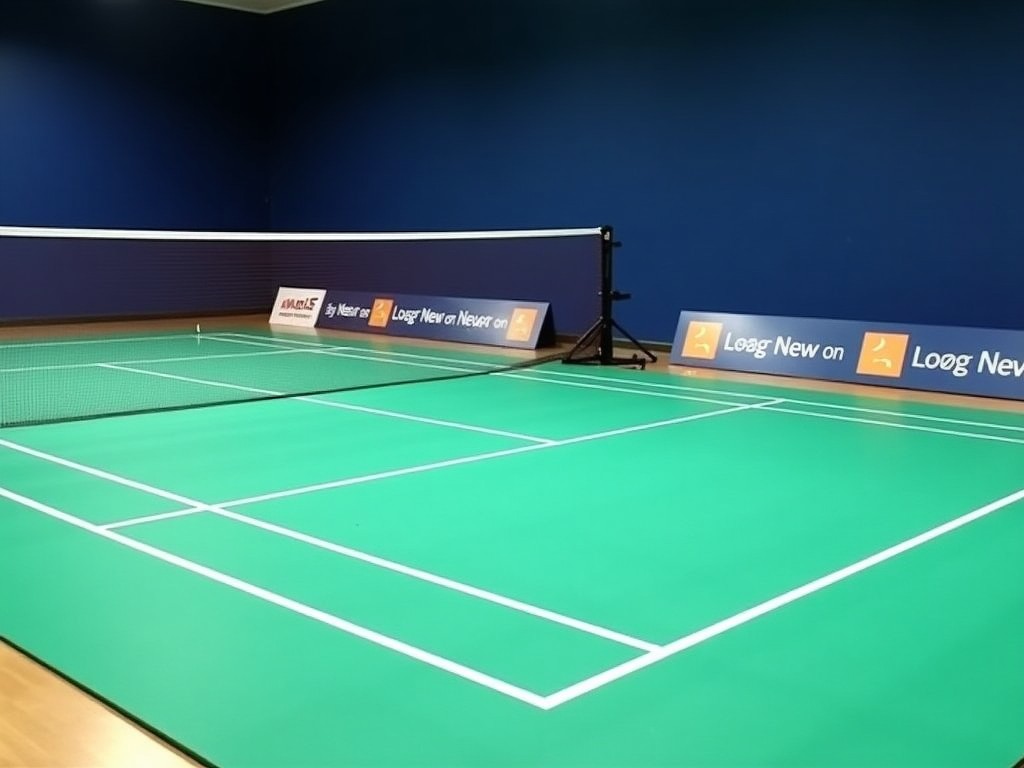
China Pvc Flooring For Badminton Court Supplier
China Pvc Flooring For Badminton Court Supplier
PVC Flooring for Badminton Court – Supplier from China
Badminton demands a surface that balances slip resistance with sufficient shock absorption to protect joints during rapid lateral movements. PVC sports flooring meets these requirements through a multi‑layer structure that delivers consistent ball rebound, low maintenance, and long‑term durability under intensive play.
Material Composition and Construction
The flooring consists of a clear wear layer, a printed design layer, a foam backing, and a stabilizing base. The wear layer is typically a PVC‑based coating ranging from 0.3 mm to 0.7 mm thick, providing abrasion resistance. Beneath it, a printed layer carries court lines and logos, while a closed‑cell foam layer (2 mm to 4 mm) supplies shock absorption and dimensional stability.
Overall thickness usually falls between 4.5 mm and 6.5 mm, allowing the product to be installed over various subfloors without excessive height buildup. The layers are calendared together under heat and pressure to ensure uniform bonding and prevent delamination during service.
Key Performance Characteristics
Slip resistance is measured by the coefficient of friction (CoF) using the pendulum test; typical values for badminton courts range from 0.6 to 0.8, providing enough grip for quick direction changes without hindering slide. Shock absorption, expressed as force reduction, generally falls between 25 % and 35 % according to EN 14904 standards, reducing impact on ankles and knees.
Vertical deformation under a 20 kg load is kept below 0.5 mm to maintain consistent ball bounce. Wear resistance is evaluated via Taber abrasion; the wear layer typically loses less than 0.1 mm after 1000 cycles under a 500 g load. UV stabilizers are added to minimize yellowing when the floor is exposed to indirect sunlight through windows.
Installation Guidelines
A clean, level subfloor with moisture content below 2 % is required; any deviations should be corrected with a self‑leveling compound before adhesive application. The flooring is usually bonded with a polyurethane‑based sports adhesive applied at a rate of 300–400 g/m², followed by rolling to eliminate air bubbles.
Seams are heat‑welded using a compatible PVC welding rod to create a continuous surface that prevents moisture ingress and maintains mechanical strength. Expansion gaps of 5–10 mm are left around the perimeter and filled with flexible silicone to accommodate thermal movement. The adhesive typically reaches handling strength in 4–6 hours and full cure in 24 hours at 20 °C.
Applications in Badminton Facilities
The product provides a uniform playing surface that supports consistent shuttlecock flight and reduces the risk of slipping during lunges and jumps. Its low‑maintenance nature—requiring only regular sweeping and occasional damp mopping—makes it suitable for venues with high court turnover.
- Professional tournament courts needing ITF‑approved surface characteristics
- Training centers where multiple daily sessions demand durable wear resistance
- School and community gyms seeking cost‑effective, easy‑to‑clean flooring
- Multi‑purpose halls that host badminton alongside other indoor sports
Quality Assurance and Testing
Production lines incorporate inline thickness gauges that monitor wear layer and overall thickness within ±0.05 mm. Samples from each batch undergo Taber abrasion, pendulum slip, and force reduction tests to verify compliance with project specifications.
Dimensional stability is checked after 24 hours exposure to 40 °C/90 % RH; length and width variation must stay below 0.1 %. Visual inspection ensures uniform color registration and absence of defects such as bubbles, streaks, or incomplete welding. All test results are retained for traceability and are available to customers upon request.
Customization Options
Customers can adjust the wear layer thickness to balance longevity with cost, select from a range of standard court colors or request custom hues, and have logos or sponsor graphics printed directly into the design layer. Roll width and length are tailored to minimize seams for specific court dimensions.
- Wear layer: 0.3 mm – 0.7 mm (customizable)
- Overall thickness: 4.5 mm – 6.5 mm (customizable)
- Color: standard court green, blue, red, or custom Pantone
- Graphics: court lines, logos, bespoke artwork
- Roll width: 1.5 m – 2.0 m (based on project layout)
- Roll length: up to 30 m per roll (splicing available)
Technical Specification Table
| Parameter | Typical Value | Notes / Customization |
|---|---|---|
| Wear layer thickness | 0.3 mm – 0.7 mm | Selected per expected foot traffic |
| Overall thickness | 4.5 mm – 6.5 mm | Includes foam backing and base |
| Slip resistance (CoF) | 0.6 – 0.8 | Pendulum test, wet condition |
| Force reduction | 25 % – 35 % | EN 14904 classification |
| Vertical deformation (20 kg) | ≤0.5 mm | Ensures consistent bounce |
| Taber abrasion (1000 cycles, 500 g) | <0.1 mm loss | Wear layer only |
| UV stability | ΔE < 2 after 200 h UV | Indirect sunlight exposure |
| Roll width | 1.5 m – 2.0 m | Customizable to reduce seams |
| Roll length | Up to 30 m | Splicing available for longer runs |
Packaging and Logistics
The finished rolls are wrapped in a low‑tack polyethylene film to protect the surface from dust and moisture during transit. Each roll is placed on a sturdy pallet, secured with straps, and covered with a top‑sheet to prevent shifting. Standard 20‑foot containers accommodate up to 30 rolls depending on width and length, while 40‑foot containers double that capacity.
Pallets are labeled with product code, roll dimensions, batch number, and handling instructions. For overseas shipments, a moisture‑barrier liner is added inside the container to guard against condensation. Documentation includes material safety data sheets (MSDS) and test certificates upon request.
Frequently Asked Questions
Yes, overall thickness and wear layer thickness can be customized based on expected usage intensity and subfloor conditions.
Required details include court dimensions, desired thickness, color or graphics specifications, subfloor type, and delivery destination.
The wear layer is a PVC‑based compound formulated with UV stabilizers and abrasion‑resistant additives; alternative formulations are available upon request.
Each batch undergoes inline thickness checks, Taber abrasion, pendulum slip, and force reduction tests; results are documented and can be shared with the buyer.
Standard packaging includes polyethylene film wrap, palletization, and strapping; additional moisture‑barrier liners and corner protectors can be arranged.
Lead time varies with order size and customization but generally ranges from 2 to 4 weeks after final design approval.
Contact for Inquiry
To discuss your badminton court flooring project, request a detailed quote, or obtain samples, please reach out using the link below.
Request a Quote