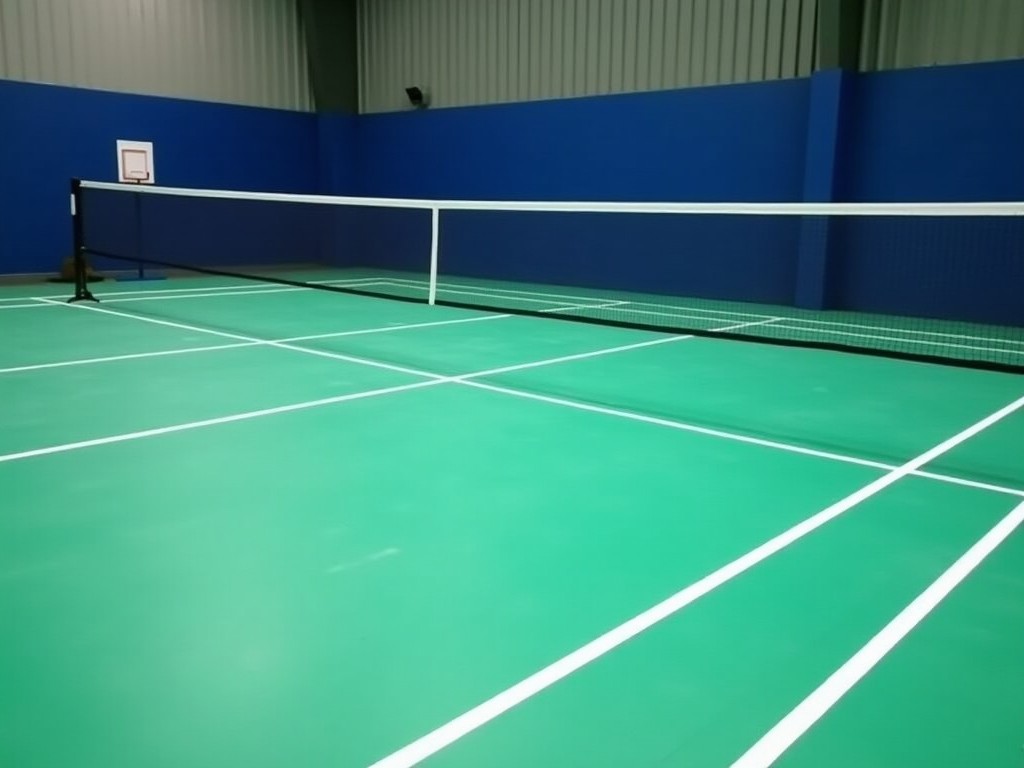
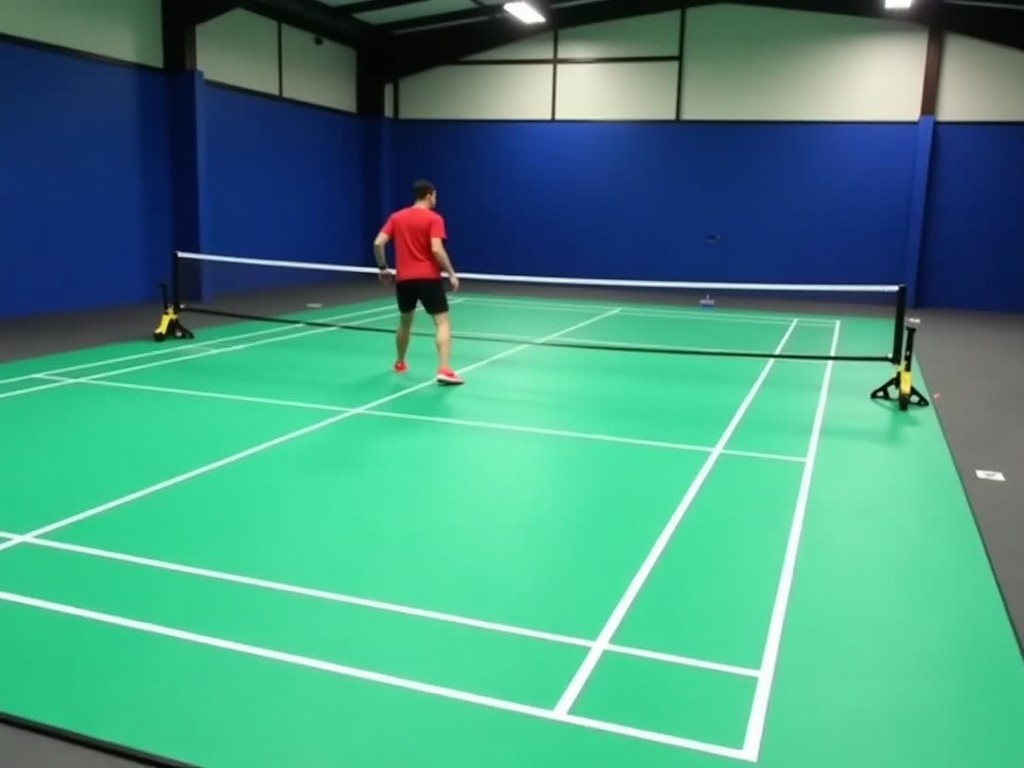
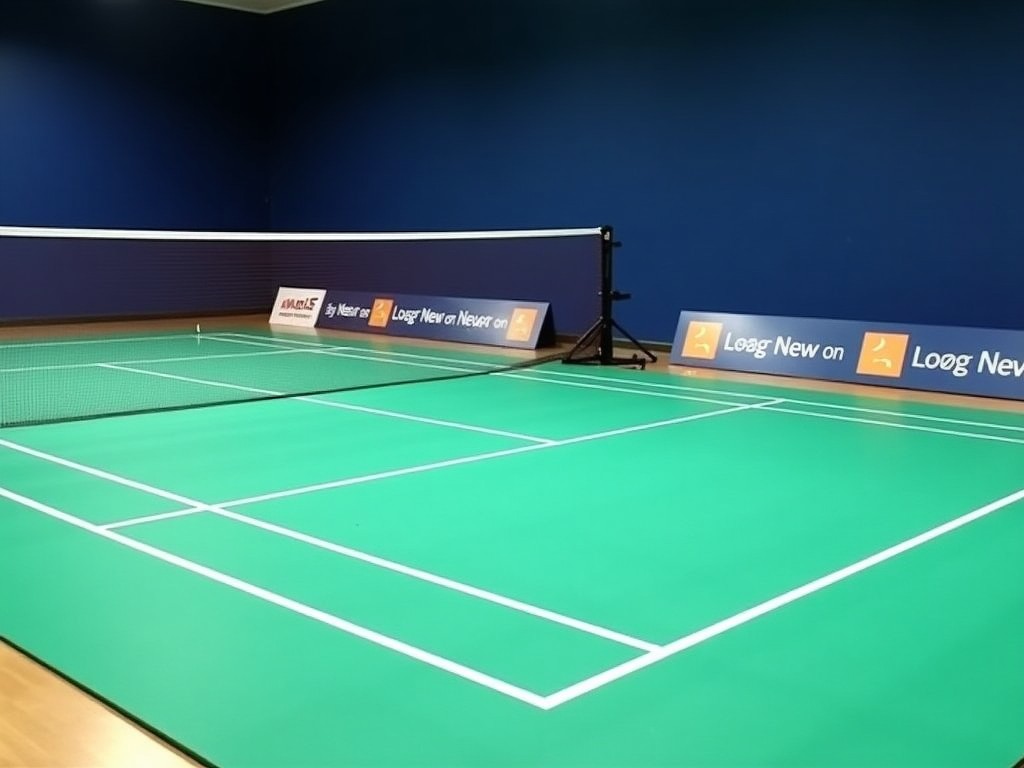
China Pvc Badminton Court Floor Mats Factory
China Pvc Badminton Court Floor Mats Factory
PVC Badminton Court Floor Mats
PVC badminton court floor mats are engineered to provide a durable, low‑maintenance playing surface that meets the performance demands of indoor sports facilities. The mats combine a flexible PVC matrix with reinforcing additives to deliver consistent shock absorption and ball response.
Material Composition
The base polymer is polyvinyl chloride (PVC) resin selected for its balance of flexibility and strength. Plasticizers such as phthalate‑free adipates are added to achieve a Shore A hardness range of 80‑90, while calcium‑zinc stabilizers protect against heat and UV degradation.
Fillers like calcium carbonate are used to control density and improve dimensional stability, allowing tight thickness tolerances across large production runs.
- PVC resin – primary structural component
- Phthalate‑free adipate plasticizer – provides flexibility
- Calcium‑zinc stabilizer – thermal and UV protection
- Calcium carbonate filler – density and stability modifier
Performance Characteristics
Typical mat thickness ranges from 6 mm to 12 mm, providing a balance between cushioning and stability. Tensile strength measured at break is generally ≥ 15 MPa, and elongation at break exceeds 250 %.
The surface finish is designed to give a coefficient of friction of 0.6 ± 0.05, ensuring adequate grip for quick lateral movements. Abrasion resistance evaluated by Taber test shows weight loss below 80 mg after 1000 cycles under standard load.
VOC emissions are kept below 0.5 mg/m³·h, complying with indoor air quality requirements for multi‑purpose halls.
| Property | Typical Value | Test Standard |
|---|---|---|
| Thickness | 6‑12 mm | ISO 24346 |
| Shore A Hardness | 80‑90 | ISO 868 |
| Tensile Strength | ≥ 15 MPa | ISO 527‑2 |
| Elongation at Break | ≥ 250 % | ISO 527‑2 |
| Abrasion Loss (1000 cycles) | < 80 mg | ISO 5470‑1 |
| Coefficient of Friction | 0.6 ± 0.05 | ASTM D2047 |
| VOC Emission | < 0.5 mg/m³·h | GB/T 18883 |
Installation Guidelines
Prior to installation, the subfloor must be clean, level, and dry, with a maximum moisture content of 3 % for concrete bases. A compatible polyurethane adhesive is applied in a thin, uniform layer, or the mats can be laid using an interlocking edge system if supplied with tongue‑and‑groove profiles.
Seams are sealed with a PVC welding rod or hot‑air weld to prevent moisture ingress and maintain uniform performance. After laying, a roller weighing 50‑70 kg is used to ensure full contact and eliminate air pockets.
Applications
Badminton courts require a surface that offers consistent shock absorption to reduce joint stress during rapid lunges and jumps, while delivering a predictable ball bounce. PVC mats provide a uniform elasticity across the entire area, minimizing dead spots that can affect shuttlecock trajectory.
The low‑maintenance nature of PVC—resistant to staining, easy to clean with mild detergents, and non‑porous—makes it suitable for multi‑purpose halls that host training sessions, tournaments, and recreational play.
Quality Control
In‑line monitoring includes thickness measurement with laser gauges every 2 m, and width control to maintain tolerances of ± 0.5 mm. Samples from each batch undergo tensile and elongation testing according to ISO 527‑2, with results recorded in a statistical process control chart.
Abrasion resistance is verified on a Taber abraser, and surface friction is tested using a portable tribometer. Visual inspection checks for color uniformity, surface defects, and proper edge finishing before packing.
Customization Options
- Thickness: 6 mm, 8 mm, 10 mm, 12 mm (custom steps available)
- Color: standard green, blue, red; custom RAL or Pantone matches upon request
- Surface texture: smooth, embossed grain, anti‑slip patterned
- Edge treatment: straight cut, beveled, interlocking tongue‑and‑groove
- Logo printing: screen‑printed or heat‑transfer for court branding
Frequently Asked Questions
Can dimensions be customized?
Yes, length and width can be cut to specific court sizes, and edge profiles can be adapted to suit the installation method.
What information is required for a quotation?
Required details include desired thickness, total area, color preference, edge type, and any logo or marking specifications.
How is quality inspected?
Each lot undergoes dimensional checks, tensile and elongation tests, abrasion resistance evaluation, and surface friction measurement before release.
What packaging methods are available?
Mats are rolled with a protective polyethylene wrap, placed in cardboard cartons, and secured on pallets with corner braces for export.
What is the typical production lead time?
Lead time ranges from 2 to 4 weeks depending on order size and customization complexity, confirmed at quote stage.
Contact Us
For technical data, sample requests, or project‑specific inquiries, please reach out to our engineering team.
Send an inquiry