Wholesale Volleyball Court Ground Mats Top Supplier
Wholesale Volleyball Court Ground Mats Top Supplier
Wholesale Volleyball Court Ground Mats – Technical Overview
Volleyball court ground mats serve as a load‑distributing layer that reduces impact forces transmitted to the sub‑floor while providing a consistent surface for ball bounce and player traction. Engineers select these mats based on measurable properties such as shock absorption, vertical deformation, and slip resistance rather than subjective quality claims.
Material Composition and Engineering
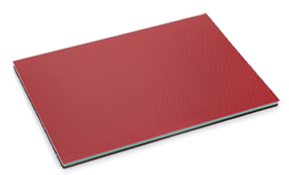
The core is typically a blend of recycled SBR rubber granules and EPDM particles bound with a polyurethane matrix, yielding a density range of 650–800 kg/m³. A wear‑resistant PVC foam top layer, 2–3 mm thick, adds abrasion resistance and facilitates cleaning. This combination provides a Shore A hardness of 45–55, balancing cushioning with sufficient firmness for rapid lateral movements.
Additives such as UV stabilizers and antimicrobial agents are incorporated to extend outdoor service life and inhibit microbial growth, which is critical for facilities with high humidity or frequent wet‑cleaning cycles.
Performance Characteristics
Shock absorption is quantified by the G‑max value obtained from ASTM F355 testing; typical values for these mats fall between 80 g and 110 g, indicating effective attenuation of peak impact forces. Vertical deformation under a 20 kg load averages 4–6 mm, providing a stable yet responsive feel for players.
Slip resistance is measured by the coefficient of friction (COF) per ASTM F2913; dry COF values range from 0.6 to 0.78, meeting the requirements for indoor sports surfaces where rapid direction changes occur.
| Property | Typical Value | Test Standard |
|---|---|---|
| Density | 650–800 kg/m³ | ISO 845 |
| Shore A Hardness | 45–55 | ASTM D2240 |
| G‑max (Impact) | 80–110 g | ASTM F355 |
| Vertical Deformation (20 kg) | 4–6 mm | ASTM F2772 |
| Coefficient of Friction (Dry) | 0.60–0.78 | ASTM F2913 |
Installation and Interlocking System
Mats are manufactured as 500 mm × 500 mm modules with a tongue‑and‑groove profile on all four edges, enabling adhesive‑free assembly. The interlock creates a continuous membrane that accommodates minor sub‑floor irregularities while preventing lateral shift during play.
Installation requires a clean, level substrate; a moisture barrier is recommended for concrete bases to protect against vapor transmission. No specialized tools are needed—modules are pressed together by hand or with a rubber mallet, and perimeter trim strips secure the edges.
Applications in Sports Facilities
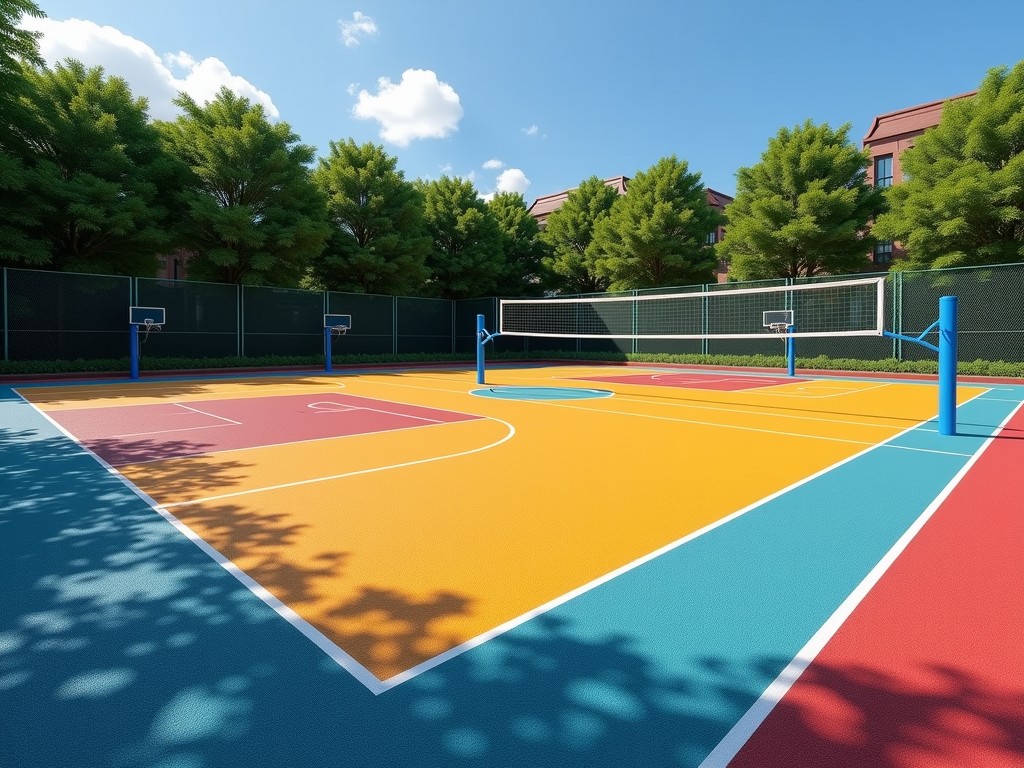
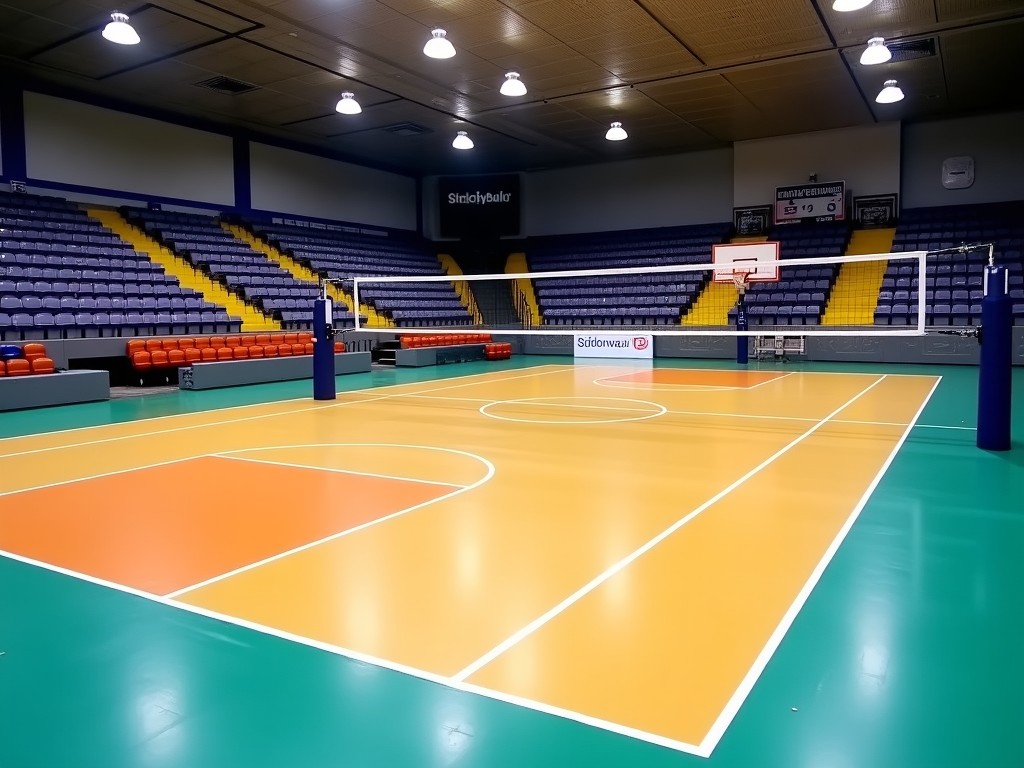
Volleyball courts demand a surface that provides uniform ball rebound, minimizes joint stress during jumps, and offers reliable traction for quick lateral moves. The mat’s consistent thickness and homogeneous material distribution ensure predictable bounce coefficients across the entire playing area, reducing variability that could affect game outcomes.
Beyond volleyball, the same specifications satisfy multi‑use gymnasiums where basketball, badminton, and indoor soccer are scheduled, because the impact attenuation and slip resistance meet the overlapping requirements of those sports.
Customization Options
Clients may specify panel dimensions ranging from 300 mm × 300 mm to 1000 mm × 1000 mm to accommodate unique layout constraints or to reduce seam frequency in large installations. Thickness can be adjusted between 12 mm and 25 mm, altering shock absorption values proportionally.
Color options follow the RAL system, allowing integration with team branding or facility aesthetics. Surface embossing for logos or court markings is achievable via a hot‑press process that does not compromise the mat’s mechanical properties.
Edge trim pieces are available in PVC or aluminum profiles, providing a finished look and protecting the exposed edges from impact damage during equipment movement.
Quality Control and Testing
Each production lot undergoes dimensional inspection using laser scanning to verify thickness tolerance within ±0.5 mm and planarity under 1 mm deviation across a 2 m span. Hardness is checked on five random samples per batch with a durometer, ensuring the Shore A value stays within the defined range.
Accelerated aging tests expose specimens to UV‑B radiation and cyclic temperature shifts (−10 °C to +50 °C) for 500 hours; post‑test measurements show less than 5 % change in hardness and tensile strength, confirming long‑term outdoor stability.
Final visual inspection looks for surface defects such as blisters, foreign inclusions, or incomplete curing; any unit exceeding the defined defect threshold is rejected before packaging.
Packaging and Logistics
Mats are stacked on pallets with a maximum load of 1 tonne per pallet, separated by corrugated cardboard layers to prevent abrasion. The palletized units are wrapped in stretch film and secured with polyester strapping, providing protection against moisture and shifting during transit.
For container shipments, pallets are arranged to maximize cube utilization while maintaining accessibility for forklift handling. Documentation includes material safety data sheets (MSDS), test certificates, and a packing list detailing quantity, dimensions, and batch numbers.
Frequently Asked Questions
- Can panel dimensions be customized to fit non‑standard court layouts?
- What information is required to generate a quotation (area, thickness, color, edge trim)?
- Which material blends are available for enhanced UV resistance or antimicrobial properties?
- How is quality inspected before shipment (dimensional, hardness, aging tests)?
- What packaging methods protect the mats during long‑distance transport?
- Are samples available for performance evaluation prior to bulk order?
- What is the typical production lead time for a customized order?
Request a Technical Quotation
To obtain a detailed proposal, please provide the court area, desired thickness, color preference, and any special requirements such as logo embossing or edge trim type. Our engineering team will review the specifications and return a comprehensive quote including lead time, packaging details, and compliance documentation.
Submit Inquiry