Custom Mini Indoor Volleyball Court Mats Supplier
Custom Mini Indoor Volleyball Court Mats Supplier
Custom Mini Indoor Volleyball Court Mats – Supplier Overview
Mini indoor volleyball courts require flooring that balances impact attenuation with consistent ball rebound while fitting limited floor areas. The mats described here are engineered to provide a defined thickness and density that reduces peak forces on joints during dives and slides, supporting athlete safety in confined spaces.
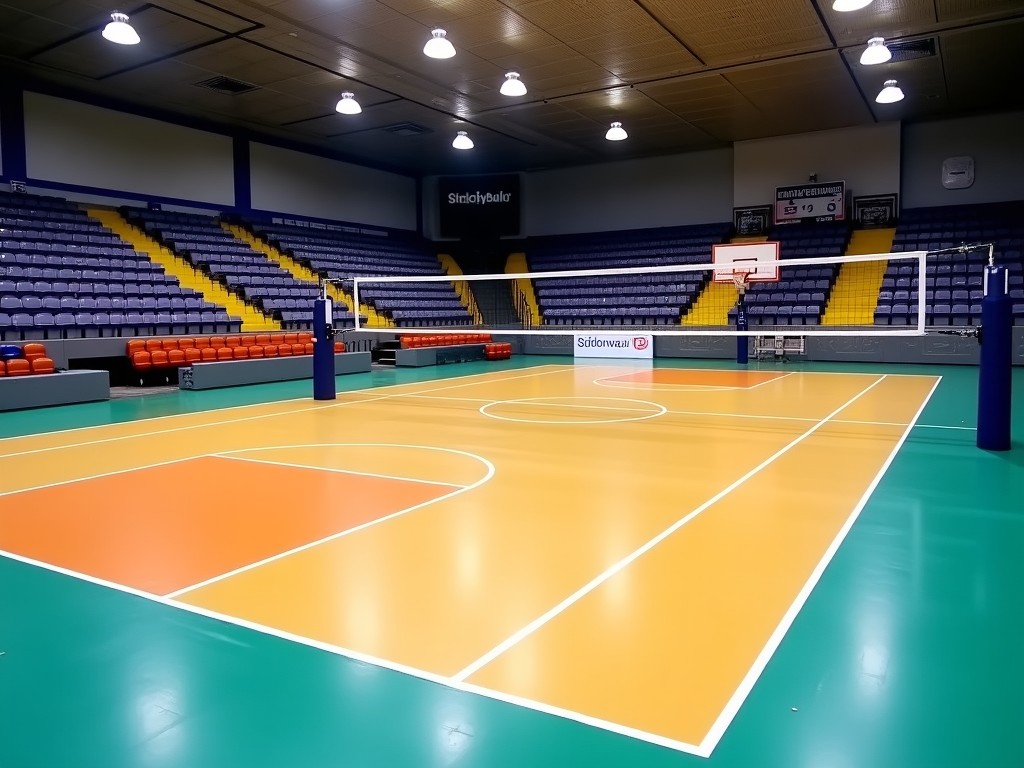
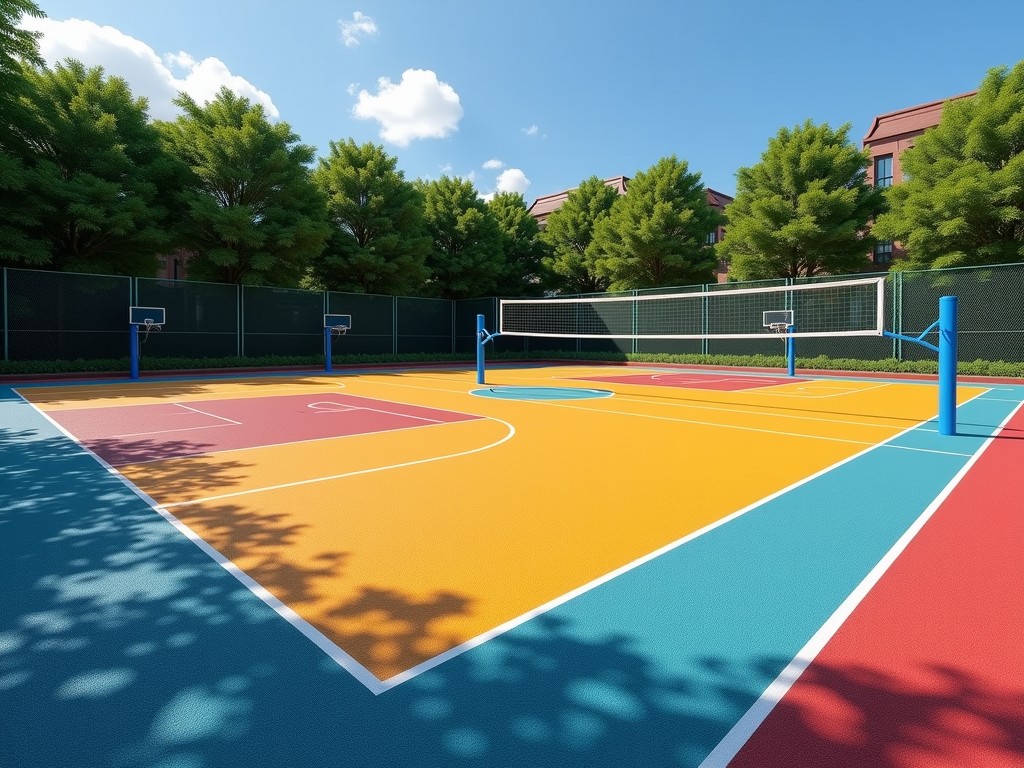
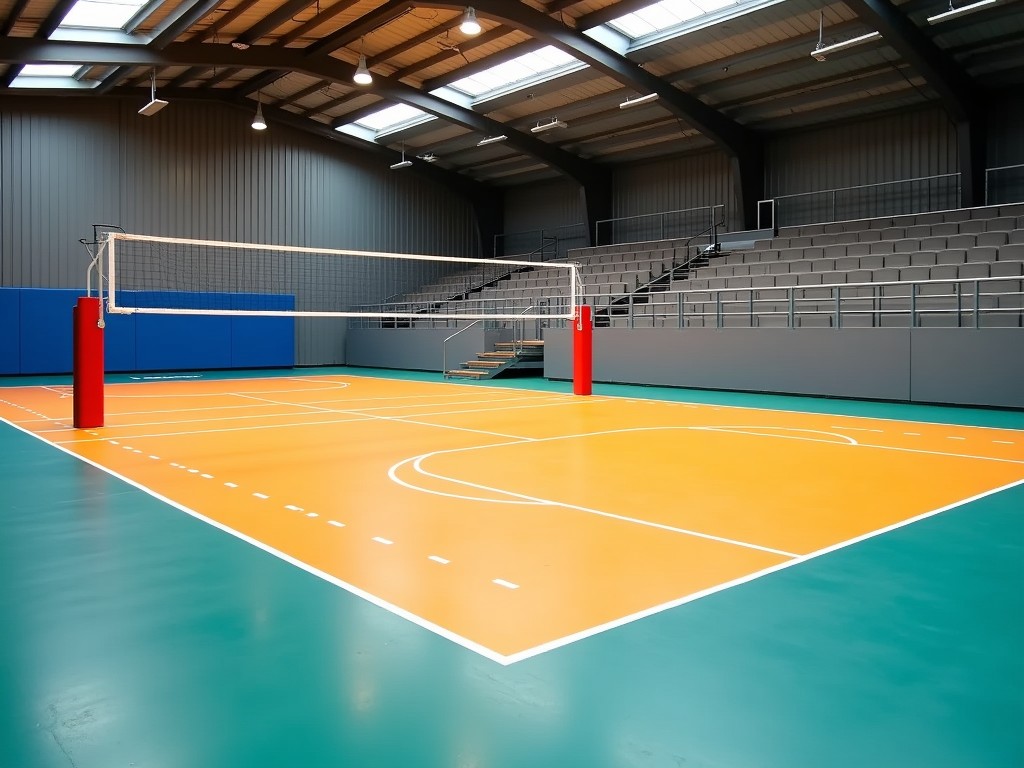
Typical installations include school multipurpose halls, community centre courts, and temporary event venues where a permanent surface is impractical or where modular flooring is preferred for rapid reconfiguration.
Material Composition and Core Properties
The core is usually a closed‑cell foam such as cross‑linked polyethylene (XPE) or ethylene‑vinyl acetate (EVA), selected for its ability to recover thickness after compression. Typical density ranges from 25 to 45 kg/m³, which influences both shock absorption and load‑bearing capacity.
A wear‑resistant top layer—commonly PVC‑coated polyester or a nitrile‑rubber blend—provides a consistent coefficient of friction (approximately 0.6–0.8) suitable for indoor volleyball shoes while resisting abrasion from frequent foot traffic.
Edge sealing is performed by hot‑press welding or ultrasonic bonding, creating a seamless perimeter that prevents delamination and limits moisture ingress.
Customization Choices
Dimensions can be tailored to court specifications, with standard panel widths ranging from 1 m to 2 m and lengths cut to match the playing area plus required runoff zones. Thickness options typically span 15 mm to 30 mm, allowing designers to tune impact attenuation according to the level of play.
Surface colour is achievable through pigmented PVC coatings, enabling corporate branding or court‑zone delineation without additional paint layers. Texture variations—such as a fine‑grain emboss or a ribbed pattern—are offered to adjust slip resistance and ball roll characteristics.
Edge treatments include beveled edges for smooth transitions to adjacent flooring, interlocking tongues for modular assembly, or reinforced welded seams for permanent installations.
Typical Performance Values
| Property | Typical Range / Value | Notes |
|---|---|---|
| Thickness | 15 mm – 30 mm | Customizable per project requirements |
| Density (core) | 25 kg/m³ – 45 kg/m³ | Influences shock absorption and load distribution |
| Shock absorption (force reduction) | 35 % – 55 % (ASTM F355) | Higher values indicate greater impact attenuation |
| Vertical deformation | 4 mm – 8 mm under 20 kg load | Measured per EN 14808 |
| Coefficient of friction (dry) | 0.6 – 0.8 | Suitable for indoor court shoes |
| Fire rating | EN 13501‑1 class B‑s2, d0 (typical) | Available upon request; varies with coating |
| Abrasion resistance (Martindale) | ≥ 20 000 cycles | Ensures surface longevity under frequent use |
Application Rationale for Mini Indoor Volleyball Courts
In facilities where ceiling height or floor area limits the installation of a full‑size court, a mini‑court configuration reduces the required playing surface while maintaining regulation‑scaled net height and attack lines. The mat system provides a uniform, portable surface that can be laid over existing hardwood, concrete, or multi‑purpose flooring without damaging the substrate.
Because the mats are modular, they enable rapid conversion of a space from volleyball to other activities such as badminton, fitness classes, or community events. The interlocking edge design prevents lateral shift during play, and the low‑profile thickness ensures that door clearances and equipment clearances remain unaffected.
Additionally, the material’s low thermal conductivity helps maintain a comfortable surface temperature in environments where heating or cooling systems are limited, contributing to player comfort during extended use.
Manufacturing and Quality Control Approach
Production begins with CNC‑cut foam cores to the specified thickness and dimensional tolerances (±2 mm). The core is then laminated with the chosen top layer using a hot‑press cycle that activates adhesives and creates a uniform bond strength, typically exceeding 150 kN/m in peel tests.
In‑process inspections include thickness gauging at multiple points per panel, density verification via sample weighing, and visual inspection for surface defects such as bubbles or pinholes. Each batch undergoes a drop‑ball impact test to confirm that the measured force reduction stays within the agreed range.
Final products are labeled with lot numbers, and a test report summarizing thickness, density, shock absorption, and slip resistance is supplied with each shipment, supporting traceability for the buyer’s quality records.
Packaging, Handling and Shipping
Mats are rolled around a rigid core (typically 100 mm diameter) to prevent creasing, then wrapped in a low‑density polyethylene shrink film that protects against moisture and surface abrasion during transit. Rolls are stacked on pallets with a maximum height of 1.2 m to maintain stability.
Handling instructions advise against dragging rolls across rough surfaces; instead, a pallet jack or forklift with padded forks should be used. For long‑distance shipments, containers are fitted with internal bracing to limit lateral movement, reducing the risk of edge damage.
Upon receipt, the buyer should allow the mats to acclimatize to ambient temperature for at least 24 hours before unrolling and installation, ensuring dimensional stability.
Frequently Asked Questions
- Can dimensions be customized? Yes, panels are cut to length and width according to court layout drawings; standard width increments are 0.5 m.
- What information is required before quotation? Required details include overall court dimensions, desired thickness, colour or branding needs, edge treatment preference, and any applicable fire‑rating or antimicrobial specifications.
- What materials are available? Core options: cross‑linked polyethylene foam (XPE) or ethylene‑vinyl acetate (EVA); top layers: PVC‑coated polyester, nitrile‑rubber blend, or TPU‑based coating.
- How is quality inspected? Incoming material checks, in‑process thickness and density monitoring, final drop‑ball impact and slip‑resistance testing, with test reports provided per lot.
- What packaging methods are available? Standard roll‑on‑core with PE shrink film; optional cardboard end caps for extra protection; palletized or containerized as per logistics.
- How are export shipments protected? Rolls are wrapped, strapped, and placed in containers with internal bracing; moisture‑absorbent desiccant packs can be added upon request.
- What is the typical production lead time? Lead time varies with order size and customization, generally ranging from 3 weeks for standard panels to 6 weeks for fully customized runs, subject to material availability.
- How are samples arranged? Sample panels (typically 0.5 m × 0.5 m) can be dispatched via express courier; costs are credited against a subsequent order.
For further information on custom mini indoor volleyball court mats, including detailed technical data sheets or to start a quotation request, please reach out to our engineering team.
Contact Technical Team