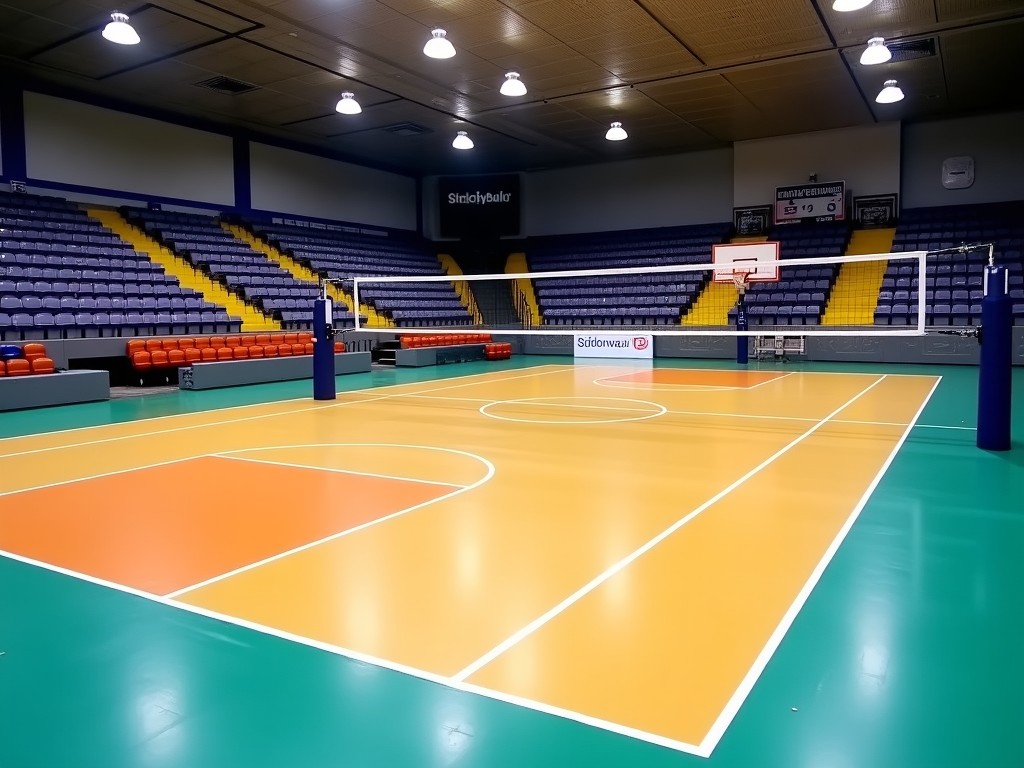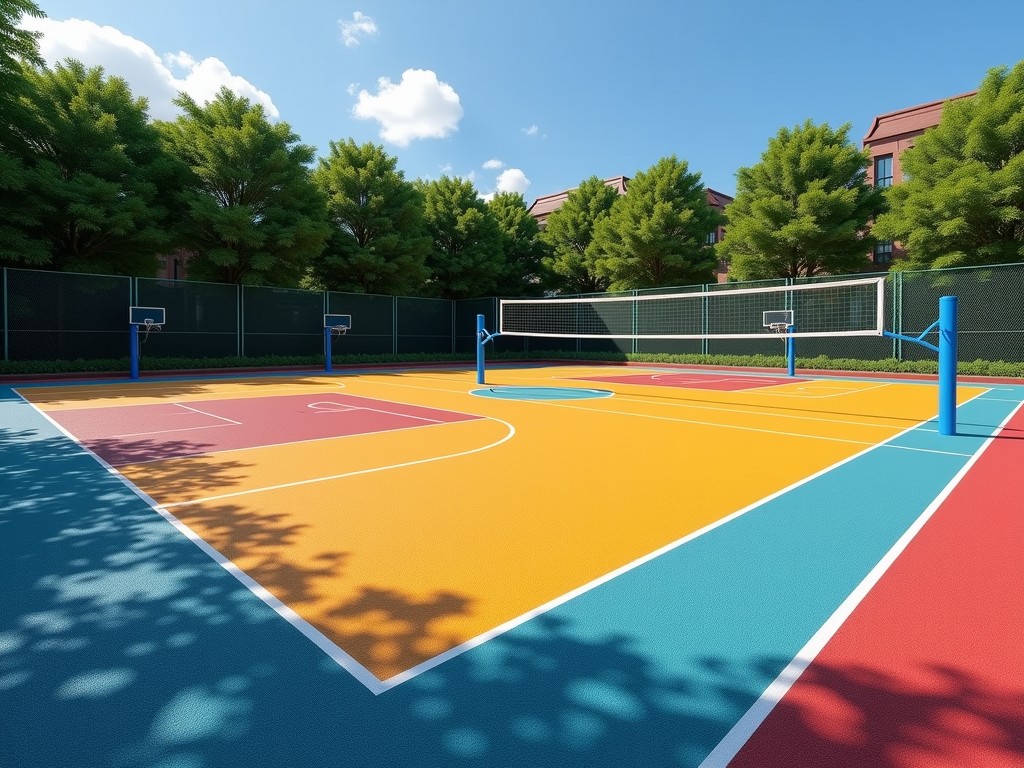
China Volleyball Court Ground Floor Mats Manufacturer
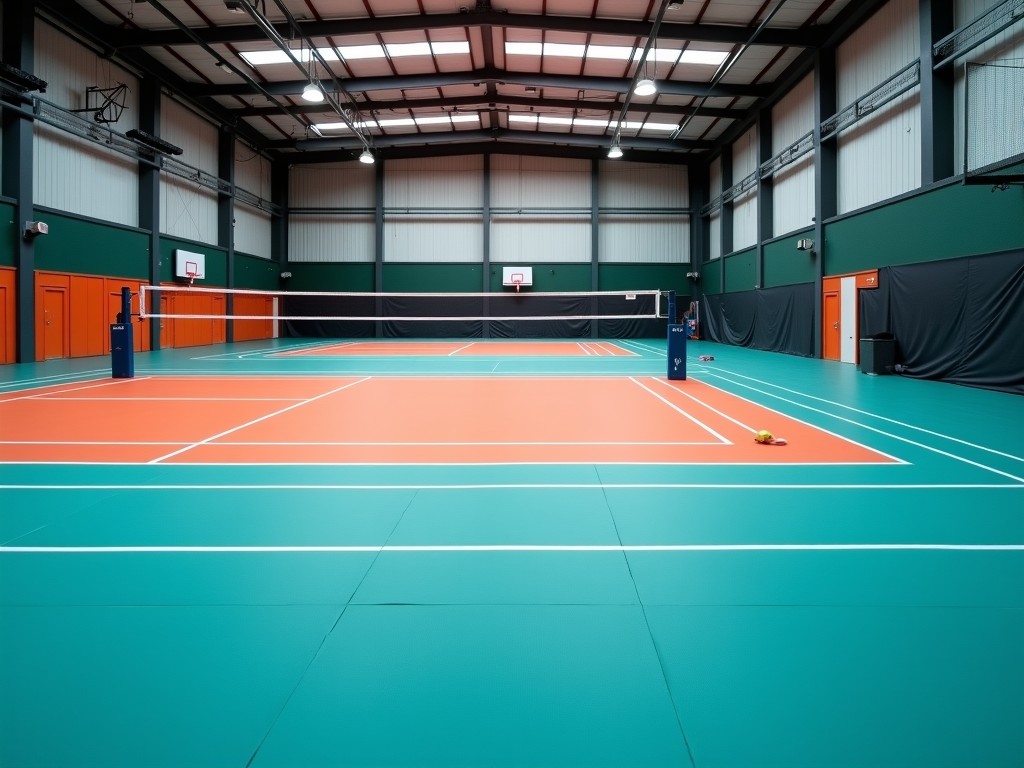
China Volleyball Court Ground Floor Mats Manufacturer
Volleyball Court Ground Floor Mats – Manufacturer Overview
The volleyball court ground floor mat is engineered to provide a stable, slip‑resistant surface that protects athletes and the underlying substrate.
Manufacturers in China produce these mats using polymer blends that can be tailored to indoor or outdoor court requirements.
Material Composition and Performance Characteristics
Typical mats combine a closed‑cell ethylene‑vinyl acetate (EVA) foam core with a polyvinyl chloride (PVC) wear layer.
The foam core provides compressive deflection measured in millimeters under a standard 500 N load, while the PVC layer offers abrasion resistance quantified by Taber wear indices.
Density of the foam core typically ranges from 0.04 to 0.08 g/cm³, influencing both shock absorption and load‑bearing capacity.
- Standard EVA‑core / PVC‑surface (indoor courts)
- Recycled rubber granules blended with polyurethane binder (outdoor, UV‑stable)
- Hybrid foam‑rubber composite for high‑impact training areas
Technical Specifications
The following table lists typical values that can be adjusted according to project requirements such as court size, expected load, and environmental exposure.
| Property | Typical Value | Unit | Notes |
|---|---|---|---|
| Thickness | 10 – 25 | mm | Customizable in 2 mm increments |
| Density (foam core) | 0.04 – 0.08 | g/cm³ | Affects shock absorption |
| Coefficient of friction (dry) | ≥0.6 | – | Measured per ASTM F2913 |
| Tensile strength (PVC layer) | 15 – 25 | MPa | Typical range for calendered PVC |
| UV stability (outdoor grade) | ≥500 h | h | ASTM G154 cycle |
Design Features for Volleyball Courts
The surface pattern is engineered to channel water away from the playing area, reducing puddle formation on outdoor courts.
Interlocking edges or tapered ramps are available to facilitate seamless installation over large areas.
Edge treatments include beveled or rounded profiles to minimize tripping hazards and to accommodate court‑line markings.
- Drain‑groove pattern (0.5 mm depth, 10 mm spacing)
- Interlocking tongue‑and‑groove system (male/female)
- Optional anti‑microbial additive in PVC layer
- Customizable color matching to team branding
Applications and Installation Considerations
These mats are installed beneath the sports‑surface layer of indoor volleyball courts to provide a uniform sub‑floor that protects the concrete slab from impact loads.
For outdoor beach or grass courts, the mats act as a separation layer that prevents soil migration while allowing drainage.
- Indoor gymnasium volleyball courts (school, club, professional)
- Outdoor sand‑court bases where a stable substrate is required
- Multi‑purpose sports halls that host volleyball, basketball, and badminton
- Temporary event courts requiring quick lay‑down and removal
Quality Control and Testing
Each production lot undergoes dimensional inspection using laser‑scanning equipment to verify thickness tolerance within ±0.5 mm.
Material samples are subjected to accelerated aging tests (UV, heat, humidity) to confirm that performance metrics remain within specification after 500 hours of exposure.
Finished mats are checked for surface hardness (Shore A) and coefficient of friction before packaging.
Customization Options
Manufacturers can adjust mat dimensions, thickness, and surface texture to match specific court layouts and performance targets.
All customizations are discussed during the quotation phase to ensure that tooling and material selections align with project timelines.
- Width and length increments of 0.5 m
- Thickness selection from 10 mm to 30 mm
- Surface finishes: smooth, textured, or perforated
- Edge treatments: straight, beveled, or interlocking
- Color options: standard grey, blue, red, or custom Pantone match
Frequently Asked Questions
Can dimensions be customized to match non‑standard court sizes?
Yes. Mats are produced in rolls or panels that can be cut to length and width in 0.5 m increments, allowing precise fit around court boundaries and obstacles.
What information is required before a quotation can be issued?
Project planners should provide the intended court area (length × width), desired thickness, indoor or outdoor use, and any specific performance criteria such as minimum friction coefficient or shock‑absorption value.
Which materials are available for outdoor UV‑exposed installations?
Outdoor grades use a UV‑stabilized PVC coating over a recycled rubber‑polyurethane core, tested for at least 500 hours of ASTM G154 exposure without significant loss of tensile strength.
How is quality inspected before shipment?
Each lot undergoes dimensional checks, surface hardness (Shore A 70‑90), friction testing, and visual inspection for defects; results are recorded in a test report that accompanies the shipment.
Contact for Technical Inquiry
For detailed technical data, sample requests, or project‑specific quotations, please reach out to our engineering team.
Request a technical consultation