Wholesale Interlocking Outdoor Court Tiles Factory
Wholesale Interlocking Outdoor Court Tiles Factory
Wholesale Interlocking Outdoor Court Tiles – Factory Direct Supply
Understanding Interlocking Outdoor Court Tiles
Interlocking tiles consist of modular units that connect via male‑female edges without adhesives or fasteners.
When installed, the system creates a continuous surface that distributes loads across the joint lines.
This configuration allows rapid deployment and removal, making the product suitable for temporary or semi‑permanent installations.
Material Selection for Durability
The base resin is a polypropylene copolymer chosen for its impact strength and low moisture absorption.
UV stabilizers are blended at 0.5‑2 % by weight to retard surface degradation under prolonged sun exposure.
Color pigments are dispersed using masterbatch techniques to achieve uniform hue throughout the tile thickness.
Production Flow in the Factory
Pelletized resin is fed into a heated barrel where it reaches a melt temperature of approximately 200 °C.
The molten polymer is injected into a multi‑cavity mold that forms the tile’s top surface, underside ribs, and interlocking profiles in a single shot.
Cooling channels within the mold extract heat at a controlled rate, ensuring dimensional stability and minimizing internal stresses.
After ejection, tiles undergo a brief anneal to relieve residual stress before moving to inspection.
Engineering Performance Characteristics
Load capacity is determined by the tile’s rib geometry and material modulus, typically supporting 2 tonnes per square metre when installed over a compacted base.
Slip resistance is measured using the pendulum test, yielding a value above 45 BPN for the standard textured finish.
Drainage is facilitated by perforations or channels that allow water to pass at a rate of 150 mm/hour under a 10 mm head.
| Parameter | Typical Value |
|---|---|
| Tile thickness | 15 mm (standard), 20 mm (heavy‑duty) |
| Weight per tile | 1.2 kg (15 mm), 1.6 kg (20 mm) |
| Interlock type | Male‑female tongue‑groove with lateral lock |
| Standard dimensions | 300 mm × 300 mm |
| Color options | Standard palette (red, blue, green, gray) + custom Pantone |
| UV stability (QUV) | ≥1500 hours with ΔE < 3 |
| Load capacity | 2 t/m² (uniformly distributed) |
| Temperature range | ‑30 °C to +60 °C |
Why These Tiles Suit Outdoor Court Applications
Sports surfaces require a uniform playing field that maintains consistent ball bounce and player traction.
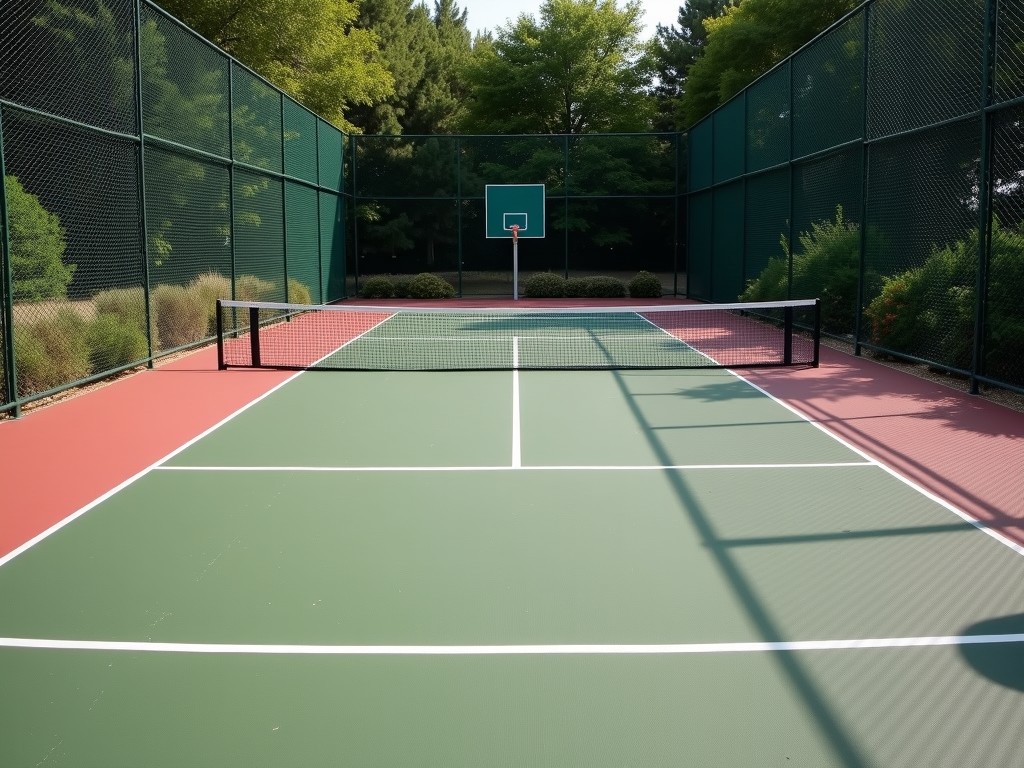
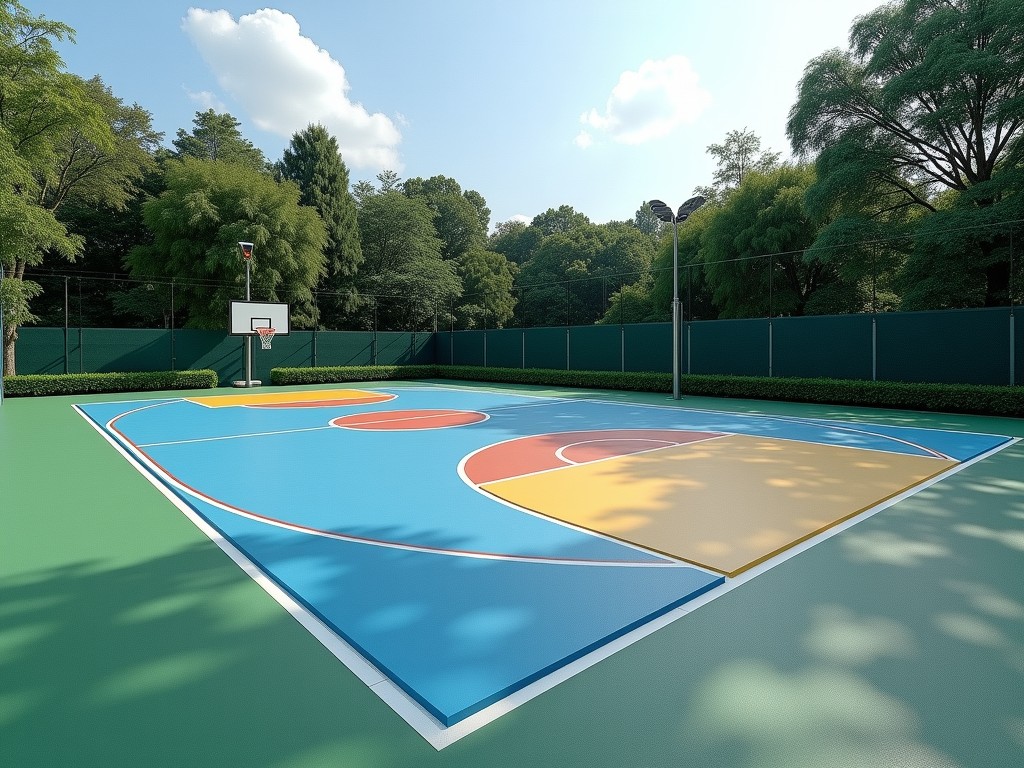
The modular nature allows courts to be re‑configured for different sports without permanent construction.
Installation over existing asphalt or concrete reduces preparation time and avoids costly surface treatments.
- Multi‑use courts (basketball, tennis, futsal)
- Playground safety surfacing
- Temporary event flooring (exhibitions, concerts)
- Portable training facilities
Quality Assurance Procedures
Each production lot is sampled for dimensional inspection using a coordinate measuring machine with a tolerance of ±0.5 mm on thickness and ±1.0 mm on interlock engagement.
Impact resistance is verified by dropping a 5 kg steel ball from a height of 1 m onto three random tiles per batch; no cracking is acceptable.
UV stability is assessed via accelerated weathering (QUV) for 1000 hours, with color delta E monitored to stay below 3.
Final visual inspection checks for surface defects, flash, and color uniformity before packaging.
Customization Options
Tile dimensions can be adjusted in increments of 10 mm to match specific court layouts.
Color formulation allows matching to corporate or team colors using Pantone references.
Surface textures range from smooth to aggressive slip‑resistant patterns, selected based on sport requirements.
Logo or line markings can be added via embossing or laser etching during the molding stage.
Packaging for Safe Transport
Tiles are stacked in layers separated by corrugated sheets to prevent surface abrasion.
A standard pallet holds 480 tiles, weighing approximately 960 kg, and is secured with stretch film and corner protectors.
For container shipments, pallets are arranged to maximize cube utilization, typically fitting 20 pallets per 40‑foot container.
Request a Quote or Sample
To obtain a detailed quotation, provide the required area, preferred thickness, color, and any custom markings.
Our engineering team will review the specifications and return a cost breakdown within two business days.
Samples can be dispatched via express courier upon receipt of a formal request.
Contact Us