Oem Anti Slip Interlocking Court Tiles Factory
Oem Anti Slip Interlocking Court Tiles Factory
OEM Anti Slip Interlocking Court Tiles
These tiles are manufactured from engineered thermoplastic compounds designed for modular sports surfaces. The interlocking geometry allows rapid installation without adhesives or specialized tools. Each unit provides a stable, load‑bearing platform that can be disassembled and re‑configured as needed.
Material Composition
The base polymer is a polypropylene copolymer with a melt flow index ranging from 8 to 12 g/10 min, selected for balanced stiffness and impact resistance. Mineral fillers such as talc or calcium carbonate are added to increase dimensional stability and reduce thermal expansion. UV stabilizers and antioxidant packages are incorporated to maintain surface properties under outdoor exposure.
- Polypropylene copolymer (PP‑CO) – primary matrix
- Talc filler (10‑20 wt %) – stiffness and creep resistance
- Calcium carbonate (5‑15 wt %) – cost effective filler
- Hindered amine light stabilizers (HALS) – UV protection
- Antioxidant blend (e.g., Irganox 1010) – oxidative stability
Interlocking Mechanism
Each tile features a male tongue on two opposite edges and a corresponding female groove on the other edges. The tongue‑groove geometry creates a shear‑lock that resists lateral displacement under dynamic loads. A secondary snap‑fit rib provides vertical engagement, limiting vertical movement to less than 0.2 mm under a 500 N point load.
- Tongue height: 3 mm; groove depth: 3.2 mm
- Snap‑fit rib height: 1.5 mm
- Engagement angle: 90° ±2°
Slip Resistance Performance
The surface is textured with a fine‑grit pattern achieved during molding, resulting in a pendulum test slip resistance value (SRV) typically above 45 (wet condition). This level corresponds to a classification of R10/R11 under the DIN 51130 scheme, suitable for areas where occasional water or sweat may be present. The texture depth averages 0.3 mm, providing micro‑abrasion without causing excessive wear on shoe soles.
Typical Applications
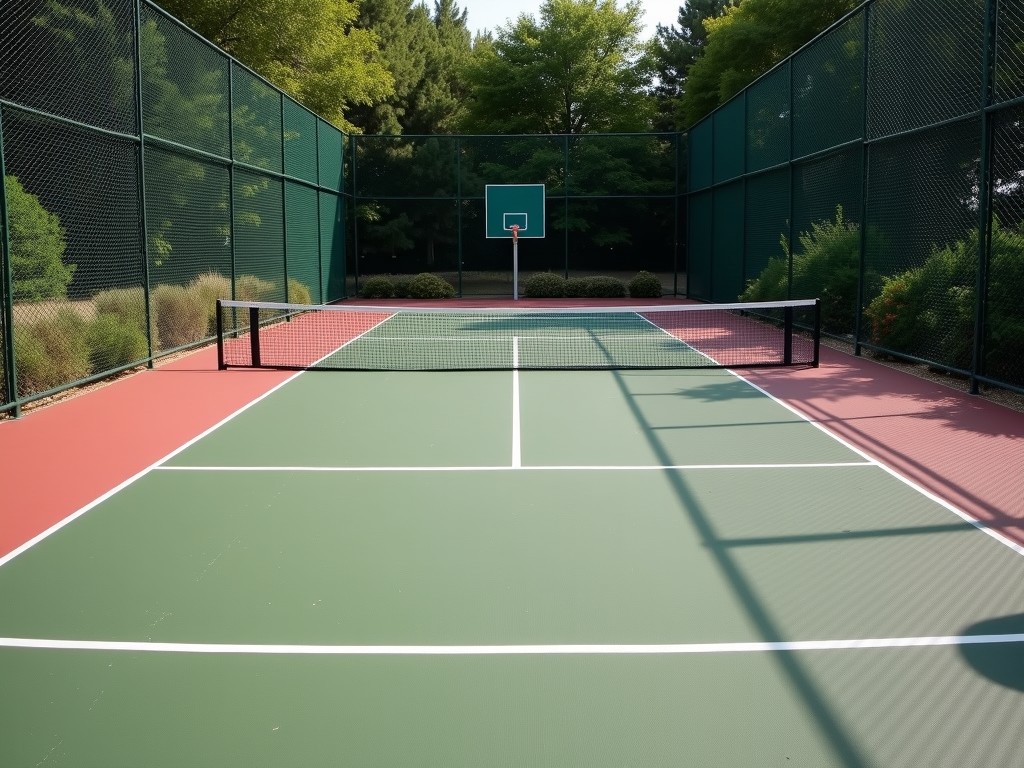
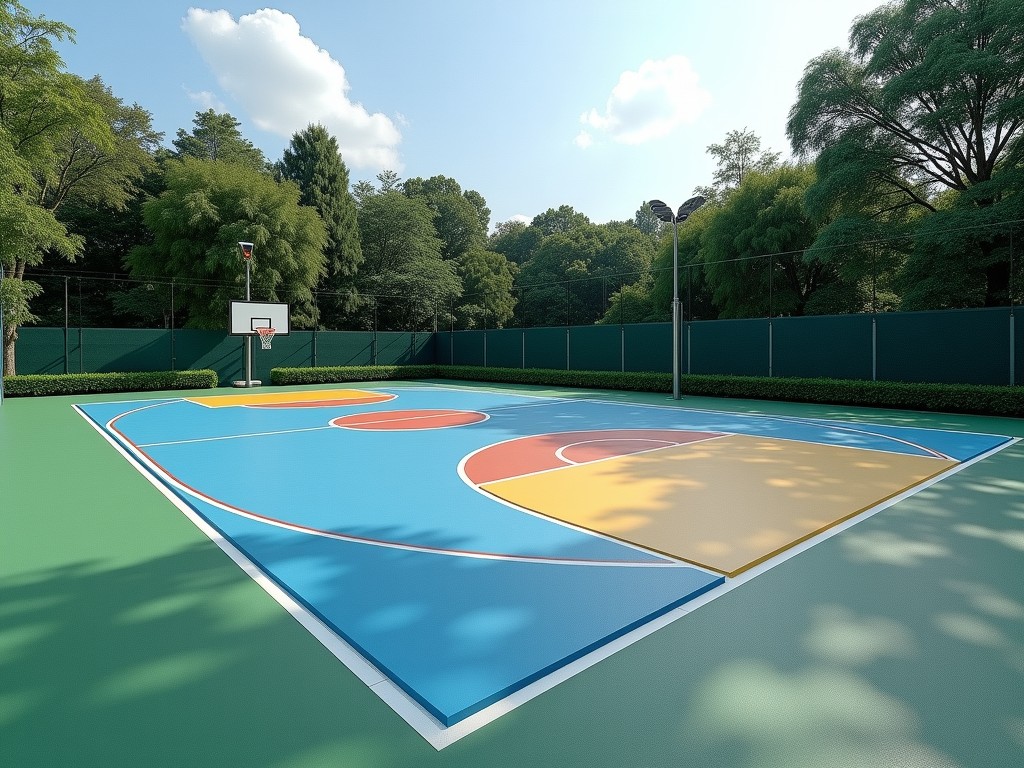
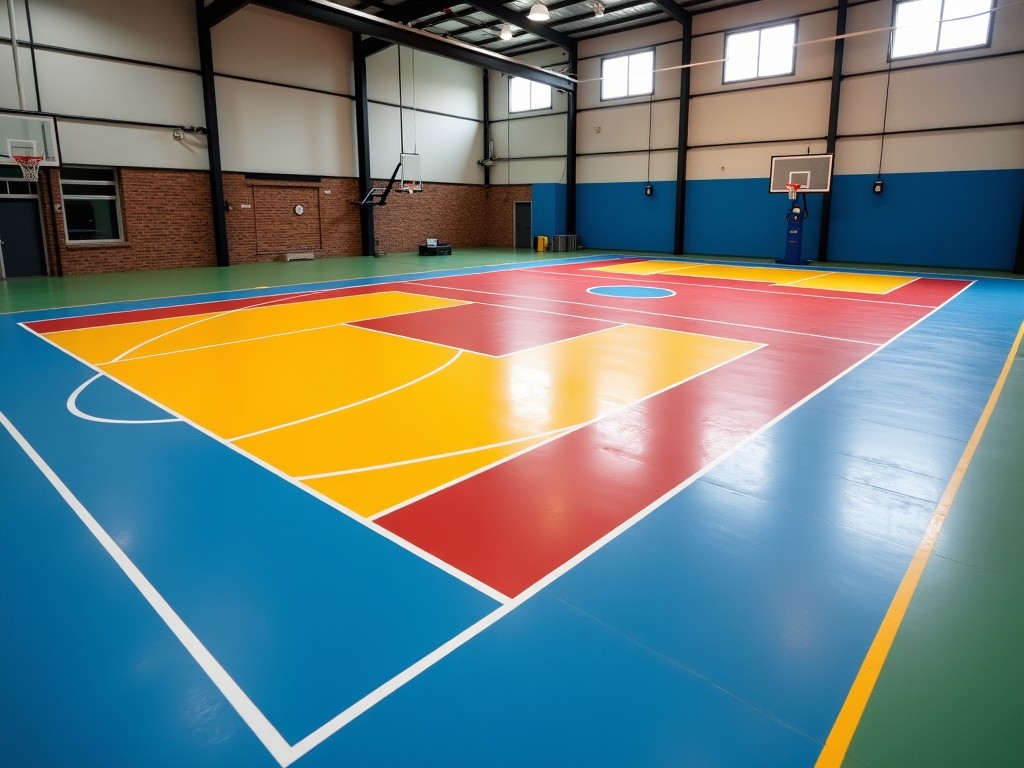
Modular courts made from these tiles are used for multi‑purpose sports such as basketball, volleyball, futsal, and tennis. The system is also common in temporary event flooring, school gymnasiums, and community recreation centers where a portable, low‑maintenance surface is advantageous. Because the tiles can be removed and stored, they enable rapid conversion of a space between different activities.
- Indoor and outdoor sports courts
- Temporary exhibition and event flooring
- School and community multipurpose halls
- Rehabilitation and therapy facilities
Quality Control & Testing
Raw material lots are inspected for melt flow index, density, and filler content before extrusion. During production, inline vision systems verify tile dimensions and interlock geometry to a tolerance of ±0.1 mm. Finished tiles undergo a batch test for compressive strength (ASTM D695) and slip resistance (pendulum method). Visual inspection checks for surface defects, color uniformity, and flash removal.
- Melt flow index verification (ASTM D1238)
- Density measurement (ASTM D792)
- Dimensional inspection (CMM or laser)
- Compressive strength test
- Slip resistance (pendulum) test
- Visual defect inspection
Customization Options
OEM customers can specify tile dimensions within a range of 250 mm to 500 mm square, thickness from 12 mm to 25 mm, and a variety of color pigments matched to RAL or Pantone standards. Surface logos or court markings can be added via inset molding or post‑mold pad printing. Edge profiles can be altered to accommodate specific drainage or mounting requirements.
- Length/width: 250 mm – 500 mm (square or rectangular)
- Thickness: 12 mm – 25 mm
- Color: custom pigment loading (up to 5 wt %)
- Logo/emboss: recessed or raised
- Edge profile: straight, chamfered, or with drainage groove
Packaging & Logistics
Tiles are stacked in layers separated by corrugated sheets to prevent surface abrasion. A standard pallet holds 480 tiles (assuming 300 mm × 300 mm × 15 mm) and is secured with stretch film and corner protectors. For export, pallets are placed in ISO containers with moisture‑barrier liners and marked according to ISPM‑15 when wooden pallets are used.
- Layer separator: 3 mm corrugated fiberboard
- Pallet size: 1.1 m × 1.1 m (standard)
- Load per pallet: ≈ 800 kg (depends on tile thickness)
- Stretch film: 80 µm PE
- Corner protectors: recycled PET
Specifications
| Parameter | Typical Value | Notes / Customizable |
|---|---|---|
| Tile length | 300 mm | 250‑500 mm available |
| Tile width | 300 mm | 250‑500 mm available |
| Tile thickness | 15 mm | 12‑25 mm range |
| Weight per tile | 1.35 kg | Varies with thickness & filler |
| Interlock type | Tongue‑groove + snap‑fit rib | Custom edge profiles possible |
| Slip resistance (SRV, wet) | ≥ 45 | Corresponds to R10/R11 |
| Compressive strength | ≥ 25 MPa | ASTM D695 |
| Thermal expansion coefficient | ≈ 1.0 × 10⁻⁴ / °C | Dependent on filler content |
| UV stability | ≥ 1500 h (QUV) | With HALS package |
| Service temperature | ‑20 °C to +60 °C | Short‑term excursions possible |
Contact for OEM Inquiry
To discuss project‑specific requirements, material options, or to request a formal quotation, please reach out via the contact form.