Factory Direct Interlocking Metric Sport Court Tiles Exporter
Factory Direct Interlocking Metric Sport Court Tiles Exporter
Factory Direct Interlocking Metric Sport Court Tiles
These tiles are produced with exact millimeter module sizes, enabling designers to layout courts using standard SI units without conversion errors.
Material Composition and Properties
Tile bodies consist of virgin polypropylene copolymer blended with UV stabilizers and pigment concentrates, providing a density of approximately 0.92 g/cm³ and a melt flow index of 8 g/10 min.
Additives include hindered amine light stabilizers (HALS) at 0.5 wt % to maintain color stability under prolonged solar exposure, and antimicrobial agents at 0.2 wt % to reduce surface microorganism growth.
Interlocking Design Mechanics
Each tile features a male‑female edge system with a 3 mm engagement depth and a 0.5 mm radial clearance, allowing hand‑tight assembly without tools while resisting lateral displacement under load.
The interlock geometry distributes shear forces across a 12 mm wide contact band, reducing edge stress concentration by roughly 40 % compared to simple butt‑joint designs.
Dimensional Tolerances and Metric Standards
Tiles are manufactured to nominal dimensions of 300 mm × 300 mm × 15 mm (length × width × thickness) with permissible deviations defined in the table below.
| Dimension | Nominal Value | Tolerance (±) |
|---|---|---|
| Length | 300 mm | 0.3 mm |
| Width | 300 mm | 0.3 mm |
| Thickness | 15 mm | 0.2 mm |
| Interlock Height | 3 mm | 0.1 mm |
Load‑Bearing and Impact Performance
Under a uniformly distributed static load, the tile system sustains a pressure of 1.2 MPa before measurable deformation (>0.5 mm) occurs, corresponding to a point load capacity of approximately 10 kN per tile.
Instrumented drop‑ball tests (mass = 5 kg, height = 1 m) indicate an energy absorption of 35 J per impact event, with peak acceleration below 80 g, suitable for high‑intensity sports such as basketball and volleyball.
Installation Procedure
Installation begins with surface preparation: the substrate must be flat within 3 mm over a 2 m span and free of debris, oils, or moisture.
Tiles are placed by hand, aligning the male edge of one tile with the female edge of the adjacent tile; a rubber mallet may be used to achieve full engagement without damaging the interlock.
For outdoor courts, a perimeter restraint system of aluminum extrusions is recommended to accommodate thermal expansion of up to 1.5 mm per meter.
Maintenance and Longevity
Routine maintenance consists of sweeping with a soft‑bristle brook and occasional mopping with a pH‑neutral detergent; abrasive cleaners should be avoided to prevent surface wear.
Accelerated weathering tests (UV‑B, 0.8 W/m², 8 h/day) show less than 5 % color shift after 1500 h, equivalent to approximately five years of outdoor exposure in temperate climates.
Customization Options
Customization can include pigment matching to specific RAL or Pantone codes, surface texturing for enhanced slip resistance (R‑value ≥ 0.6), and integration of drainage channels molded into the tile underside.
Logo embossing is achievable via laser etching at a depth of 0.2 mm, providing permanent identification without compromising structural integrity.
Quality Control and Testing
Quality assurance follows a statistical process control plan with sampling frequency of one tile per 500 produced, evaluated for dimensional compliance, interlock force (≥ 150 N engagement), and impact resistance.
Each batch undergoes a visual inspection for surface defects, a melt flow index verification, and a tensile strength test (ASTM D638) targeting a minimum of 25 MPa.
Export Packaging and Logistics
Tiles are stacked in layers of 20, separated by corrugated cardboard sheets, and secured within triple‑wall palletized cartons measuring 1.2 m × 1.0 m × 0.8 m.
Each pallet is stretch‑wrapped with 80 µm polyethylene film and fitted with corner protectors to resist impacts during transit; typical container load is 22 pallets per 40‑ft HQ container.
Applications
The modular nature and metric sizing make these tiles suitable for a variety of sports and recreational installations where rapid deployment and consistent performance are required.
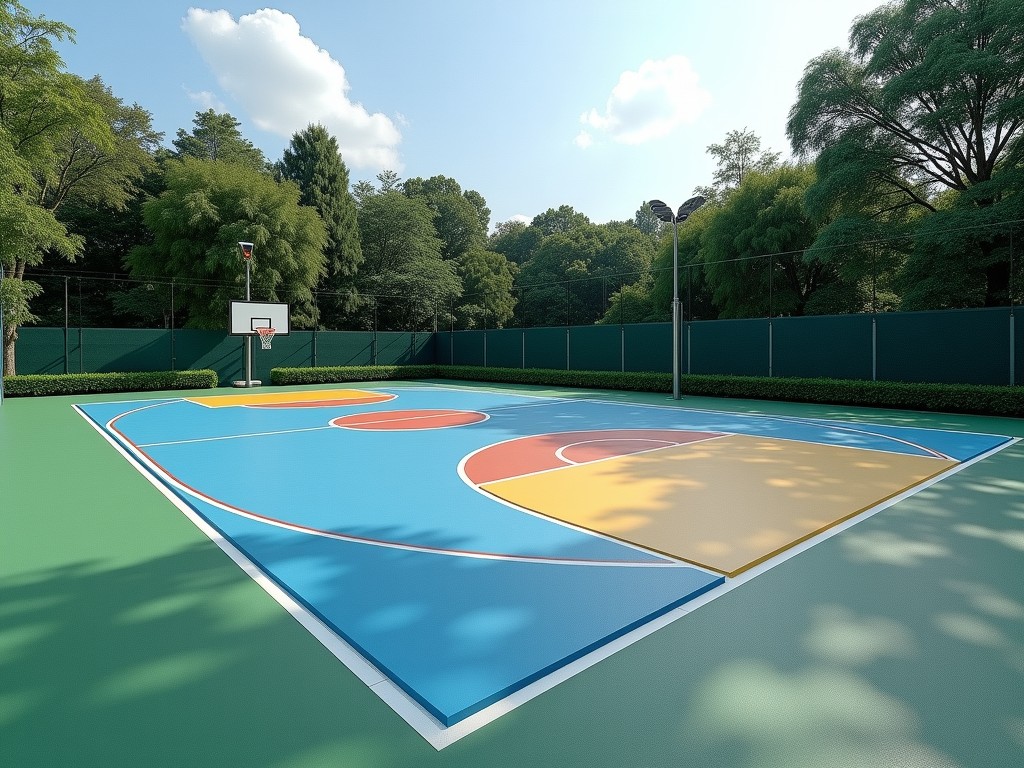
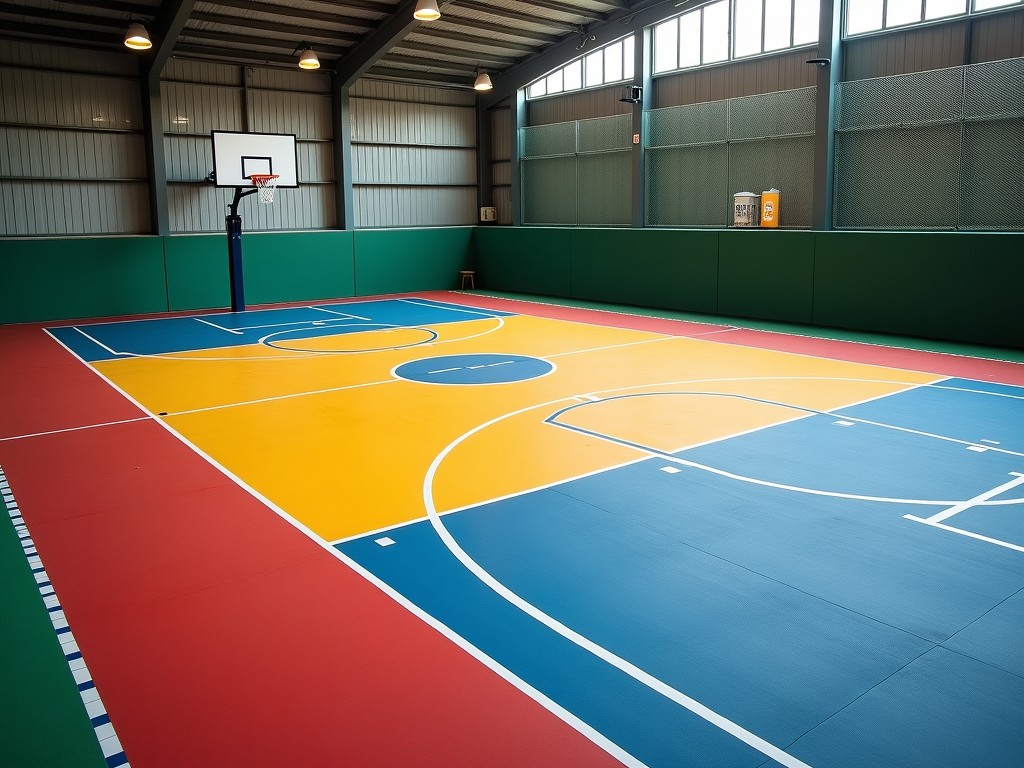
- Indoor basketball courts requiring uniform bounce and low‑maintenance surfaces.
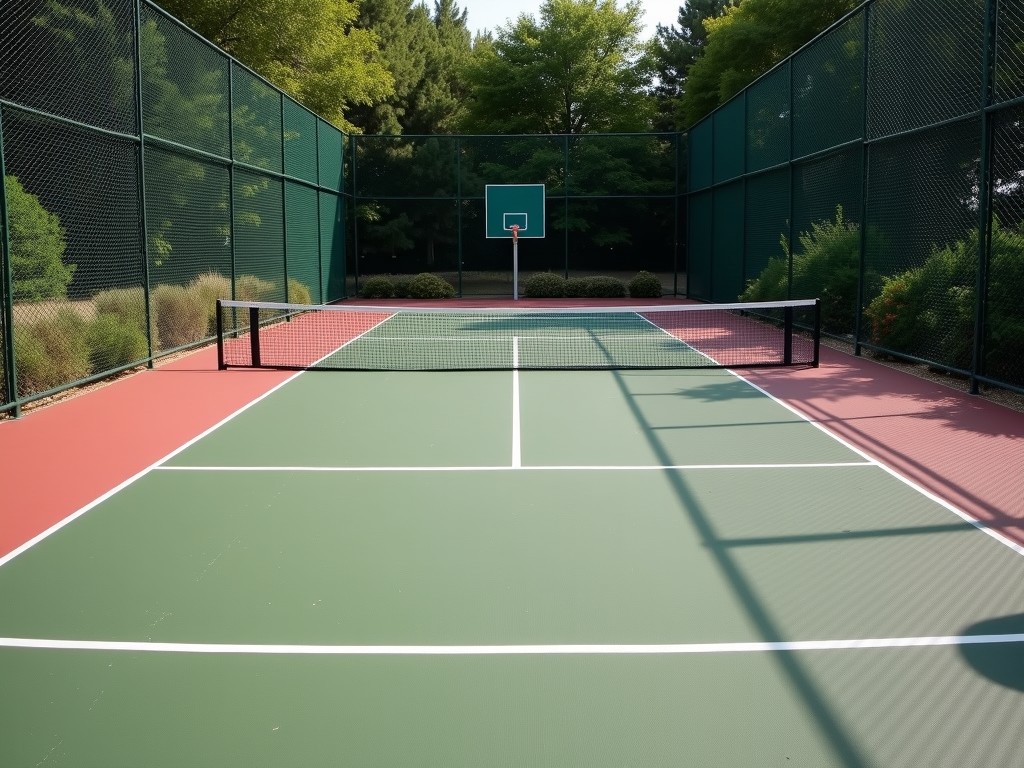
- Outdoor tennis installations where UV stability and drainage are critical.
- Multi‑purpose school gyms needing quick reconfiguration for different activities.
- Temporary event flooring for exhibitions or concerts that must support dynamic loads.
- Rehabilitation centers seeking slip‑resistant, antimicrobial surfaces.
Frequently Asked Questions
Can tile dimensions be customized?
Yes, length and width can be adjusted in 50 mm increments, and thickness can be varied between 12 mm and 20 mm depending on load requirements.
What information is needed before quotation?
Project details such as total area, intended sport, substrate condition, color preference, and any required surface treatments enable an accurate quote.
How is quality inspected before shipment?
Each shipment undergoes random sampling for dimensional tolerances, interlock force, and impact resistance, with a test report provided upon request.
What packaging methods are available for export?
Standard packaging uses palletized cartons; alternatives include wooden crates for high‑impact handling or reusable plastic totes for closed‑loop logistics.
Contact Us for Technical Inquiry
For further specifications, sample requests, or project‑specific consultation, please reach out using the contact form.
Request Information