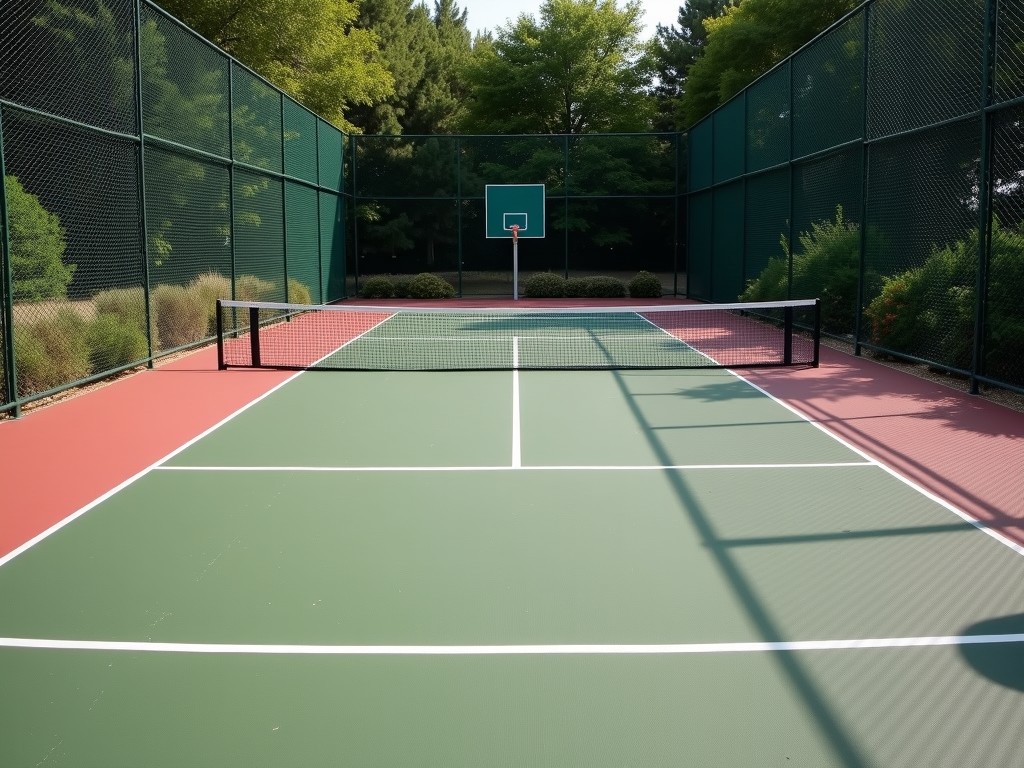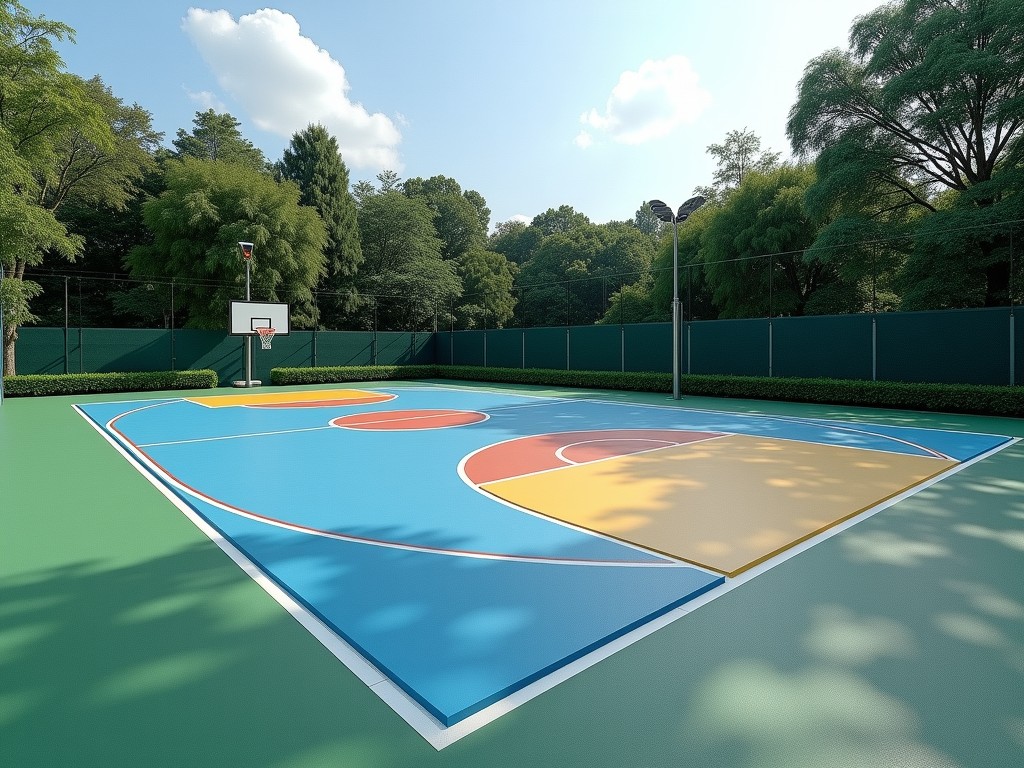
Direct Factory Rubber Tiles For Outdoor Basketball Court Company
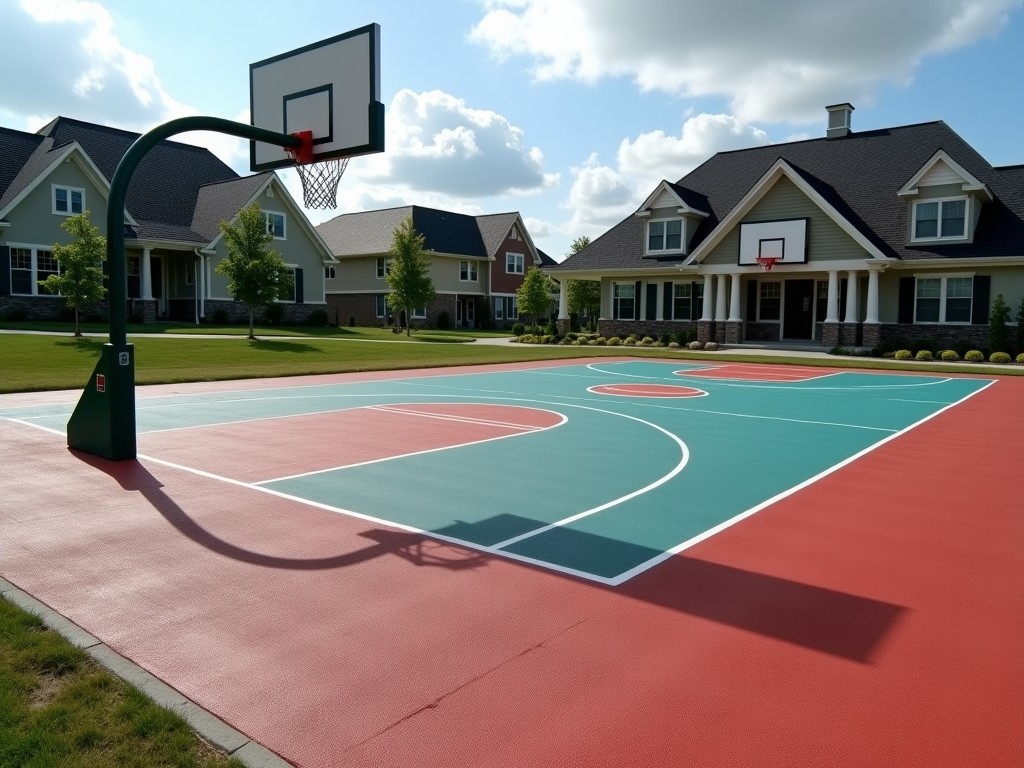
Direct Factory Rubber Tiles For Outdoor Basketball Court Company
Direct Factory Rubber Tiles for Outdoor Basketball Court
Direct factory rubber tiles designed for outdoor basketball courts are manufactured as interlocking units that provide a continuous playing surface without seams that trap water or debris.
Each tile is molded from a recycled SBR rubber compound blended with virgin EPDM to achieve consistent color stability and impact absorption.
The product is supplied directly from the molding line, eliminating intermediate handling that could introduce contamination or dimensional variation.
Material Composition
The base polymer consists of approximately 60% styrene-butadiene rubber (SBR) and 40% ethylene propylene diene monomer (EPDM) by weight.
Fillers include finely ground calcium carbonate and carbon black, which contribute to UV resistance and abrasion durability.
The compound is vulcanized at 160°C for 45 minutes, resulting in a cross‑linked matrix with a Shore A hardness of 70 ± 5.
Performance Characteristics
Key performance indicators are measured according to ASTM standards and reflect the tile’s behavior under typical outdoor court conditions.
| Property | Test Method | Typical Value | Unit |
|---|---|---|---|
| Thickness | ASTM F2415 | 20 (customizable 15‑30) | mm |
| Density | ASTM D297 | 1.15 | g/cm³ |
| Shore A Hardness | ASTM D2240 | 70 ± 5 | – |
| Tensile Strength | ASTM D412 | 3.5 | MPa |
| Elongation at Break | ASTM D412 | 250 | % |
| Compression Set (24 h @ 70 °C) | ASTM D395 | 8 | % |
| UV Resistance (QUV ASTM G154) | ASTM G154 | 1500 (no >5% ΔE) | h |
| Temperature Range | Internal | ‑30 to +80 | °C |
Surface texture is engineered to yield a wet coefficient of friction of 0.62 (ASTM F1677), meeting the slip‑resistance requirement for sports flooring.
Applications
Outdoor basketball courts demand a surface that combines impact attenuation, weather durability, and consistent ball response.
- Impact absorption reduces player joint load, measured as force reduction of 35% compared to concrete.
- Interlocking edges prevent lateral movement, maintaining court geometry under thermal expansion.
- Porous design allows rapid drainage, limiting standing water to less than 2 mm after a 25 mm/h rainfall simulation.
- UV‑stabilized binder retains color intensity, with ΔE < 3 after 1000 h of accelerated exposure.
- Low rolling resistance ensures consistent ball bounce, with rebound height variation under 5% across tile joints.
Installation Guidelines
Tiles are placed on a compacted crushed stone base with a geotextile separator to prevent soil migration.
Adhesive is not required; the male‑female interlock provides shear resistance sufficient for dynamic loads up to 5 kN per tile.
Quality Control & Testing
Each production lot undergoes dimensional inspection using laser scanning, with tolerance limits of ±0.5 mm on thickness and ±1.0 mm on planar dimensions.
Hardness is verified on five random samples per batch using a durometer, accepting only readings within the specified range.
Accelerated weathering cycles are performed on a representative sample set, and results are archived for traceability.
Customization Options
Clients can specify several parameters to match site‑specific design and performance needs.
- Tile thickness (15 mm to 30 mm in 5 mm increments)
- Surface pattern (circular grooves, linear ribs, or smooth finish)
- Color palette (standard red, blue, green, or custom Pantone match)
- Edge profile (square, beveled, or tapered for ramp transitions)
- Embedded logos or court markings via in‑mold printing
Packaging & Shipping
Tiles are stacked in layers separated by corrugated cardboard sheets and secured with stretch film on pallets measuring 1.1 m × 1.1 m.
Each pallet is labeled with lot number, quantity, and handling instructions, and is suitable for containerized shipment without additional crating.
FAQ
Can dimensions be customized?
Yes, thickness, length, and width can be adjusted within standard molding limits; specific tolerances are confirmed during quoting.
What information is required before quotation?
Project area, desired thickness, color, and any special features such as logos or edge profiles are needed to generate an accurate quote.
How are samples arranged?
Sample tiles can be shipped via express courier; charges are credited against the first order. Request a sample
What is the typical production lead time?
Lead time depends on order size and customization, generally ranging from 2 to 4 weeks after final drawing approval. Contact us for schedule
Call to Action
For technical data sheets, sample requests, or project‑specific quotations, contact the manufacturing team.