Direct Factory Interlocking Sport Court Tiles Company
Direct Factory Interlocking Sport Court Tiles Company
Direct Factory Interlocking Sport Court Tiles
Product Overview
Interlocking sport court tiles are modular flooring units designed for rapid assembly and disassembly of indoor and outdoor athletic surfaces. Each tile features a male‑female edge system that creates a continuous load‑bearing plane without adhesives or fasteners. The direct‑factory supply model eliminates intermediary handling, allowing tight control over dimensional tolerances and material consistency.
Technical Specifications
| Parameter | Typical Value | Notes |
|---|---|---|
| Tile thickness | 12 mm | Provides adequate shock absorption for multi‑sport use |
| Interlock type | Tongue‑and‑groove with 2 mm engagement depth | Ensures lateral stability under dynamic loads |
| Compressive strength | ≥ 8 MPa | Measured per ASTM D695 |
| Slip resistance (wet) | SRC ≥ 0.6 | According to EN 13036‑4 |
| UV stabilization | Additive package 0.5 wt % | Limits color fade to < 5 ΔE after 1000 h QUV |
| Weight per tile | 1.8 kg | Facilitates manual handling |
Material Composition
The base polymer is a virgin polypropylene copolymer impact‑modified with ethylene‑propylene‑diene monomer (EPDM) rubber to achieve a balance of stiffness and resilience. Fillers include calcium carbonate for dimensional stability and a proprietary UV absorber package. Color pigments are dispersed via masterbatch to ensure uniform hue throughout the tile cross‑section.
- Polypropylene copolymer: 78 wt %
- EPDM rubber modifier: 12 wt %
- Calcium carbonate filler: 8 wt %
- UV stabilizer & pigment package: 2 wt %
Installation Method
Tiles are placed on a clean, level substrate such as concrete, asphalt, or compacted base. The interlocking edges are engaged by hand or with a rubber mallet, applying a downward snap force of roughly 15 N per joint. No adhesives are required; the floor gains structural integrity through frictional locking and the weight of the assembled matrix. For temporary installations, a perimeter restraint system (e.g., low‑profile aluminum edging) prevents lateral migration.
Applications and Performance Benefits
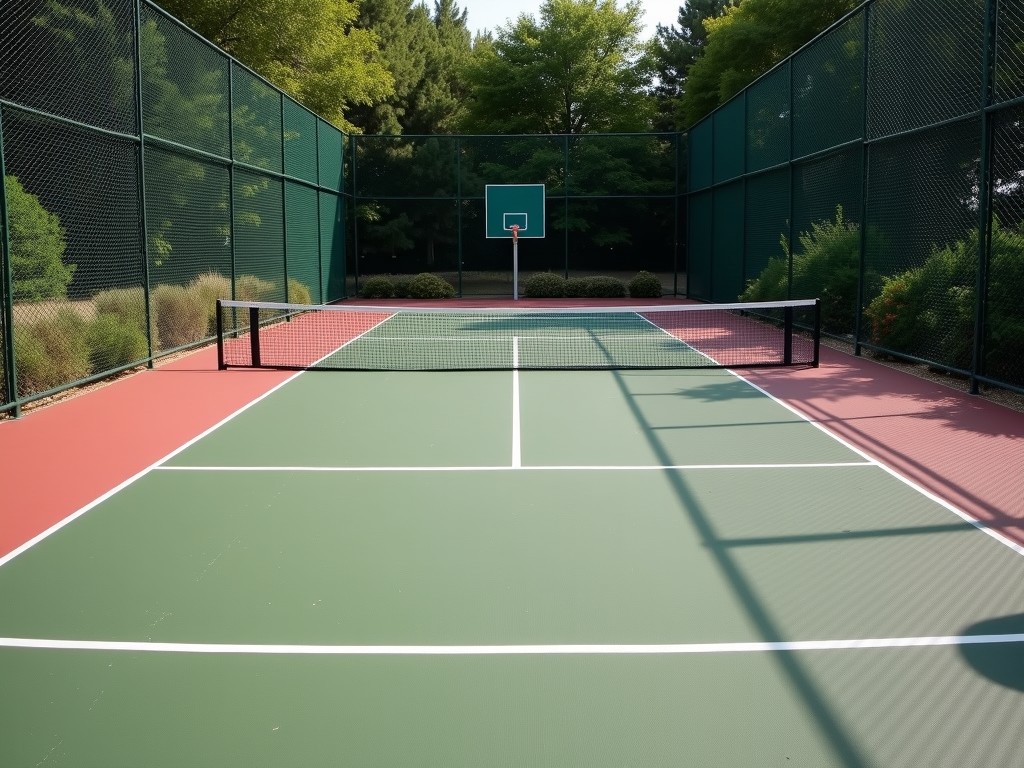
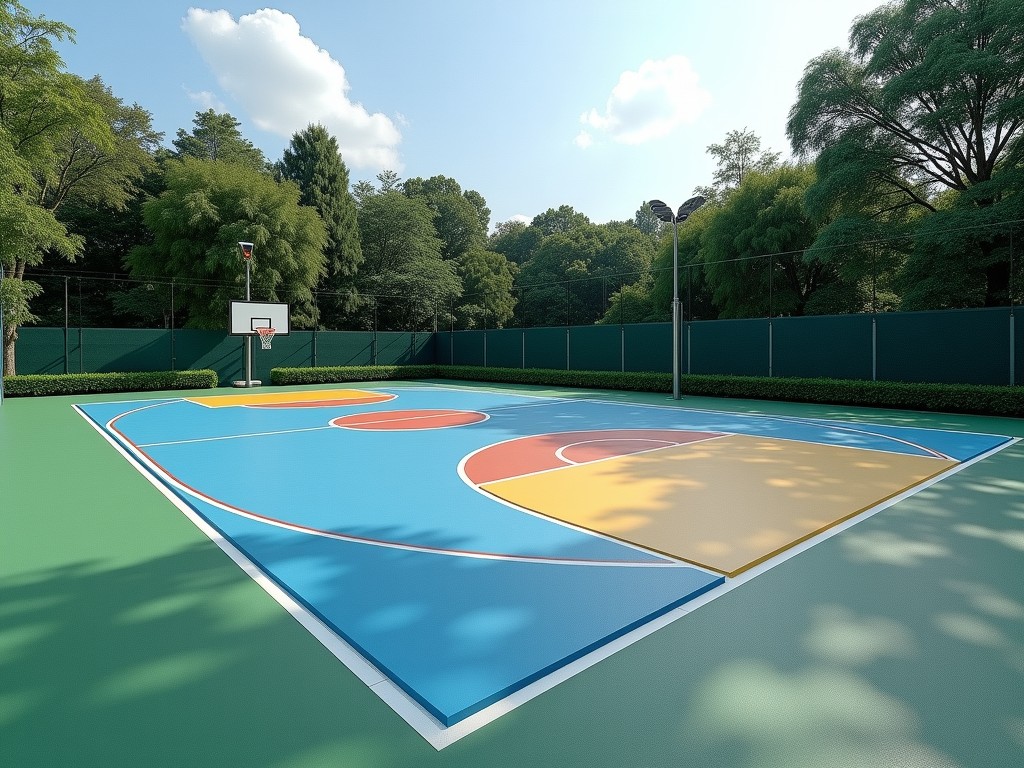
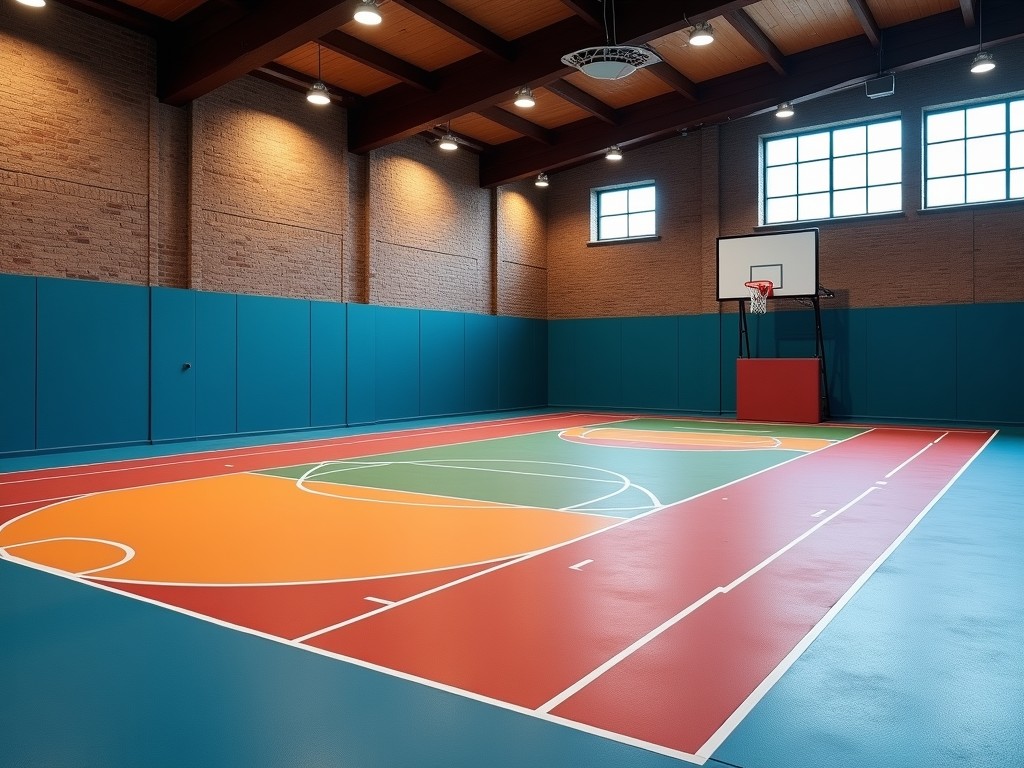
The modular nature allows rapid reconfiguration for sports such as basketball, volleyball, futsal, and multi‑use community courts. Because the tiles distribute loads across the interlocking network, point loads from equipment or athletes are attenuated, reducing stress on the underlying slab. The closed‑surface design inhibits water penetration, enabling outdoor use in climates with periodic rainfall.
- Indoor gymnasiums needing temporary tournament flooring
- Outdoor schoolyards with UV‑stable surface
- Military or disaster‑relief sites requiring fast‑deployable courts
- Commercial fitness centers seeking low‑maintenance, replaceable tiles
Quality Control and Testing
Each production lot undergoes inline dimensional inspection using laser triangulation sensors to verify edge profiles within ±0.1 mm. Mechanical samples are extracted for compressive and flexural testing per ISO 178. Accelerated weathering chambers run QUV cycles to confirm UV stability, and slip resistance is measured with a pendulum tester after surface conditioning. Results are logged in a traceable batch record linked to the tile’s unique laser‑etched code.
Customization Options
- Thickness range: 10 mm to 20 mm (adjusted via molding pressure)
- Color matching to Pantone or RAL standards
- Surface textures: smooth, fine‑grain, or anti‑slip emboss
- Optional reinforcement ribs for increased load bearing
- Custom logos or court markings injected during molding
Frequently Asked Questions
Can tile dimensions be customized?
Yes. Length and width are typically 300 mm × 300 mm but can be altered to 250 mm or 400 mm modules depending on mold tooling; such changes affect interlock geometry and are quoted per project.
What information is required before quotation?
Project area, desired thickness, color or logo specifications, substrate condition, and expected load profile (e.g., dynamic sports loads vs. static equipment).
How is quality inspected?
In‑process checks include dimensional scanning, weight sampling, and visual inspection. Final audit comprises mechanical testing of three random tiles per batch and UV exposure verification.
What packaging methods are available?
Tiles are stacked in corrugated cartons with interlocking layers separated by corrugated dividers; palletized loads use stretch film and edge protectors for export shipments.
Contact for Quote
To discuss technical requirements, request samples, or obtain a formal quotation, please reach out to our engineering team.
Request a Quote