Custom Non Slip Interlocking Outdoor Court Tiles Company
Custom Non Slip Interlocking Outdoor Court Tiles Company
Custom Non‑Slip Interlocking Outdoor Court Tiles
Overview
These tiles are engineered for exterior sports and recreational surfaces where slip resistance, durability, and rapid installation are critical. Each unit features a molded grid that locks with adjacent pieces without adhesives or fasteners.
The surface texture is designed to meet ASTM F1637 slip‑resistance thresholds while maintaining a comfortable underfoot feel for athletes and pedestrians.
Material Composition
Primary polymer is a UV‑stabilized polypropylene copolymer blended with recycled rubber granules to enhance impact absorption and abrasion resistance.
- Polypropylene copolymer – provides chemical resistance and dimensional stability.
- Recycled rubber (10‑20 % by weight) – improves shock absorption and reduces surface hardness.
- UV stabilizers and antioxidants – extend service life under direct sunlight.
Interlocking Design Mechanics
Each tile incorporates a male‑female tongue‑and‑groove system on all four edges, allowing shear transfer and preventing lateral movement under load.
The interlock geometry is optimized for a 50 mm tile thickness, delivering a shear capacity of approximately 12 kN per joint based on finite‑element analysis.
Performance Characteristics
| Property | Test Method | Typical Value |
|---|---|---|
| Compressive Strength | ASTM D695 | 30‑45 MPa |
| Slip Resistance (Wet) | ASTM F1637 | Dynamic Coefficient of Friction ≥ 0.6 |
| Thermal Expansion Coefficient | ASTM D696 | 60‑80 × 10⁻⁶ / °C |
| Water Absorption | ASTM D570 | <0.5 % (24 h) |
| Impact Attenuation (G‑max) | ASTM F1292 | ≤ 165 g (typical) |
Applications
The tiles are suited for environments where rapid surface deployment and long‑term weatherability are required, reducing downtime compared to poured‑in‑place systems.
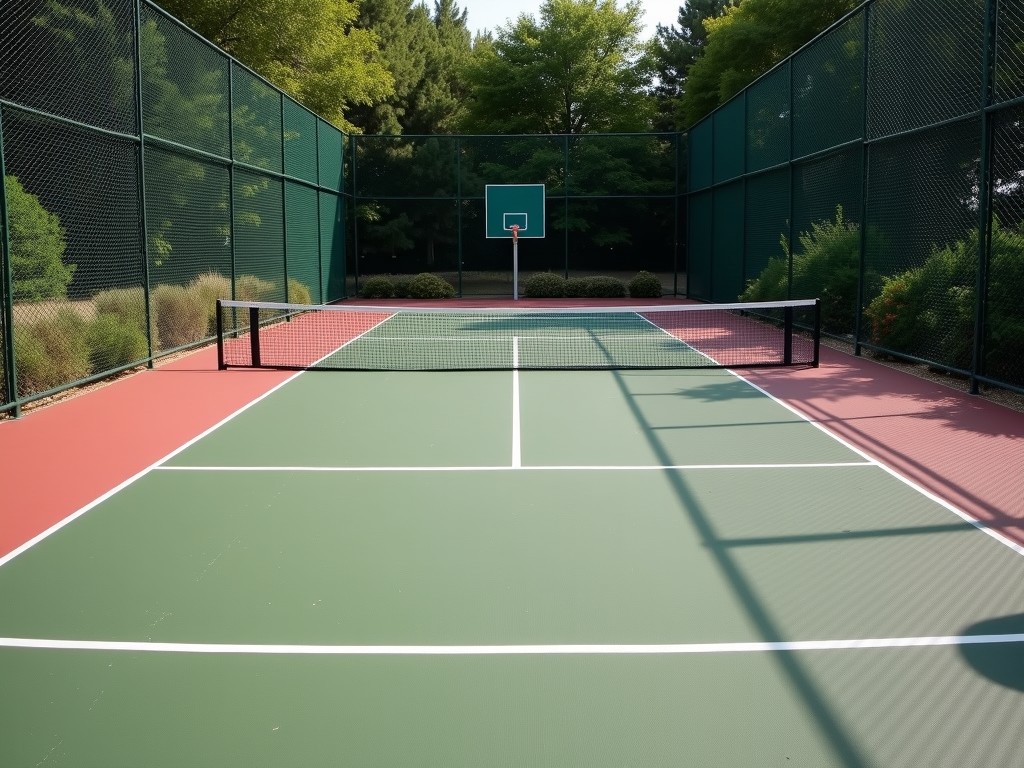
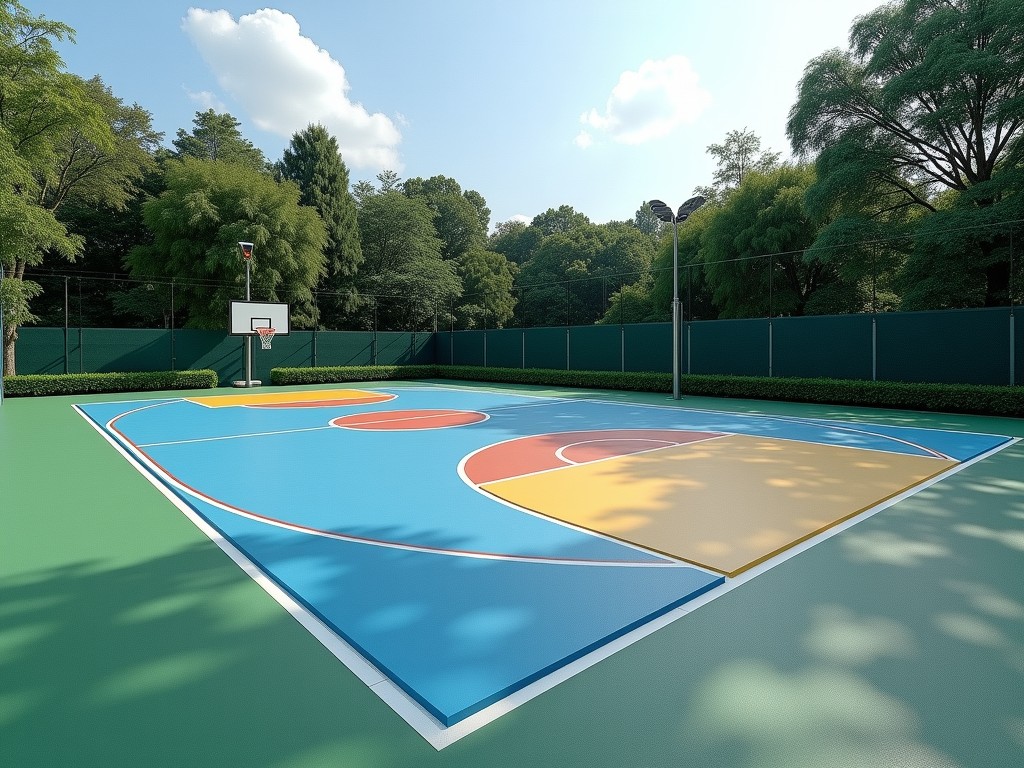
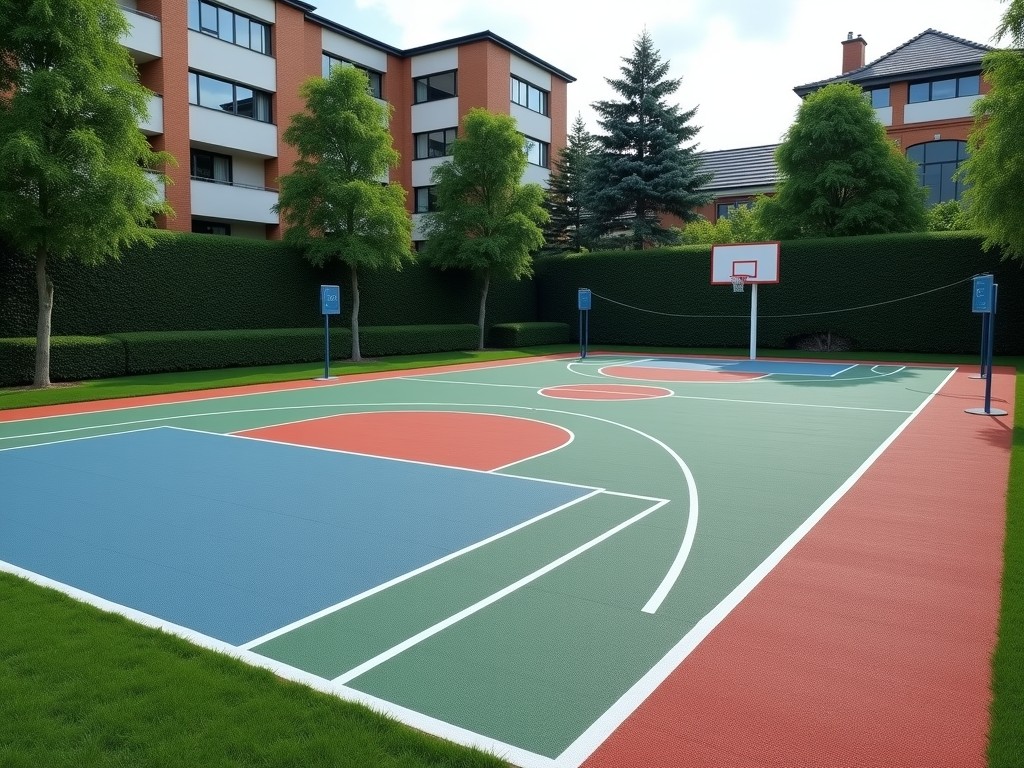
- Multi‑use sports courts (basketball, tennis, pickleball) – provides consistent bounce and traction.
- Playground safety surfacing – meets critical fall height requirements when combined with appropriate underlayment.
- Temporary event flooring – interlocking system allows installation and removal within hours.
- Pedestrian walkways and pool decks – slip‑resistant surface withstands chlorinated water and UV exposure.
Customization Options
Design flexibility is achieved through modular molds, allowing adjustments to dimensions, surface patterns, and color without retooling the entire production line.
- Tile size – standard 500 mm × 500 mm, with optional 400 mm × 400 mm or 600 mm × 600 mm modules.
- Surface texture – fine‑grain for court play, coarse‑grain for pool decks.
- Color pigments – custom Pantone matching available for branding or way‑finding.
- Logo embossing – recessed or raised logos can be integrated into the tile face.
Quality Assurance
Each production lot undergoes dimensional verification, material melt‑flow testing, and accelerated weathering to confirm conformance with specifications.
Finished tiles are sampled for slip‑resistance and impact attenuation before shipment; results are recorded in a traceable quality record.
Installation Guidance
Prepare a compacted granular base (minimum 100 mm thickness) with a level tolerance of ±3 mm over a 2 m span. Lay tiles starting from a corner, pressing each unit firmly to engage the interlocks.
No adhesives are required; however, a perimeter restraint strip may be used in high‑wind areas to prevent edge lift.
Frequently Asked Questions
Can dimensions be customized?
Yes, tile length and width can be adjusted in 50 mm increments based on project layout; tooling changes are minimal.
What information is required before quotation?
Desired area, thickness, surface texture, color, and any special features such as logos or drainage cut‑outs.
How is quality inspected?
Incoming raw material is tested for melt flow rate; finished tiles are checked for dimensional tolerances, slip resistance, and impact performance per batch.
Get a Technical Quote
Share your project specifications and our engineering team will return a detailed proposal including lead time, packaging options, and compliance documentation.
Request Quote