China Grey Interlocking Floor Tiles Top Supplier
China Grey Interlocking Floor Tiles Top Supplier
China Grey Interlocking Floor Tiles – Technical Overview
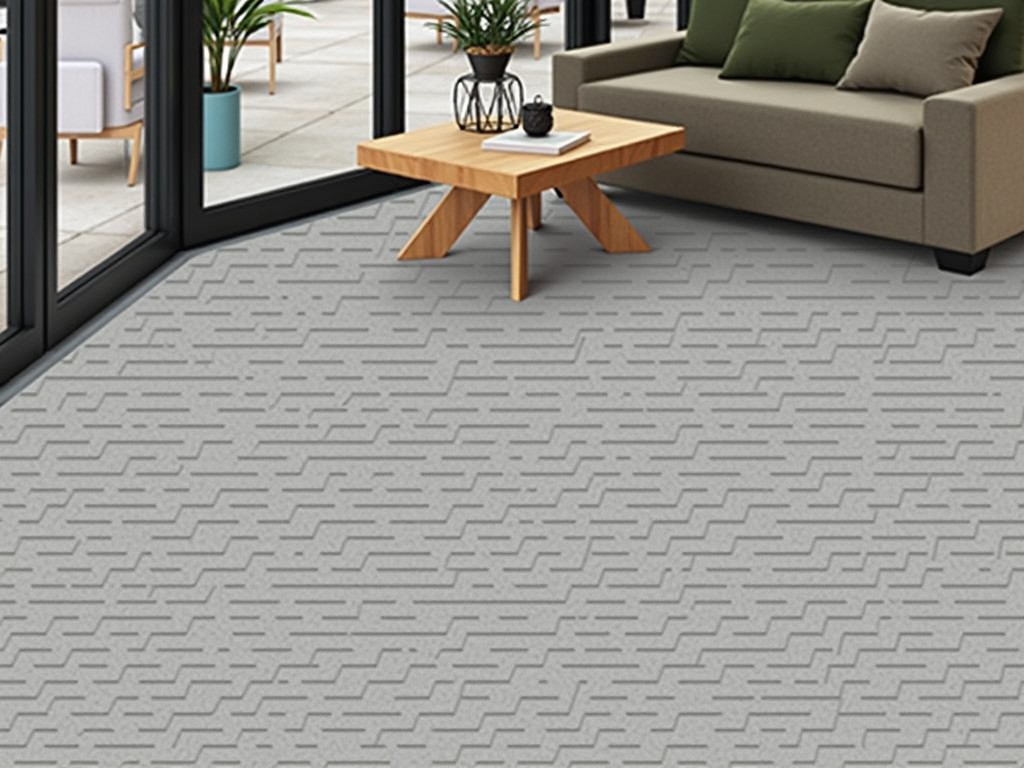
Interlocking floor tiles are modular units designed to assemble without adhesives, relying on precision‑engineered tongue‑and‑groove or snap‑fit edges. The grey variant commonly uses a polymer blend that balances impact resistance, chemical stability, and slip performance for demanding industrial environments.
Material Composition and Performance
The tile body consists of a high‑density polypropylene copolymer filled with mineral reinforcements, providing a flexural modulus of approximately 1.8 GPa. A wear layer of UV‑stabilized PVC, typically 0.5 mm thick, adds abrasion resistance measured at ≤0.08 mm loss after 1000 cycles under a 5 N load (Taber test).
Color pigments are dispersed throughout the matrix, ensuring consistent grey tone (RAL 7042) even after surface wear. The formulation achieves a water absorption rate below 0.1 % by weight, satisfying ISO 10545‑3 standards for low permeability.
Dimensional Tolerances and Load Capacity
| Parameter | Typical Value |
|---|---|
| Tile size (L × W) | 500 mm × 500 mm (±0.5 mm) |
| Overall thickness | 8.0 mm (±0.2 mm) |
| Interlock type | Double‑lap snap fit |
| Compressive strength (ASTM D695) | ≥25 MPa |
| Slip resistance (R‑rating, DIN 51130) | R10 (wet) |
| Thermal expansion coefficient | 6 × 10⁻⁵ /°C |
Primary Industrial Applications
In warehouse logistics, the tiles distribute point loads from pallet jacks and forklifts, reducing floor‑surface cracking compared with poured concrete. The interlocking system allows rapid replacement of damaged units without disrupting adjacent areas.
Workshops handling oils or solvents benefit from the tile’s chemical resistance; the polypropylene base shows no swelling after 24 h immersion in ISO‑grade mineral oil. The slip‑resistant surface meets safety thresholds for areas where spill containment is required.
Cleanroom ancillary spaces use the low‑outgassing formulation; VOC emissions measured under ASTM D5116 remain below 0.5 mg/m²·h, supporting ISO 14644‑1 Class 8 environments.
Installation Method and Subfloor Requirements
- Subfloor must be flat within ±3 mm over a 2 m span; deviations compensated with self‑leveling underlayment.
- Tiles are laid dry; interlocking edges engage by applying downward pressure along the seam line.
- Perimeter restraint is achieved using aluminum edge trim fixed with mechanical fasteners, preventing lateral movement under dynamic loads.
- No curing time is required; the floor is serviceable immediately after installation.
Quality Control and Testing
Each production batch undergoes dimensional verification on a coordinate‑measuring machine, with a sample size of 5 % of lot quantity. Mechanical testing follows ISO 178 for flexural properties and ISO 604 for compressive strength.
Surface finish is assessed using a gloss meter (60° geometry) to ensure uniformity within 5 gloss units across the lot. Slip resistance is validated via the pendulum tester per BS 7976‑2.
Customization Options
- Thickness range: 6 mm to 12 mm, adjustable by altering core filler ratio.
- Surface patterns: smooth, ribbed, or diamond‑embossed for specific traction needs.
- Edge profiles: standard snap‑fit, reinforced metal‑insert, or chamfered for transition zones.
- Color matching: custom pigments available upon provision of Pantone or RAL reference.
- Antimicrobial additive: silver‑ion based treatment可抑制细菌增殖,适用于食品加工区。
Packaging and Logistics
Tiles are stacked in layers separated by polyethylene sheets, then placed on heat‑treated pallets (1000 mm × 1200 mm). Each pallet holds up to 50 m² of product, secured with stretch film and corner boards.
Container loading follows ISO 1496‑1 standards, allowing 22 pallets per 40‑ft high‑cube unit. Shock‑absorbent corner protectors mitigate impact during transit.
Lead Time and Sampling
Standard production lead time is 3‑4 weeks after receipt of approved technical drawings and material specifications. Expedited runs can be arranged for critical projects, subject to capacity confirmation.
Sample tiles (up to 2 m²) are provided free of charge; freight costs are borne by the requester. Samples undergo the same QC checks as production lots to ensure representativeness.
Frequently Asked Questions
| Question | Answer |
|---|---|
| Can tile dimensions be customized? | Yes. Length and width can be adjusted in 50 mm increments, subject to mold availability. |
| What information is required before quotation? | Project area, desired thickness, surface pattern, edge type, color reference, and any special certifications (e.g., ISO 9001, REACH). |
| What materials are available? | Base options include polypropylene copolymer, PVC‑modified blends, and rubber‑filled compounds for enhanced impact. |
| How is quality inspected? | Each lot undergoes dimensional checks, mechanical testing, surface gloss, and slip resistance tests per ISO and ASTM standards. |
| What packaging methods are available? | Palletized with PE interlayers, stretch‑wrapped, or carton‑packed for smaller quantities. |
| How are export shipments protected? | Corner boards, moisture‑barrier liners, and shock‑absorbent edge guards are used; containers are secured with lashing per CSC standards. |
| What is the typical production lead time? | 3‑4 weeks for standard specifications; lead time varies with custom tooling requirements. |
| How are samples arranged? | Request via email or web form; samples shipped via express courier with tracking. |
Contact for Technical Inquiry
For detailed specifications, CAD files, or a project‑specific quotation, please reach out to our technical team.
Submit Inquiry