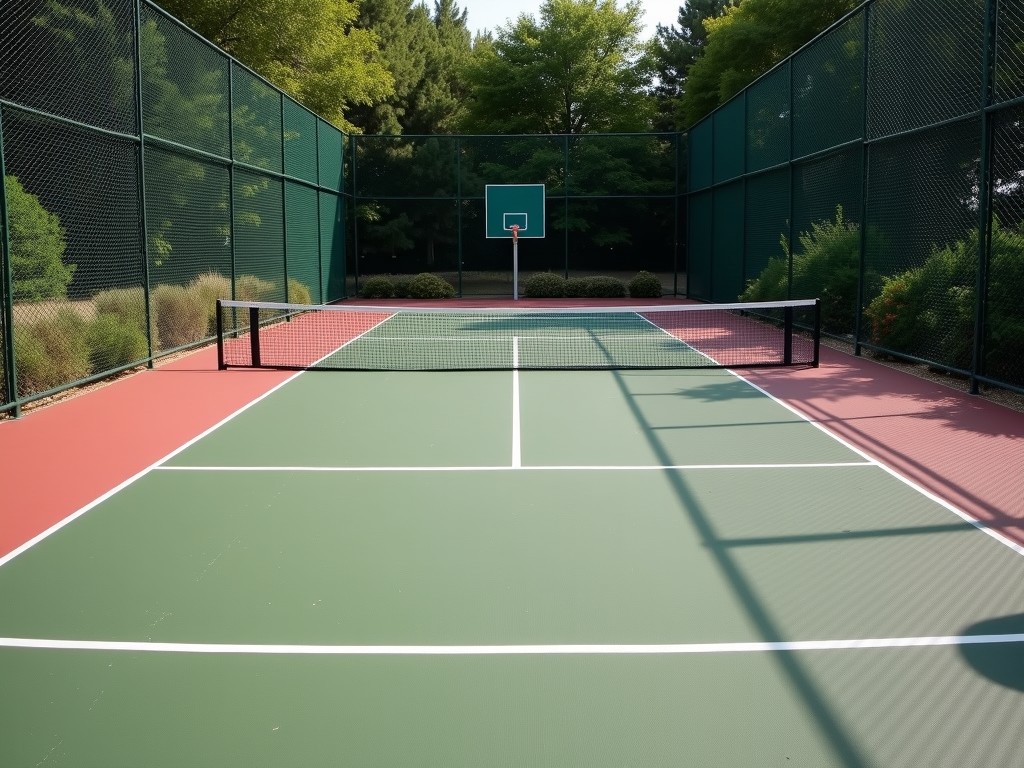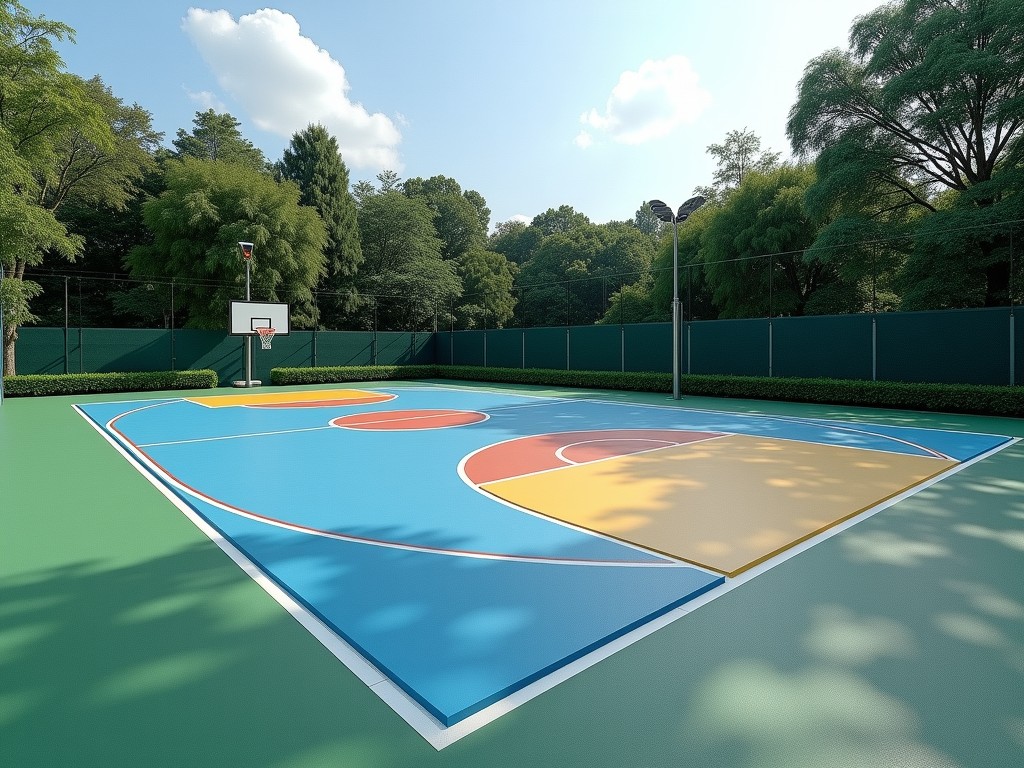
Bulk Interlocking Outdoor Basketball Tiles Exporter
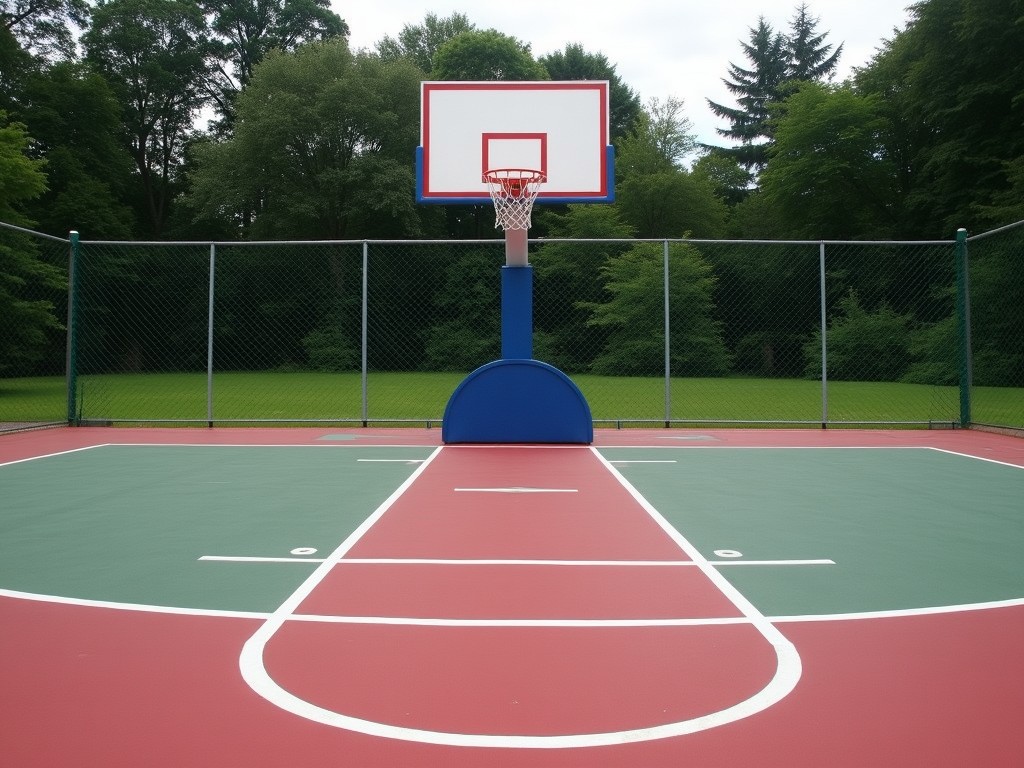
Bulk Interlocking Outdoor Basketball Tiles Exporter
Bulk Interlocking Outdoor Basketball Tiles – Exporter Overview
Interlocking outdoor basketball tiles are modular surface systems designed to provide a durable, uniform playing area that can be installed over various substrates. As an exporter handling bulk orders, the focus is on consistent dimensional stability, UV resistance, and load distribution characteristics that meet international sports surfacing standards.
Product Construction and Material Composition
Each tile consists of a high-density polypropylene (HDPE) core blended with recycled rubber granules to achieve a balance between impact absorption and rigidity. The surface layer incorporates a UV-stabilized coating that reduces color fading under prolonged sun exposure.
| Property | Typical Value | Test Method |
|---|---|---|
| Density | 0.92 g/cm³ | ASTM D792 |
| Shore A Hardness | 85 ±5 | ASTM D2240 |
| UV Stability (color change after 1000h) | ΔE < 3 | ISO 4892-2 |
Interlocking Mechanism and Dimensional Tolerances
The tiles feature a male‑female dovetail edge system that engages with a compressive force of approximately 150 N per joint, providing lateral stability without the need for adhesives. Manufacturing tolerances are held to ±0.5 mm on length and width, and ±0.2 mm on thickness, ensuring tight fit across large court areas.
- Tile size: 500 mm × 500 mm (standard)
- Thickness options: 12 mm, 18 mm, 25 mm
- Weight per tile: 6.8 kg (12 mm), 10.2 kg (18 mm), 14.1 kg (25 mm)
- Interlock engagement depth: 8 mm
Performance Characteristics for Outdoor Basketball Courts
Performance is evaluated through ball rebound, shock absorption, and slip resistance. The HDPE‑rubber composite delivers a ball rebound efficiency of 92 % relative to a concrete baseline, while the surface texture yields a wet pendulum slip rating of P3 (minimum for outdoor sports).
| Parameter | Result | Relevant Standard |
|---|---|---|
| Ball Rebound (%) | 92 | ASTM F2117 |
| Force Reduction (%) | 28 | ASTM F2569 |
| Vertical Deformation (mm) | 1.8 | ASTM F2772 |
| Slip Resistance (wet pendulum) | P3 | EN 13036-4 |
Applications and Suitability
These tiles are chosen for temporary or semi‑permanent basketball courts in schools, community centers, and military bases where rapid installation and removal are required. The modular nature allows reconfiguration of court dimensions without cutting, and the load‑spreading capability protects underlying asphalt or concrete substrates from point‑load damage during intensive play.
Quality Control and Testing
Each production lot undergoes dimensional inspection on a coordinate measuring machine (CMM) with a sampling rate of 1 per 200 tiles. Mechanical properties are verified using universal testing machines on five specimens per batch, and UV exposure is simulated in a Q‑sun accelerator for 500 hours before colorimetric assessment.
Packaging for Export
Tiles are stacked in layers separated by polyethylene sheets, then placed on heat‑treated pallets measuring 1.1 m × 1.1 m. Each pallet is secured with PET straps and covered with a UV‑resistant shrink film to prevent moisture ingress during ocean freight. A typical 20‑foot container holds approximately 24 pallets, equating to 4,800 tiles of the 12 mm thickness.
Customization Options
Buyers can specify alternative colors (standard palette includes orange, blue, green, and gray) by adding pigment to the surface coating during extrusion. Logo embossing is achievable through a secondary molding step that raises the design 0.3 mm above the tile face, suitable for court branding without compromising slip resistance.
Frequently Asked Questions
Can tile dimensions be customized?
Yes, length and width can be adjusted in 50 mm increments, subject to mold tooling availability and minimum order quantities.
What information is required before quotation?
Project details such as total area, desired thickness, color preference, and delivery destination are needed to calculate freight and tooling costs.
How is quality inspected?
Inspection includes dimensional checks, hardness testing, and accelerated UV exposure, with test reports provided upon request.