Wholesale Table Tennis Floor Mats For Sale
Wholesale Table Tennis Floor Mats For Sale
Wholesale Table Tennis Floor Mats
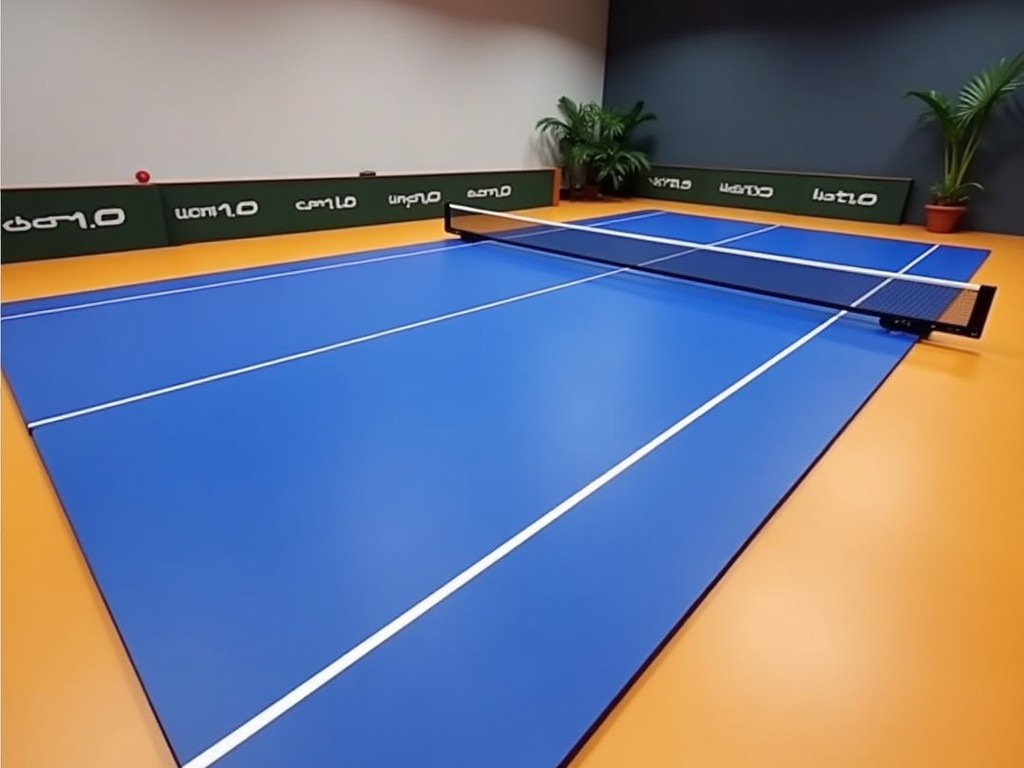
These mats provide a uniform playing surface that delivers consistent ball rebound, controls impact forces, and limits slip hazards during intense play. Engineered for continuous use in clubs, schools, and commercial venues, they combine dimensional stability with low maintenance requirements.
Material Composition and Performance
Typical constructions use vulcanized natural rubber or thermoplastic elastomer blends with a Shore A hardness ranging from 60 to 70. This hardness range yields a balance between shock absorption and surface resilience, measured by a vertical deformation of 1.2 mm under a 500 N impact load. The surface coefficient of friction, tested per ASTM D2047, remains above 0.60 to prevent shoe sliding while allowing controlled lateral movement.
Thickness options span 5 mm to 10 mm, influencing both weight per square meter (approximately 4.5 kg/m² at 5 mm, increasing to 9 kg/m² at 10 mm) and overall damping capacity. The closed‑cell structure limits water absorption to less than 0.5 % by volume after 24 h immersion, preserving performance in humid environments.
Dimensional Stability and Installation
Interlocking tongue‑and‑groove edges enable seamless alignment without adhesives, reducing installation time to under 15 minutes per 10 m² for a two‑person crew. Each mat weighs between 2.3 kg and 4.6 kg depending on thickness, facilitating manual handling while maintaining sufficient inertia to resist shifting during play.
Thermal expansion coefficients of the rubber base are approximately 1.5 × 10⁻⁴ /°C, resulting in negligible dimensional change (<0.1 % length variation) across typical indoor temperature ranges of 15 °C to 30 °C. This stability ensures consistent ball bounce over the product lifespan.
Applications in Sports Facilities
Facilities that host regular training sessions benefit from the mat’s ability to attenuate peak impact forces, lowering joint stress for athletes during repetitive footwork. The uniform surface eliminates variations in ball spin that can arise from uneven flooring, supporting accurate skill development and fair competition.
Multi‑purpose halls that schedule table tennis alongside other activities gain from the mat’s quick‑release interlocking system, allowing rapid conversion between sports without permanent floor modifications. The non‑marking surface protects underlying substrates while providing adequate grip for shoe soles.
Technical Specifications
| Property | Typical Value | Unit | Notes |
|---|---|---|---|
| Shore A Hardness | 60‑70 | Shore A | Measured per ASTM D2240 |
| Thickness | 5‑10 | mm | Customizable per project |
| Density | 0.9‑1.1 | g/cm³ | Closed‑cell formulation |
| Coefficient of Friction | >0.60 | – | ASTM D2047, dry condition |
| Vertical Deformation @ 500 N | 1.2 | mm | Indicates shock absorption |
| Water Absorption (24 h) | <0.5 | % volume | ASTM D570 |
Quality Control and Testing
Each production lot undergoes inline hardness verification using a durometer probe, with acceptance limits set at ±2 Shore A points from the target. Finished mats are subjected to a repeated impact test (10,000 cycles at 500 N) to confirm that deformation recovery remains above 90 % of initial thickness. Surface flatness is checked with a laser profilometer, ensuring deviations do not exceed 0.5 mm over a 1 m span.
Documentation includes material safety data sheets, REACH compliance statements, and test reports per ASTM F2772 for sports flooring, which are available upon request for qualification purposes.
Customization Options
- Thickness: 5 mm, 7 mm, 10 mm (other values available)
- Surface texture: smooth, low‑profile grip, or embossed pattern
- Edge configuration: interlocking tongue‑and‑groove, straight cut, or beveled
- Color: standard dark gray, light gray, or custom Pantone match
- Branding: embossed logo or printed identifier on underside
Packaging and Logistics
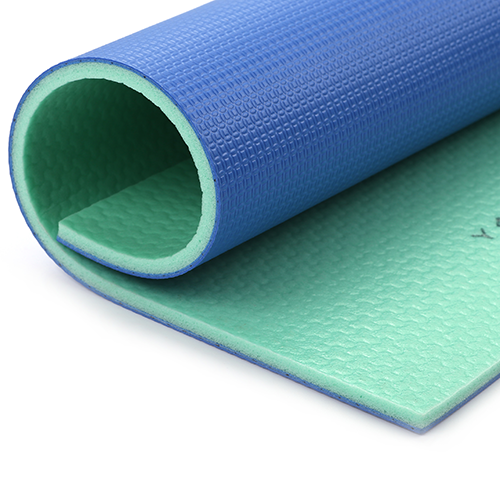
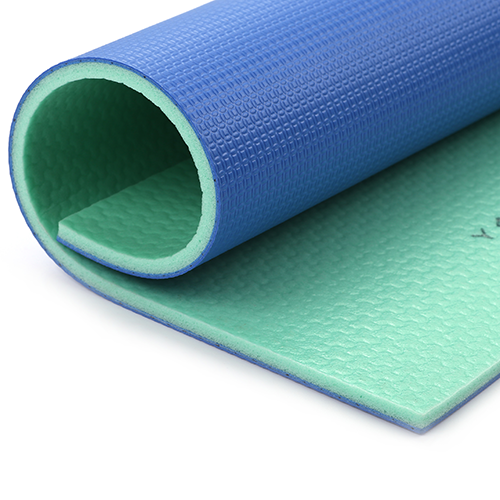
Mats are rolled tightly around a rigid core, wrapped in polyethylene film, and placed on pallets with corner protectors. Each pallet holds up to 50 m² of 5 mm material, reducing handling steps during warehouse receipt. Labels include lot number, dimensions, and handling instructions to facilitate traceability.
For export shipments, the packaging meets ISPM‑15 standards for wood pallets, and optional moisture‑barrier bags are available for climates with high humidity. Lead times are typically 2‑3 weeks for standard sizes, with confirmation provided after receipt of technical specifications.
Frequently Asked Questions
- Can dimensions be customized? Yes, length and width can be cut to specific tolerances (±2 mm) before shipping.
- What information is required before quotation? Required details include desired thickness, surface finish, edge type, quantity, and delivery destination.
- What materials are available? Standard offerings are vulcanized natural rubber and thermoplastic elastomer blends; alternative compounds are available upon request.
- How is quality inspected? Each lot undergoes hardness, impact recovery, and flatness checks as described in the quality control section.
- What packaging methods are available? Primary options are rolled with film wrap on pallets; flat‑stacked sheets are available for thin profiles.
- How are export shipments protected? Products are packed with corner protectors, moisture‑resistant film, and comply with ISPM‑15 pallet regulations.
- What is the typical production lead time? Standard configurations ship within 2‑3 weeks; custom colors or textures may extend lead time by up to one week.
- How are samples arranged? Sample pieces (up to 0.5 m²) can be dispatched via express courier after receipt of a formal request.