Direct Factory Table Tennis Court Flooring Material Company
Direct Factory Table Tennis Court Flooring Material Company
Direct Factory Table Tennis Court Flooring Material
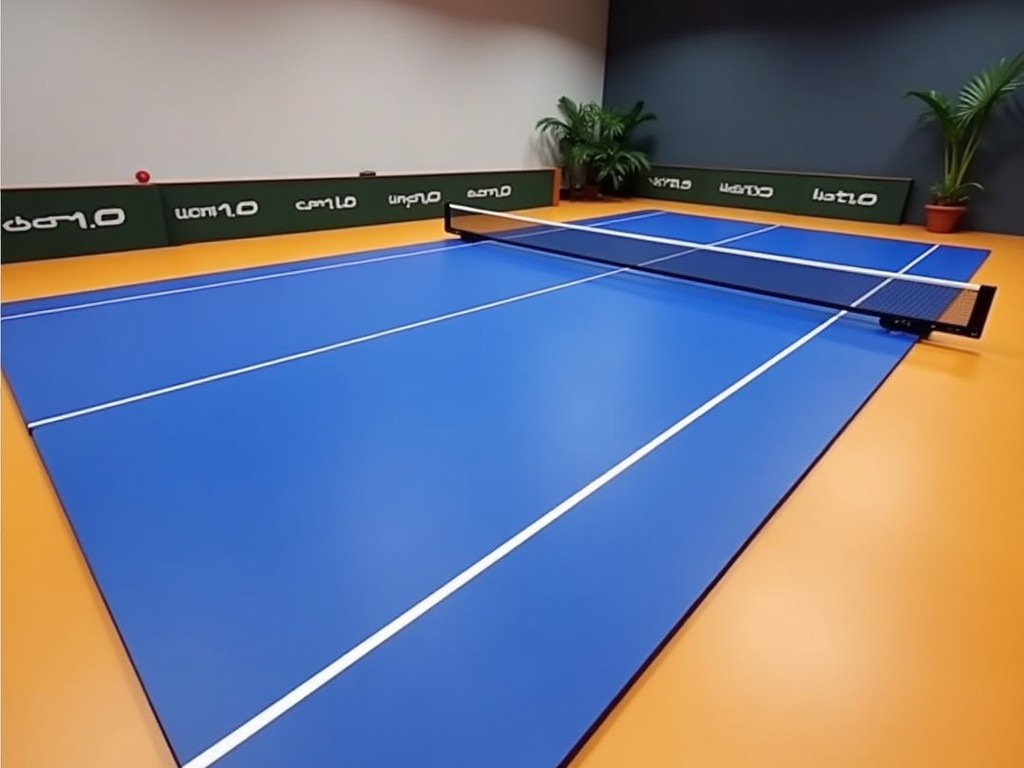
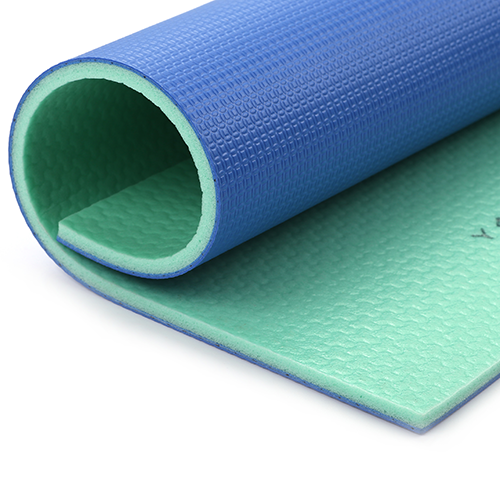
This material is manufactured in‑house as interlocking tiles or roll‑out sheets, providing a consistent playing surface for table tennis courts. It combines a polymeric wear layer with a shock‑absorbing underlayer to meet sport‑specific performance requirements.
Material Composition and Structure
The wear layer consists of virgin polyvinyl chloride (PVC) compounded with titanium dioxide for UV stability, typically 1.2 mm thick. Beneath it, a recycled rubber granule matrix provides shock absorption, ranging from 8 mm to 12 mm in thickness depending on the selected grade. The two layers are fused under heat and pressure, resulting in a homogeneous board with a density of approximately 1.35 g/cm³.
Performance Characteristics
Key performance indicators are measured under laboratory conditions that simulate competitive play. The following table lists typical ranges for each parameter; actual values can be adjusted according to project requirements.
| Property | Typical Value | Test Method |
|---|---|---|
| Shock absorption (force reduction) | 30 % – 45 % | ASTM F355 |
| Coefficient of friction (dry) | 0.45 – 0.55 | ASTM D2047 |
| Wear resistance (Taber abrasion, 1000 cycles) | ≤ 30 mg loss | ASTM D4060 |
| Dimensional stability (24 h, 70 °C) | ≤ 0.2 % change | ISO 23999 |
Installation and Subfloor Requirements
The flooring is supplied as interlocking tiles with a male‑female edge system that locks without adhesives for temporary installations, or as roll‑out sheets that require a thin‑set adhesive for permanent courts. Subfloor flatness must be within ±3 mm over a 2 m straightedge to avoid uneven settling. Expansion gaps of 5 mm around the perimeter accommodate thermal movement.
Applications in Sports Facilities
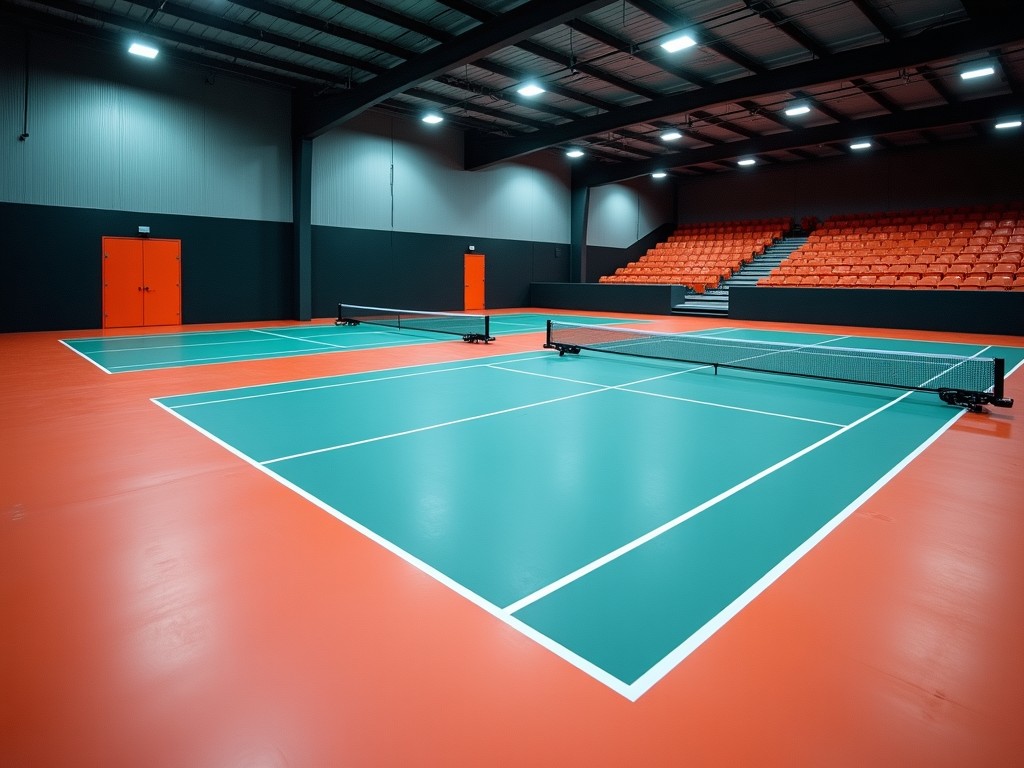
Table tennis demands a surface that delivers consistent ball rebound, low slip risk, and minimal maintenance. The polymeric wear layer provides a uniform coefficient of restitution, ensuring predictable ball bounce across the entire court. The shock‑absorbing underlayer reduces impact forces on players’ joints, which is particularly beneficial in multi‑use halls where the flooring also supports other indoor sports.
Customization Options
Manufacturers can adjust several parameters to match venue branding or performance targets.
- Thickness: wear layer from 1.0 mm to 2.0 mm; underlayer from 6 mm to 15 mm.
- Color: standard RAL palette or custom pigment matching.
- Surface texture: matte, low‑gloss, or embossed for enhanced grip.
- Logo integration: in‑mold printing or removable overlays.
- Edge trim: PVC or aluminum profiles for seamless transitions.
Quality Control and Testing
Each production lot undergoes inline monitoring of thickness, density, and color consistency. Finished tiles are sampled for shock absorption and abrasion resistance according to ITTF‑approved test procedures. Results are recorded in a traceable batch record, and any deviation beyond the specified tolerance triggers a rework or rejection.
Frequently Asked Questions
- Can dimensions be customized? Yes, tile size can be adjusted from 300 mm × 300 mm to 600 mm × 600 mm, and roll width up to 2 m.
- What information is required before quotation? Required details include court dimensions, desired thickness, color preference, installation type (interlocking or adhesive), and any logo or branding needs.
- What materials are available? The wear layer is PVC‑based; the underlayer can be recycled rubber, EVA foam, or polyurethane, selected according to shock‑absorption targets.
- How is quality inspected? Inline laser thickness gauges, portable durometers, and laboratory Taber abrasion testers are used; final inspection includes a ball‑rebound test on a sample area.
- What packaging methods are available? Tiles are stacked on pallets with corner protectors and stretch‑film wrap; rolls are placed in cardboard cores with protective polyethylene sleeves.
- How are export shipments protected? Pallets are fitted with edge boards and moisture‑barrier bags; containers are secured with straps and desiccants to prevent humidity damage.
- What is the typical production lead time? Lead time ranges from 10 to 20 working days after artwork approval, depending on order size and customization complexity.
- How are samples arranged? Sample kits (up to four tiles or a 0.5 m roll segment) can be shipped via express courier; charges are credited against the first order.
Get a Quote or Contact
For technical data sheets, sample requests, or a formal quotation, please reach out to our engineering team.