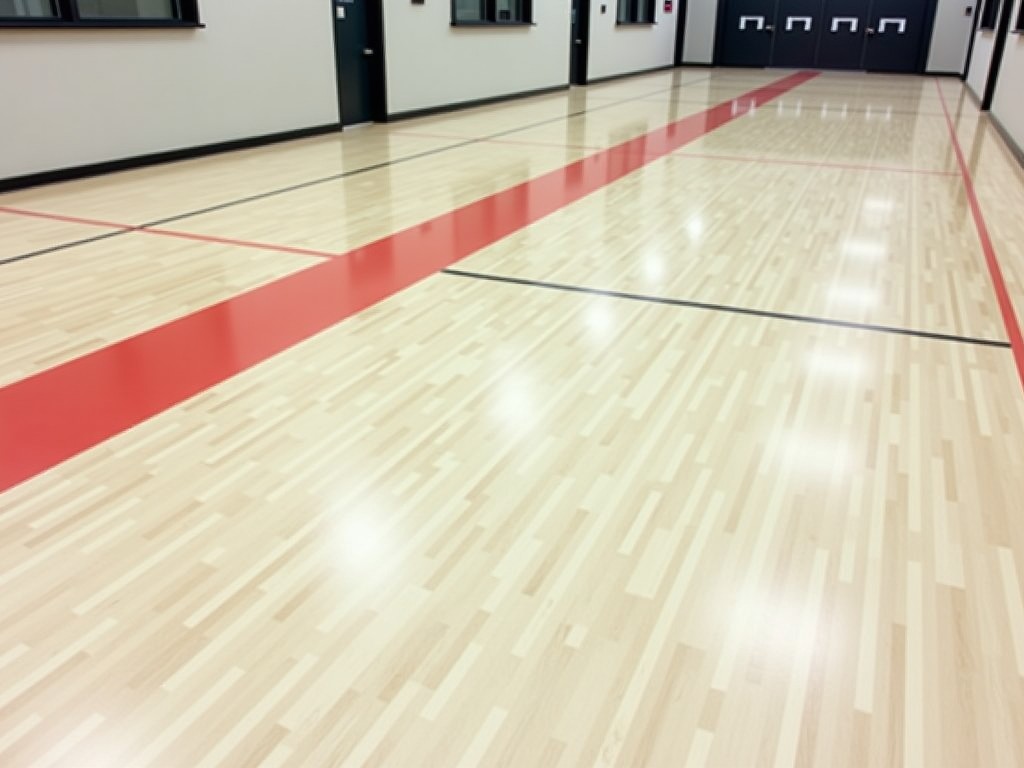
Low Price Inexpensive Vinyl Plank Flooring Wholesale
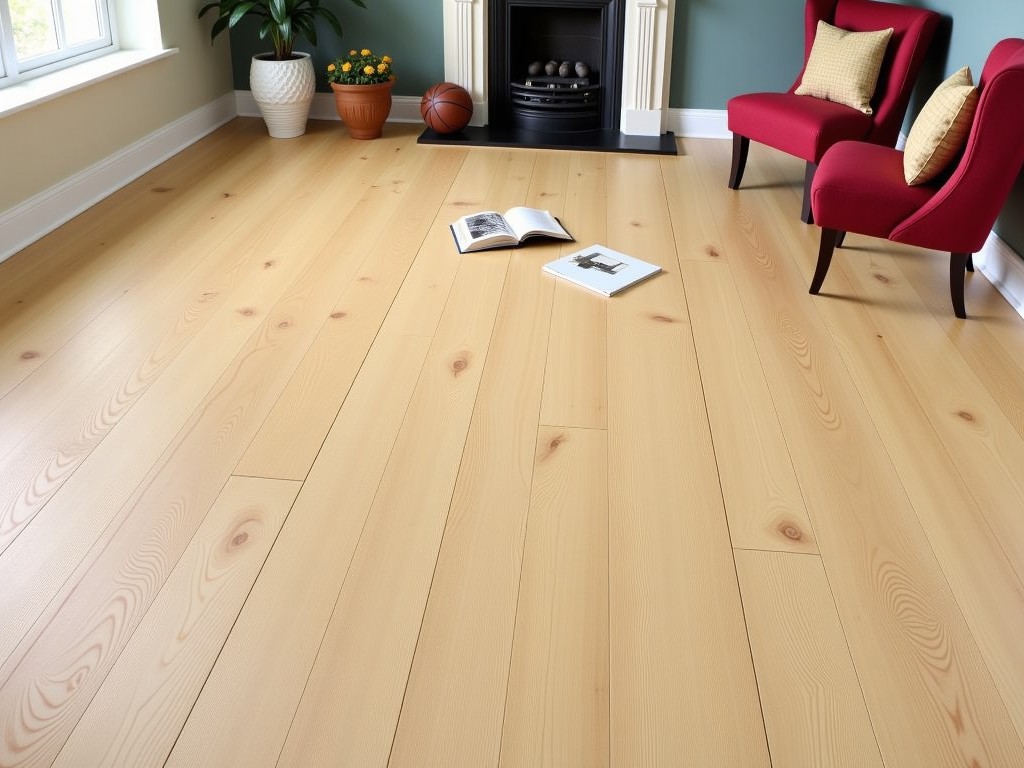
Low Price Inexpensive Vinyl Plank Flooring Wholesale
Low Price Inexpensive Vinyl Plank Flooring – Wholesale
Vinyl plank flooring is a multilayer synthetic product designed to mimic the appearance of natural wood while offering enhanced resistance to moisture, wear, and impact. The wholesale version discussed here is produced in large format rolls or planks optimized for cost‑effective installation in commercial and light‑industrial settings.
Key Technical Specifications
| Parameter | Typical Value | Notes |
|---|---|---|
| Overall Thickness | 2.0 mm – 3.0 mm | Includes wear layer and backing |
| Wear Layer Thickness | 0.2 mm – 0.5 mm | Determines abrasion resistance |
| Density (core) | 1.2 g/cm³ – 1.4 g/cm³ | Affects dimensional stability |
| Dimensional Change (24h water immersion) | ≤0.2% | Meets ASTM F2199 |
| Slip Resistance (Coefficient of Friction) | 0.5 – 0.6 (dry) | ASTM D2047 |
| Fire Rating | Class Bfl‑s1 (EN 13501‑1) | Limited flame spread |
Material Composition & Construction
The product consists of four primary layers: a UV‑cured wear layer, a printed decorative film, a rigid PVC core, and a backing layer that may include foam or felt for acoustic attenuation. Each layer is calendared under controlled temperature and pressure to ensure uniform bonding and minimal void formation.
The wear layer is typically formulated with a clear urethane resin containing aluminum oxide particles, providing a measurable abrasion resistance rating (e.g., 6000 cycles under Taber ASTM D4060). The decorative film uses high‑resolution printing technology to reproduce wood grain patterns with color fidelity within ΔE < 2.0.
Performance Characteristics
Due to its homogeneous PVC core, the flooring exhibits low thermal conductivity (≈0.15 W/m·K), contributing to stable under‑foot temperature in environments with fluctuating HVAC loads. The closed‑cell structure limits water absorption to less than 0.1% by weight after 24 h immersion, reducing the risk of swelling or cupping.
Impact resistance is quantified by the Gardner impact test; typical values exceed 20 in‑lb without cracking, making the product suitable for areas with occasional heavy equipment movement. The product also demonstrates low VOC emissions, generally below 0.5 mg/m³, meeting indoor air quality standards such as CDPH/EHLB/Standard Method V1.1.
Typical Applications
- Retail showrooms where frequent foot traffic and occasional cart loads require a surface that resists scuffing and maintains visual appeal.
- Light‑industrial workshops needing a moisture‑resistant floor that can be cleaned with mild detergents without degradation.
- Office corridors and break rooms where acoustic comfort is improved by the optional foam backing, reducing impact noise by approximately 3 dB.
- Temporary exhibition spaces where quick‑lock or glue‑down installation enables rapid reconfiguration.
Quality Assurance & Testing
Each production lot undergoes inline thickness gauging (±0.05 mm) and wear‑layer adhesion testing (peel strength ≥ 1.5 N/mm). Finished planks are sampled for dimensional stability after 48 h conditioning at 23 °C/50 % RH, with acceptance criteria of ≤0.15 % change in length and width.
Fire performance is verified via a small‑scale radiant panel test (ISO 5660‑1) confirming compliance with the declared class. All test reports are available upon request for qualified buyers.
Customization Options
- Plank length: 1200 mm to 1800 mm (custom lengths available).
- Width: 150 mm, 180 mm, or 200 mm.
- Wear layer thickness: selectable from 0.2 mm to 0.5 mm.
- Surface finish: matte, semi‑gloss, or high‑gloss (gloss units 5–80).
- Edge treatment: square, beveled, or micro‑beveled.
Packaging & Logistics
Planks are stacked in cartons of 20 kg maximum, with each carton containing a variable number of planks based on dimensions. Cartons are sealed with moisture‑barrier film and placed on pallets (100 kg max load) stabilized with corner protectors and stretch wrap.
For export shipments, pallets are fumigated or heat‑treated as required by ISPM 15, and a container desiccant is added to maintain relative humidity below 50 % during transit.
Frequently Asked Questions
- Can the plank dimensions be customized?
- Yes. Length, width, and wear‑layer thickness can be adjusted according to project specifications; tooling lead times vary.
- What information is required before a quotation?
- Required data include total area, desired thickness, wear‑layer grade, surface finish, and any special certifications (e.g., low VOC, fire rating).
- How is quality inspected?
- Inline gauging, adhesion testing, and post‑production sampling for dimensional stability and fire performance are standard; reports are supplied with each lot.
- What packaging options are available?
- Standard cartons, palletized loads, and custom crating for oversized lengths; all include moisture barrier protection.
- What is the typical production lead time?
- Lead times range from 2 to 4 weeks for stocked specifications; customized orders may require an additional 1‑2 weeks for tooling.
Contact for Wholesale Inquiry
To receive a detailed quotation, technical data sheets, or sample arrangements, please reach out via the contact form.