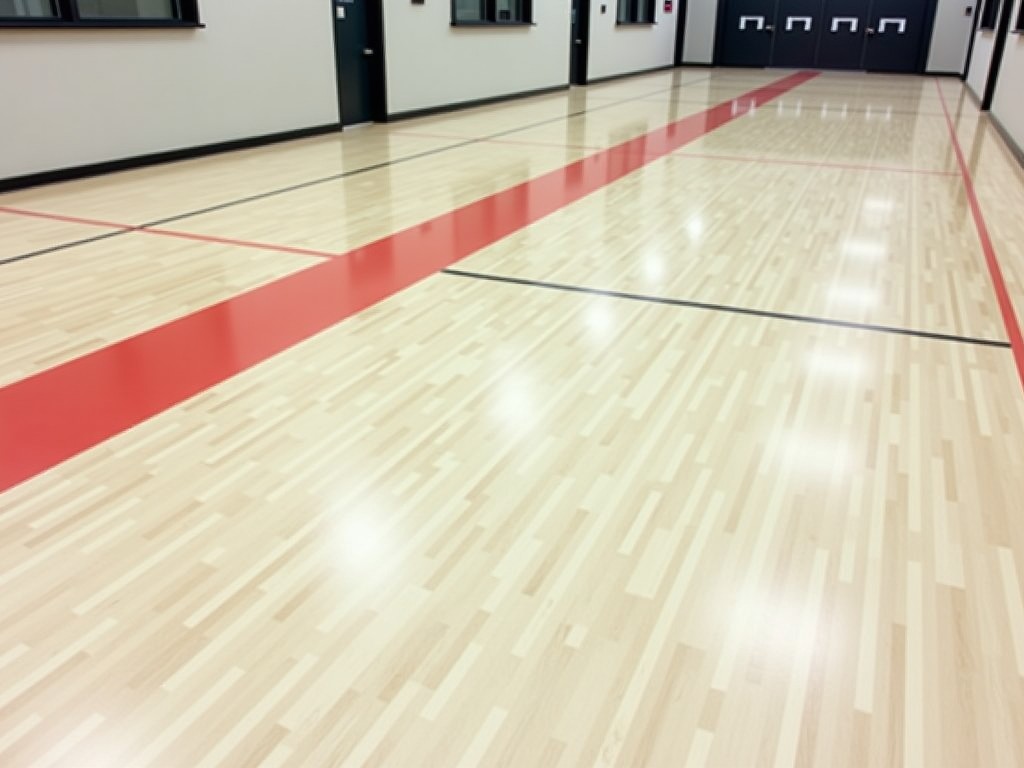
Factory Direct Basketball Court Vinyl Flooring Supplier
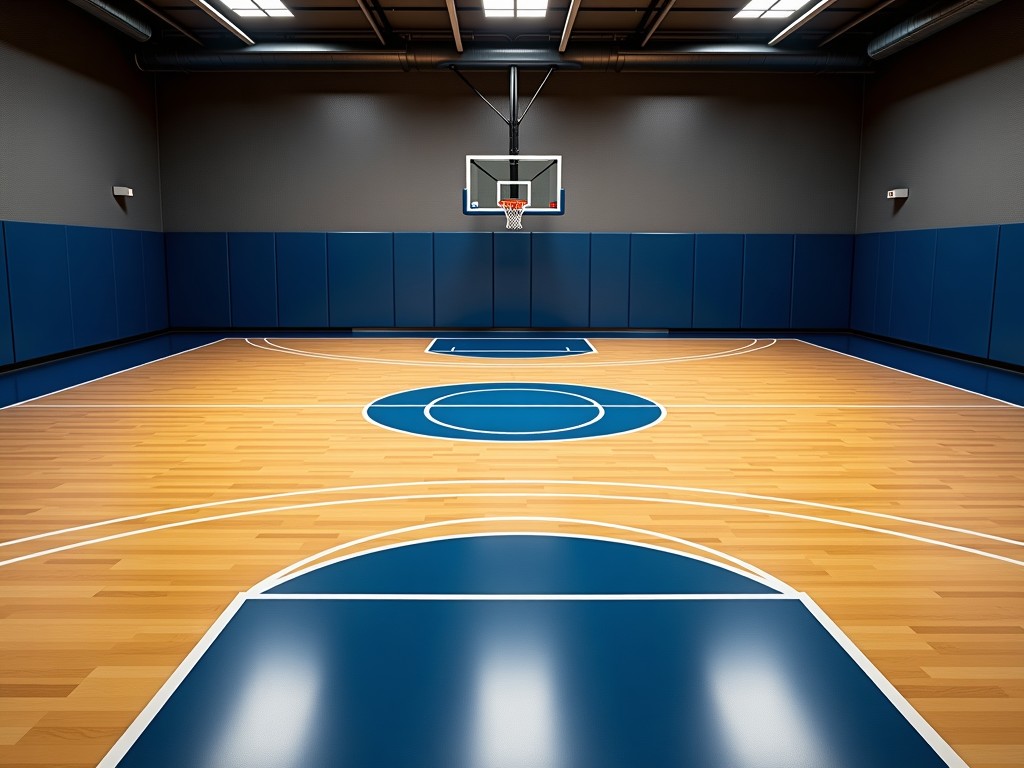
Factory Direct Basketball Court Vinyl Flooring Supplier
Factory Direct Basketball Court Vinyl Flooring Supplier
Basketball court surfacing requires a wear layer that balances ball bounce, player traction, and impact absorption while resisting abrasion from frequent foot traffic and equipment. Vinyl-based systems are engineered with a homogeneous or heterogeneous construction, typically consisting of a PVC backing, a reinforced fiberglass layer, and a surface coating formulated for specific slip resistance values.
Typical Technical Specifications
| Property | Typical Value | Test Standard |
|---|---|---|
| Overall thickness | 4.5 mm - 8.0 mm (customizable) | ASTM F1292 |
| Wear layer thickness | 0.5 mm - 1.2 mm | ASTM D4060 |
| Shock absorption (force reduction) | 35% - 55% | ASTM F2772 |
| Vertical deformation | 0.5 mm - 1.0 mm | ASTM F2772 |
| Coefficient of friction (wet/dry) | 0.6 - 0.8 (dry), 0.5 - 0.7 (wet) | ASTM E303 |
| VOC emissions | ≤ 0.5 mg/m³ (TVOC) | ISO 16000-9 |
Where This Flooring Is Used
- Indoor basketball courts in schools, community centers, and professional facilities requiring consistent ball rebound and player safety.
- Multi‑purpose sports halls where the surface must accommodate volleyball, badminton, and futsal without delamination.
- Training areas with heavy equipment loads, where the flooring resists indentation from weight racks and plyometric boxes.
- Retail showrooms or exhibition spaces that need a low‑maintenance, roll‑out surface with quick installation.
Customization Options
Thickness, wear‑layer composition, and surface texture can be adjusted to meet specific performance targets such as higher shock absorption for youth leagues or increased abrasion resistance for high‑traffic courts. Color patterns, line markings, and logo inlays are produced using heat‑transfer or laser‑etched methods that do not compromise the wear layer integrity. Edge profiles (straight, beveled, or interlocking) are selected based on subfloor preparation and installation method.
Quality Control Philosophy
Each batch undergoes raw material verification for PVC resin melt flow index and plasticizer content, followed by in‑line thickness gauging during calendering. After lamination, samples are taken for abrasion cycles (1000 revolutions under a 5 kg load) and slip‑resistance testing under both dry and wet conditions. Finished rolls are inspected for dimensional stability, flatness, and adhesion strength before packaging, with statistical process control charts monitoring key parameters.
Packaging and Logistics
Flooring is rolled onto rigid cores with a diameter of 150 mm, wrapped in polyethylene film, and placed in corrugated cardboard cartons rated for 30 kg load. For export shipments, cartons are palletized, strapped, and covered with moisture‑barrier shrink wrap to protect against humidity during transit. Each pallet includes a packing list, material safety data sheet, and installation guide.
Frequently Asked Questions
- Can dimensions be customized? Yes, roll width and length are adjusted per project requirements; standard widths are 1.5 m or 2.0 m, with lengths up to 30 m.
- What information is needed for a quotation? Required details include court dimensions, desired thickness, wear‑layer preference, color or marking specifications, and site access constraints.
- Which material options are available? Homogeneous PVC, heterogeneous with foam backing, and reinforced versions with fiberglass scrim are offered.
- How is quality inspected? Incoming resin is tested for MFI, in‑process thickness is monitored, and final product undergoes abrasion, slip, and VOC testing per ASTM/ISO standards.
- What packaging methods are available? Standard roll‑on‑core with poly film and carton; optional wooden crates for high‑value orders.
- How are export shipments protected? Cartons are placed on pallets, strapped, and wrapped with moisture‑barrier film; container loading follows ISPM‑15 guidelines.
- What is the typical production lead time? Lead time ranges from 2 to 4 weeks after artwork approval, depending on order size and customization complexity.
- How are samples arranged? Sample pieces (30 cm × 30 cm) are shipped via express courier with freight charges reimbursed upon order confirmation.