Factory Direct Anti Slip Vinyl Plank Flooring Company
Factory Direct Anti Slip Vinyl Plank Flooring Company
Factory Direct Anti Slip Vinyl Plank Flooring
Product Overview
This flooring consists of a homogeneous PVC wear layer bonded to a reinforced composite core, providing a slip‑resistant surface suitable for high‑traffic industrial environments.
The wear layer thickness ranges from 0.3 mm to 0.7 mm, and the total plank thickness is typically 4 mm to 6 mm, depending on the intended load rating.
Technical Characteristics
| Property | Typical Value | Test Standard |
|---|---|---|
| Wear layer thickness | 0.3 mm – 0.7 mm | ASTM F410 |
| Total thickness | 4 mm – 6 mm | ASTM F386 |
| Slip resistance (R‑value) | R10 – R13 (wet) | DIN 51130 / ASTM E303 |
| Abrasion resistance | ≤0.05 g loss per 1000 cycles | ASTM D4060 |
| Dimensional stability | ≤0.15 % change after 24 h immersion | ASTM F2199 |
Values are representative; actual specifications can be adjusted to meet project‑specific load or chemical resistance requirements.
Core Construction Details
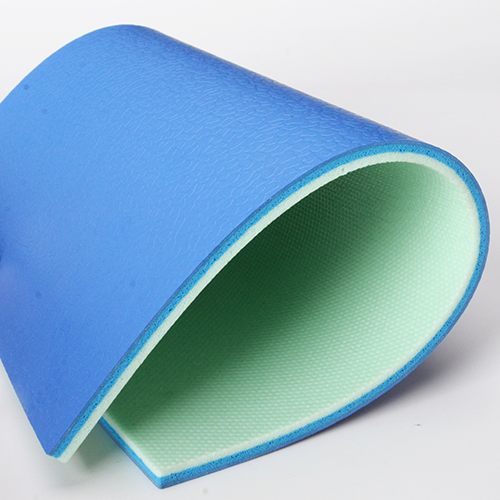
The wear layer is a calendared PVC sheet containing aluminum oxide or silicon carbide aggregates that create micro‑texture for slip resistance.
Beneath the wear layer, a reinforced PVC core provides rigidity; the core may include glass‑fiber or polyester scrim to limit expansion under temperature fluctuations.
A backing layer of PVC or cork‑based material adds acoustic damping and improves adhesion to sub‑floor adhesives.
Industrial Applications
Facilities that combine wet processes, heavy equipment traffic, and stringent hygiene standards benefit from a floor that maintains traction while resisting chemicals and abrasion.
- Food and beverage processing plants where water, oils, and cleaning agents are present.
- Pharmaceutical manufacturing areas requiring slip‑resistant surfaces that can be sanitized.
- Automotive assembly lines with oil spills and frequent forklift movement.
- Warehouse loading docks exposed to rain, snow, and pallet jack traffic.
- Chemical storage zones where spill containment and floor durability are critical.
In each case, the anti‑slip rating reduces the likelihood of workplace accidents, while the vinyl composition resists staining and facilitates easy cleaning.
Installation Methods
Two primary installation approaches are available, selected according to sub‑floor condition and project schedule.
- Glue‑down installation using a pressure‑sensitive acrylic adhesive, providing a permanent bond ideal for areas with heavy dynamic loads.
- Interlocking click‑lock planks that float over a thin underlayment, allowing faster installation and easier replacement of damaged sections.
Both methods accommodate expansion joints every 8 m to 10 m, preventing buckling under temperature variations.
Quality Control & Testing
Each production lot undergoes inline thickness gauging and wear‑layer abrasion testing to verify consistency.
Slip resistance is measured with a pendulum tester on both dry and wet surfaces; results are recorded and linked to the batch number for traceability.
Visual inspection checks for embossing uniformity, color consistency, and absence of surface defects before packaging.
Customization Options
Buyers can specify wear‑layer thickness, overall plank dimensions, surface emboss pattern, and color palette to match corporate branding or safety‑zone markings.
- Plank widths: 100 mm, 150 mm, 200 mm (custom widths available on request).
- Lengths: 1 m – 2 m standard; longer lengths achievable via joint‑less manufacturing.
- Surface finishes: fine‑grain, medium‑grain, or coarse‑grain embossing to achieve specific R‑values.
- Color options: standard grays, safety yellows, blues, and custom Pantone matches.
All customizations are subject to minimum order quantities that vary with thickness and emboss complexity.
Packaging & Logistics
Planks are stacked in corrugated cardboard cartons with edge protectors, then placed on pallets secured with stretch film.
Each carton label includes product code, batch number, slip‑resistance rating, and installation instructions.
For export shipments, pallets are fumigated and wrapped in moisture‑barrier film to prevent damage during transit.
Frequently Asked Questions
Can dimensions be customized?
Yes, width, length, and thickness can be adjusted to suit project specifications; tooling changes may affect lead time.
What information is required before quotation?
Required data include total area, desired wear‑layer thickness, slip‑resistance target (R‑value), sub‑floor type, and any color or emboss preferences.
How is quality inspected?
Inline gauging, abrasion testing, pendulum slip testing, and visual inspection are performed on each batch; results are documented and available upon request.
What packaging methods are available?
Standard cartons on pallets; optional crate packaging for high‑value or fragile orders.
How are export shipments protected?
Pallets receive moisture‑barrier wrapping, corner boards, and stretch film; fumigation complies with ISPM‑15 where required.
What is the typical production lead time?
Lead time ranges from 2 weeks for stock items to 4‑6 weeks for customized runs, depending on order complexity.
Call to Action
To obtain a detailed quotation or request a sample kit, please provide your project specifications via the contact form.
Request Quote