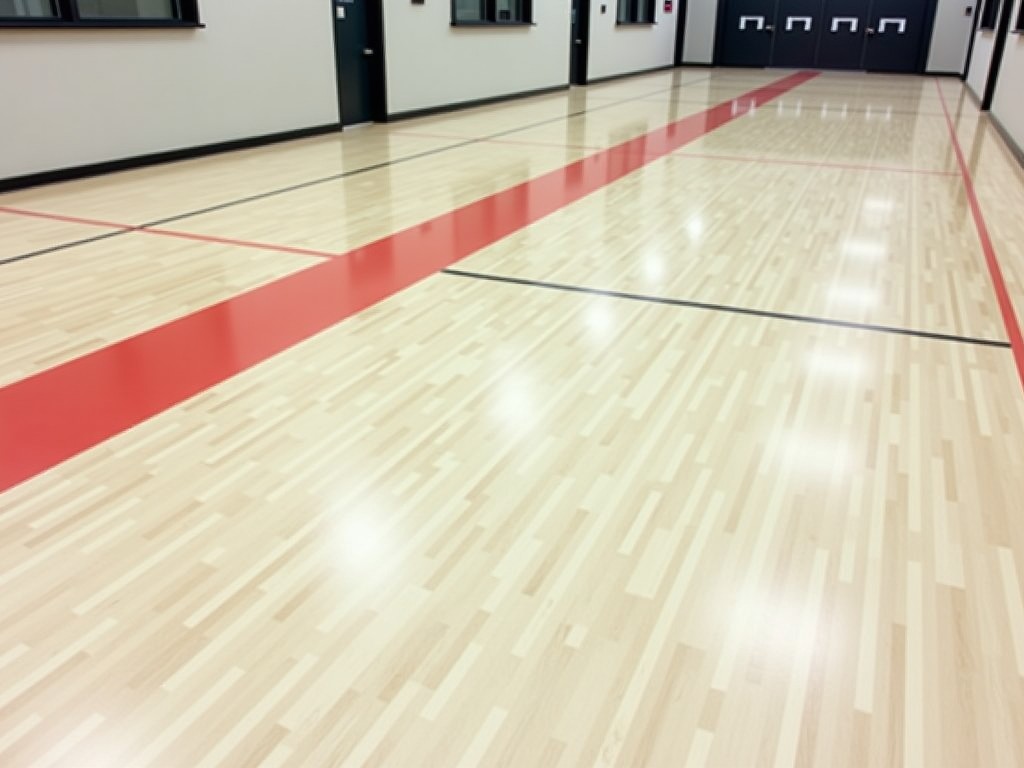
Custom Eco Friendly Vinyl Sports Flooring Factory
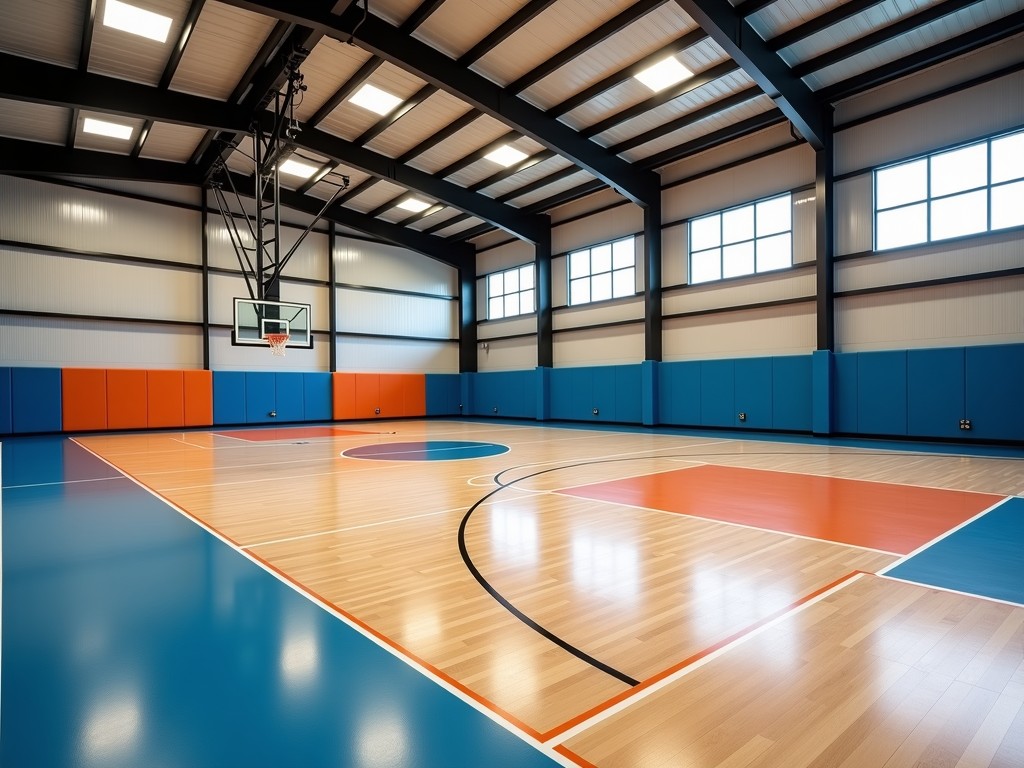
Custom Eco Friendly Vinyl Sports Flooring Factory
Custom Eco‑Friendly Vinyl Sports Flooring – Factory Direct
This flooring system is manufactured from a vinyl compound that incorporates post‑consumer PVC regrind and renewable plasticizers derived from vegetable oils, offering a balance between mechanical durability and reduced carbon footprint.
Material Composition
The base layer consists of a calendered vinyl sheet with a thickness ranging from 2 mm to 5 mm, selected according to load‑bearing requirements. A wear‑resistant top coat, typically 0.5 mm thick, is formulated with aluminum oxide particles to achieve a Taber Abrasion Index below 80 mg loss per 1000 cycles.
Optional backing layers include a closed‑cell foam for impact attenuation or a fiberglass reinforcement mat for dimensional stability under temperature fluctuations.
Performance Specifications
| Property | Typical Range | Test Standard |
|---|---|---|
| Shore A Hardness | 85 – 95 | ASTM D2240 |
| Tensile Strength | 15 – 25 MPa | ASTM D412 |
| Coefficient of Friction (wet) | 0.55 – 0.70 | ASTM E303 |
| Vertical Deformation | 0.5 – 1.5 mm at 2000 N | EN 14808 |
| Recycled Content | 30 % – 60 % by weight | ISO 14021 |
Values are indicative; final specifications are adjusted to match the specific sport, sub‑floor condition, and expected traffic intensity.
Customization Options
- Thickness: 2 mm to 5 mm in 0.5 mm increments
- Surface emboss: wood grain, stone texture, or smooth finish
- Color palette: standard RAL shades or custom pigment matching
- Logo or line‑mark inlay via laser‑etched vinyl or printed wear layer
- Edge profiling: straight, beveled, or interlocking tongue‑and‑groove
Each option is evaluated for its effect on performance metrics such as slip resistance and rebound, ensuring that aesthetic changes do not compromise functional requirements.
Applications
The flooring is suited for environments where a combination of impact absorption, consistent ball response, and low maintenance is required.
- Indoor basketball and volleyball courts – provides uniform bounce and reduces joint stress
- Multi‑purpose gymnasiums – accommodates aerobics, badminton, and futsal with a single surface
- Weight‑training zones – high compressive strength resists equipment indentation
- Educational facilities – easy to clean and resistant to staining from spills
Installation over concrete, asphalt, or existing wood sub‑floors is possible with appropriate moisture barriers and adhesive systems.
Environmental Attributes
By incorporating recycled PVC and bio‑based plasticizers, the product reduces virgin material consumption by up to 40 % compared with conventional vinyl flooring. The manufacturing process operates at lower extrusion temperatures, decreasing energy use by approximately 15 %.
At end‑of‑life, the flooring can be mechanically regrinded and reused in non‑critical vinyl applications, supporting a circular material flow.
Quality Assurance
Each batch undergoes inline thickness gauging, UV stability testing, and chemical resistance checks against common gymnasium disinfectants. Finished rolls are sampled for peel strength and dimensional change after 24 h exposure to 70 °C/80 % RH.
Traceability is maintained through lot numbers that link raw material sources to final product specifications, facilitating rapid response to any field feedback.
Installation Considerations
Acclimatize the rolls at 18 °C–22 °C for 48 hours prior to laying. Use a pressure‑sensitive adhesive compatible with vinyl substrates, applying at a rate of 200–250 g/m². Seams are sealed with heat‑welding tape to prevent moisture ingress and ensure uniform surface continuity.
Allow 24 hours cure time before subjecting the floor to dynamic loads.
FAQ
Q: Can dimensions be customized?
A: Yes. Widths range from 1 m to 2 m, and lengths are cut to project‑specific measurements with minimal waste.
Q: What information is required before quotation?
A: Sub‑floor type, intended sport, expected load, desired thickness, surface finish, and any branding elements.
Q: How is quality inspected?
A: Inline gauging, Taber abrasion, tensile, and slip resistance tests per batch, plus final visual inspection.
For technical data sheets, sample requests, or to discuss a custom specification, contact our engineering team.
Contact Our Engineering Team