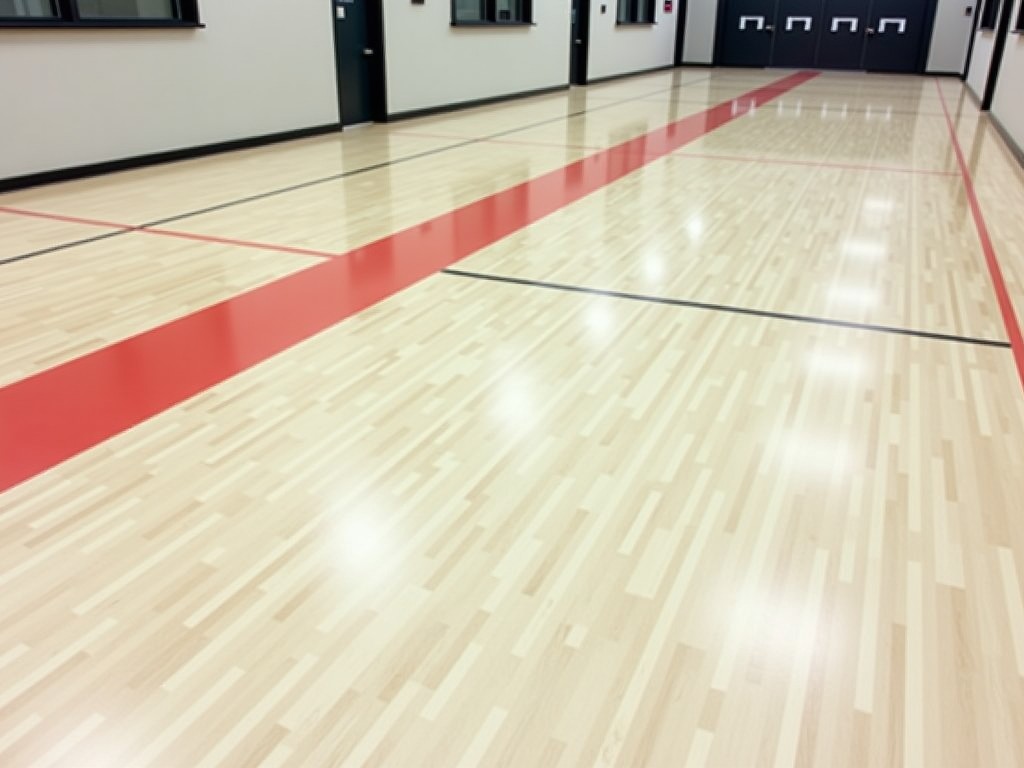
China Vinyl Plank Flooring For Basketball Court Manufacturer
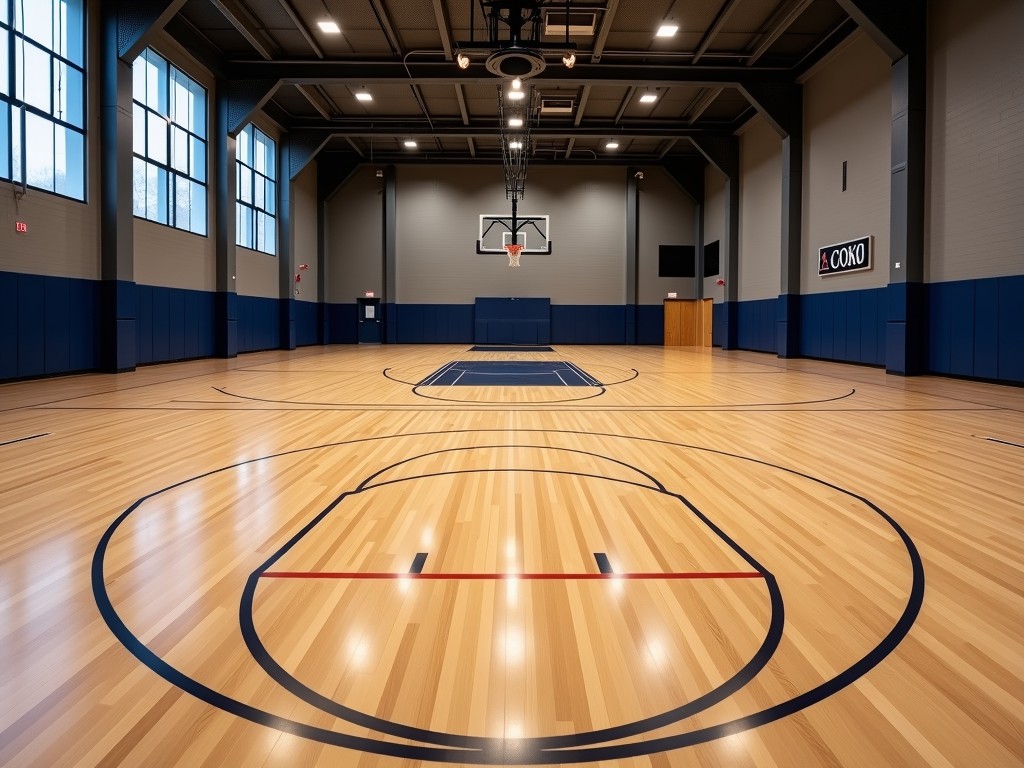
China Vinyl Plank Flooring For Basketball Court Manufacturer
China Vinyl Plank Flooring for Basketball Court Manufacturer
Vinyl plank flooring designed for basketball courts must combine wear resistance, slip control, and dimensional stability under dynamic loads. The product described here is engineered for indoor sports facilities where frequent impact, rolling loads, and maintenance cycles demand consistent performance over many seasons.
Technical Specifications
| Property | Typical Value | Test Standard |
|---|---|---|
| Overall Thickness | 6.0 mm (±0.2 mm) | ISO 24346 |
| Wear Layer Thickness | 0.55 mm | ISO 24340 |
| Density | 1.45 g/cm³ | ISO 1183 |
| Static Load Resistance | ≥150 N/mm² | ISO 8542-2 |
| Coefficient of Friction (wet) | 0.60–0.65 | EN 13036-4 |
Material Composition
- Core: high‑density polyvinyl chloride (PVC) reinforced with calcium carbonate filler for rigidity.
- Wear layer: UV‑cured polyurethane coating with aluminum oxide nanoparticles for abrasion resistance.
- Backing layer: fiberglass‑reinforced PVC sheet to prevent dimensional change under temperature fluctuations.
- Edge profile: milled tongue‑and‑groove with micro‑bevel to accommodate subfloor tolerances.
Performance Characteristics
The 6 mm overall thickness provides sufficient cushioning to reduce athlete fatigue while maintaining a firm surface for accurate ball bounce. The wear layer thickness of 0.55 mm exceeds the minimum 0.30 mm recommended for high‑traffic sports floors, translating to an expected service life of 8–10 years under regular school or community use. The static load resistance ensures that portable basketball hoops and equipment exerting point loads do not cause permanent indentation.
Slip resistance is achieved through a micro‑textured surface finish that yields a wet coefficient of friction within the 0.60–0.65 range, meeting the EN 15009‑1 standard for sports surfaces. This level prevents premature sliding during quick directional changes while allowing smooth shoe pivot.
Dimensional stability is maintained by the fiberglass backing, limiting expansion/contraction to less than 0.1 % across a temperature range of 10 °C to 30 °C, which eliminates gaps or peaking at joints after installation.
Installation Guidelines
- Acclimatize planks in the installation area for 48 hours at 18–22 °C and 40–60 % relative humidity.
- Ensure subfloor is flat to within 3 mm over a 2 m radius; repair any high spots or depressions.
- Apply a compatible pressure‑sensitive adhesive or use a loose‑lay interlocking system per project specifications.
- Stagger end joints by at least 200 mm and maintain a 2 mm expansion gap around perimeter walls.
- Roll the installed surface with a 45 kg roller to achieve full adhesive transfer and eliminate air pockets.
Applications in Basketball Courts
Basketball courts experience repetitive impact from player jumps, lateral slides, and equipment loads. The flooring’s high density and wear layer protect against surface degradation from shoe abrasion and ball scuff. The controlled slip resistance supports both traction for acceleration and the slight slide needed for defensive shuffles, reducing injury risk. Additionally, the low‑maintenance surface resists staining from sweat and beverage spills, allowing quick cleaning with neutral pH solutions.
Quality Assurance
Each production lot undergoes inline thickness monitoring, wear layer adhesion testing, and surface roughness measurement. Finished lots are sampled for abrasion resistance using a Taber rotary platform (1000 cycles, CS‑10 wheels) and must retain ≤0.08 mm mass loss. Dimensional checks are performed on a coordinate measuring machine to verify tongue‑and‑groove fit within ±0.1 mm tolerance.
Customization Options
- Thickness range: 4.5 mm to 8.0 mm (adjustable core and wear layer).
- Wear layer options: 0.30 mm, 0.45 mm, 0.55 mm, 0.70 mm.
- Color and grain patterns: standard maple, walnut, or custom printed designs.
- Edge treatments: square, beveled, or rounded for specific transitions.
- Backing variants: standard fiberglass, acoustic foam, or moisture barrier.
Packaging & Shipping
Planks are packed in cartons of 2.14 m² (typically 10 planks per carton) with corner protectors and stretch film. Pallets are stacked to a maximum height of 1.2 m and secured with straps. Export shipments include moisture‑barrier liners and are labeled with handling instructions to prevent exposure to direct sunlight during transit.
Frequently Asked Questions
Can the dimensions be customized for a specific court layout?
Yes. Plank length and width can be adjusted to match the court module, reducing waste and seam frequency. Provide the required dimensions and we will generate a cutting layout.
What information is needed before a quotation?
Project area (sq m), desired thickness, wear layer, color preference, subfloor type, and any special performance requirements (e.g., acoustic rating).
Which quality standards does the flooring meet?
Products comply with ISO 9001, ISO 14001, EN 15009‑1 (sports surfaces), and can be supplied with CE marking upon request.
How are samples arranged?
Sample kits containing 3 planks (different colors or wear layers) are shipped via express courier. Shipping charges are reimbursed upon order confirmation.
Get a Technical Quote
To discuss your basketball court flooring project, please share the specifications listed above. Our engineering team will return a detailed proposal, including lead time, packaging, and landing cost.