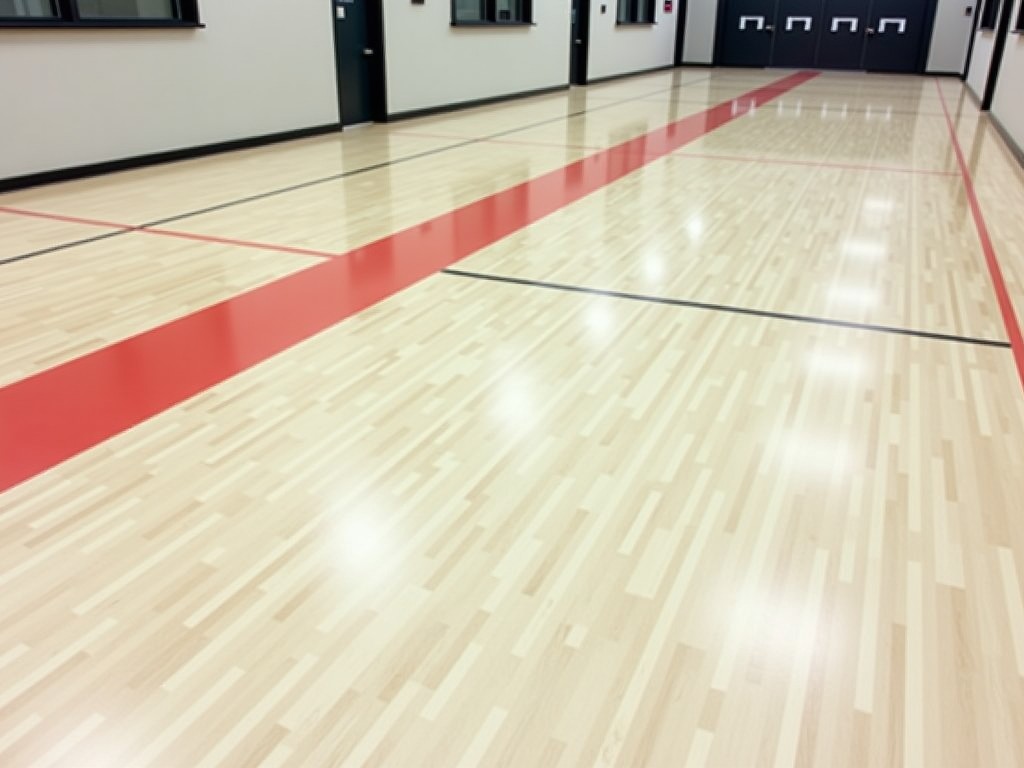
China Sports Hall Vinyl Composite Flooring Factory
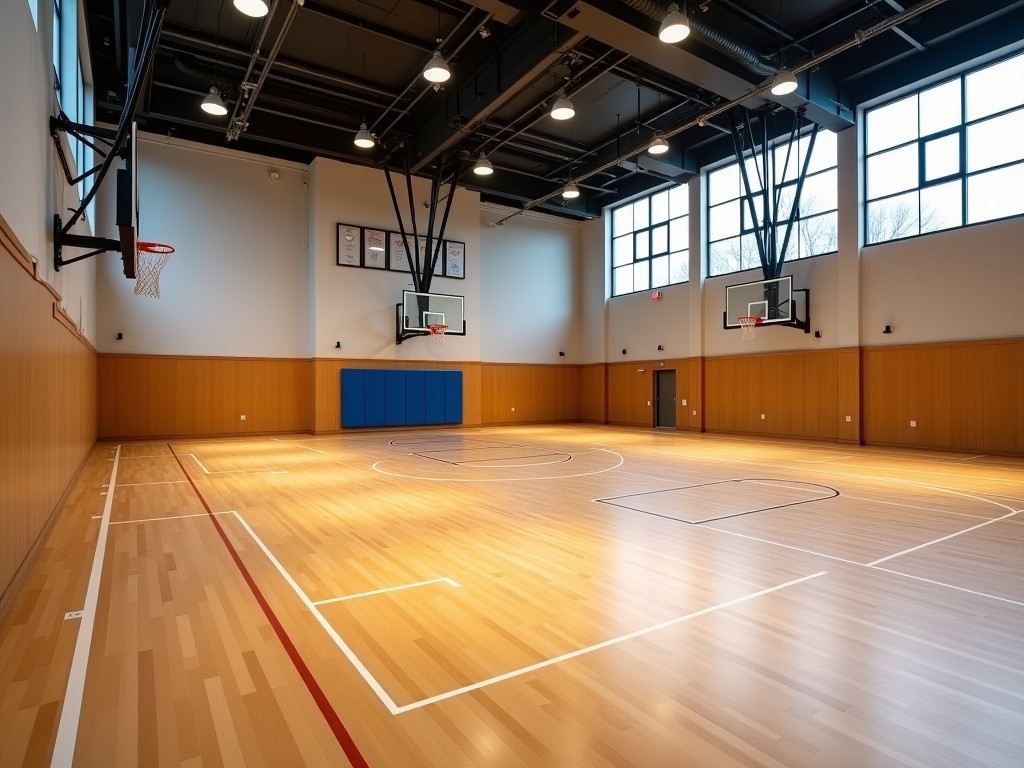
China Sports Hall Vinyl Composite Flooring Factory
China Sports Hall Vinyl Composite Flooring Factory
This facility produces vinyl composite flooring specifically engineered for indoor sports venues where surface durability, athlete safety, and consistent ball response are critical.
Material Composition and Layer Structure
The flooring consists of a homogeneous PVC core reinforced with a fiberglass grid, a printed design layer, and a transparent wear layer. The core typically contains 55‑60% polyvinyl chloride resin, 20‑25% plasticizers (phthalate‑free options available), and 15‑20% mineral fillers such as calcium carbonate for dimensional stability.
A fiberglass reinforcement grid, positioned mid‑core, limits expansion and contraction under temperature fluctuations, keeping dimensional change below 0.1% per 10 °C. The wear layer, usually 0.5 mm thick, is coated with a UV‑cured polyurethane finish that provides abrasion resistance measured at ≤0.02 mm loss after 1000 cycles under Taber testing.
Performance Characteristics Relevant to Sports Halls
- Shock absorption: 25‑35% force reduction, reducing impact stress on joints during high‑intensity activities.
- Slip resistance: static coefficient of friction (COF) ≥0.6 (wet) and ≥0.8 (dry) per EN 13036‑4, meeting indoor sports safety standards.
- Ball rebound: standardized basketball rebound efficiency 90‑95% of concrete baseline, ensuring consistent play.
- Fire rating: Bfl‑s1 (EN 13501‑1) achievable with optional flame‑retardant additives.
- Moisture resistance: water absorption <0.5% after 24 h immersion, suitable for areas with occasional spillages.
Typical Applications and Why the Product Fits
In badminton courts, the low‑glare surface and consistent friction allow rapid lateral movements without foot slippage, while the cushioned underlayer reduces fatigue during long matches.
For multipurpose halls that host basketball, volleyball, and indoor soccer, the flooring’s uniform ball rebound and impact attenuation meet the varied biomechanical demands of each sport, eliminating the need for surface changes between events.
Quality Control Philosophy
Each batch undergoes inline thickness measurement (±0.02 mm tolerance), wear‑layer abrasion testing, and COF verification. Finished rolls are inspected for color ΔE <2 against the approved master sample, ensuring visual consistency across large installations.
Documentation includes a material safety data sheet (MSDS), ISO 9001 audit records, and batch‑specific test reports that can be supplied to project engineers upon request.
Customization Options
- Wear layer thickness: 0.3 mm to 0.8 mm, adjustable for expected traffic intensity.
- Surface embossing: wood grain, stone texture, or smooth finish to match aesthetic requirements.
- Color matching: Pantone or RAL references accommodated via in‑house pigment blending.
- Edge profiling: straight, beveled, or interlocking tongue‑and‑groove for seamless installation.
- Backing options: standard PVC backing or reinforced with additional foam layer for enhanced acoustic absorption.
Technical Specifications
| Property | Typical Value | Test Standard |
|---|---|---|
| Total thickness | 4.5 mm – 6.0 mm (customizable) | EN 428 |
| Wear layer thickness | 0.5 mm (standard) | EN 429 |
| Dimensional change (heat) | ≤0.1% per 10 °C | EN 434 |
| Abrasion resistance (Taber) | ≤0.02 mm loss after 1000 cycles | EN 649 |
| Static COF (wet) | ≥0.6 | EN 13036‑4 |
| Fire rating | Bfl‑s1 (optional) | EN 13501‑1 |
| Shock absorption | 25‑35% force reduction | ASTM F2772 |
Frequently Asked Questions
Yes. Roll width (1.0 m–2.0 m) and length are adjusted to suit site logistics; custom cuts and edge profiles are available upon request.
Project area, desired thickness, wear‑layer preference, color or embossing specification, and any performance criteria (e.g., fire rating, acoustic backing).
Inline gauges monitor thickness and emboss depth; final inspection includes abrasion, COF, and color ΔE checks per ISO 9001‑controlled procedures.
Rolls are wrapped in polyethylene film, placed on sturdy cardboard cores, and loaded into palletized crates with corner protectors to prevent edge damage.
Lead time ranges from 15 to 25 working days after design confirmation, depending on order size and customization complexity.
Get in Touch
For technical datasheets, sample requests, or a project‑specific quotation, please contact our engineering team.
Request a Quote