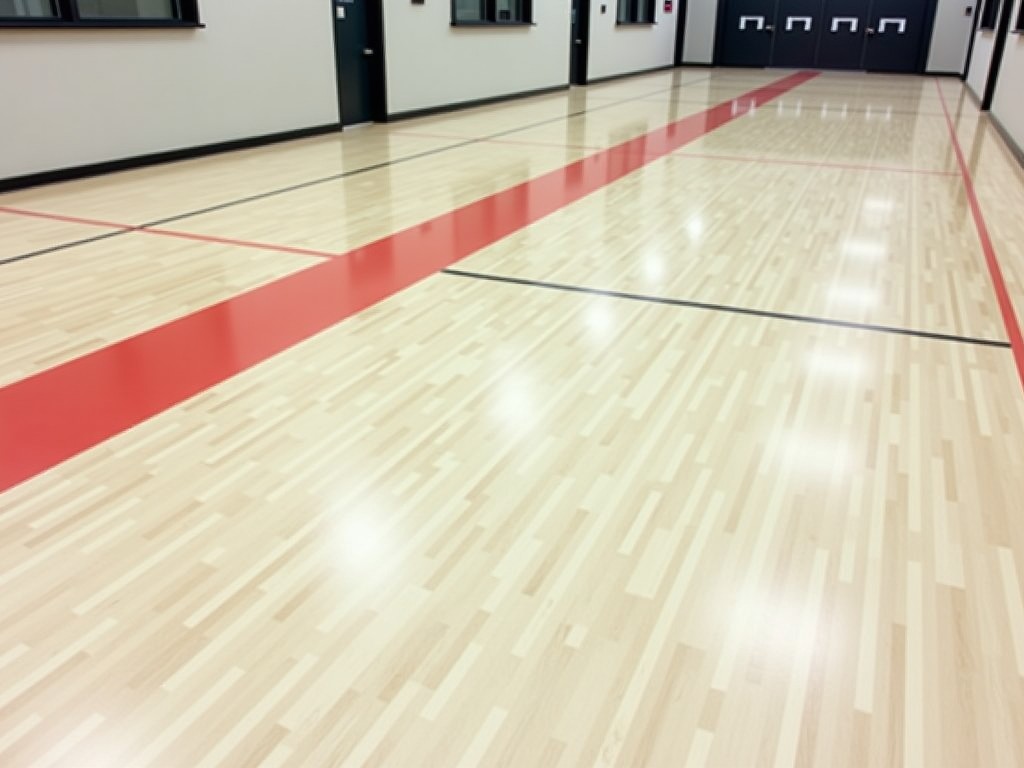
China Pvc Interlocking Sports Floor Tiles Manufacturer
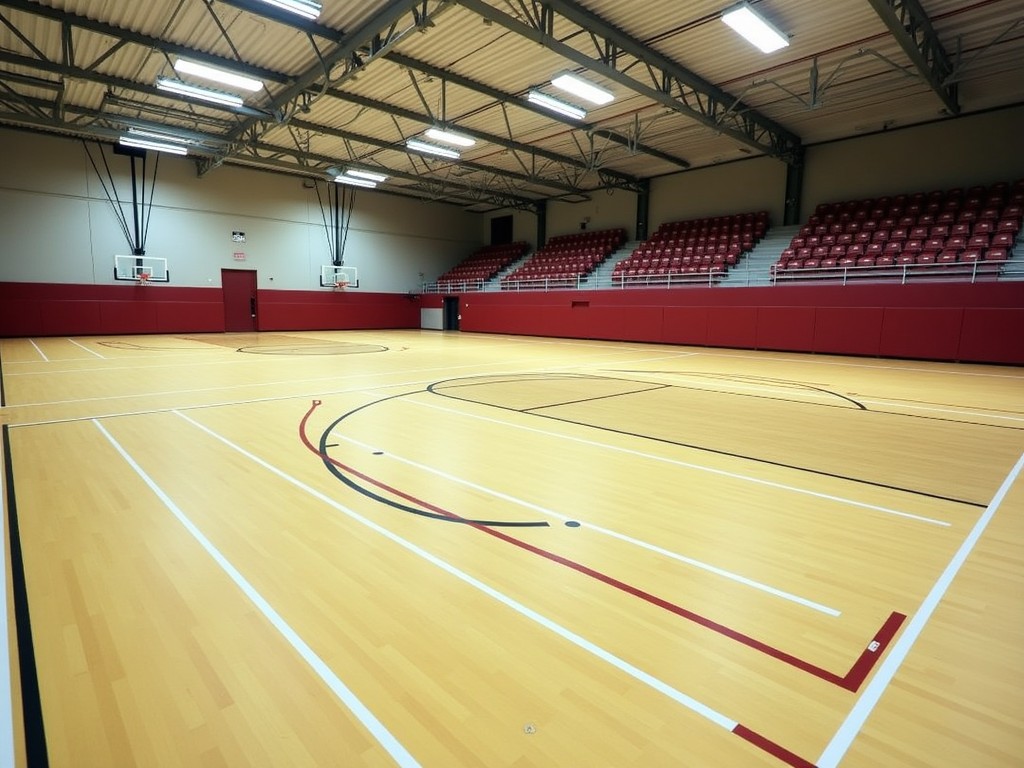
China Pvc Interlocking Sports Floor Tiles Manufacturer
China PVC Interlocking Sports Floor Tiles Manufacturer
Product Overview
PVC interlocking sports floor tiles are modular panels designed for indoor athletic surfaces. Each tile measures typically 300 mm × 300 mm with a thickness ranging from 6 mm to 10 mm depending on the intended sport. The surface layer incorporates a calibrated emboss pattern to achieve a specific coefficient of friction, while the backing layer provides dimensional stability under load.
Material Composition
The tiles consist of a virgin PVC compound blended with plasticizers, stabilizers, and fillers. The wear layer contains a higher concentration of titanium dioxide for UV resistance and a fine silica additive to enhance abrasion resistance. The base layer uses a recycled PVC core to reduce weight while maintaining compressive strength above 25 MPa.
Additive packages are selected to meet EN 14904 standards for sports flooring, ensuring consistent shock absorption values between 25 % and 45 % measured via ASTM F2569.
Interlocking Mechanism
Each tile features a male‑female edge system with a tapered tongue and groove geometry. The interlock angle is 15°, providing a shear resistance of approximately 1.2 kN per joint under static load. The design allows for a floating installation without adhesives, accommodating thermal expansion of up to 0.02 mm/m·°C.
Field testing shows that after 10 000 load cycles at 500 N per tile, joint displacement remains below 0.1 mm, indicating long‑term mechanical stability.
Performance Specifications
| Property | Typical Value | Test Standard |
|---|---|---|
| Thickness | 6 mm – 10 mm | ISO 24346 |
| Shock Absorption | 25 % – 45 % | ASTM F2569 |
| Vertical Deformation | 0.5 mm – 1.5 mm | EN 14904 |
| Coefficient of Friction | 0.8 – 1.1 | EN 13036‑4 |
| Abrasion Resistance (Taber) | ≤ 150 mg loss per 1000 cycles | ASTM D4060 |
| Dimensional Stability (ΔL/L) | ≤ 0.2 % after 8 h at 70 °C | ISO 23999 |
Values above represent typical ranges; actual specifications can be adjusted according to project requirements such as higher load bearing for multi‑use halls or enhanced slip resistance for wet‑area installations.
Typical Applications
Sports facilities benefit from a modular floor that can be re‑configured for different activities without permanent adhesives. The interlocking system allows rapid turnover between basketball, volleyball, badminton, and futsal courts.
- Indoor courts requiring consistent ball rebound and athlete safety.
- Multi‑purpose halls where flooring must withstand point loads from equipment.
- Training centers needing quick installation over existing sub‑floors.
- Temporary event venues where flooring must be removed and reused.
The tiles’ resistance to moisture and chemicals makes them suitable for areas where spills or cleaning agents are present, reducing maintenance cycles compared with traditional wood or rubber surfaces.
Installation Procedure
Installation begins with substrate inspection; the base must be flat within ±3 mm over a 2 m radius and free of debris. Tiles are laid dry, starting from a corner and progressing outward, tapping each panel with a rubber mallet to engage the interlock.
No adhesives or fasteners are required, which eliminates VOC emissions and allows the floor to be lifted for inspection or re‑layout. Expansion gaps of 5 mm are left at perimeter walls to accommodate thermal movement.
Average installation rate for a trained crew is approximately 30 m² per hour, depending on site conditions.
Quality Control Philosophy
Each production batch undergoes inline monitoring of melt flow index, tensile strength, and impact resistance. Finished tiles are sampled for dimensional tolerance (±0.1 mm) and surface hardness (Shore A 90‑95).
Statistical process control charts track key parameters; any deviation beyond 2σ triggers an automatic line stop for corrective action. Final inspection includes a visual check for color uniformity and a functional test of interlock engagement under a 200 N load.
Customization Options
Customers can specify variations in thickness, surface texture, and color to match branding or performance needs. Custom logos can be printed using UV‑cured inks that meet EN 71‑3 safety standards for toys, ensuring no harmful substances leach during use.
- Thickness: 6 mm, 8 mm, 10 mm (custom steps available).
- Surface patterns: fine‑grain, medium‑rib, anti‑slip rib.
- Color palette: standard RAL colors, custom Pantone matching.
- Edge treatments: beveled, square, or recessed for drainage.
Packaging and Logistics
Tiles are stacked in layers separated by corrugated cardboard sheets and placed on pallets sized 1.1 m × 1.1 m. Each pallet holds up to 500 mm of stacked height, corresponding to approximately 200 tiles depending on thickness.
- Pallet wrap: stretch film with UV inhibitor.
- Corner protectors: recycled polyethylene.
- Labeling: QR code linking to batch test data.
For overseas shipments, pallets are secured in ISO containers with moisture‑absorbent desiccants to maintain product integrity during transit.
Frequently Asked Questions
- Can dimensions be customized? Yes, tile length and width can be adjusted in 50 mm increments upon request, subject to minimum order quantities.
- What information is required before quotation? Project area, desired thickness, surface texture, color, and any special performance criteria such as enhanced shock absorption.
- What materials are available? Virgin PVC compound with optional recycled core; additive packages can be tailored for anti‑microbial or fire‑retardant properties.
- How is quality inspected? Inline checks for melt flow, tensile strength, and impact; final sampling for dimensions, hardness, and interlock performance.
- What packaging methods are available? Standard palletized packing with cardboard interleaving; custom crating or container‑load options exist.
- How are export shipments protected? Moisture‑desiccant packs, stretch film wrap, and corner boards to prevent damage during handling.
- What is the typical production lead time? 2‑4 weeks for standard specifications; custom colors or textures may extend to 6 weeks.
- How are samples arranged? Sample kits of 4‑6 tiles can be dispatched via express courier; shipping costs are reimbursed upon order confirmation.
Next Steps
For technical data sheets, sample requests, or project‑specific quotations, please reach out using the contact form below.
Contact Our Technical Team