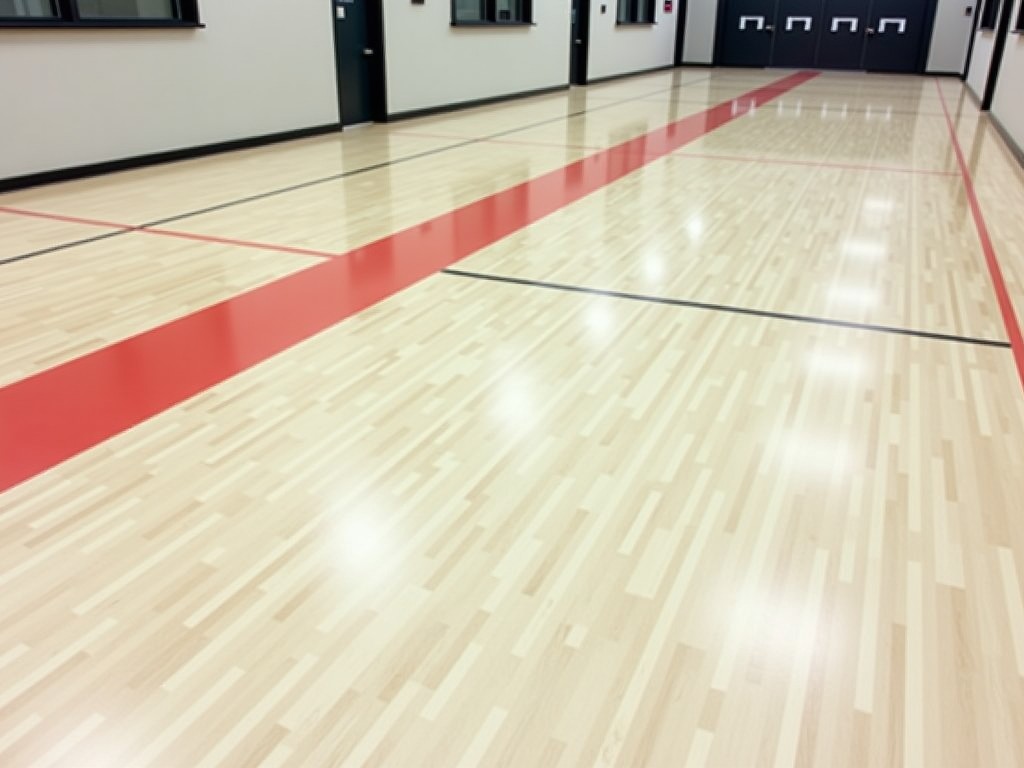
Bulk Pattern Vinyl Sheet Sports Flooring Supplier
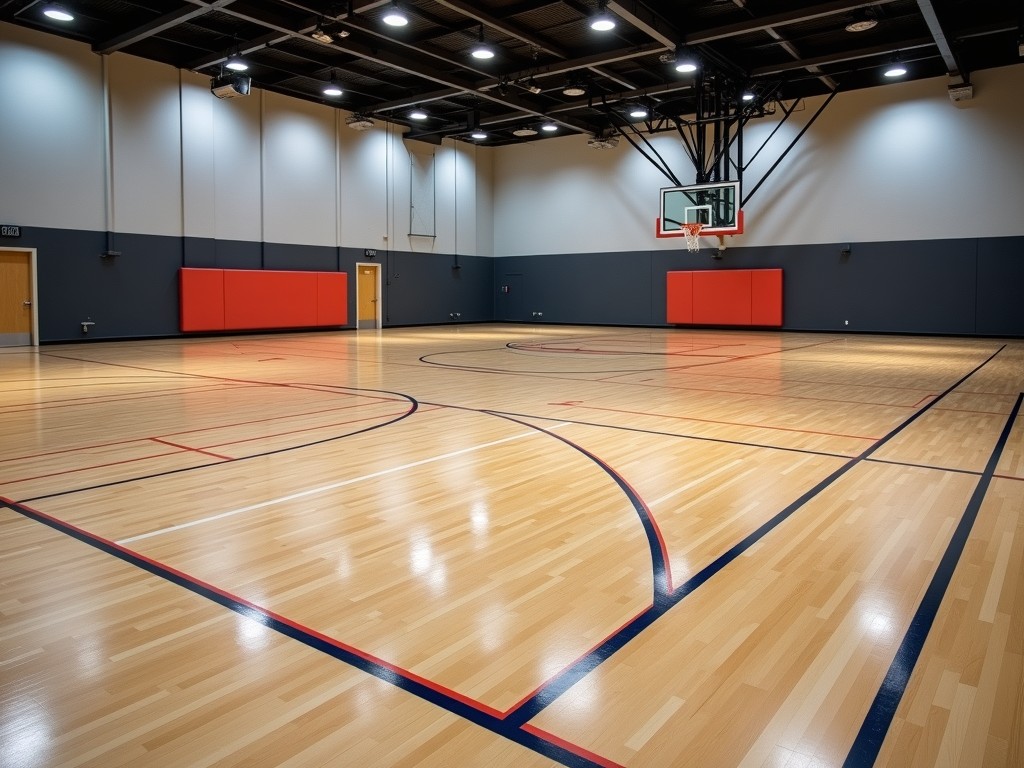
Bulk Pattern Vinyl Sheet Sports Flooring Supplier
Bulk Pattern Vinyl Sheet Sports Flooring Supplier
Bulk pattern vinyl sheet sports flooring consists of a homogeneous polyvinyl chloride (PVC) core coated with a wear‑resistant top layer that carries a printed or embossed pattern. The material is supplied in continuous rolls, typically 1.5 m to 2 m wide and up to 30 m long, allowing large‑area installation with minimal seaming.
Purchasing the flooring in bulk reduces the unit cost per square metre, limits the number of field joints that can become failure points, and ensures consistent colour and pattern across the entire installation. For sports facilities where performance uniformity is critical, bulk supply simplifies logistics and shortens on‑site handling time.
Material Composition
The sheet is built from three primary layers: a calendered PVC base that provides dimensional stability, a reinforcement layer of polyester or fibreglass mesh that improves tear strength, and a surface wear layer containing the pattern and a UV‑stabilised topcoat.
- Base PVC: 1.0 mm to 1.5 mm thickness, specific gravity ≈1.38 g/cm³.
- Reinforcement mesh: 25 µm to 35 µm diameter filaments, tensile strength ≥30 MPa.
- Wear layer: 0.2 mm to 0.5 mm thick, includes pigmented pattern and a clear polyurethane overcoat for abrasion resistance.
Performance Characteristics
Key performance indicators are determined by the formulation of the PVC compound and the thickness of the wear layer. These values guide suitability for various sports activities such as basketball, volleyball, badminton, and multi‑use training.
| Property | Typical Value | Test Standard |
|---|---|---|
| Shock absorption | 25 % – 35 % | EN 14904 |
| Vertical deformation | 0.5 mm – 1.0 mm | EN 14904 |
| Abrasion resistance (weight loss) | ≤0.08 g/1000 cycles | ISO 5470‑1 |
| Slip resistance (wet) | ≥0.5 µ | EN 13036‑4 |
| Fire rating | Bfl‑s1 (EN 13501‑1) | EN 13501‑1 |
Installation Guidelines
Proper subfloor preparation is essential to achieve the advertised performance. The substrate must be clean, dry, level, and free of contaminants that could impede adhesion.
- Apply a compatible PVC‑based adhesive using a notched trowel (typically 1.5 mm notch) at a spread rate of 250 g/m².
- Unroll the vinyl sheet, allowing it to acclimatise for at least 24 hours at 18 °C–22 °C before positioning.
- Seam the edges using heat‑welding tape or a cold‑weld solvent, ensuring a continuous, flush surface.
- Roll the installed floor with a 50 kg–70 kg roller to eliminate air bubbles and achieve full contact.
Applications
The product is suited for indoor sports halls where a uniform playing surface reduces athlete injury risk and provides consistent ball bounce. Its shock‑absorption and slip‑resistance properties meet the requirements for competitive basketball and volleyball courts.
Beyond dedicated courts, the flooring serves multi‑purpose facilities such as school gymnasiums, community centres, and fitness studios because it tolerates heavy equipment loads and is resistant to staining from sweat and cleaning agents.
Customization Options
Buyers can specify several parameters to match the flooring to the exact functional and aesthetic needs of a project. These options are discussed during quotation and are produced to order.
- Overall thickness: 2.0 mm to 5.0 mm (adjustable in 0.5 mm increments).
- Wear layer thickness: 0.2 mm to 0.5 mm.
- Pattern: wood grain, abstract, solid colour, or custom logo imprint.
- Roll width: 1.5 m, 1.8 m, or 2.0 m.
- Edge finish: straight, tapered, or with integrated lip for wall‑base transition.
Quality Assurance
Each production lot undergoes dimensional checks, thickness variance testing (< ±0.1 mm), and visual inspection for pattern registration. Mechanical tests are performed on specimens taken from the beginning, middle, and end of a roll to confirm batch consistency.
Documentation includes a material safety data sheet (MSDS), a test report summarising the values in the performance table, and a traceability label that links the roll to the manufacturing batch.
Packaging & Shipping
Finished rolls are wound on a 76 mm diameter core, wrapped in low‑density polyethylene film, and placed on a pallet with corner protectors. A typical pallet holds 10 rolls, each up to 30 m long, facilitating containerised transport.
For overseas shipments, the pallet is additionally strapped and covered with a weather‑proof tarp to prevent moisture ingress during transit.
Frequently Asked Questions
- Can the dimensions be customized? Yes, thickness, width, roll length, and wear‑layer thickness are adjustable according to project requirements.
- What information is required before quotation? Required details include the intended sport or activity, substrate condition, desired thickness, pattern preference, and total area to be covered.
- What materials are available? The base is PVC with optional polyester or fibreglass reinforcement; wear layer can be pure PVC or a PVC‑polyurethane blend.
- How is quality inspected? Each roll is checked for width, thickness, weight per square metre, and pattern alignment; mechanical tests follow ISO and EN standards.
- What packaging methods are available? Standard packaging is polyethylene‑wrapped rolls on wooden pallets; custom crating or container‑ready packing can be arranged.
- How are export shipments protected? Rolls are wrapped in water‑resistant film, placed on pallets with corner boards, and strapped; a tarp covers the pallet for overseas transport.
- What is the typical production lead time? Lead time ranges from 2 to 4 weeks after receipt of confirmed specifications, depending on order size and customization complexity.
- How are samples arranged? Sample pieces up to 1 m × 1 m can be shipped via express courier; the cost is credited against the first order.
Get a Quote
To discuss your specific requirements, provide the project dimensions, desired performance criteria, and any customization needs. Our technical team will return a detailed quotation, including lead time and shipping options.