Oem Athletic Sports Track Surfacing Solutions Manufacturer
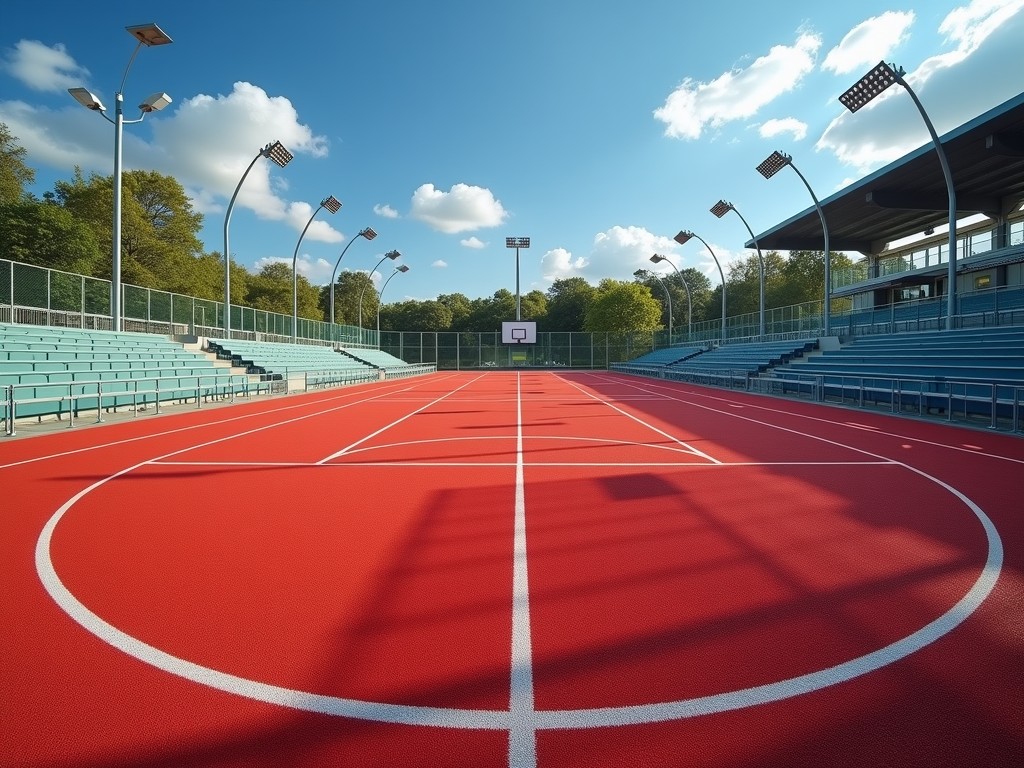
Oem Athletic Sports Track Surfacing Solutions Manufacturer
OEM Athletic Sports Track Surfacing Solutions
Track surfacing must satisfy biomechanical criteria such as vertical deformation ranging from 2.0 mm to 4.5 mm under a 500 N impact and a coefficient of friction between 0.5 and 0.7 for athletic footwear. OEM manufacturers achieve these targets by formulating polymeric binders, selecting aggregate gradations, and controlling curing conditions.
Material Composition
The base layer typically consists of SBR rubber granules sized 0.5‑2.0 mm blended with a polyurethane‑modified asphalt binder at a ratio of 8:1 by weight. The wearing course incorporates EPDM granules of 0.8‑1.5 mm for UV stability and pigment retention.
- SBR rubber – provides elasticity and impact attenuation
- EPDM granules – resist color fading and oxidative degradation
- Polyurethane‑asphalt binder – delivers adhesion and temperature flexibility
- Pigments – inorganic oxides for consistent hue under sunlight
Performance Characteristics
Key performance indicators are measured according to ASTM F2157 and EN 14877 standards. Values vary with thickness and formulation but remain within defined ranges for competitive tracks.
| Property | Typical Range | Test Method |
|---|---|---|
| Vertical deformation (mm) | 2.0 – 4.5 | ASTM F2157 |
| Shock absorption (% ) | 35 – 55 | EN 14877 |
| Coefficient of friction | 0.50 – 0.70 | ASTM F2913 |
| Tensile strength (MPa) | 0.8 – 1.2 | ISO 1798 |
| UV stability (ΔE after 1000 h) | < 3 | ISO 4892‑2 |
Customization Options
OEM suppliers adjust layer thickness, granule size distribution, and binder chemistry to meet site‑specific requirements such as drainage slope, expected usage intensity, and local climate extremes.
- Total thickness: 10 mm – 15 mm (base + wearing)
- Color palette: standard IAAF colors or custom RAL matches
- Drainage channels: integrated perforated layers or surface grooves
- Prefabricated rolls vs. in‑situ spray application
Applications and Suitability
Athletic tracks installed at schools, collegiate stadiums, and professional venues demand surfaces that maintain consistent mechanical properties over thousands of loading cycles. The engineered combination of rubber elasticity and binder viscosity reduces peak forces transmitted to athletes’ joints while providing adequate traction for sprint starts and distance running.
Facilities in regions with high temperature swings benefit from the low‑temperature flexibility of the polyurethane‑asphalt binder, which prevents cracking during freeze‑thaw cycles. Conversely, UV‑stable EPDM granules limit surface hardening in climates with intense solar radiation.
Quality Assurance
Manufacturing control begins with raw‑material testing: granule size distribution is verified by laser diffraction, binder viscosity is measured at 25 °C, and pigment dispersion is assessed via spectrophotometry. In‑process monitoring includes thickness gauges behind the paver and infrared temperature readings to ensure uniform cure.
- Raw material certificates of analysis
- In‑line thickness verification (±0.5 mm)
- Post‑cure hardness (Shore A) testing
- Performance sampling per 500 m² lot
Frequently Asked Questions
Can the track thickness be adjusted for different event zones?
Yes. The base layer can be increased under sprint lanes for higher shock absorption while keeping the wearing course uniform for lane consistency.
What information is required for a quotation?
Project plans showing area dimensions, desired color, expected usage level (e.g., training vs. competition), and any drainage or slope constraints.
Which materials are available for the wearing course?
Standard options include EPDM granules in IAAF‑approved colors; alternative TPU‑coated rubber or recycled PVC compounds are available upon request.
How is quality inspected before shipment?
Each batch undergoes thickness, hardness, and tensile tests; a visual inspection checks for color uniformity and surface defects.
Contact for Technical Consultation
To discuss material selection, thickness optimization, or site‑specific constraints, reach out to our engineering team.
Request a technical quote