Low Price Artificial Indoor Gym Sports Flooring Company
Low Price Artificial Indoor Gym Sports Flooring Company
Low Price Artificial Indoor Gym Sports Flooring
This flooring system combines a polymer wear layer with a closed‑cell foam backing to provide impact absorption and surface durability for indoor athletic activities. The product is supplied in roll or tile formats, allowing seamless coverage of courts, multipurpose halls, and training zones.
Material Composition and Structure
The top wear layer is a calendared polyvinyl chloride (PVC) sheet with a nominal thickness of 1.2 mm and a Shore A hardness of 85, offering resistance to abrasion from shoe soles and equipment.
Beneath the wear layer, a 5 mm thick ethylene‑vinyl acetate (EVA) foam core provides a compressive modulus of approximately 0.15 MPa, delivering consistent shock attenuation across the surface.
A backing layer of non‑woven polyester fabric, 0.3 mm thick, enhances dimensional stability and facilitates adhesive bonding to the subfloor.
Performance Specifications
Key mechanical and safety properties are measured according to ASTM and EN standards.
- Overall thickness: 6.5 mm ±0.3 mm (wear layer + foam + backing)
- Shock absorption (ASTM F2772): ≥35 % energy reduction
- Vertical deformation: ≤0.5 mm under a 2000 N load
- Slip resistance (wet pendulum test): SRV ≥45
- Fire rating: EN 13501‑1 Bfl‑s1
- VOC emissions: ≤0.5 mg/m³ (ISO 16000‑9)
Typical Applications
Indoor sports flooring must balance athlete safety with surface durability, and the described system meets those demands in environments where repetitive impact and rapid direction changes occur.
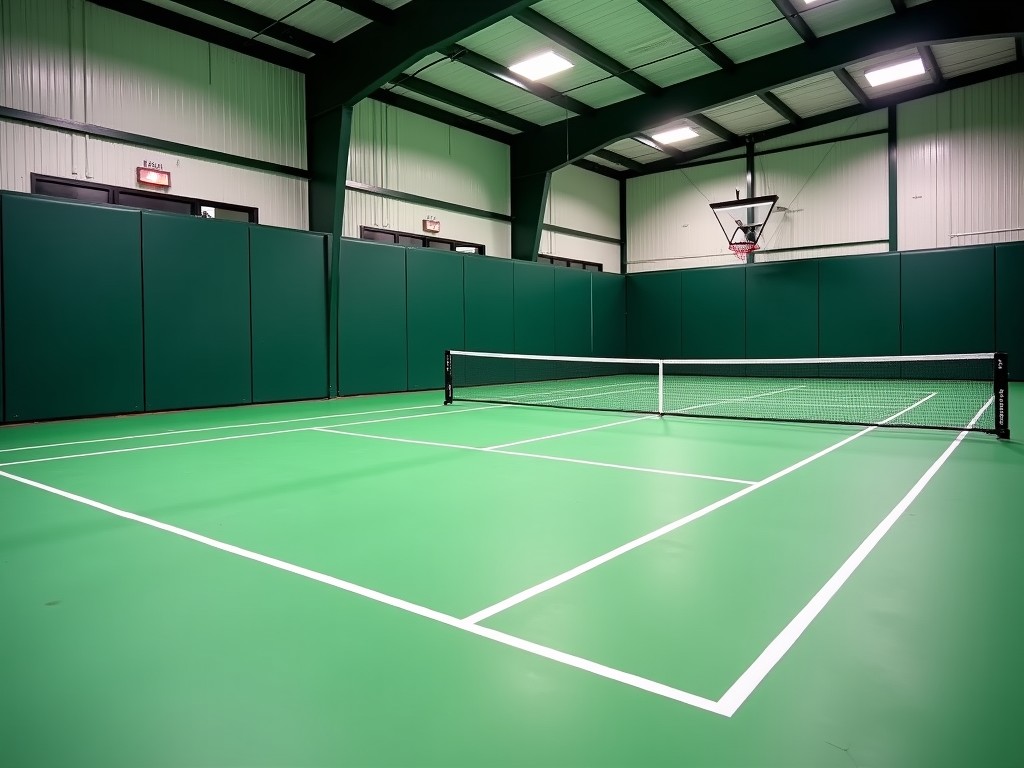
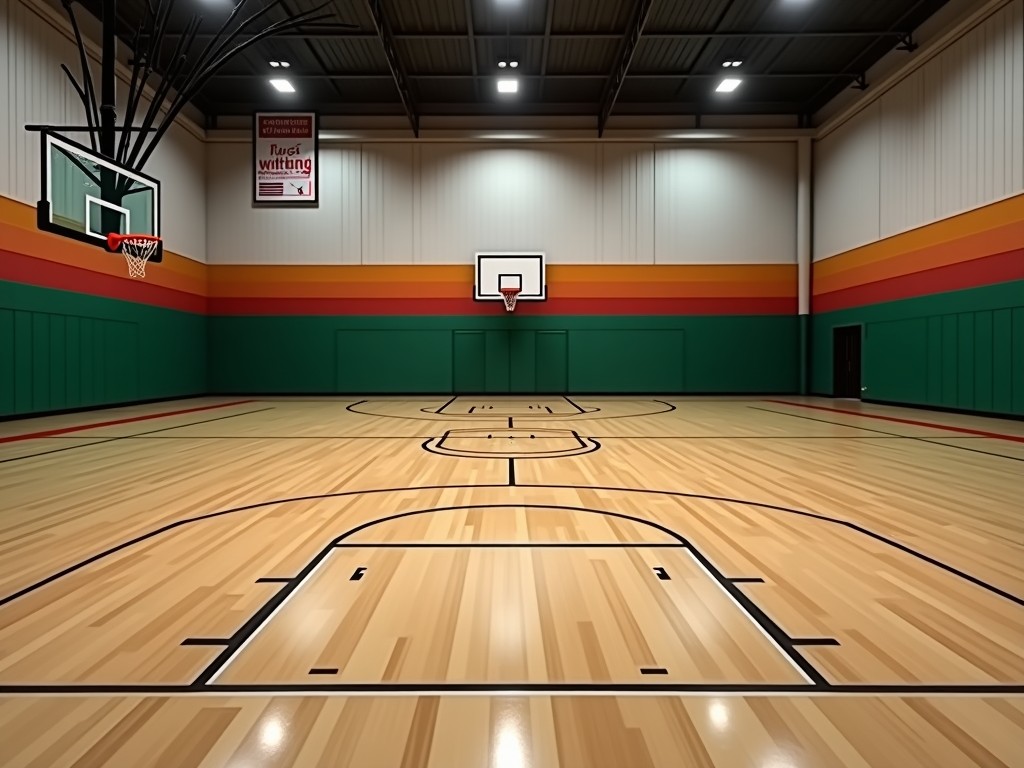
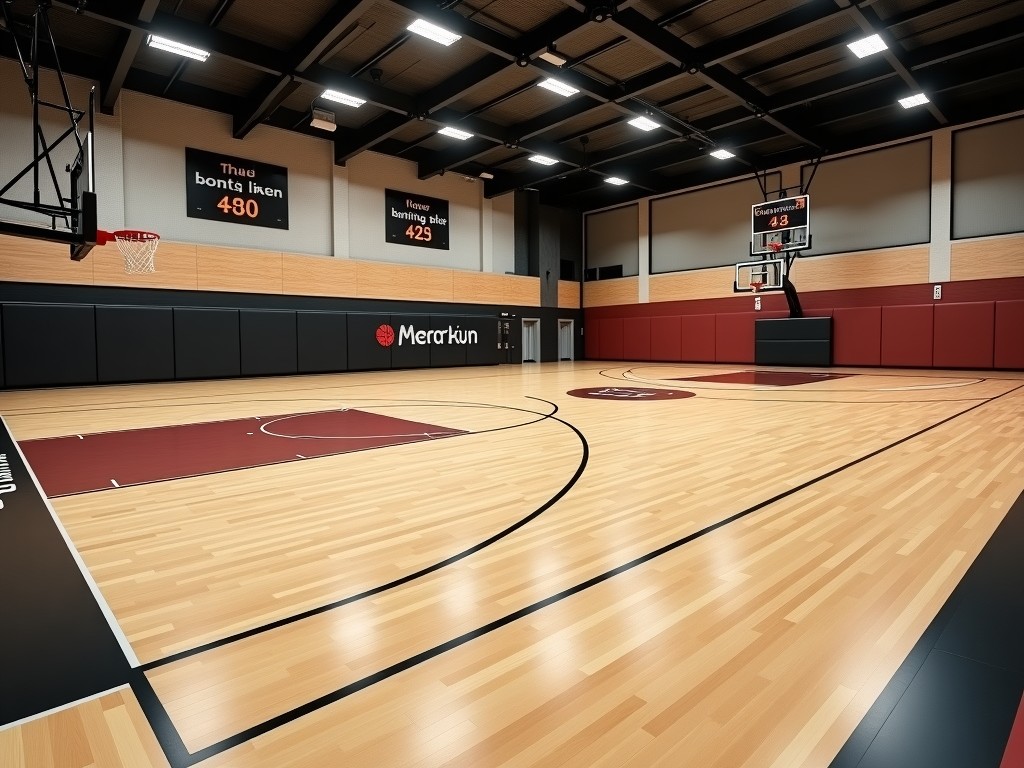
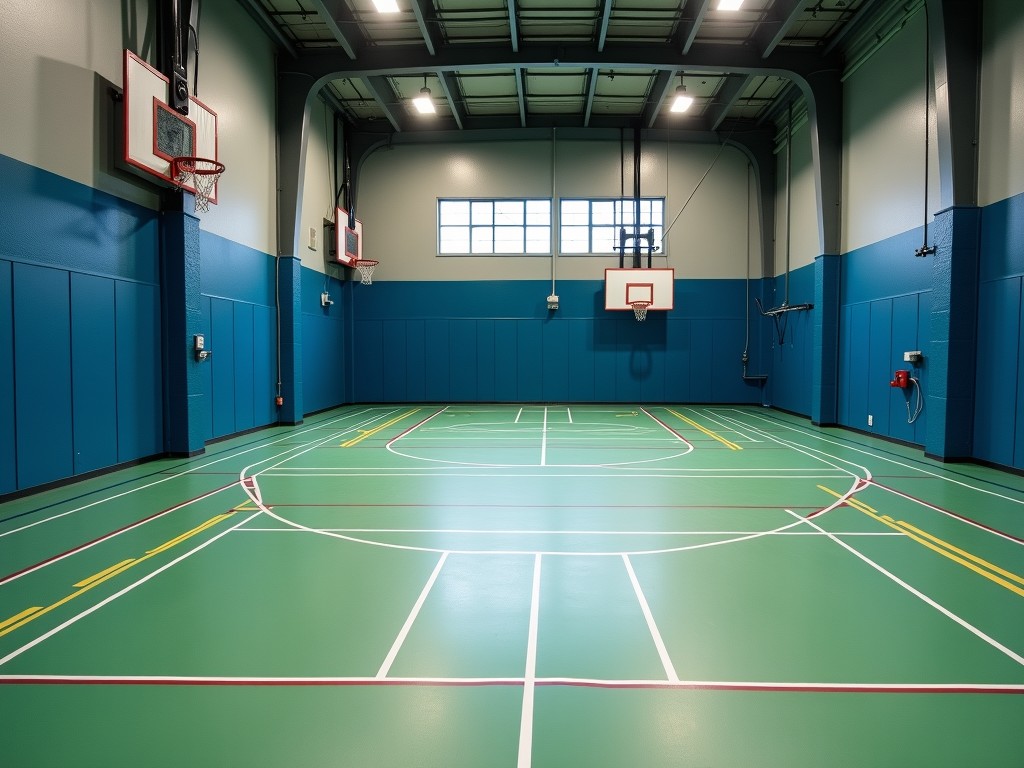
Common installations include basketball courts, volleyball courts, badminton halls, multipurpose gymnasiums, and school physical‑education spaces where a uniform, low‑maintenance surface is required.
The flooring’s dimensional stability allows it to be installed over concrete slabs with a moisture barrier, reducing the risk of delamination in humid climates.
Installation Overview
The product is supplied in 2 m wide rolls or 500 mm × 500 mm tiles, both featuring a factory‑applied pressure‑sensitive adhesive backing.
Installation involves unrolling the material, aligning seams, and applying a roller to achieve full adhesion; tiles are laid with a staggered joint pattern to minimize visible lines.
Quality Control and Testing
Each batch undergoes inline thickness measurement using laser gauges, with a tolerance of ±0.1 mm recorded for every 10 m of roll.
Shock absorption and vertical deformation are verified on a universal testing machine according to ASTM F2772, and results are logged against the specification limits.
Final inspection includes a visual check for surface defects and a slip‑resistance test using a pendulum tester; any batch failing to meet the SRV threshold is quarantined for rework.
Customization Options
- Wear‑layer thickness: 1.0 mm, 1.2 mm, or 1.5 mm
- Foam core density: 25 kg/m³, 35 kg/m³, or 45 kg/m³ (affects shock absorption)
- Color pigments: standard RAL palette or custom matte finishes
- Surface embossing: fine texture for enhanced grip or smooth finish for low‑friction areas
- Edge profiling: straight, beveled, or interlocking tile edges
Technical Data
| Property | Value (Typical) | Test Standard |
|---|---|---|
| Overall thickness | 6.5 mm | ISO 24346 |
| Wear layer thickness | 1.2 mm | ISO 24340 |
| Shock absorption | ≥35 % | ASTM F2772 |
| Vertical deformation | ≤0.5 mm @ 2000 N | ASTM F2772 |
| Slip resistance (wet) | SRV ≥45 | EN 13036‑4 |
| Fire rating | Bfl‑s1 | EN 13501‑1 |
| VOC emissions | ≤0.5 mg/m³ | ISO 16000‑9 |
Frequently Asked Questions
Can the thickness be adjusted for specific sport requirements? Yes, the wear‑layer and foam core thicknesses can be selected from the ranges listed in the customization options to meet the impact‑absorption needs of basketball, volleyball, or multipurpose use.
What information is needed to obtain a quotation? Provide the total area to be covered, preferred format (roll or tile), desired thickness and color, and any special requirements such as fire rating or embossing.
How are the rolls protected during overseas shipment? Rolls are wrapped in a polyethylene shrink film, placed on pallets, and secured with corner protectors to prevent edge damage and moisture ingress.
For further technical details, sample requests, or to discuss a project‑specific configuration, please contact our sales engineering team.
Contact Us