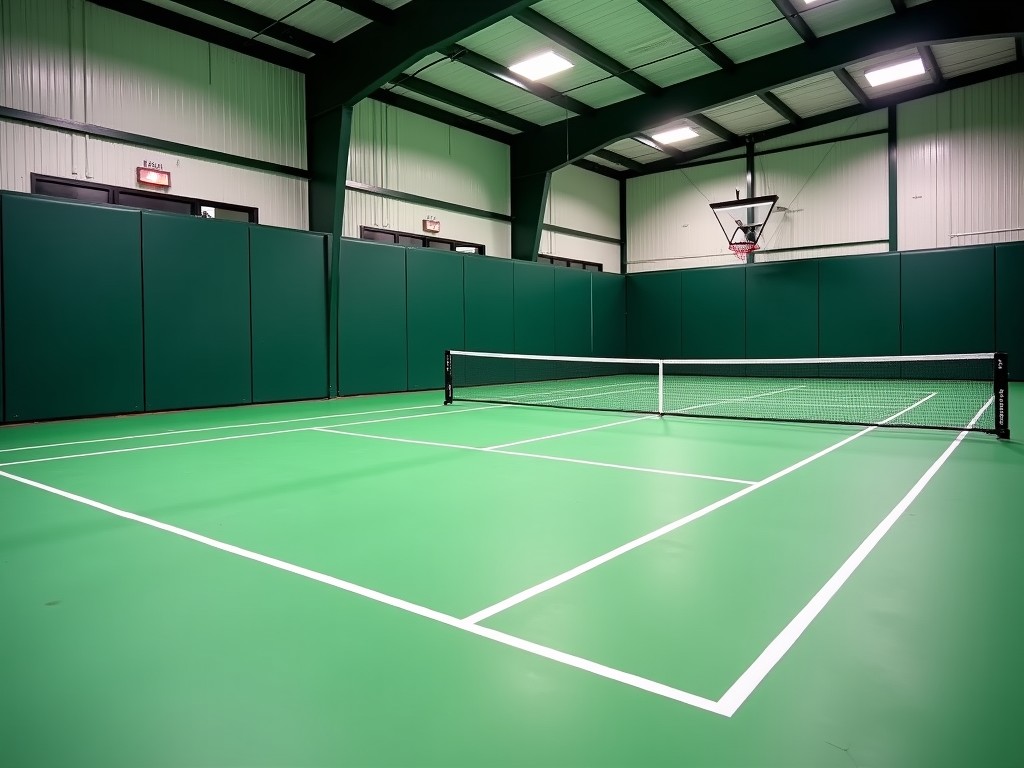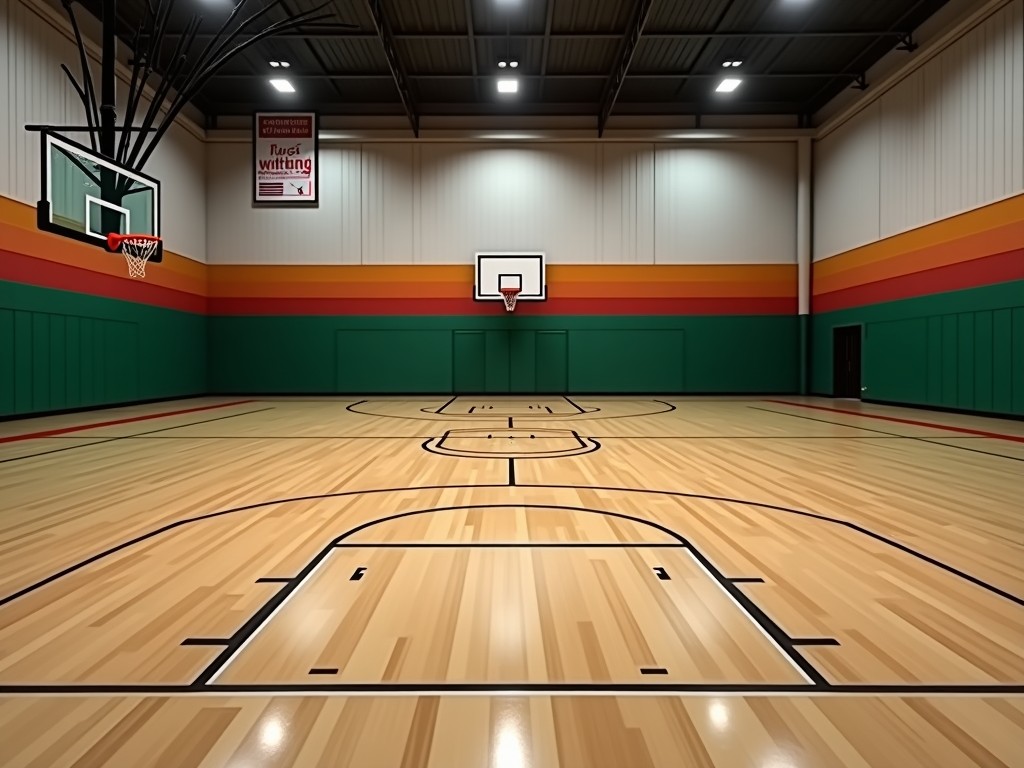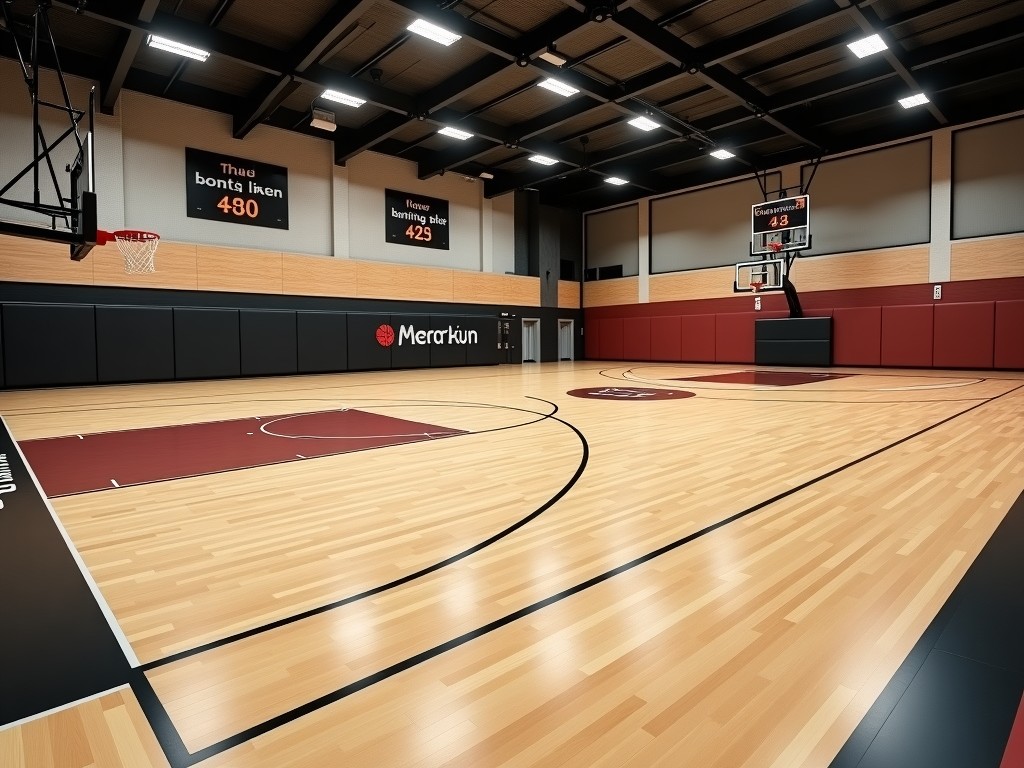
Direct Factory Indoor Pickleball Court Flooring Supplier
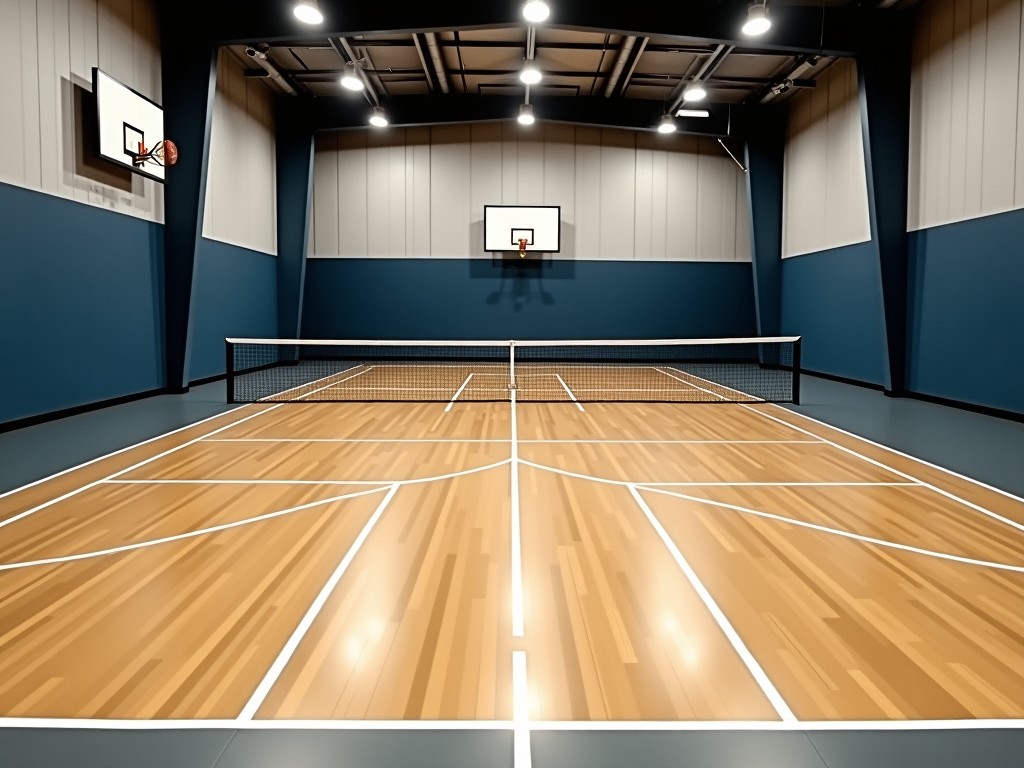
Direct Factory Indoor Pickleball Court Flooring Supplier
Direct Factory Indoor Pickleball Court Flooring
Indoor pickleball courts require a surface that provides consistent ball bounce, adequate traction for lateral movements, and sufficient shock absorption to reduce player fatigue. Flooring supplied directly from the factory eliminates intermediate handling, allowing tighter control over material formulation, thickness tolerances, and surface texture.
Technical Overview
The flooring system consists of a layered composite: a wear-resistant top coat, a resilient underlayer, and a stabilizing backing. Typical total thickness ranges from 10 mm to 15 mm, with the wear layer contributing 2–3 mm of the total. The underlayer is formulated from a polyurethane‑rubber blend that provides a Shore A hardness between 80 and 90, balancing durability with comfort.
Material Composition
| Component | Typical Material | Function |
|---|---|---|
| Wear layer | UV‑stabilized acrylic polyurethane | Provides abrasion resistance and consistent ball rebound |
| Underlayer | Polyurethane‑rubber elastomer | Delivers shock absorption and vertical deformation |
| Backing | High‑density polyethylene (HDPE) or polypropylene | Ensures dimensional stability and moisture barrier |
Performance Characteristics
Key performance indicators for indoor pickleball flooring include ball rebound resilience, coefficient of friction, and impact load reduction. Ball rebound resilience typically falls between 90 % and 95 % of the rebound height measured on a concrete reference, ensuring predictable play. The surface coefficient of friction is maintained in the range of 0.55 – 0.65, offering sufficient grip for quick direction changes without excessive resistance that could strain joints. Impact load reduction, measured as peak force transmitted to the sub‑floor under a 50 kg drop test, is commonly reduced by 30 %–40 % compared with an untreated concrete base.
Applications
Beyond dedicated pickleball courts, the flooring is suitable for multi‑purpose sports halls where badminton, table tennis, or recreational basketball are played. The consistent surface texture supports accurate ball roll for table tennis while providing enough cushion for jumping activities in basketball. Facilities that require quick re‑configuration benefit from the flooring’s modular interlocking edges, which allow sections to be lifted and re‑laid without adhesive.
Customization Options
- Thickness: adjustable from 8 mm to 20 mm in 1 mm increments to match sub‑floor conditions.
- Surface texture: options include fine sand‑finished for higher slip resistance or smooth polished for faster ball speed.
- Color palette: standard court colors (e.g., blue, green, red) and custom RAL matches available upon request.
- Edge profile: straight‑cut, beveled, or interlocking tongue‑and‑groove designs.
- Backing enhancements: added moisture barrier or antimicrobial treatment for humid environments.
Quality Assurance
Each batch undergoes inline monitoring of thickness via laser gauging, with tolerances held to ±0.2 mm. The wear layer hardness is verified using a Shore A durometer at five points per panel, targeting the specified range. Finished panels are subjected to a standardized ball rebound test (ASTM F2117) and a slip resistance test (ASTM F1677) before packaging. Documentation of test results is provided with every shipment.
Packaging and Logistics
Panels are stacked flat on pallets, separated by corrugated cardboard layers to prevent surface abrasion. Standard pallet dimensions are 1.1 m × 1.1 m, with a maximum load of 1.2 t per pallet to ensure safe handling with forklifts. For export shipments, pallets are wrapped in stretch film and secured with corner protectors; optional heat‑treated wooden pallets are available for ISPM‑15 compliance.
Lead Time and Sampling
Production lead time typically ranges from 3 weeks to 6 weeks after receipt of approved technical drawings, depending on order size and customization complexity. Sample panels measuring 500 mm × 500 mm can be dispatched within 5 working days upon request, allowing customers to evaluate texture, color, and mechanical properties before committing to a full order.
Frequently Asked Questions
| Question | Answer |
|---|---|
| Can dimensions be customized? | Yes, panel length and width can be tailored to court layout; standard sizes are 1 m × 0.5 m but custom lengths up to 2.4 m are available. |
| What information is required before quotation? | Required details include court dimensions, desired thickness, surface texture preference, color, and any special backing requirements. |
| What materials are available for the wear layer? | The wear layer is offered in UV‑stabilized acrylic polyurethane; alternative formulations such as aliphatic polyurethane can be provided upon request for specific UV exposure conditions. |
| How is quality inspected? | Quality control includes dimensional checks, hardness testing, ball rebound, and slip resistance testing as per ASTM standards, with results supplied in the shipment documentation. |
| What packaging methods are available? | Standard packaging uses flat‑stacked pallets with cardboard interleaving and stretch film; export‑grade wooden pallets and moisture‑barrier wrapping are optional. |
| How are export shipments protected? | Pallets are secured with corner protectors, stretch film, and, if required, heat‑treated pallets to meet ISPM‑15 regulations. |
| What is the typical production lead time? | Lead time is generally 3–6 weeks after drawing approval, varying with order volume and customization level. |
Get a Technical Quote
To receive a detailed quotation, including material data sheets and lead‑time confirmation, please provide your project specifications via the contact form.
Request Quote